
7 August 2025
By Tim Koch
Tim Koch puts people in the picture.
While attending the recent draw for the 311th Doggett’s Coat and Badge in the historic surroundings of Fishmongers’ Hall adjacent to London Bridge, it was difficult not to think of things historic. Those who like history tend to like the idea of continuity. In the history of rowing, there can be no greater example of continuity than that provided by the Phelps family – particularly as regards their involvement in Doggett’s.
While the story that a Phelps was in the boat that rowed King John to Runnymede and the Magna Carta in 1215 probably results more from a long night in the Duke’s Head in Putney rather than from historical fact, the line can be traced at least to William Phelps, a waterman born in Fulham in 1675. Thus, ten generations of Phelps’ have served rowing as a trade and as a sport, historically as tradesmen, boatbuilders and professionals, latterly as what would have once been called “gentlemen amateurs”.

When Richard Phelps became Chair of Henley’s Committee of Management last year, I interviewed him and began by asking what he particularly brought to the role. He initially talked about his long association with Henley and also of his strong involvement with the grassroots of the sport. However, he concluded:
I am, clearly, a Phelps. A hundred years ago, my grandfather and his brothers went to Henley but stayed around the boat tents as they were not allowed in the Stewards’ Enclosure or to race at the Regatta. I think that I bring a knowledge of what Henley was in the past and a respect for the evolution that has happened since then. I marvel at the fact that, within a few generations, a Phelps has gone from having to call all the gentlemen rowers “Sir” to becoming Chair of the whole organisation. I am very conscious of this history and want to make sure that we continue the evolution of Henley Royal Regatta.
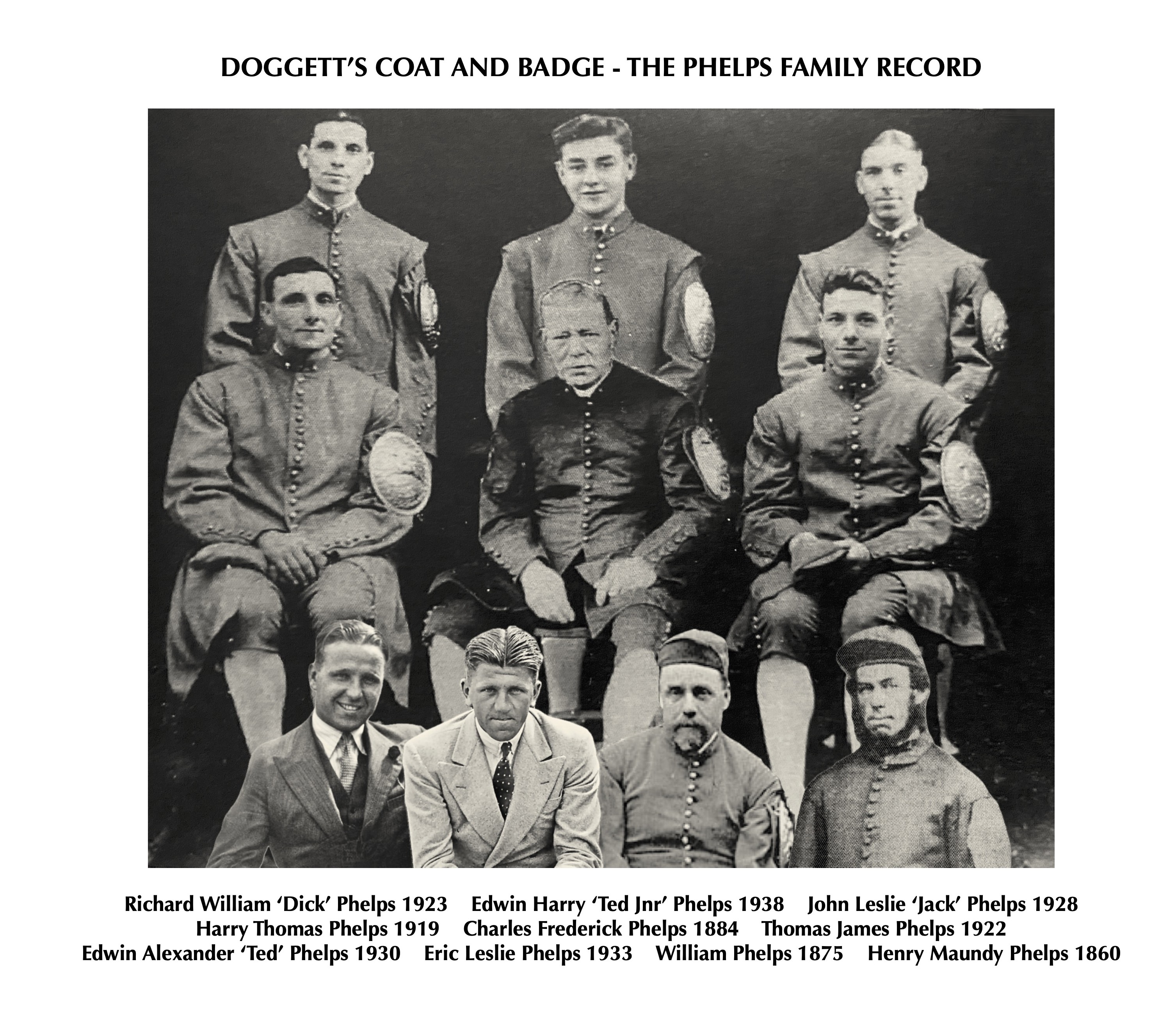
There is a famous photograph that illustrates the continuity of rowing in the Phelps family in the twentieth century.

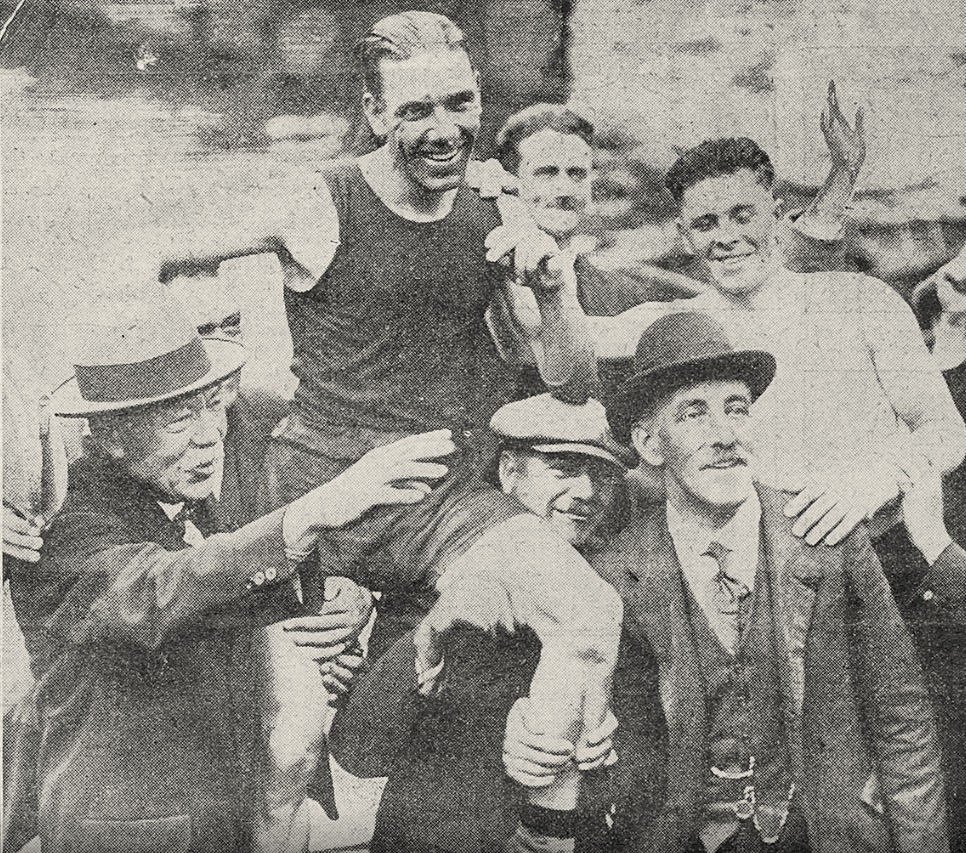
Charles Frederick Phelps (1859-1928, Doggett’s 1884) had seven surviving sons and two daughters. Four of the sons won Doggett’s: Harry Thomas (1893-1973, Doggett’s 1919); Thomas James “Tom” (1896-1971, Doggett’s 1922); Richard William “Dick” (1897-1989, Doggett’s 1923); John Leslie “Jack” (1903-1983, Doggett’s 1928). Second son, Edwin “Ted” (1890-1972) came second in 1914; seventh son, Charles Vesta (1901-1984) came fifth in 1926; eighth son, William “Bill” Fredrick (1905-1977) came fourth in 1929.

Edwin Harry “Ted Junior” Phelps (1917-1979) won Doggett’s in 1938, the last member of the family to do so. He was Charlie’s grandson, a son of his third child, Edwin (1890-1974). However, between this 1938 win and Jack’s 1928 win, two cousins, Ted and Eric, had also won the Coat and Badge.
Edwin Alexander “Ted” (1908-1882, Doggett’s 1930) and Eric Leslie (1912-1982, Doggett’s 1933) were the sons of John Thomas Phelps – “Young Bossie” (1877-1942). Young Bossie was the son of another John Thomas Phelps – “Old Bossie” (1851-1910). Old Bossie and Charlie were brothers.
I have taken the liberty of creating a third version of the original 1928 photograph as amended in 1938.



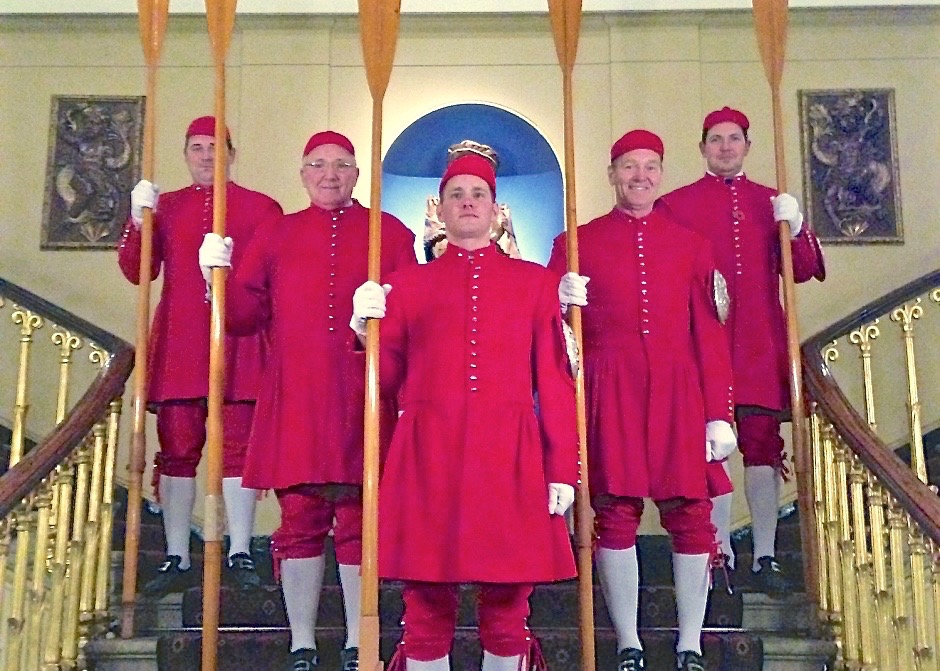

All this is proof, were it needed, that the 310-year-old Doggett’s Coat and Badge is indeed “living history”.
 Hear The Boat Sing
What a delight to read of the continuity–great rowing is great rowing.