
30 June 2025
By William O’Chee
The first Henley Royal Regatta was preceded by a draw conducted in the Town Hall, and for the last 186 years all subsequent regattas have been conducted in the same manner. Henley Town Hall is an attractive 19th century building that presides over the town’s Market Place, even if the interior has something of the atmosphere of a faded Masonic Hall.
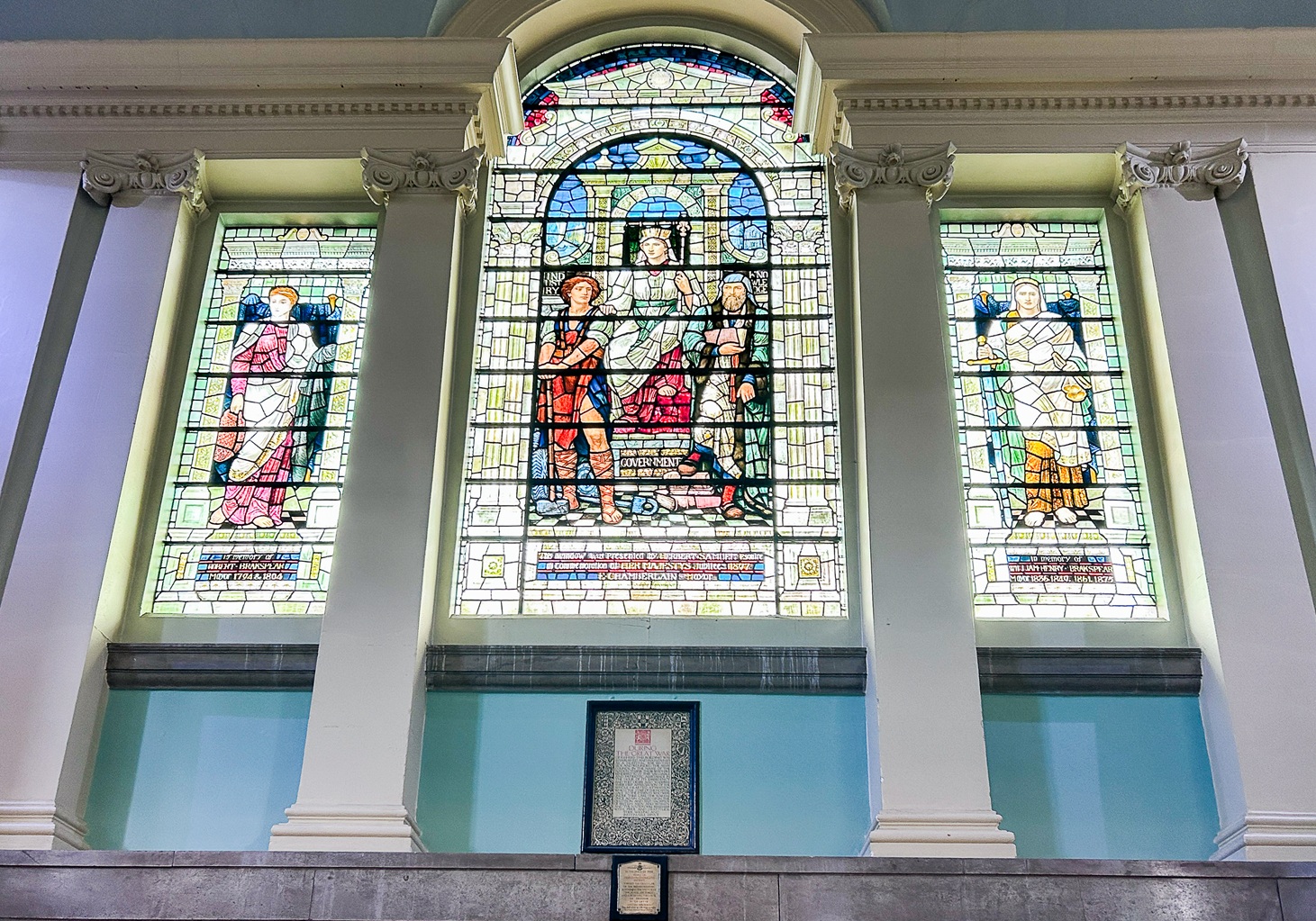
As if to be closer to Heaven, this ritual occurs in the Hall on the uppermost floor. As participants make their way up the marble staircase, they are treated to an allegorical stained glass window depicting “Government” between “Charity” and “Justice”. Are the Stewards trying to send us a message?
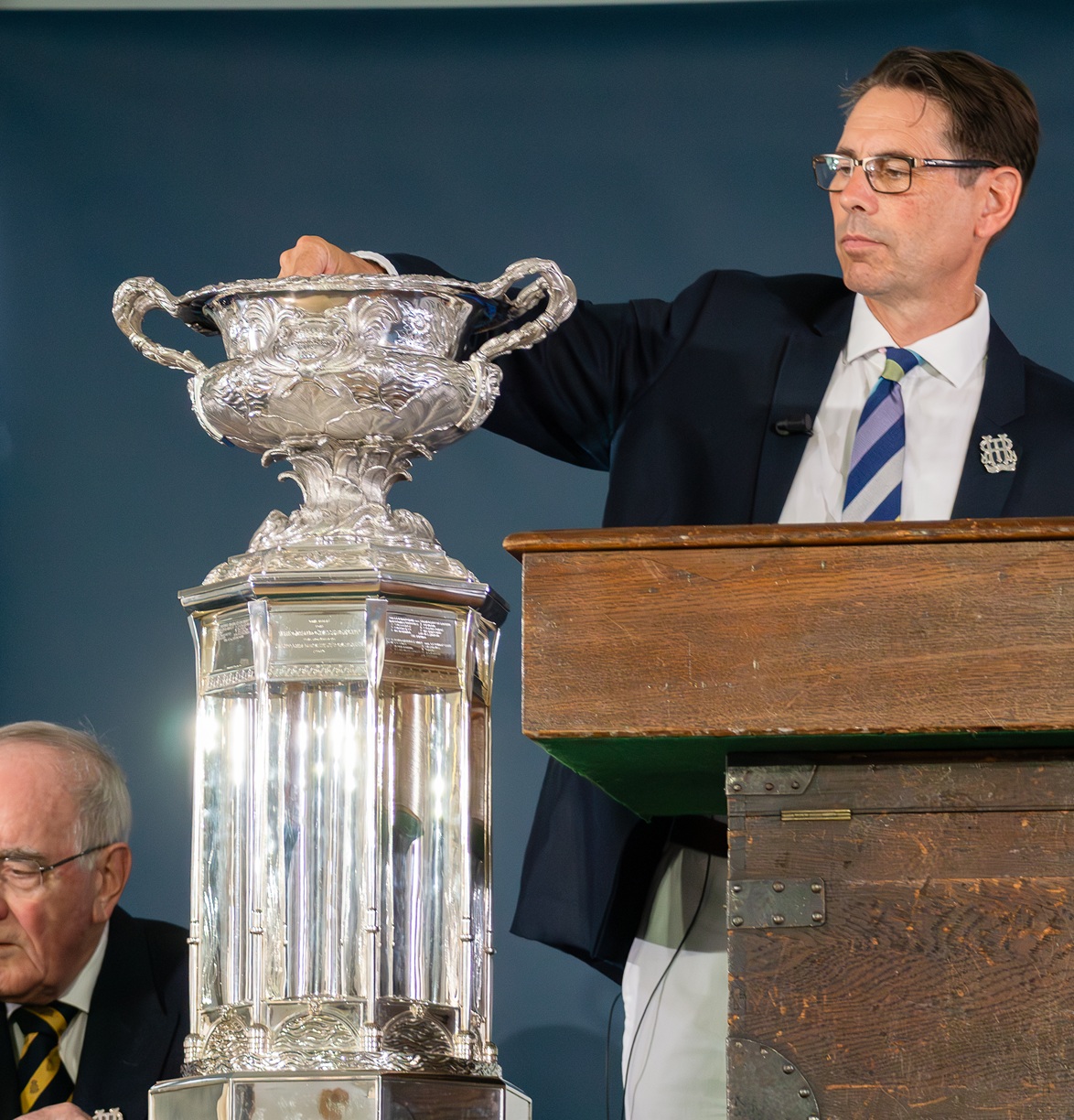
Neat rows of comfortable seats are arrayed like His Majesty’s Brigade of Guards before the stage, where the Grand Challenge Cup is front and centre. It is here that the draw is undertaken with such ceremony one almost expects the whole affair to be accompanied by the strains of Elgar’s Pomp and Circumstance March Number 2.
A Henley Royal Regatta draw is no small business. A complicated process is followed for each event. First, the Stewards determine how many “selected” crews there will be for the event. These are the favoured crews, which are randomly assigned predetermined positions in the draw. Once this has been completed, the remaining crews are drawn randomly to fill the remaining slots for races in that event.
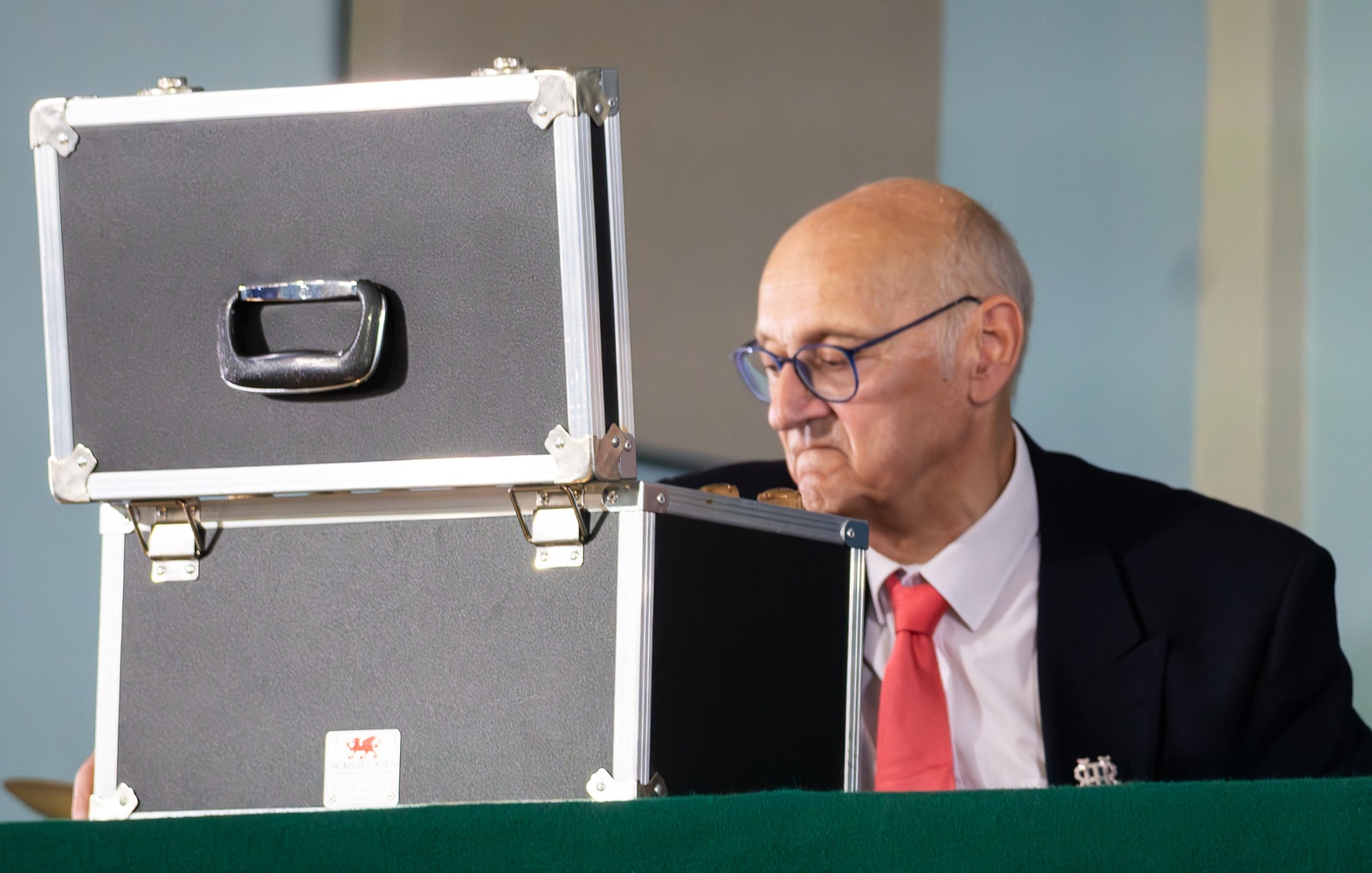
The real drama, though, is the drawing of the crews. Plastic discs with numbers corresponding to the crews are held on skewers secured with corks, and kept in a metal case. The custody of these discs is so serious a task that it requires no less than a Professor of Classics in the form of Boris Rankov.
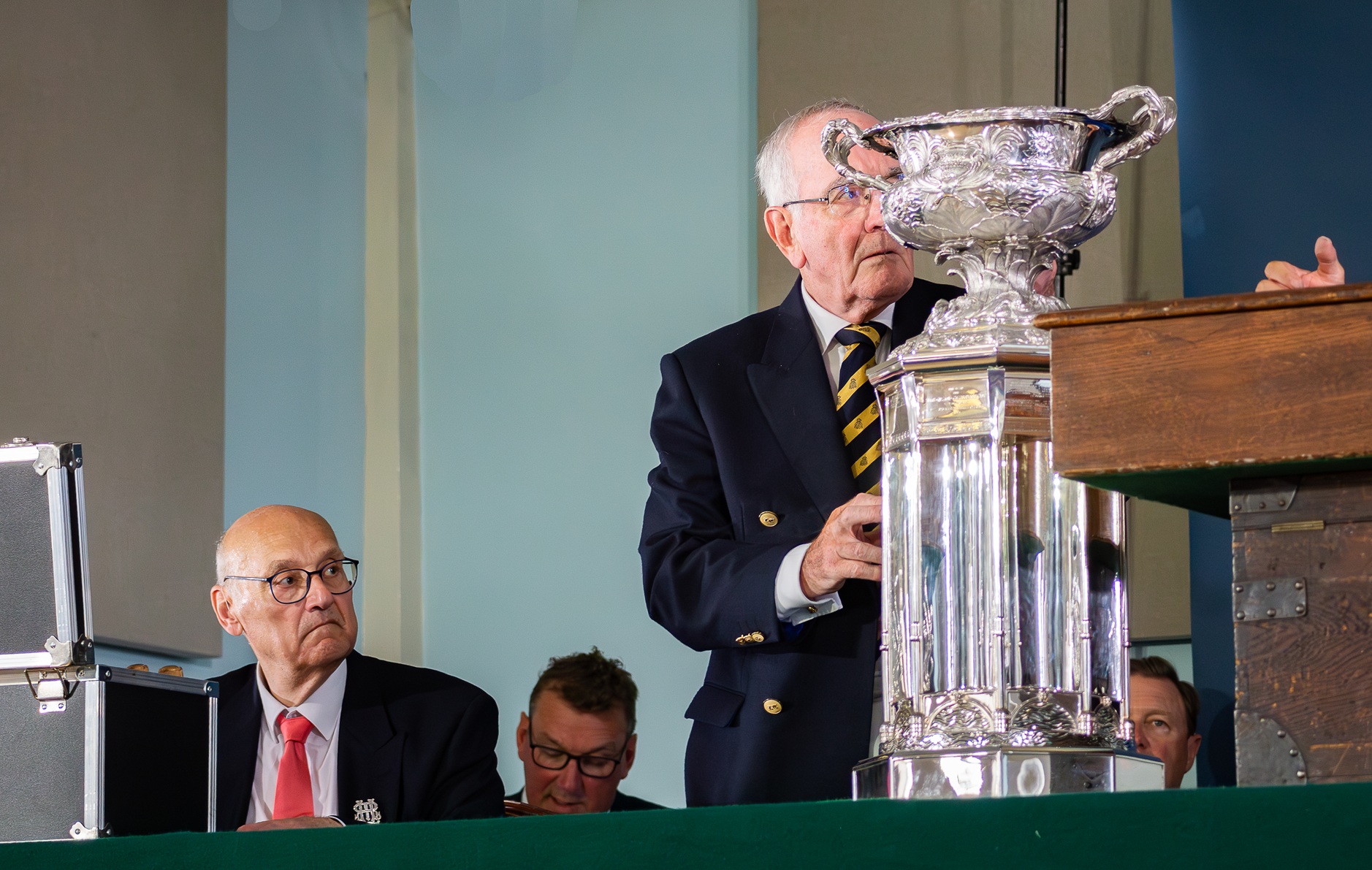
As each group of discs is required, they are passed to former Regatta Chairman, and Commander of the Order of the British Empire, Mike Sweeney. His task is to place the discs in the Grand Challenge Cup.

Presiding over the show is the current Regatta Chairman, Richard Phelps. Looking like a cross between a Christie’s auctioneer and a bingo caller at a Butlin’s holiday park, he musters all the solemnity he can while pulling each disc from the cup, and calling the number.
As each numbered disc is drawn and called, the corresponding crew name is announced and the position on the draw filled. Once this has been done, the disc is handed to a final Steward who places it on yet another skewer, and fixes it in place with a cork.
One by one the berths in the draw are filled until all 430 crews granted the privilege of racing have been assigned their matches, and no more discs remain.
Relief reigns large.
Afterwards I ask Chairman Phelps whether he had considered changing his blazer part way through the draw. “That would be an interesting idea,” he muses, before sadly concluding “but the sound man would be very unhappy with me because it would interfere with the microphone.”
It seems Henley Stewards are not omnipotent after all.
You will find the draw here.
 Hear The Boat Sing