This website covers all aspects of the rich history of rowing, as a sport, culture phenomena, a life style, and a necessary element to keep your wit and stay sane.
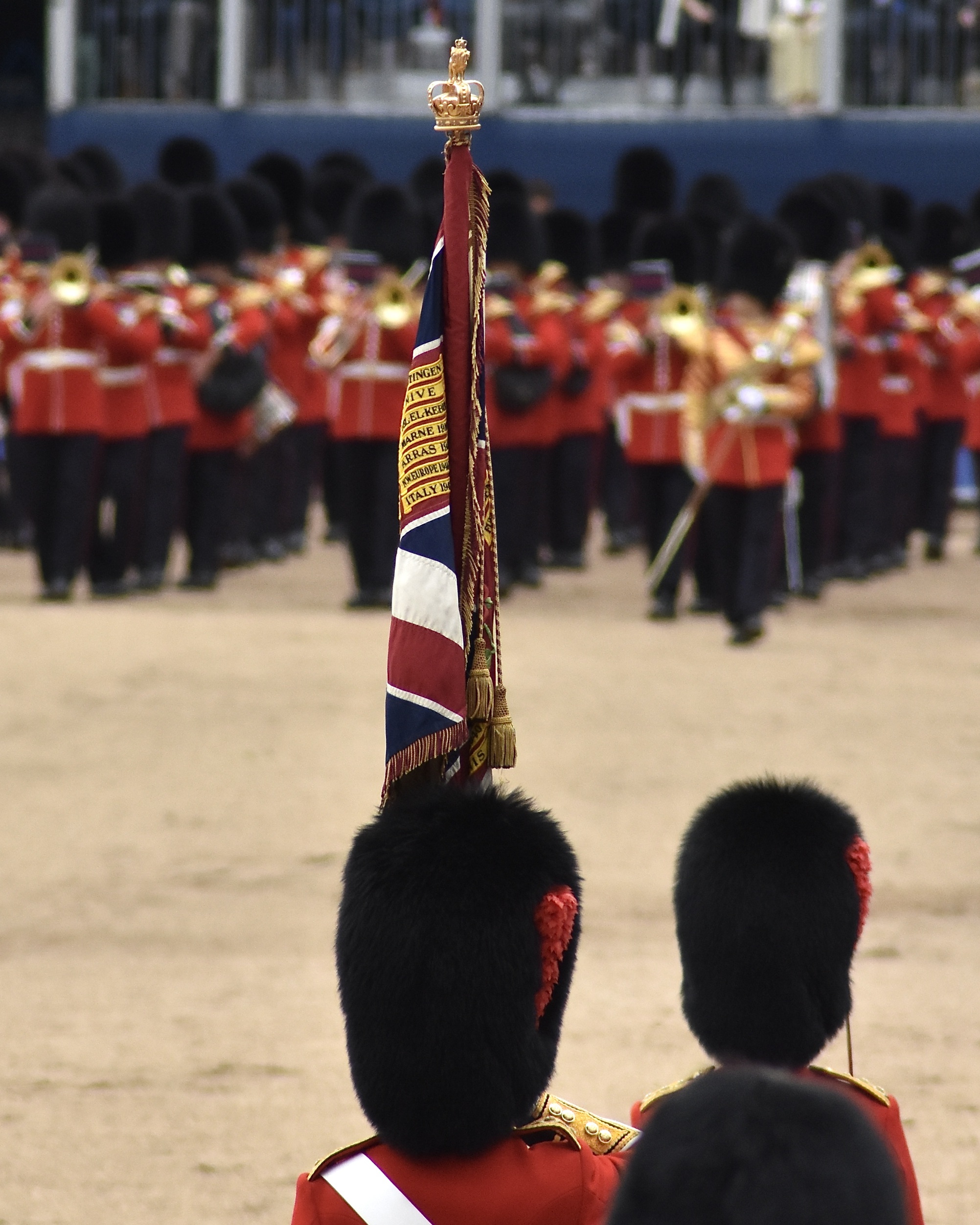
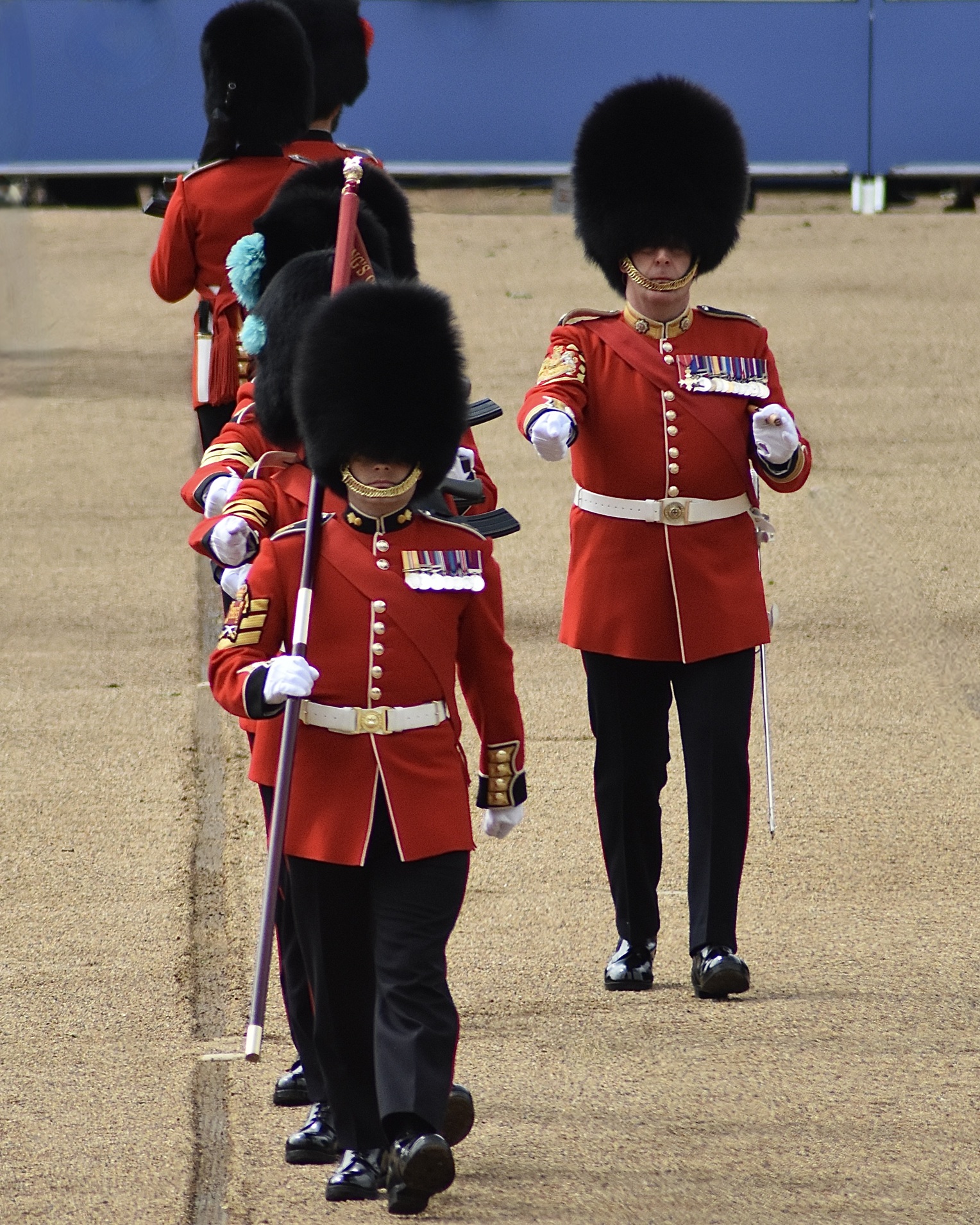
Number 7 Company of the Coldstream Guards (formerly the 2nd Battalion) troop (carry) their Colour (flag) in this year’s “Colonel’s Review”, one of the two full rehearsals for the Trooping the Colour, also known as the King’s Birthday Parade, which will be on King Charles’ official birthday, 14 June (his actual birthday is 14 November).
12 June 2015
By Tim Koch
Tim Koch has been recalled to the colours and has produced another military-not-rowing piece.
HTBS Types sometimes smile and sometimes wince when a non-rower writes about their sport but, after attempting to produce some informative text to go with my photographs of this year’s Colonel’s Review, I am more sympathetic to such scribes adrift in unfamiliar waters. In attempting to understand the ceremonial, I have relied heavily on trooping-the-colour.co.uk. However, I am sure that there are plenty of old soldiers and armchair warriors who, with only the minimum of pedantry, will correct any mistakes.
Like many old British ceremonies, Trooping the Colour can be a bit of an enigma – though this does not distract from the enjoyment of the spectacle. Further, the complexities of the military machine are difficult enough for the confirmed civilian to understand normally but the prestigious Household Division adds to this problem by adopting some unique distinctions and customs of its own.
The Household Division is made up of the Household Cavalry (the Life Guards and the Blues & Royals) and five regiments of foot guards (Grenadier Guards, Coldstream Guards, Scots Guards, Irish Guards and Welsh Guards). For Trooping the Colour, they are joined by the King’s Troop, Royal Horse Artillery, a mounted ceremonial battery.
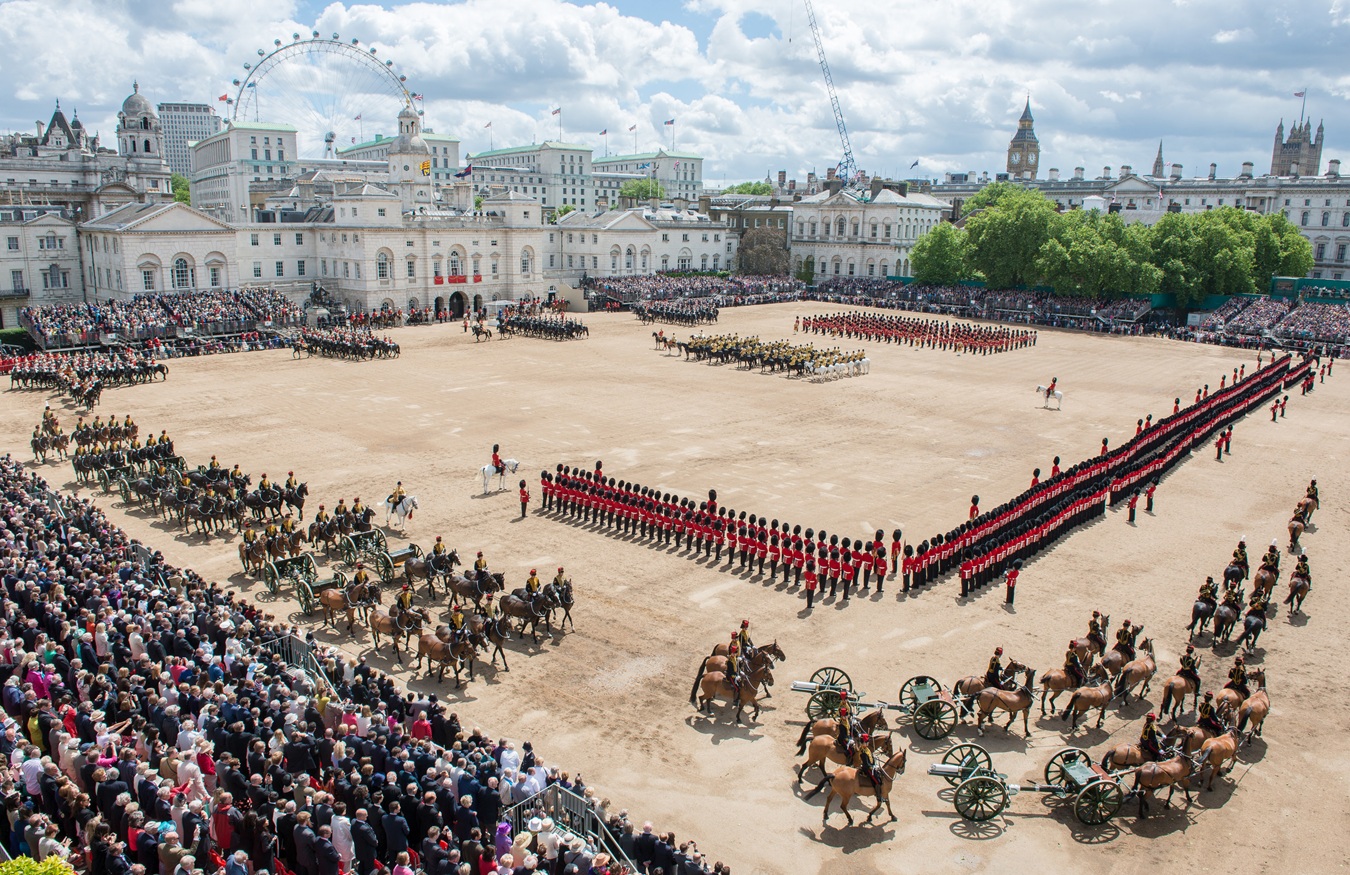
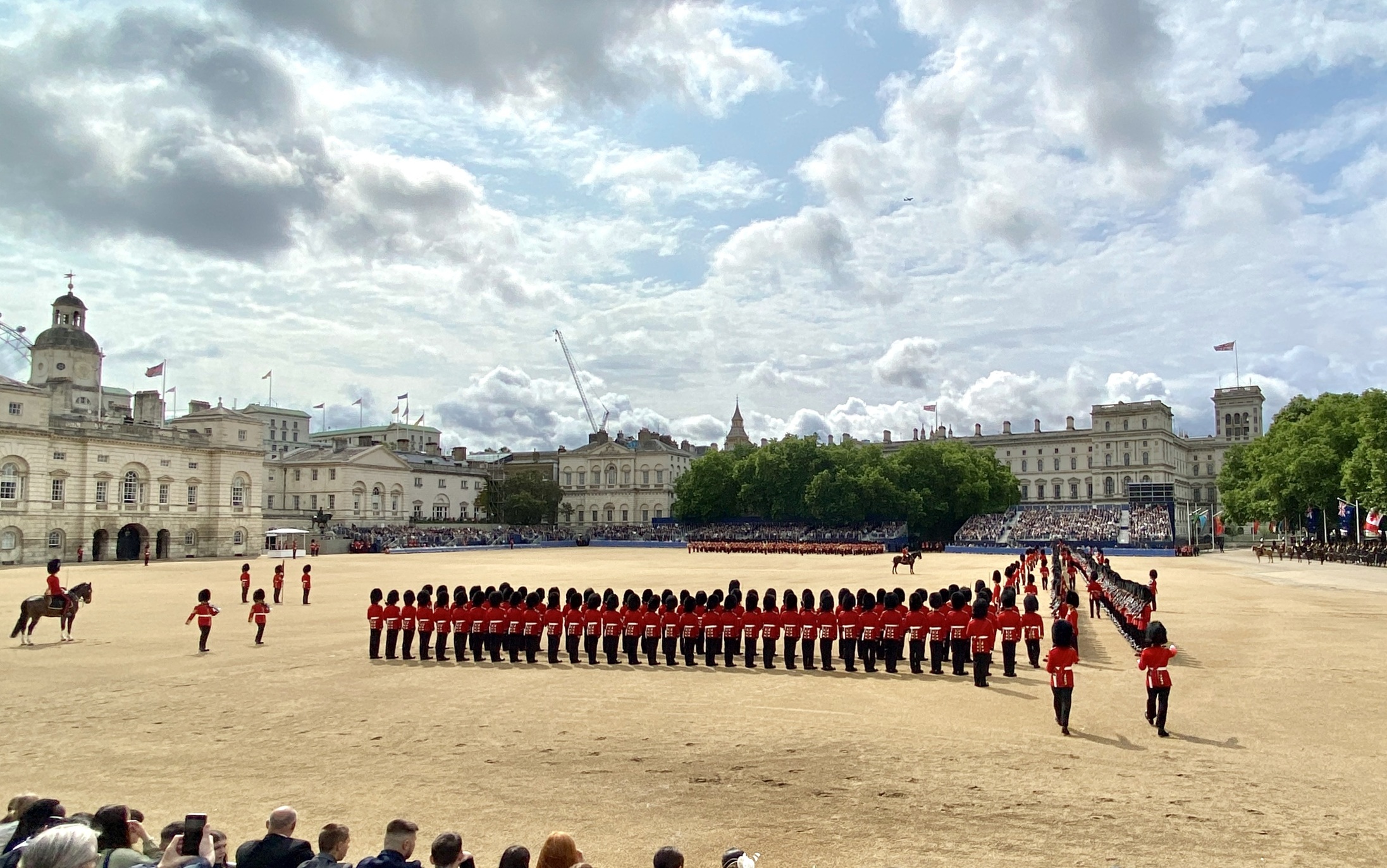
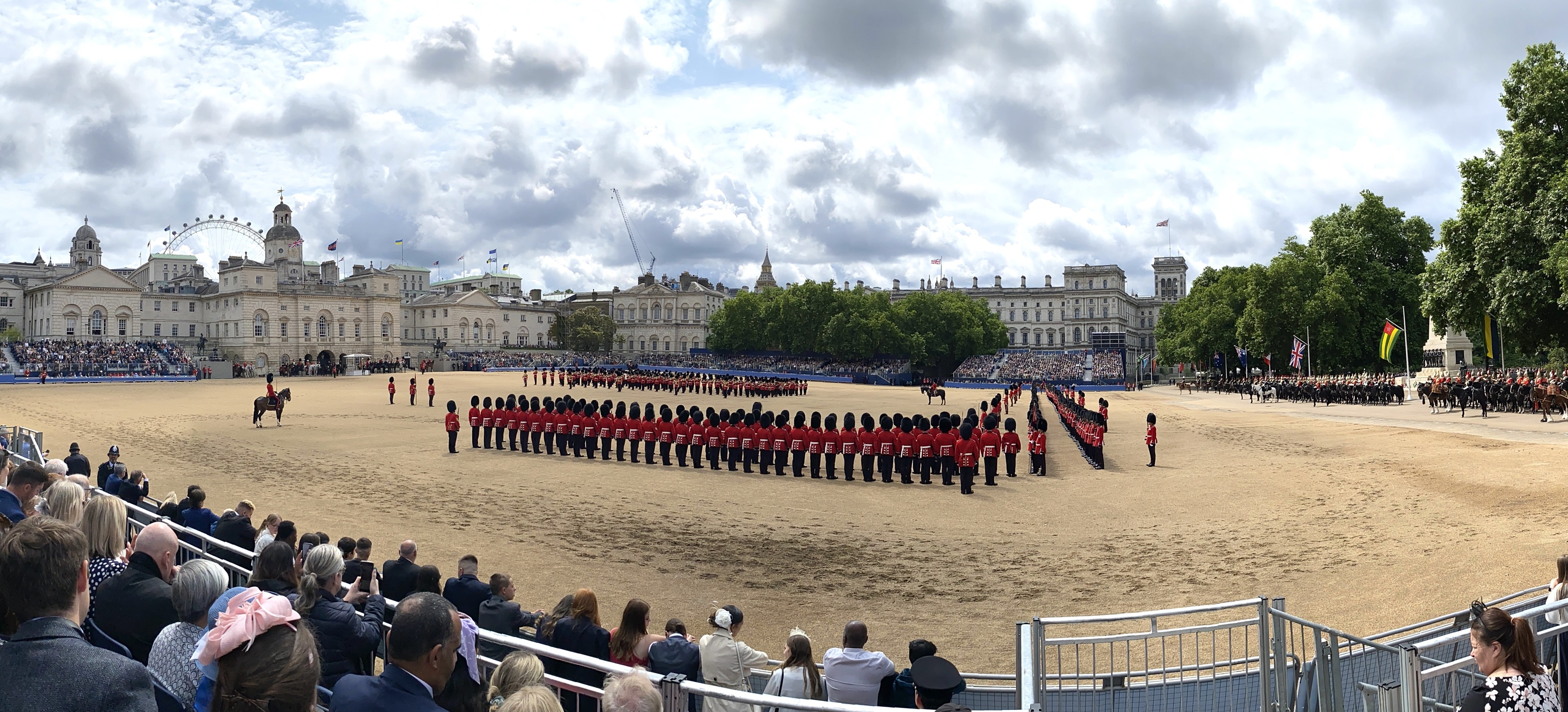
A picture from the 2013 Trooping the Colour reproduced here to show the layout of Horse Guards, the large military parade ground off Whitehall in central London which is famously home to the Trooping the Colour and also the Beating Retreat. Picture: MoD/Cpl Shaw, Open Government License.
The official birthday of the Sovereign is marked each year by a military parade and march past, known as Trooping the Colour or The King’s Birthday Parade…
Regimental flags of the British Army, historically described as “Colours,” are consecrated and display insignia worn by soldiers of the respective unit along with the unit’s Honorary Distinctions or “Battle Honours.”
Historically, the primary role of a regiment’s Colour was to provide a rallying point on the battlefield… For soldiers to recognise their Regiment’s Colour, it was necessary to display it. This was accomplished by young officers marching between formed-up ranks of soldiers with the Colour held high, which is the origin of the term “trooping.”
The ceremony of Trooping the Colour is believed to have been performed first during the reign of King Charles II (1660 – 1685). In 1748, it was determined that this parade should mark the official birthday of the Sovereign…
Only one Colour can be trooped at a time and the five regiments of Foot Guards… take turns to do so annually. The spectacular ceremony of Trooping the Colour remains the single national celebration of the Sovereign’s Official Birthday.
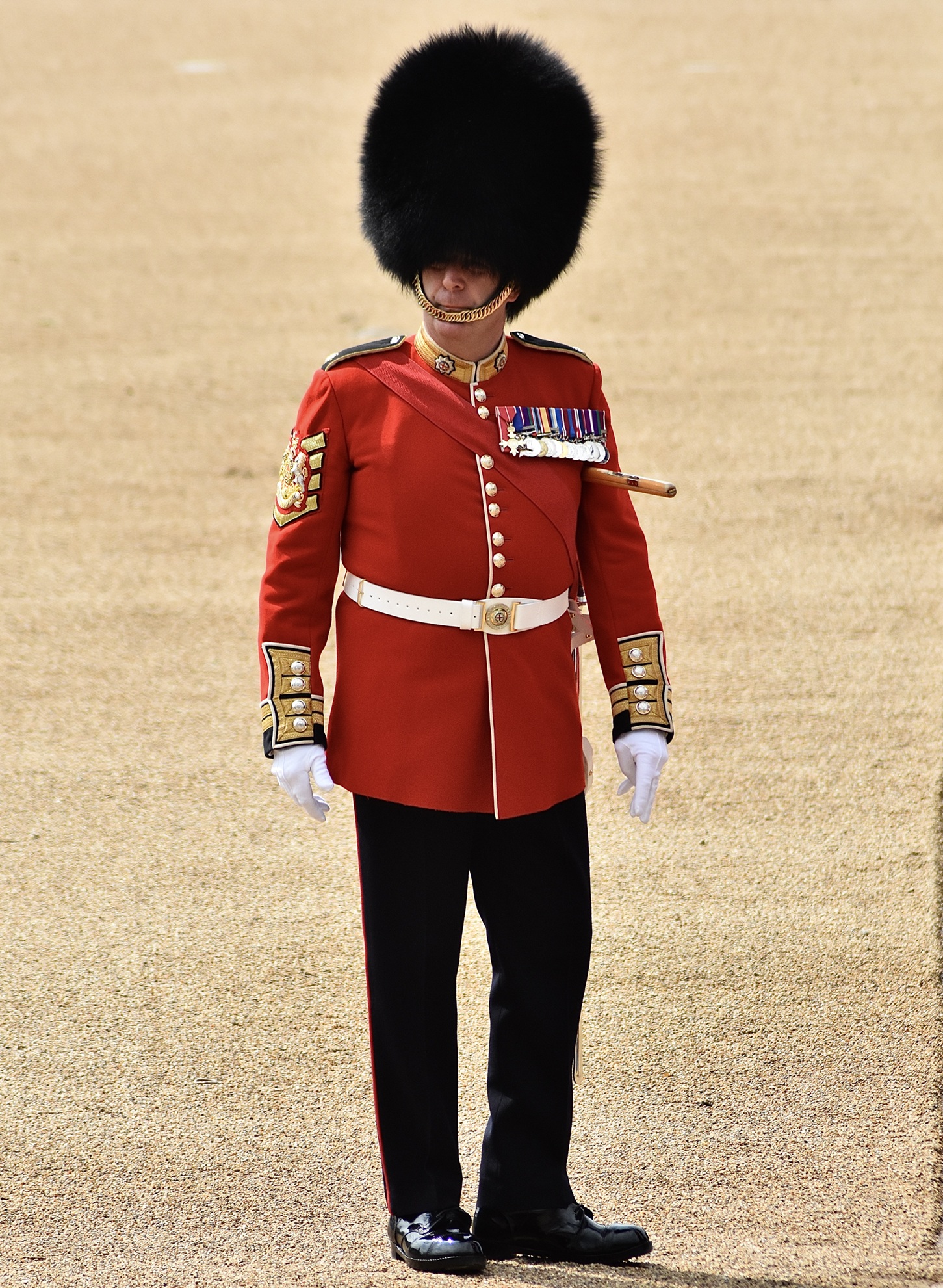
The man in charge. Warrant Officer First Class (WO1) Garrison Sergeant Major (GSM) Andrew “Vern” Stokes was keeping an experienced eye on things. The GSM London District is always a guardsman, holds one of the four most senior WO1 appointments in the British Army and has military ceremonial responsibility for all important state occasions. Stokes’ remarkable army career is outlined here.
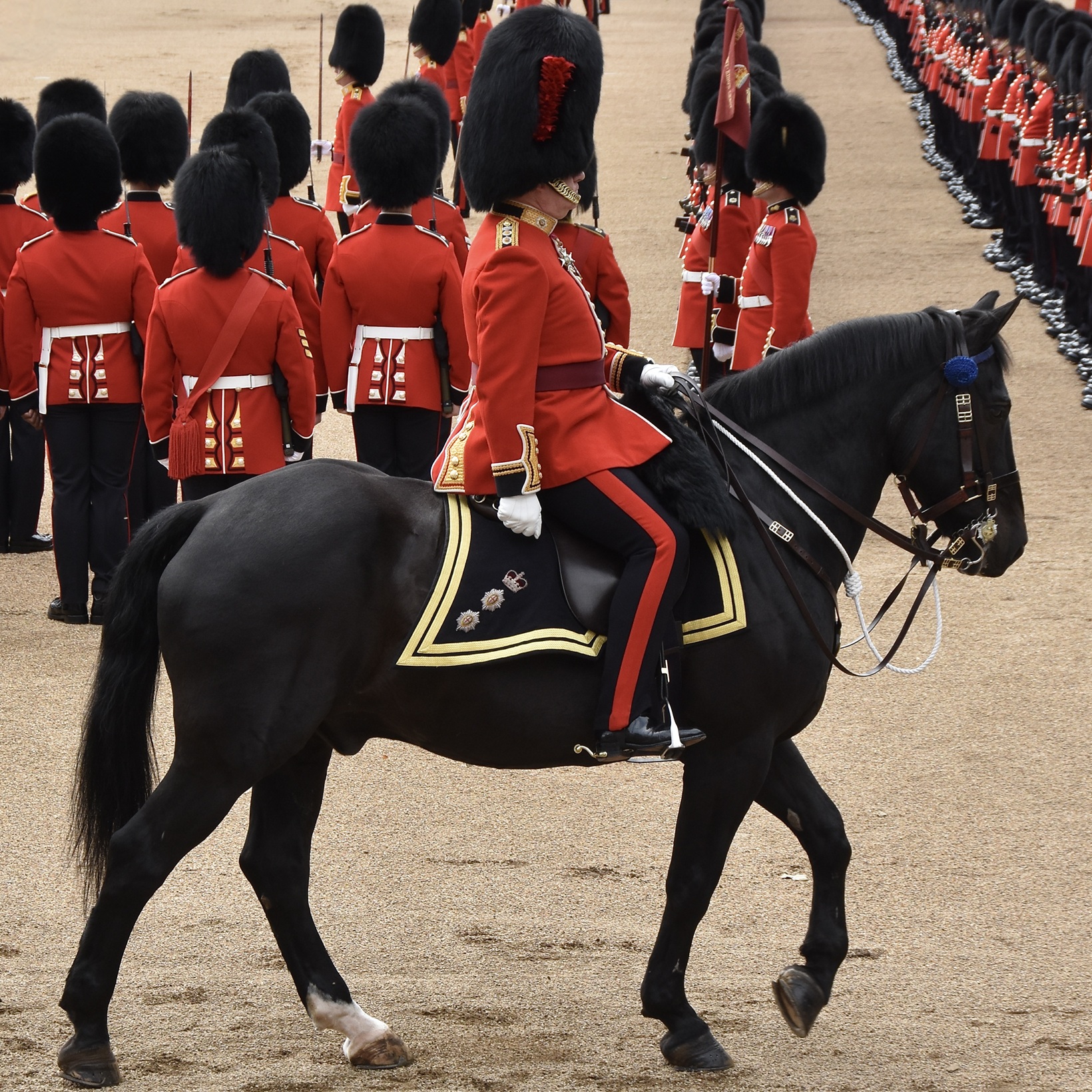
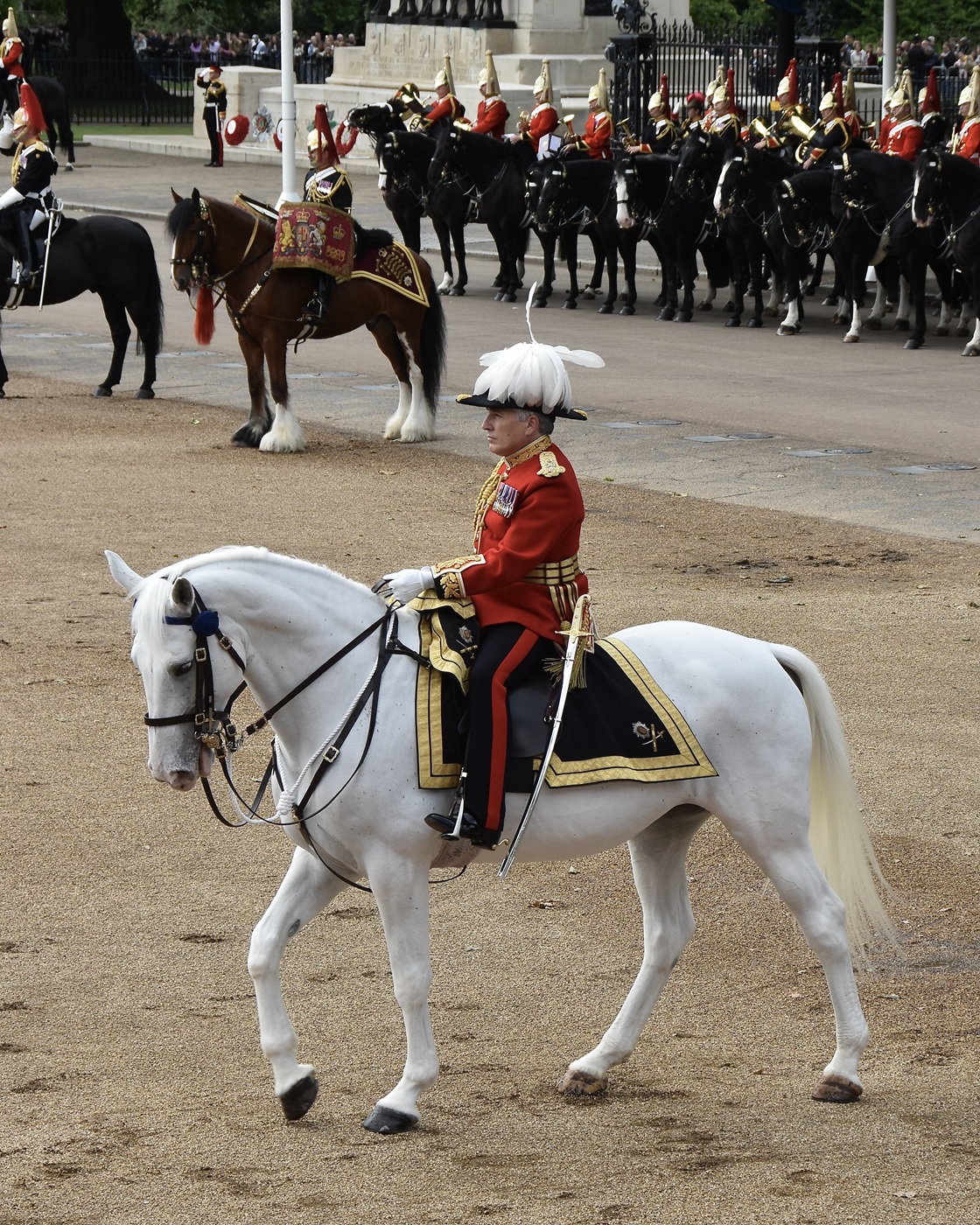
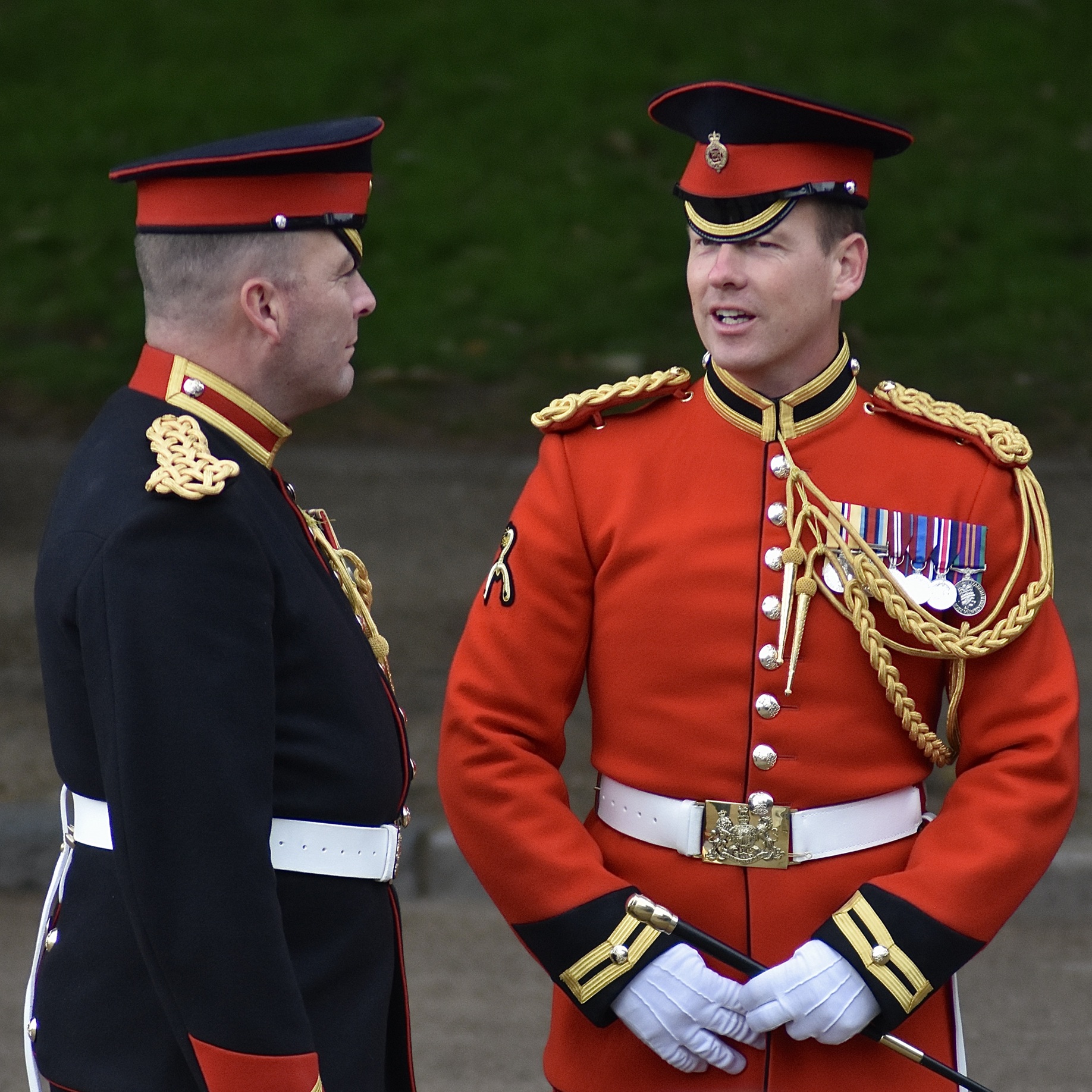
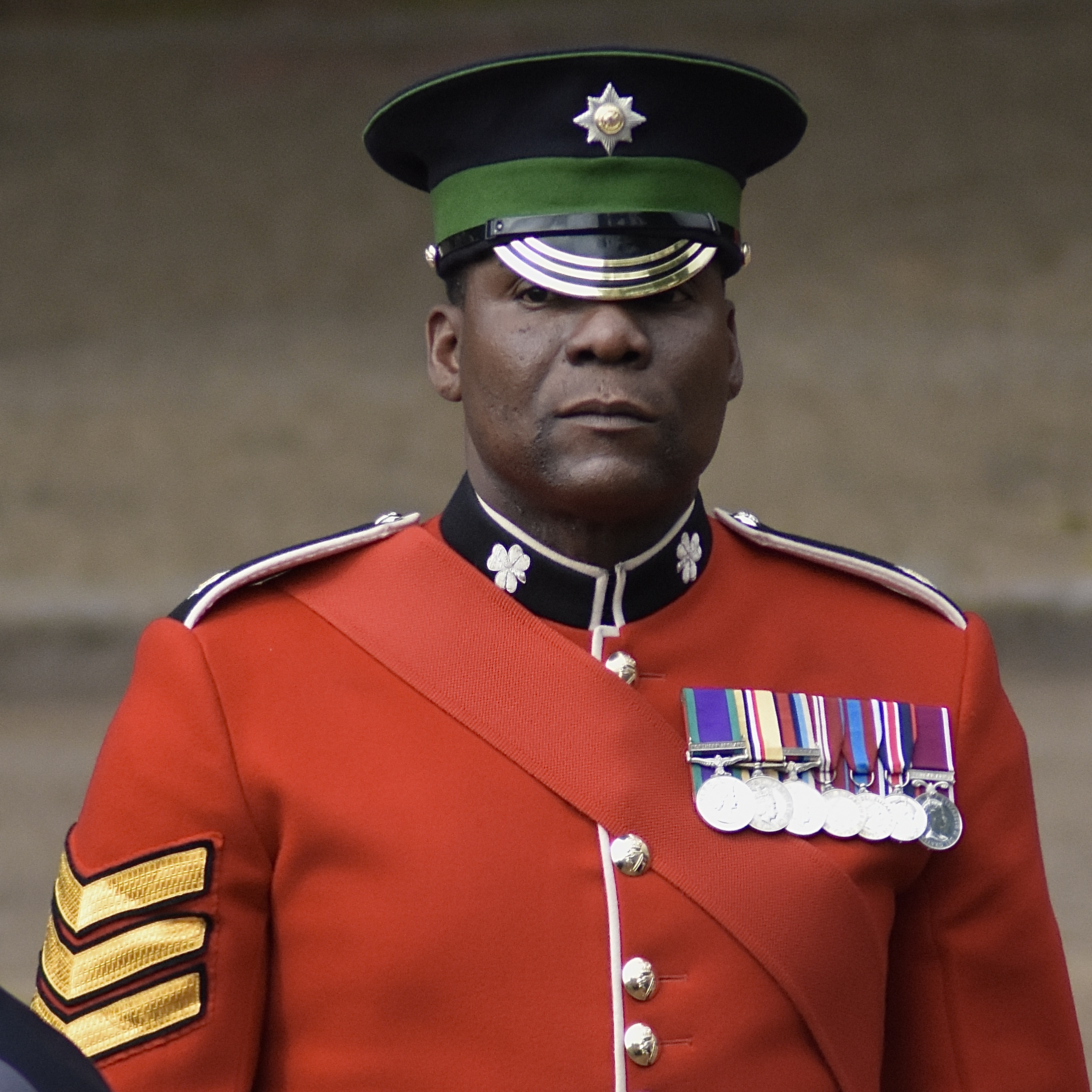
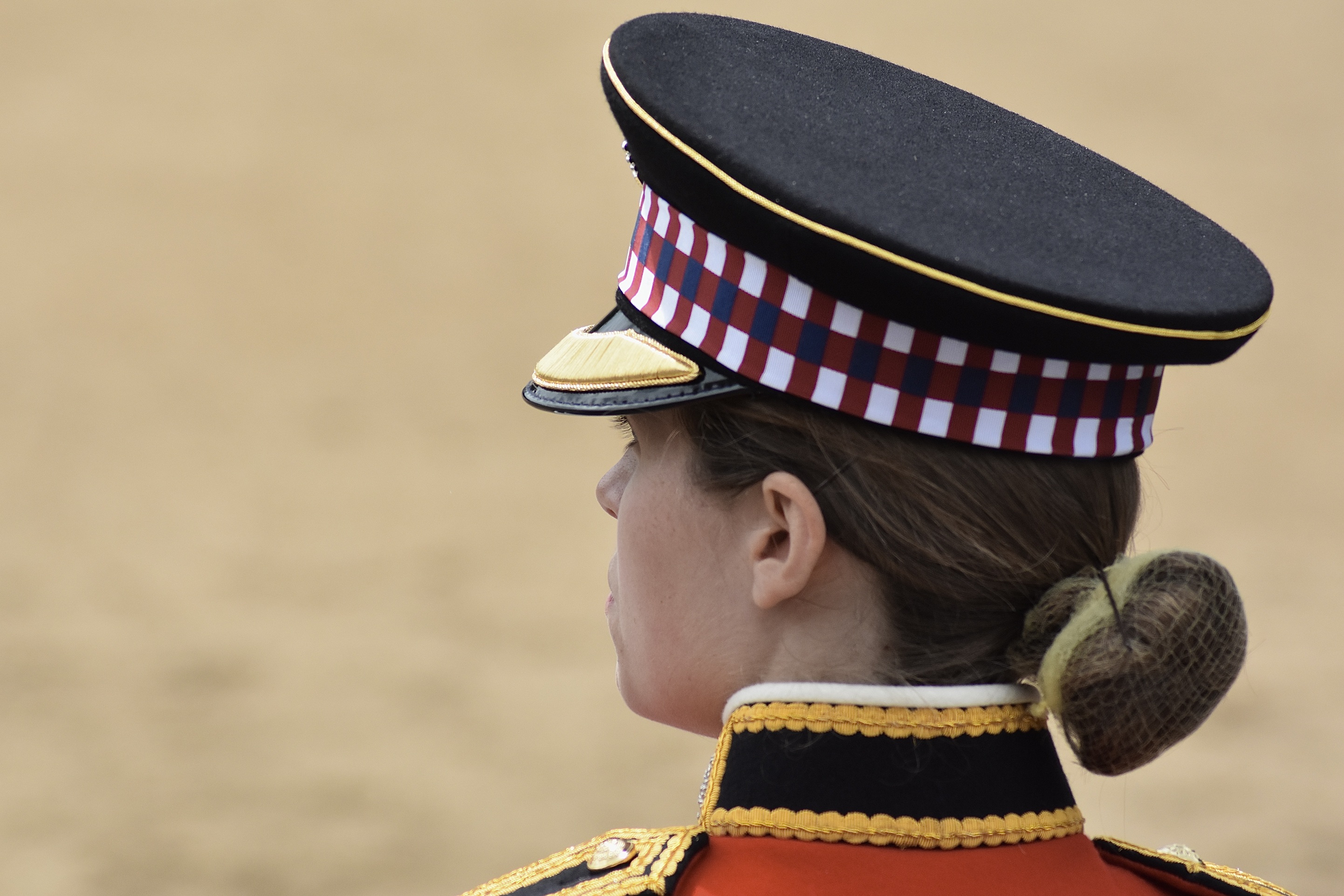
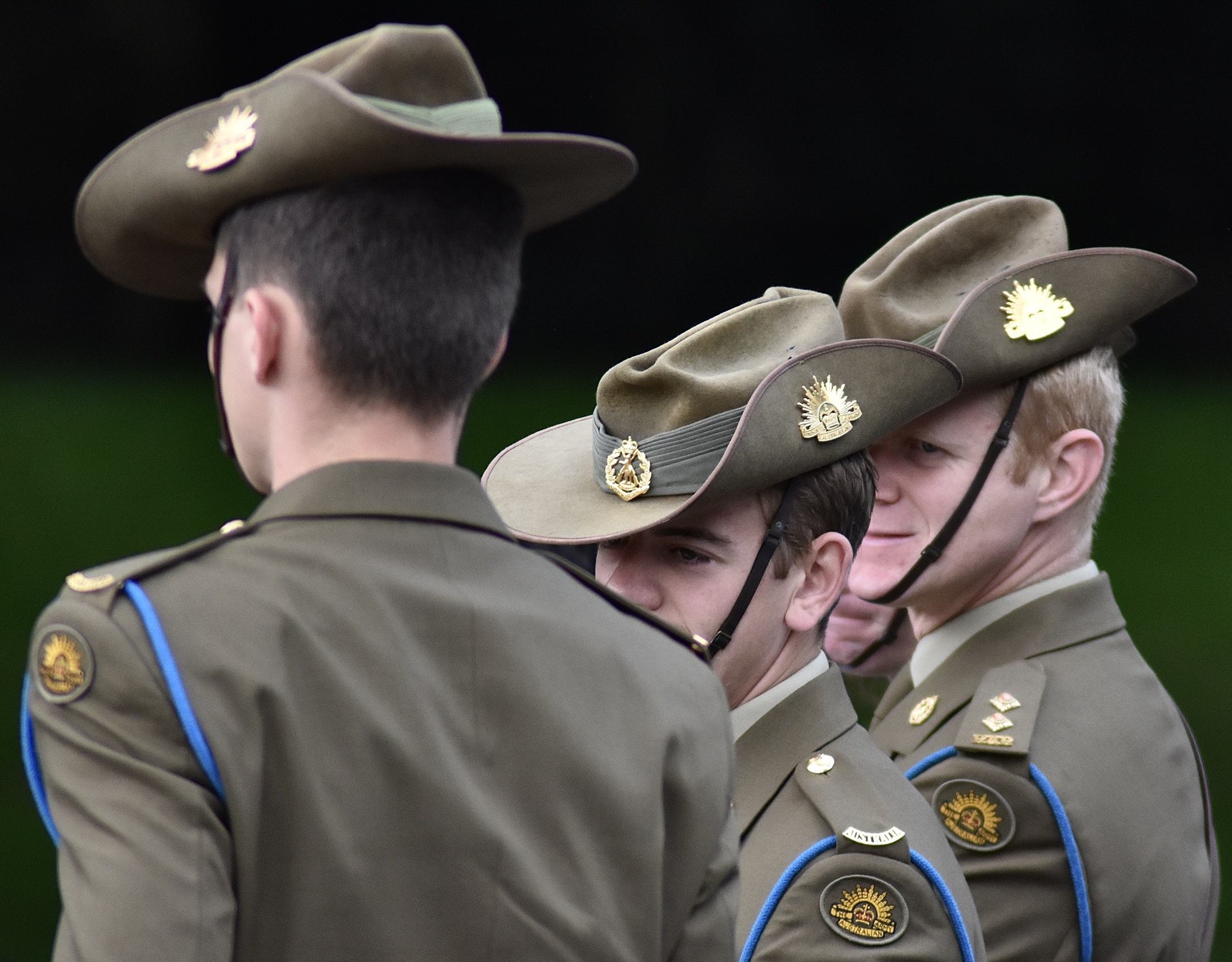
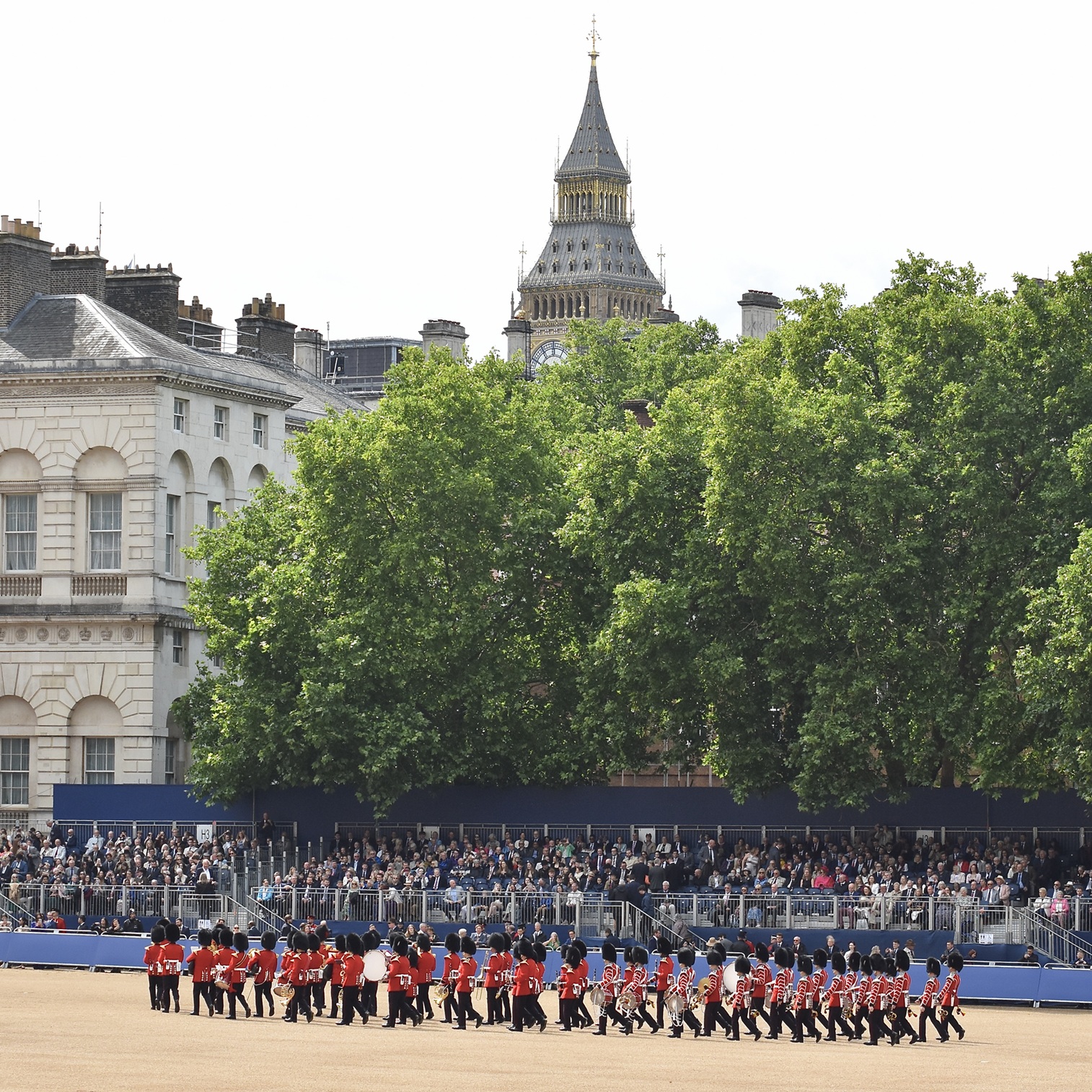
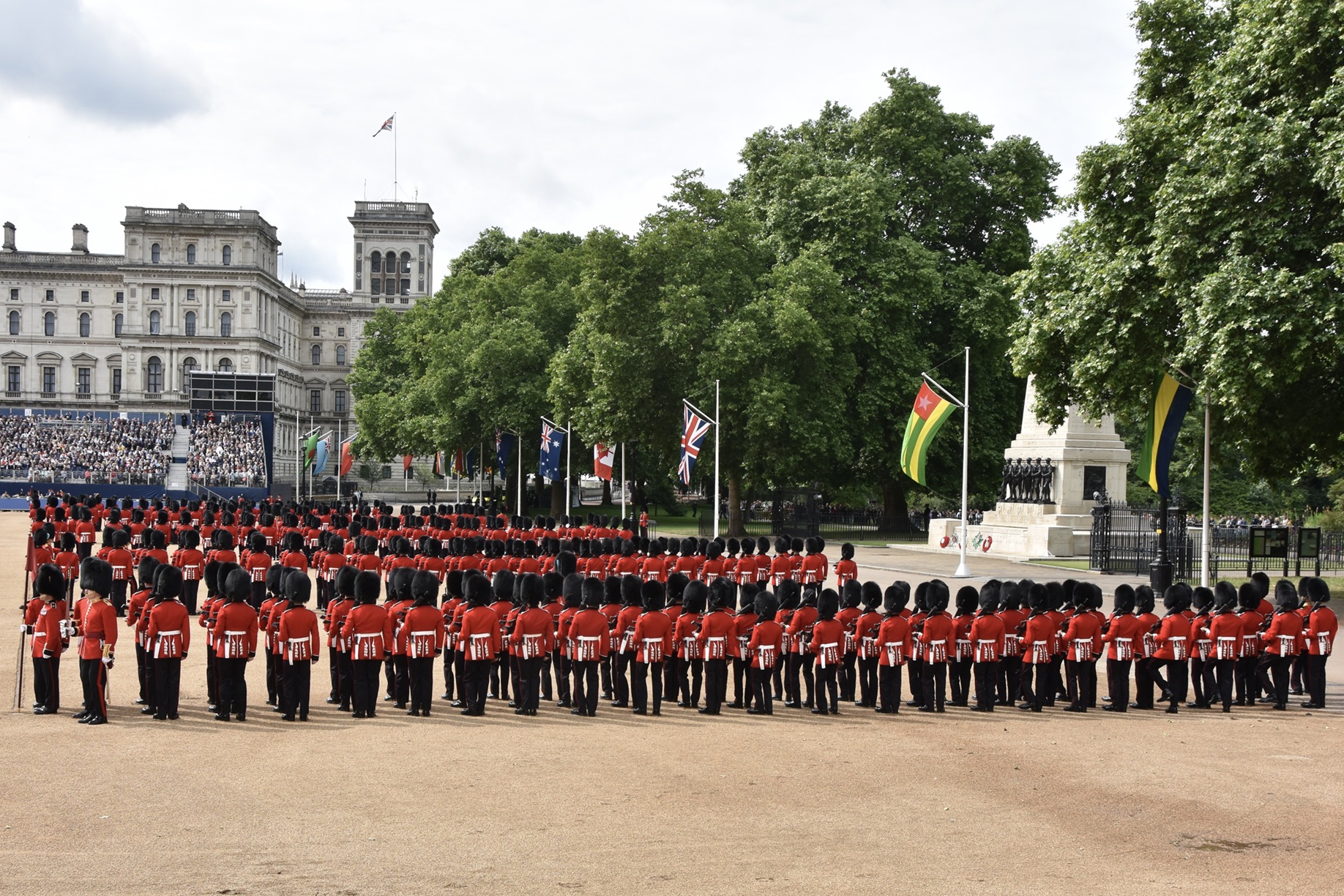
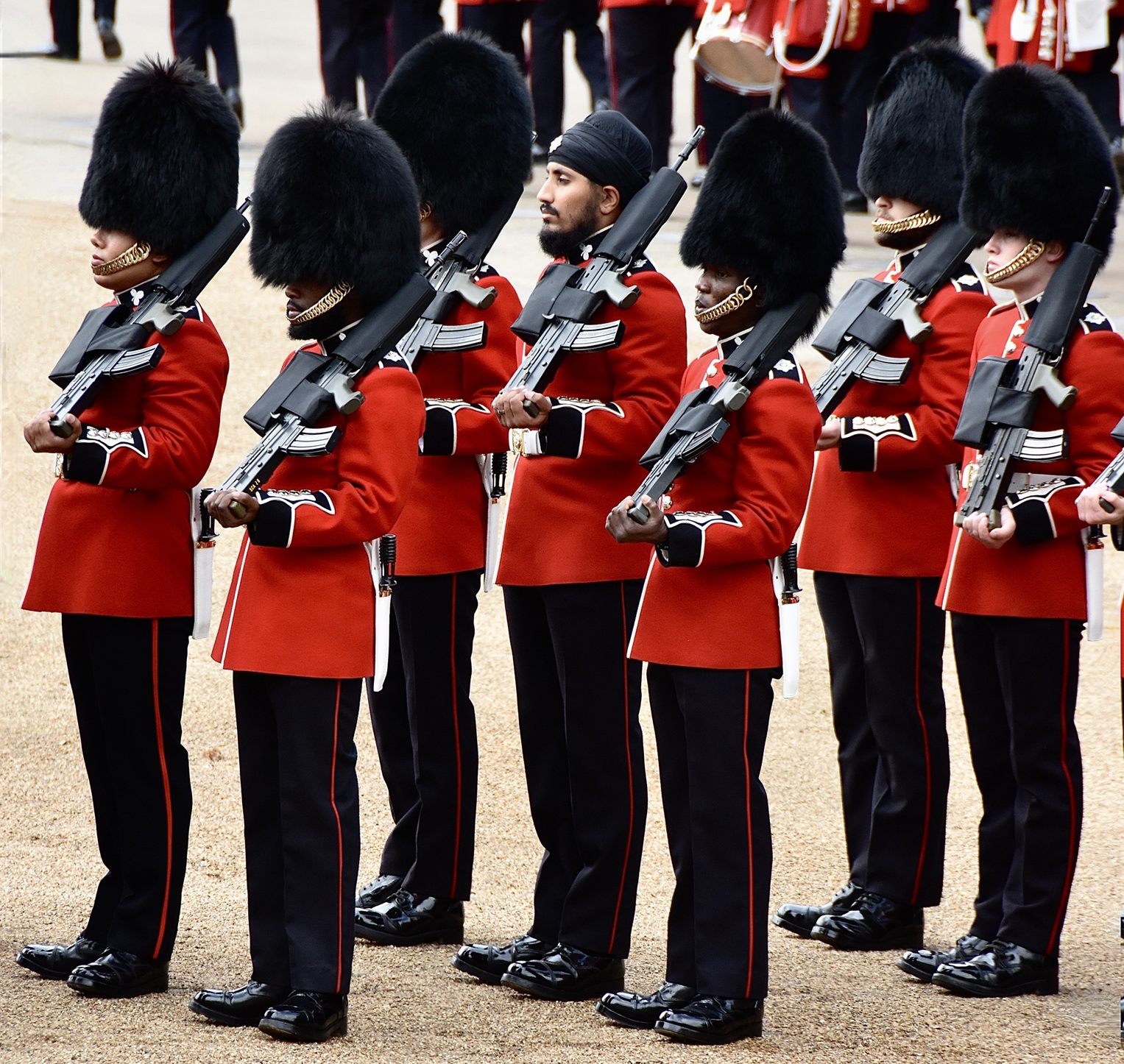
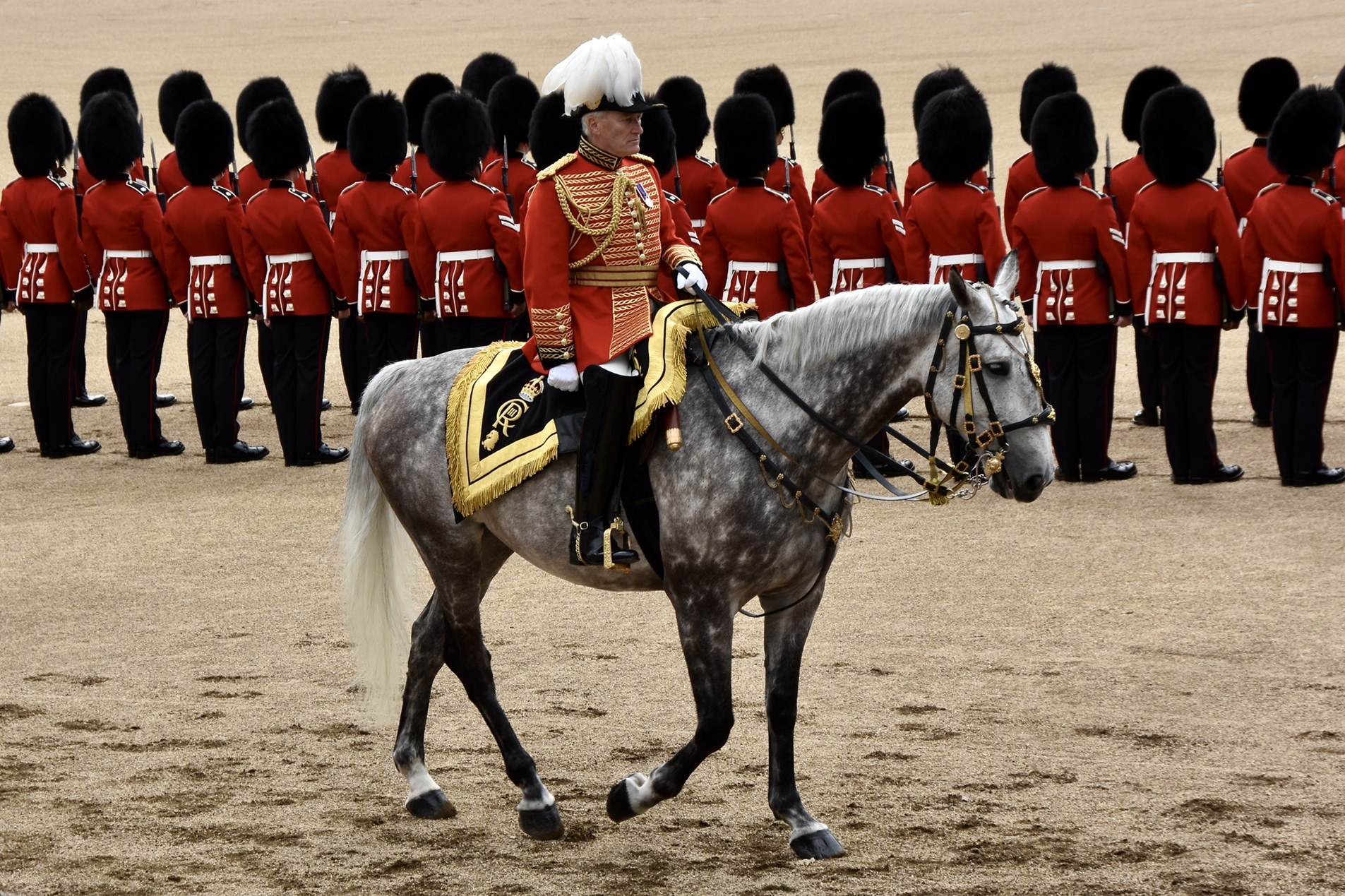
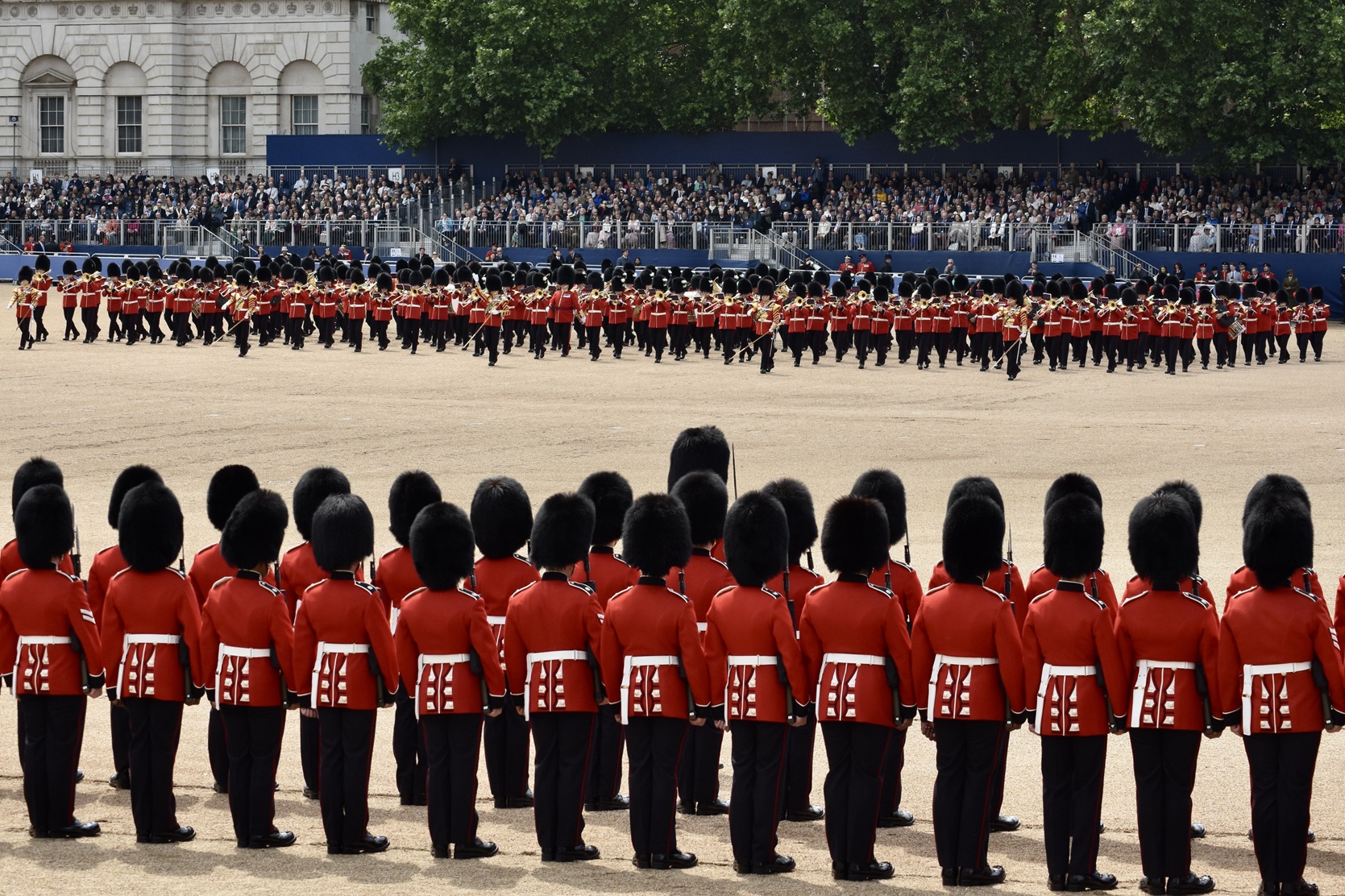
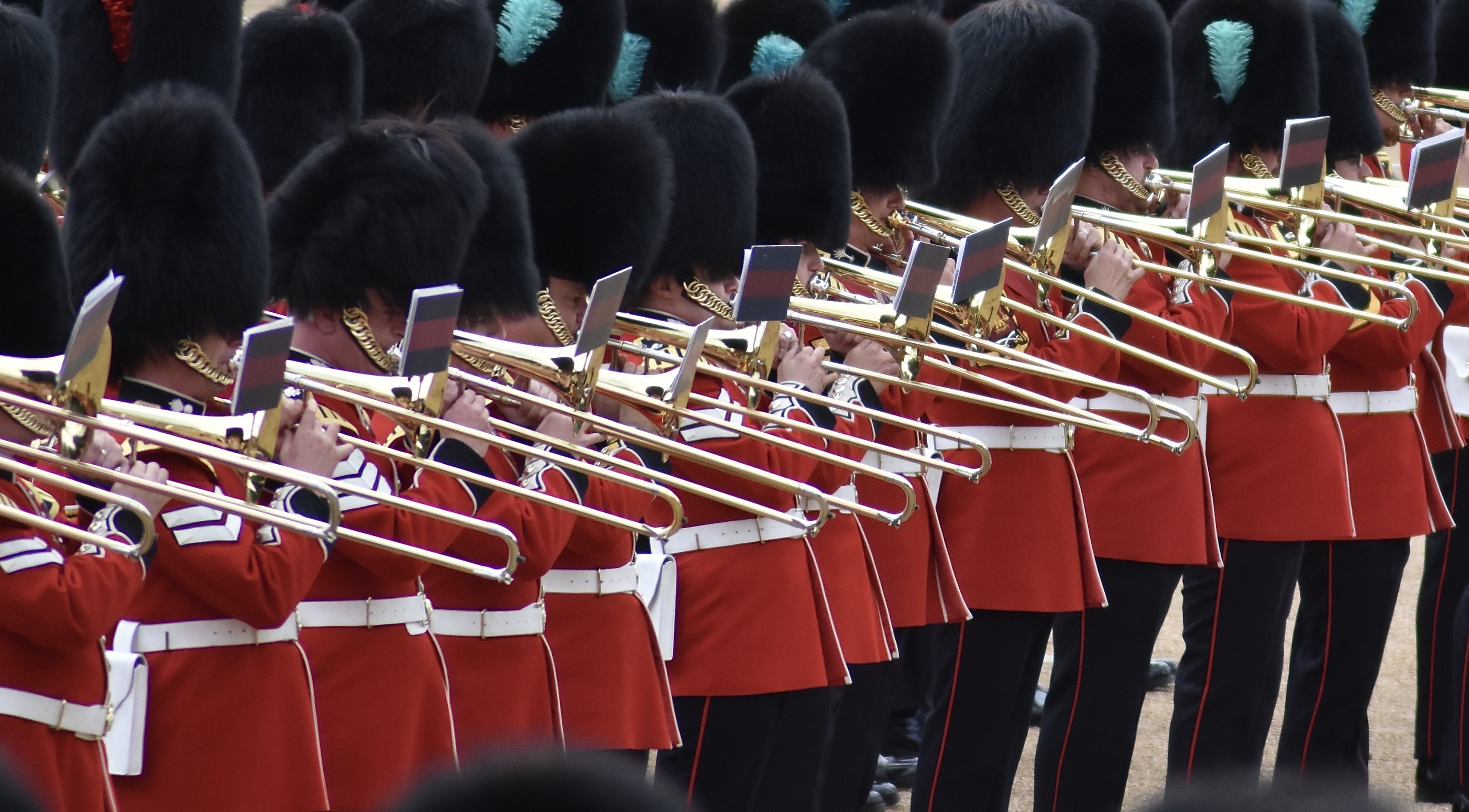
The Colonel whose review it is, Lieutenant General Sir James Bucknall, Colonel of the Coldstream Guards. The regiment is the only one in the Household Division without a Royal Colonel. Sir James wears the insignia of a colonel despite the fact that he is a higher ranking lieutenant general. Major General James Bowder, General Officer Commanding, London District and the Major General commanding the Household Division.Non-commissioned officers (NCOs) of the Blues & Royals (left) and the Life Guards (right). NCOs and warrant officers of the Household Cavalry do not wear rank insignia on their full dress uniforms. Rank is indicated by a system of aiguillettes (the ornamental braided cord with metal tips).A full sergeant of the Irish Guards.An ensign (Guards’ argo for 2nd Lieutenant) of the Scots Guards.Guests from the Royal Australian Regiment look on.Some of the 300 musicians from the Massed Bands of the Household Division. Also taking part were over 1350 soldiers of the Household Division and King’s Troop, Royal Horse Artillery. Behind the trees is the garden of 10 Downing Street and peeking above the trees is the parliamentary clocktower commonly called “Big Ben.”There were (I think) six companies of Foot Guards (each of three officers and 71 guardsmen) on parade. Each had its initial position marked by a Company pennant, one of which is being put into place here under the supervision of GSM Vern Stokes (right).Five of the six companies, Number 2 Guard to Number 6 Guard, are lined up here. Number 1 Guard is out of the picture on the left as it is the battalion trooping its colour, the Escort For The Colour.Sikh guardsmen are allowed to wear turbans in place of bearskins. Sikhs have long enjoyed a reputation as excellent soldiers and, in colonial times, they were enthusiastically recruited into the British Indian Army.
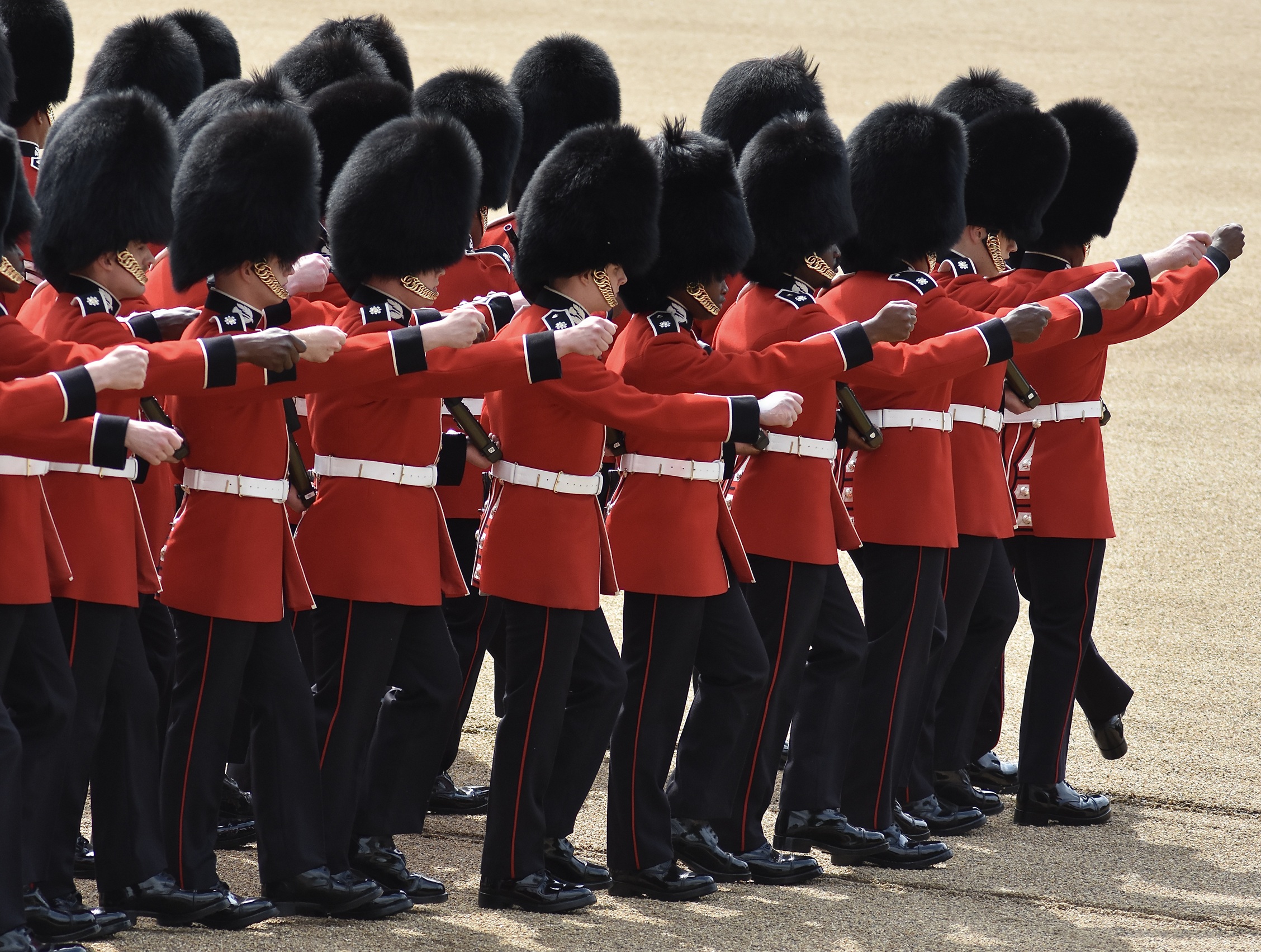
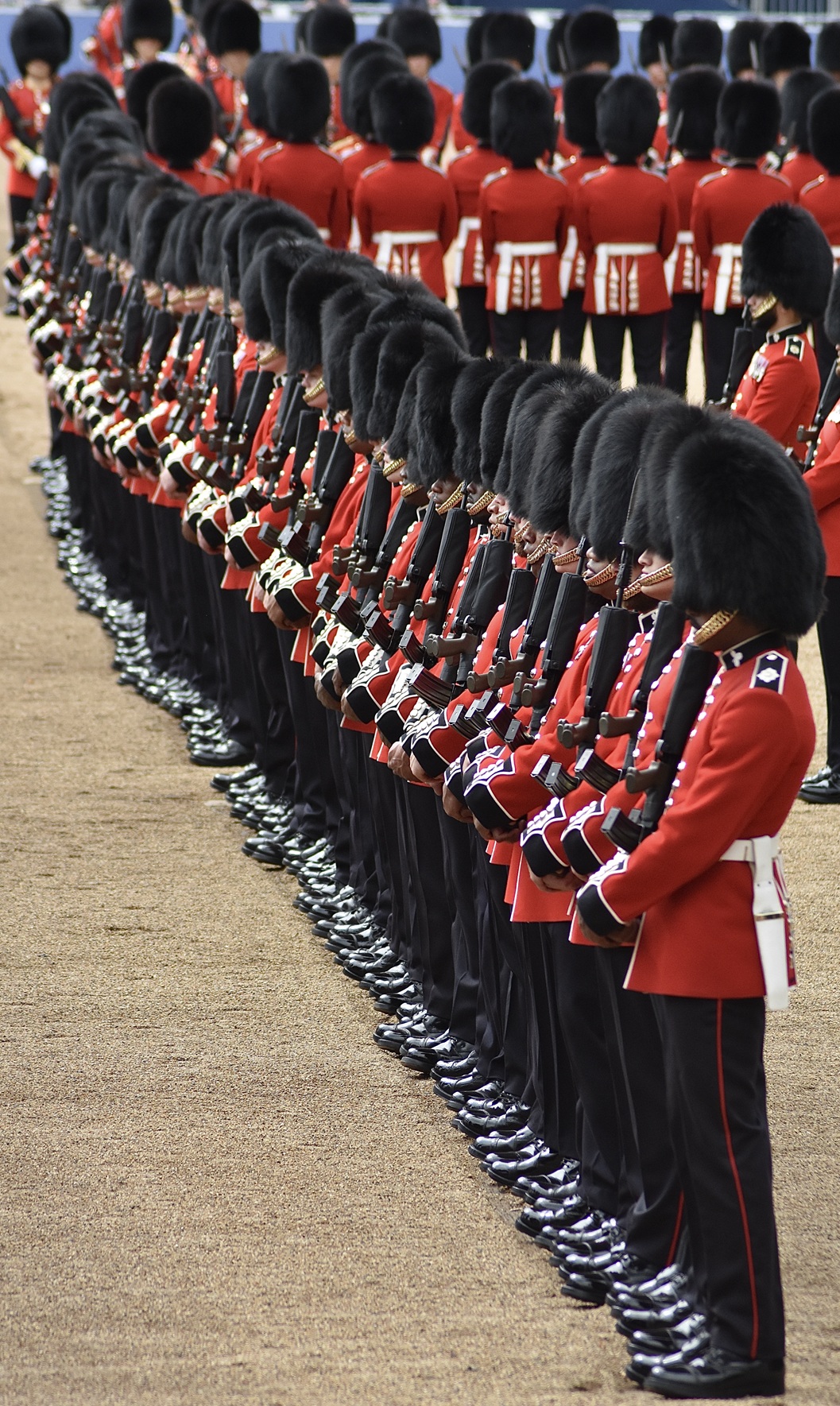
As shown in the three pictures below, the companies then manoeuvred to line two sides of the parade ground in an “L” shape as in times past when they formed a defensive “square” in battle.
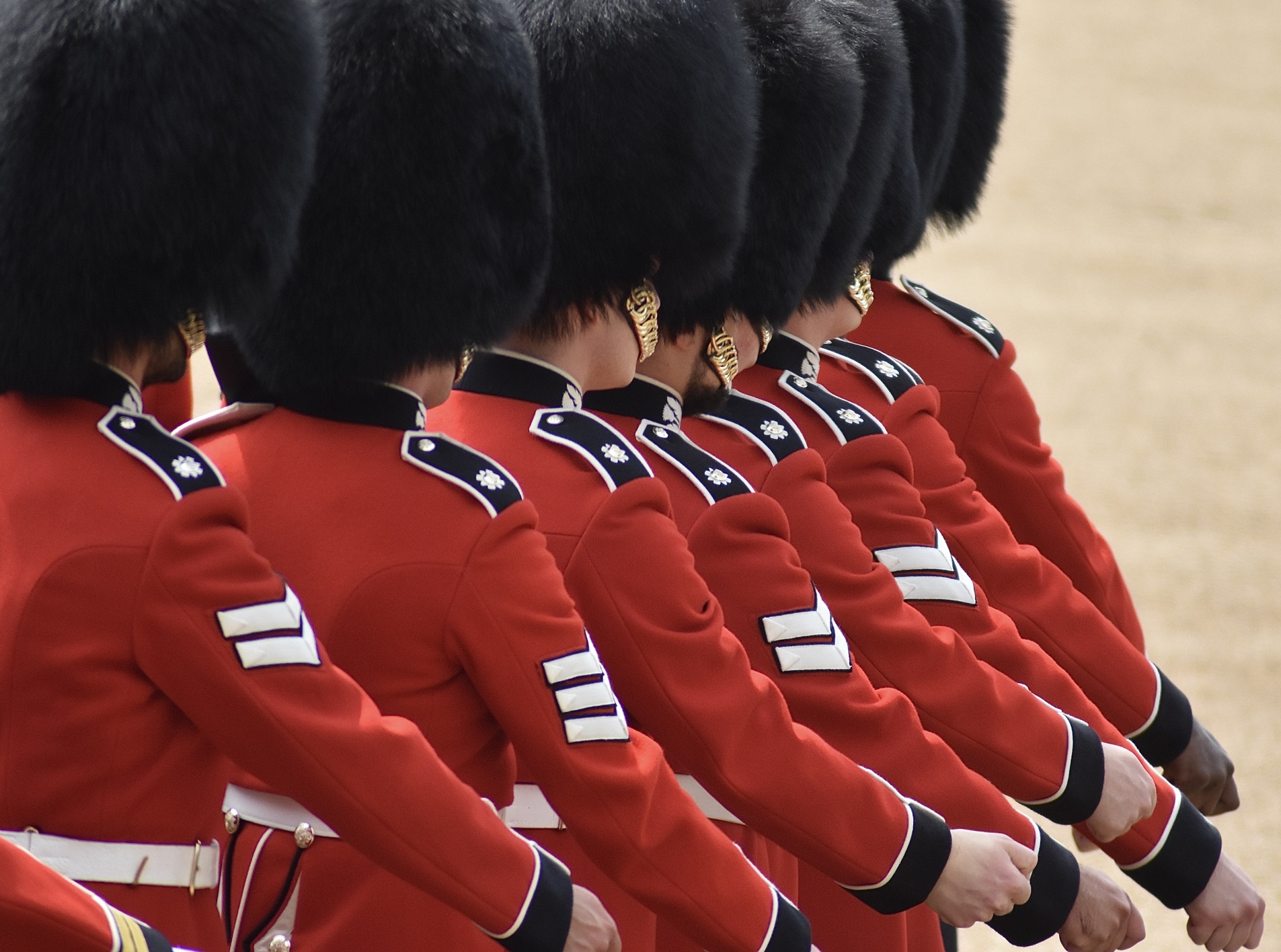
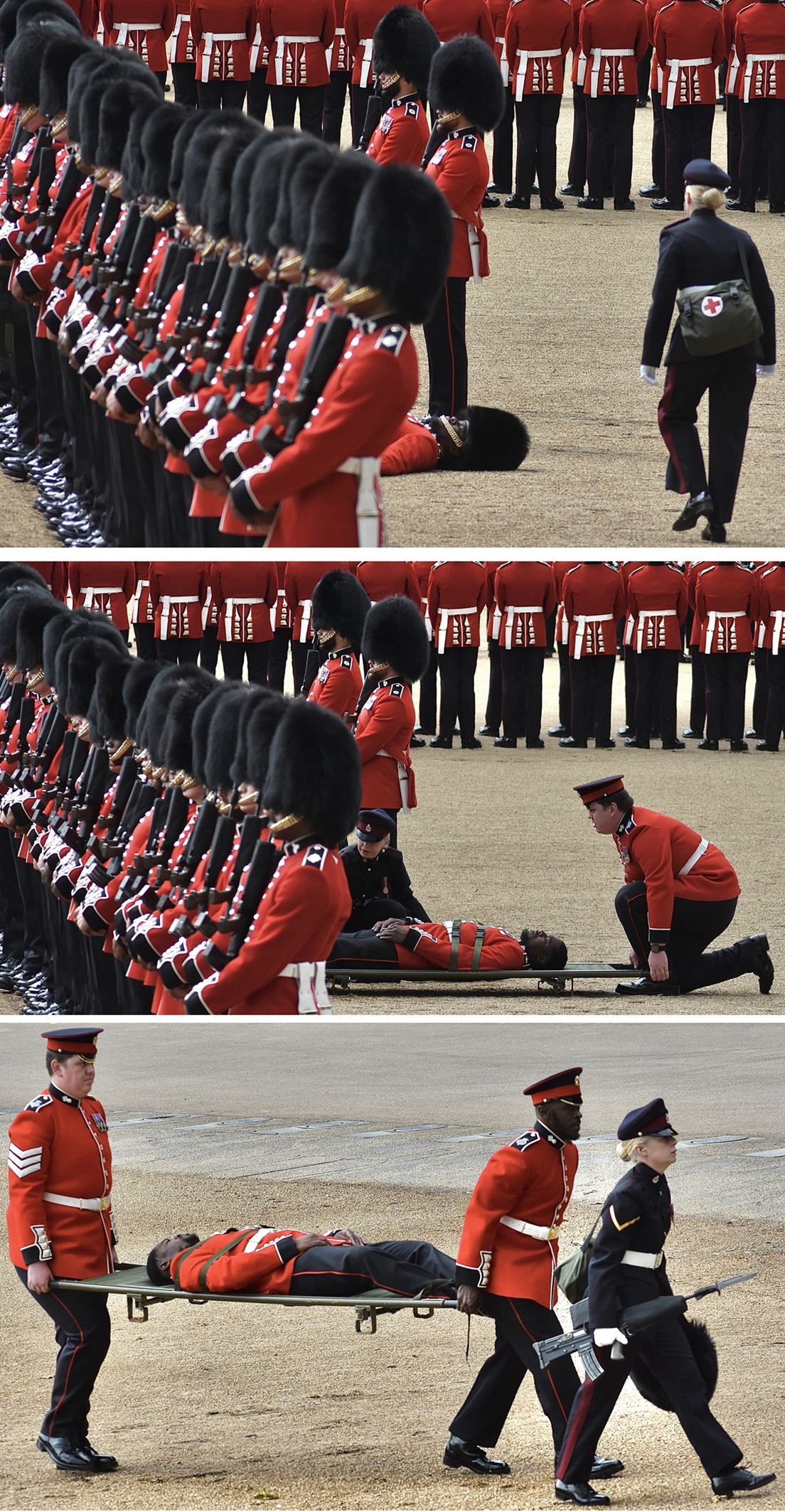
The leading guardsman starts to execute a turn.Scots Guards. In the Guards, lance sergeants (equivalent of a corporal) wear three white chevrons, lance corporals wear two.The “L” formation. The massed bands are in the foreground.
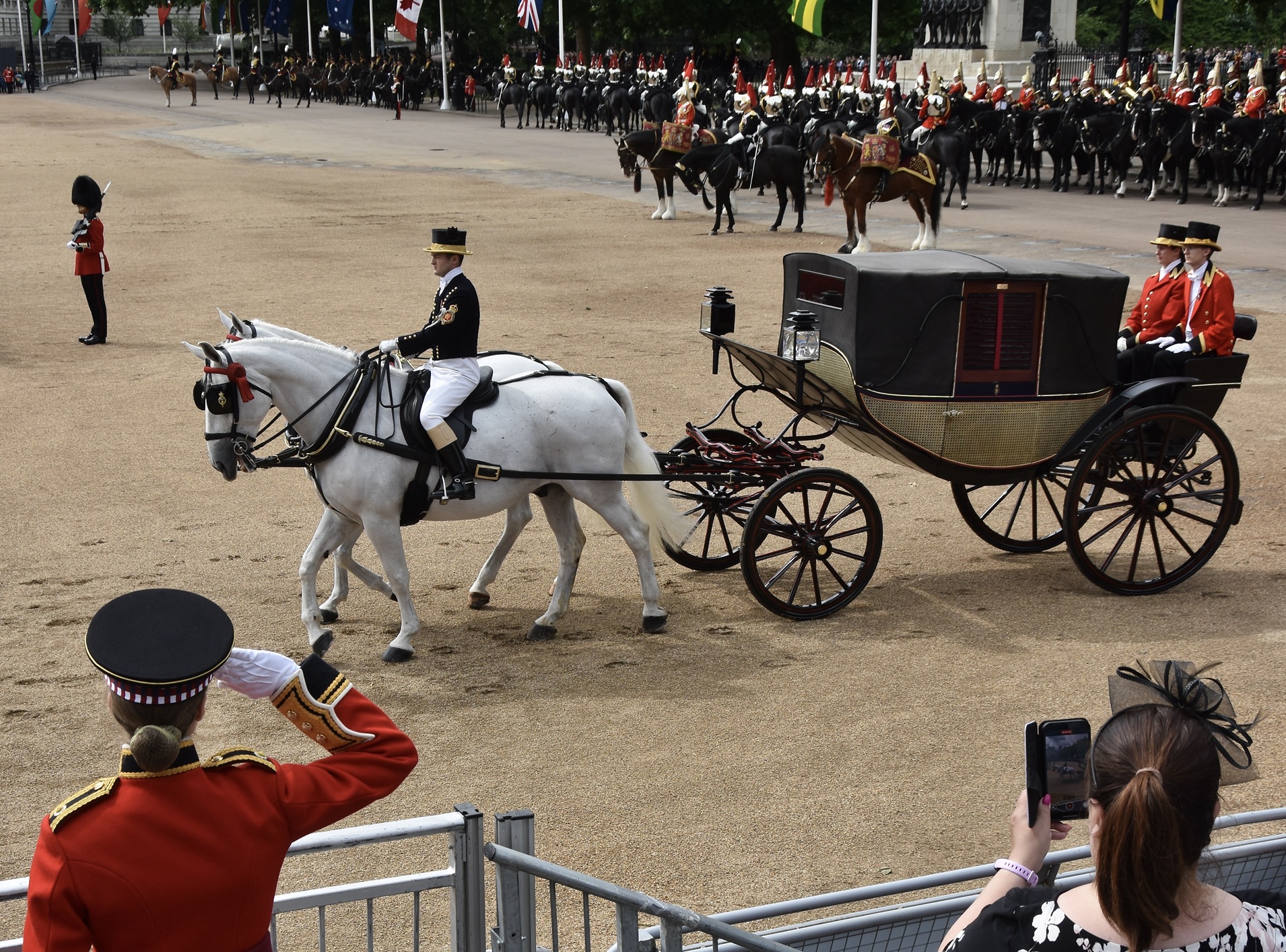
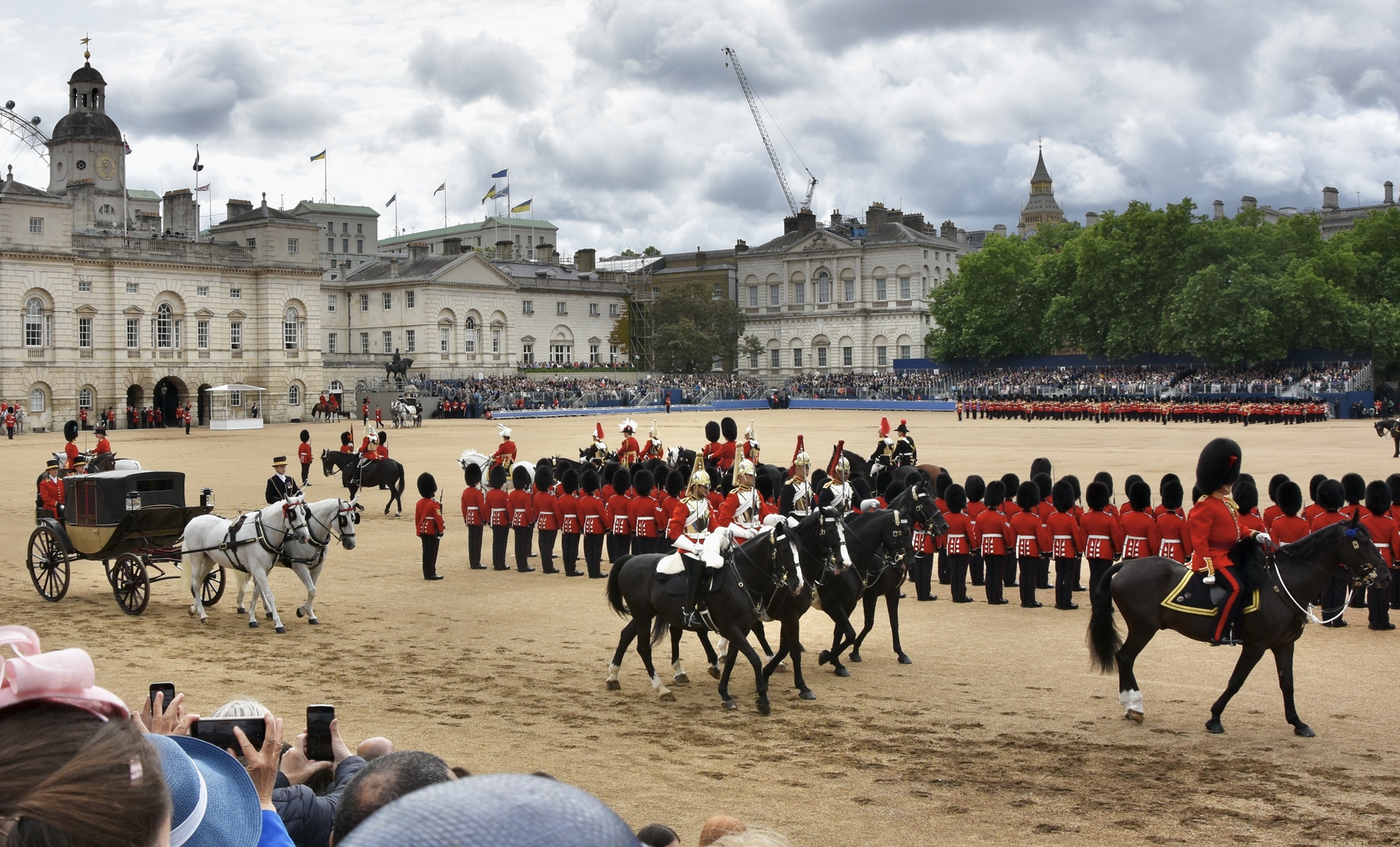
The arrival of the Royal carriage (empty in this rehearsal).
For the first time this year, King Charles, who is still receiving treatment for cancer and is now 76, is not expected to ride horseback at the parade and will travel in a carriage for the procession from Buckingham Palace to Horse Guards Parade and back. If it is not raining, the Ascot Landau shown above will be used but its double hoods will be open as in this picture.
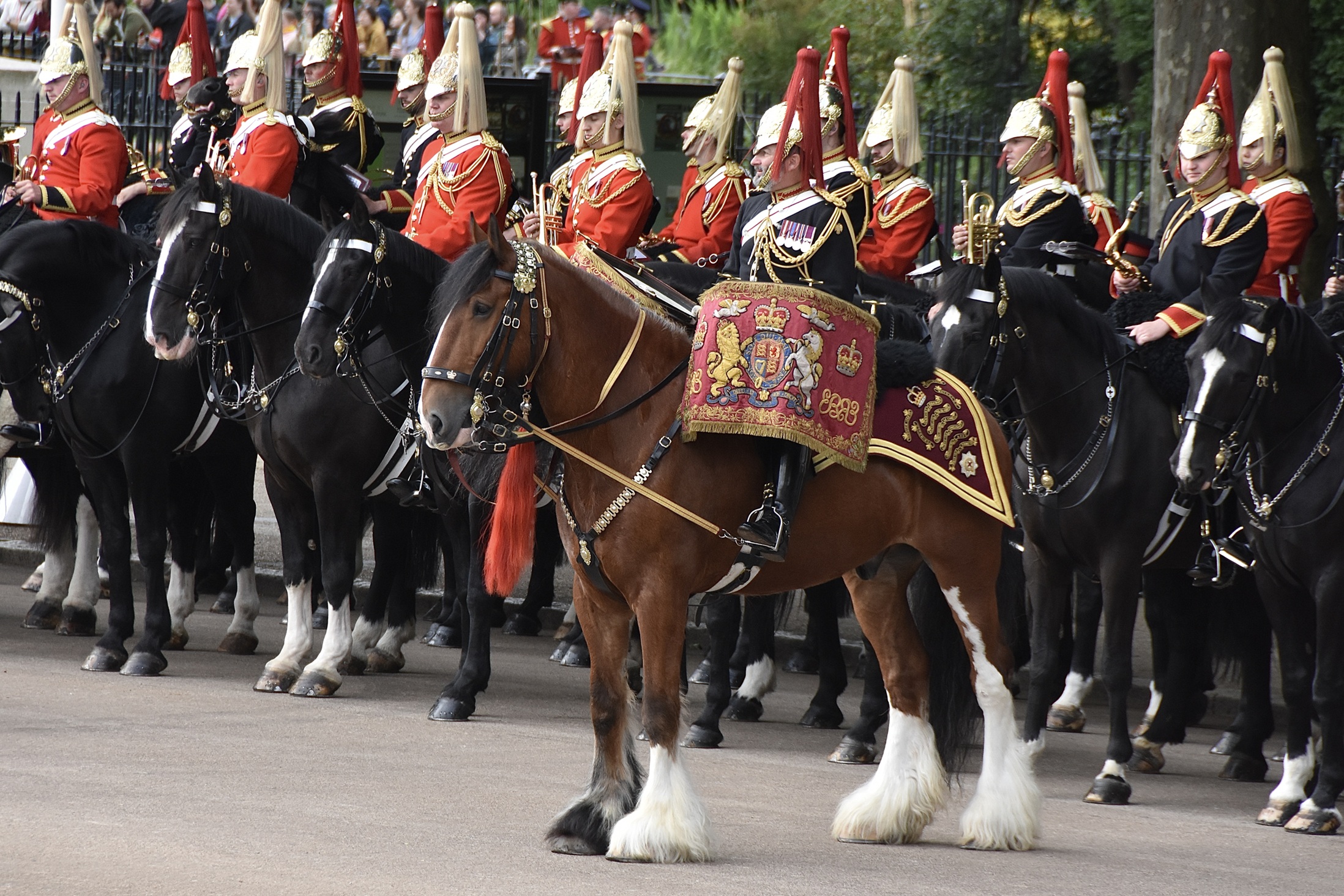
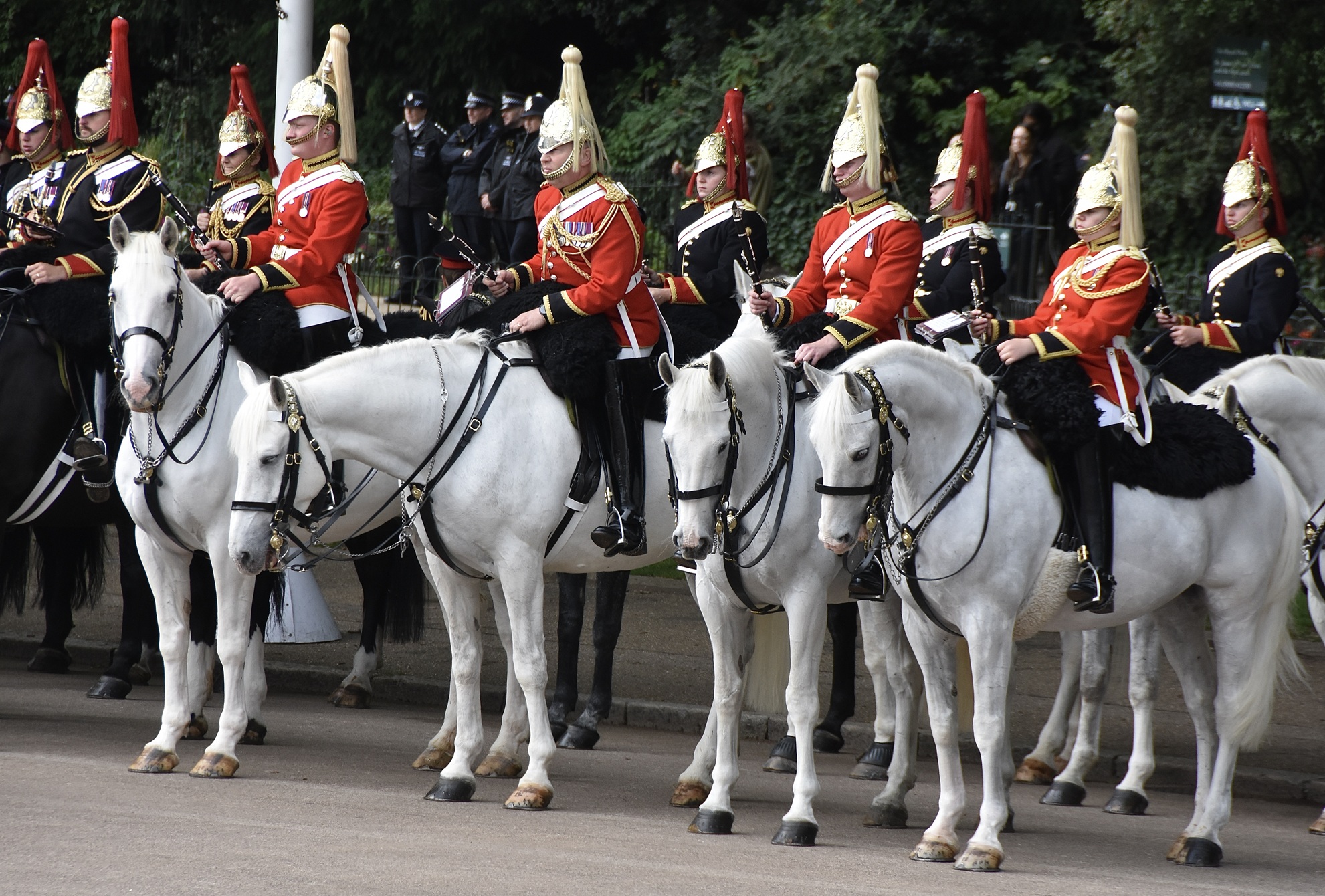
For much of the ceremony, the Household cavalry and the King’s Troop, Royal Horse Artillery, are patiently lined up at the St James’ Park end of the parade ground.
The horses used by the Household Cavalry are known as Cavalry Blacks. They are typically Irish-bred with thoroughbred and Irish Draught breeding and are selected for their size, conformation and temperament. The large and powerful drum horses are usually Shire or Clydesdale breeds. They lead the Mounted Band of the Household Cavalry, carrying two solid silver kettle drums and a drummer.The Life Guards are in red, the Blues & Royals in Blue. Trumpeters ride “grey” (white) horses, a colour chosen to help mark them out in the chaos of battle where the trumpeters would have communicated orders.
The Colonel, followed by other senior officers, then carried out the Inspection of the Line.
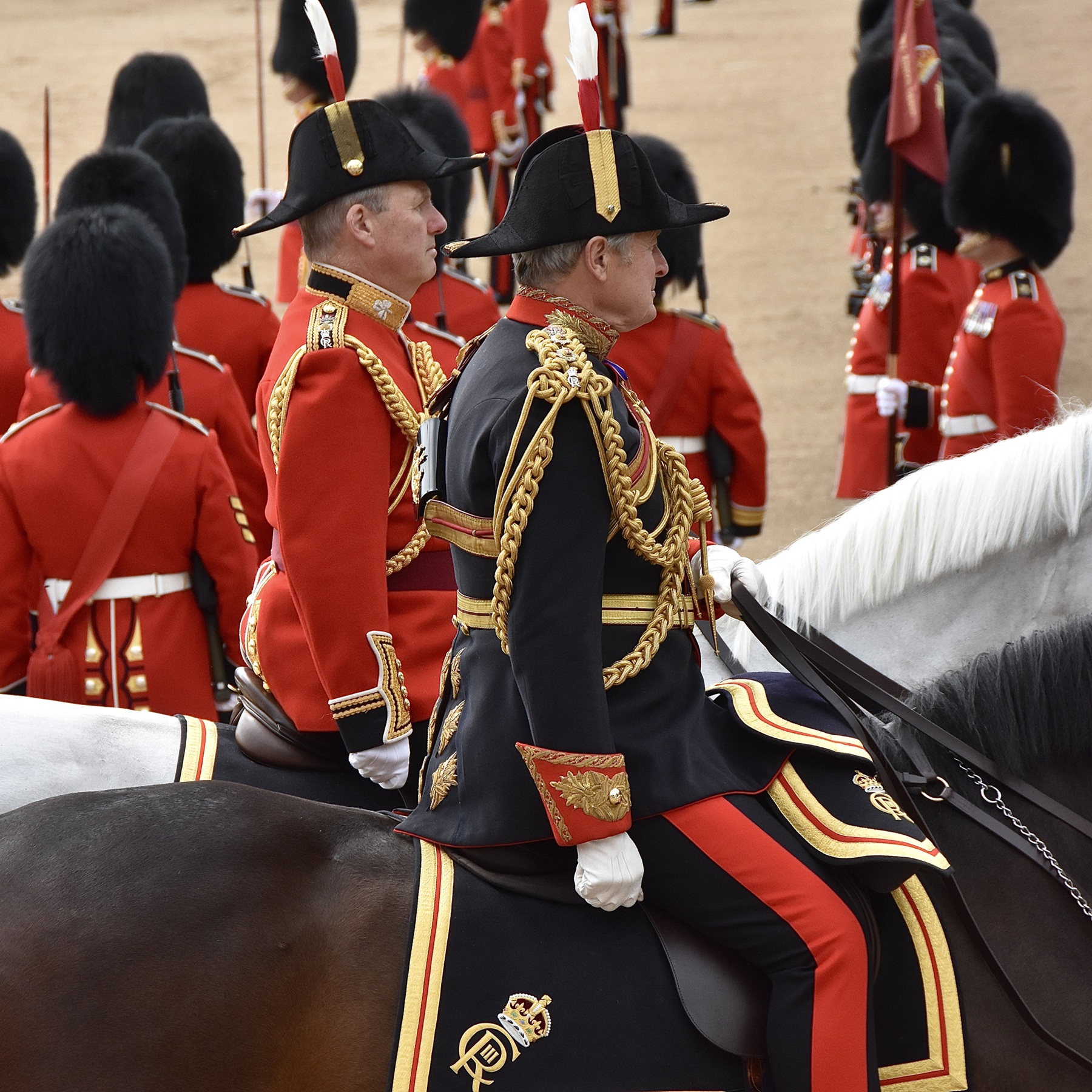
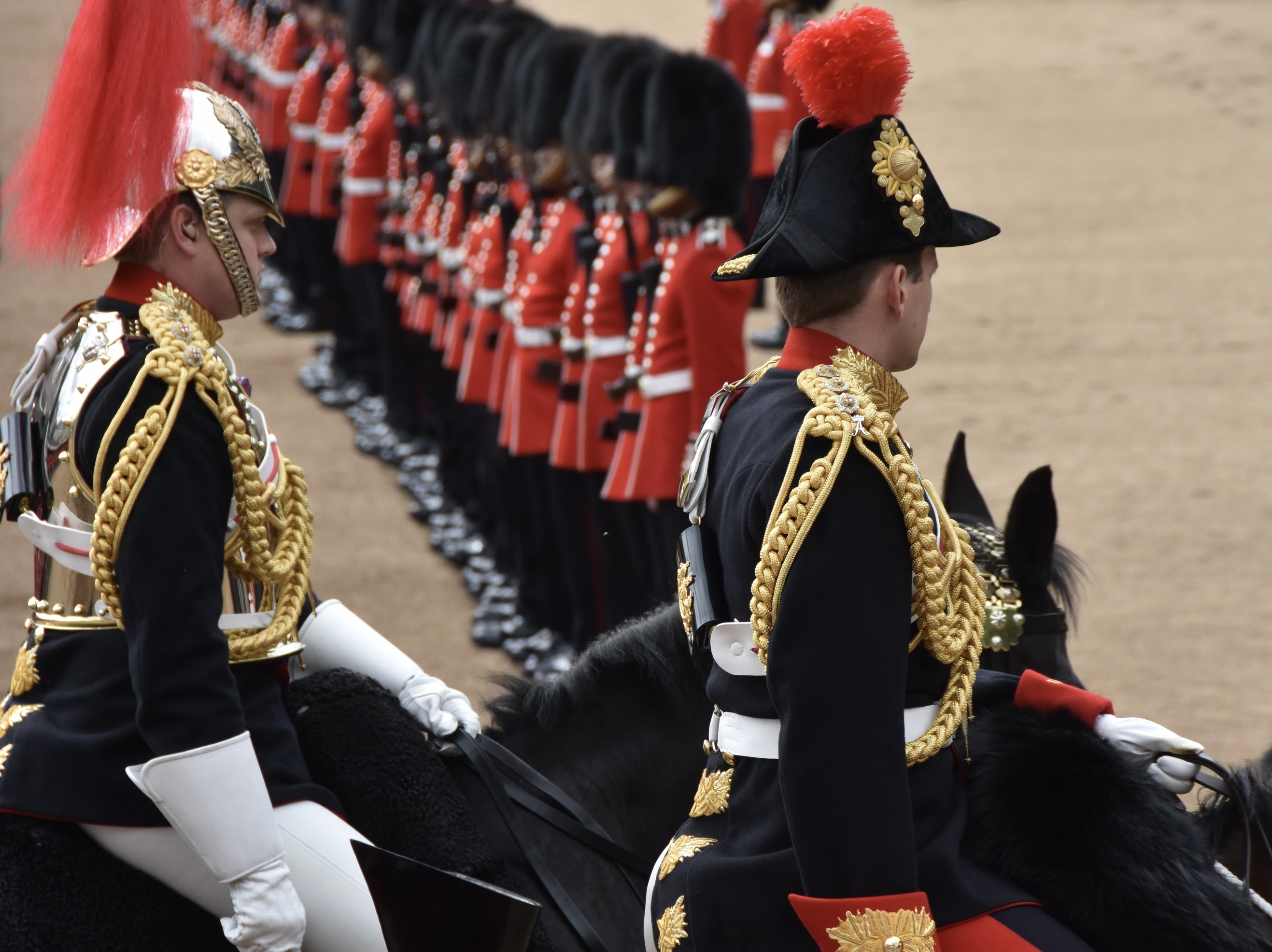
The Royal carriage, minus Royal occupants on this occasion. Clearly the King, not the Colonel, will carry out the inspection on 14 June.Baron Ashton of Hyde, The Master of the Horse, one whose primarily ceremonial role is to attend the sovereign on state occasions, especially when the monarch is on horseback.In red, a lieutenant colonel of the Irish Guards and, in blue, a colonel of the Blues & Royals.Captains of the Blues & Royals. I do not know why the officer on the right is wearing a bicorn hat.The Colonel then returned to the royal dias and remained mounted while the massed bands then “trooped” before him in slow and in quick time.Were there 76 of these?It was finally time to Troop the Colour.

 Hear The Boat Sing