
4 June 2025
By Greg Denieffe
Greg Denieffe learns a German proverb – Aller guten Dinge sind drei.
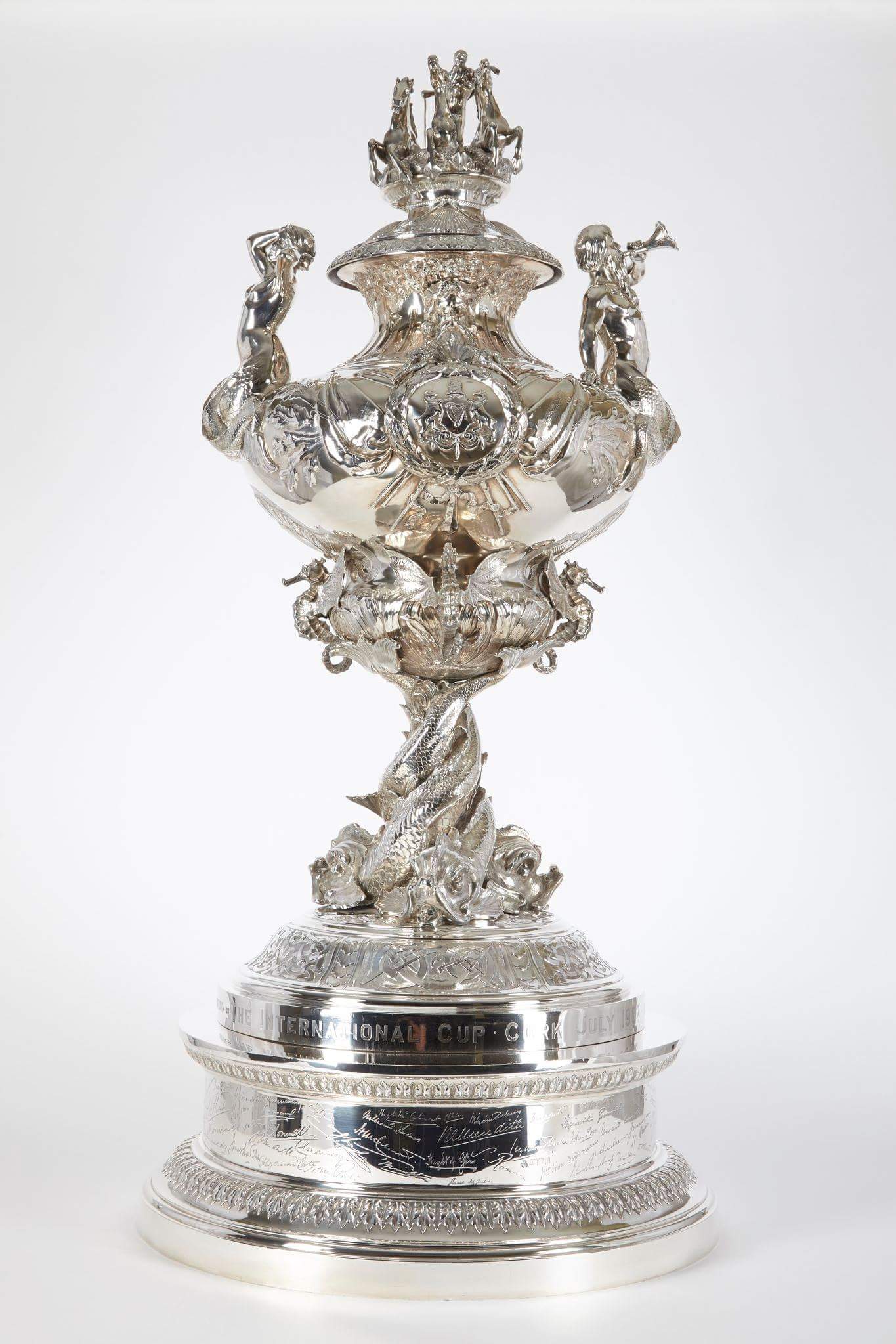
In January 2025, Matthias Zander joined the ranks of HTBS irregulars with a splendid piece about the 1902 Cork International Cup seen from the viewpoint of Berliner Ruder-Club, who were runners-up to Leander Club. Of all the photographs that Matthias included, the one that caught my eye was the trophy presented to the Berlin crew. It completed the search I began in 2014 when I first wrote about the event in a piece called The Two Poem Regatta.
When Leander celebrated their bicentenary in 2018, they gathered all their Cork silverware together, took them to Ireland and held a dinner in Dublin for their Irish members. I seized the opportunity to update HTBS readers in a piece called Reunited … and it Feels So Good.
Having failed to track down the Berlin Cup in the time between these two articles, I ended that piece as follows:
There is one last piece of silverware to be accounted for. In October 1902, Cork Regatta Committee presented a cup to Berlin R. C., that year’s losing finalists. Has it survived two world wars? Let us hope it can be found; Besser spät als nie.
I contacted Matthias, thanking him for completing the story and pointed him to the programme section of the Irish Rowing Archives. Several emails passed between us, including some with additional crew photographs that he had found in the archives of Berliner Ruder-Club.
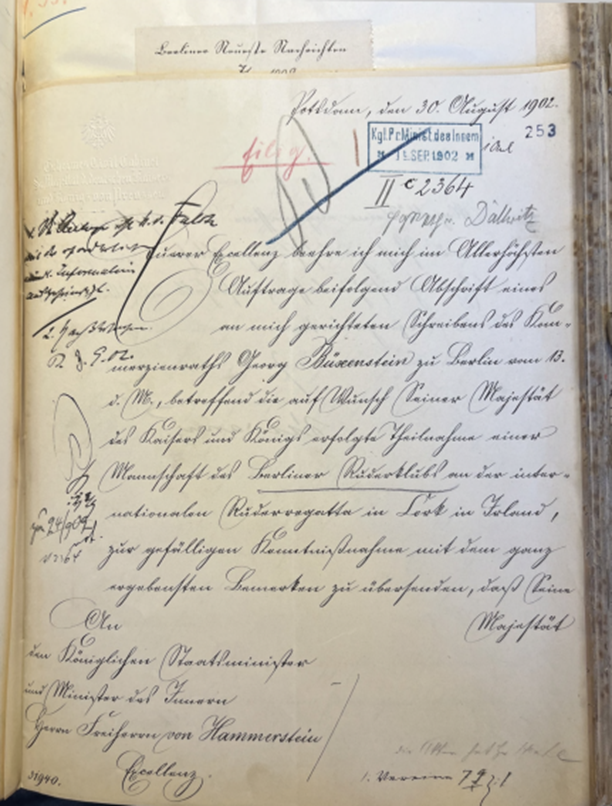
But Matthias still had one more trick up his sleeve. His January 2025 article told how Kaiser Wilhelm II had asked for a German crew to be sent to Ireland, and how he had turned to Privy Councillor Georg Büxenstein with this request. While it may seem obvious now that Büxenstein would report back to the Emperor after returning to Germany, no record of his report was known to exist. However, on 19 March, Matthias found the report in the secret Prussian state archives. His discovery was in German script. Fortunately, Matthias could read it, and then he spent a weekend transcribing the whole report, consisting of 25 pages, into modern German.
It was a chance find by Matthias; the club knew nothing about the report’s existence before then. It is more detailed than the Berliner Ruder-Club report, and it confirmed that their request for participation came via the German embassy in London.
Following Matthias’s translation and his suggestion that we add it to the Irish Rowing Archives, AI was put to good use by Kieran Kerr, and an English translation of the document now resides in the Archives here.
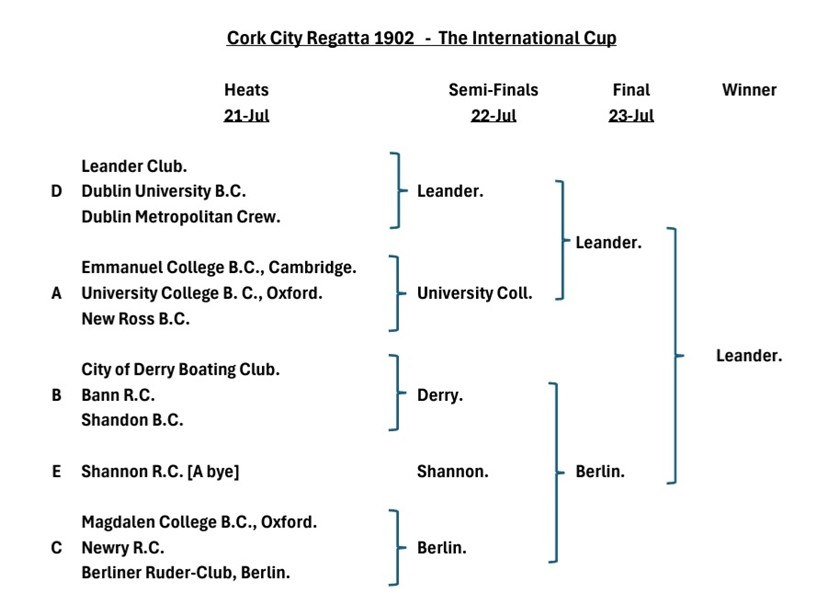
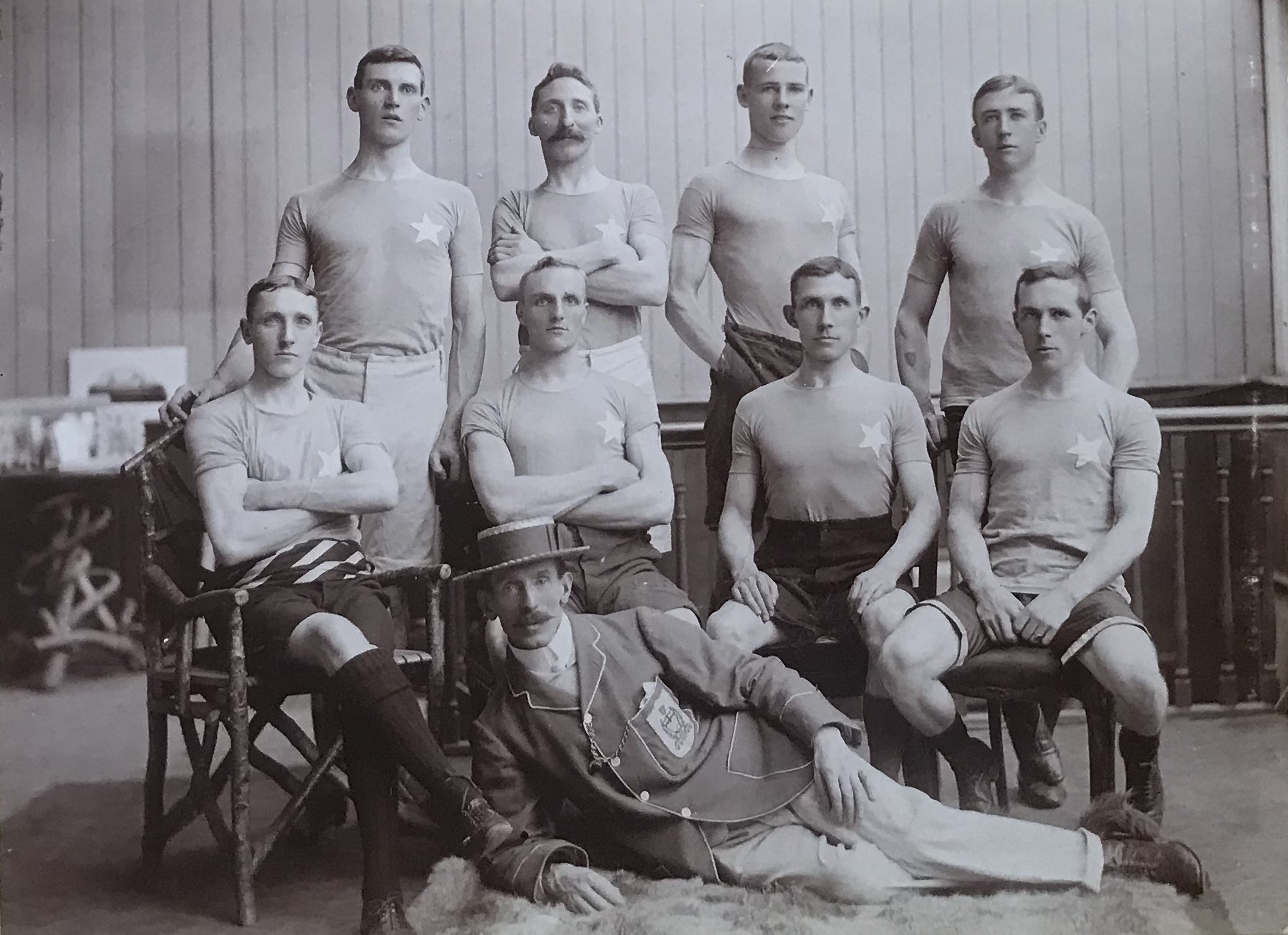
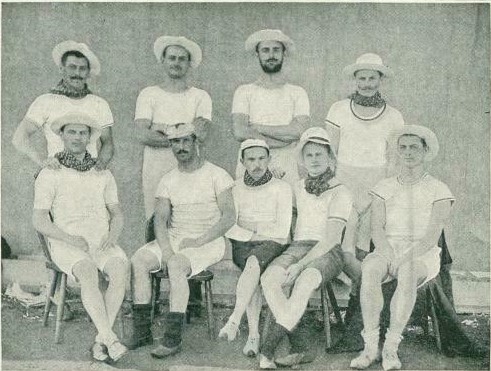
University College B.C., Oxford, won the first heat beating the above Emmanuel College crew by four lengths. Also in the race was New Ross B.C., a small provincial club from County Wexford whose fortunes have fluctuated wildly since their formation in 1876. They were pretty strong in the years before and after the turn of the 20th century. According to a contemporary report in Emmanuel College Magazine, the crew was quartered in a hotel in Cork for a few days before being hospitably entertained by Mr John Murphy. The county and city clubs made the whole crew honorary members, and in their spare time, they visited the Cork Exhibition, Blarney Castle and the Lakes of Killarney. In the last few days before their race, they were fortunate to receive coaching from Rudie Lehmann, who was officially in Cork with the Dublin University Boat Club crew. His advice “produced a very marked improvement”, but as can be seen from the result, they found the 2-mile course too long against a quality crew like University College.
In the second heat, Derry beat Bann R.C., their great rivals from the north, and local Cork club, Shandon, to progress to the semi-finals. Most of the Irish eights that competed for the International Cup also rowed for the Arnott Cup (Senior Eights), for which none of the foreign crews competed, although Emmanuel College was amongst the nine entries. Derry claimed victory in that event and the title of Champion Irish Crew of the season.
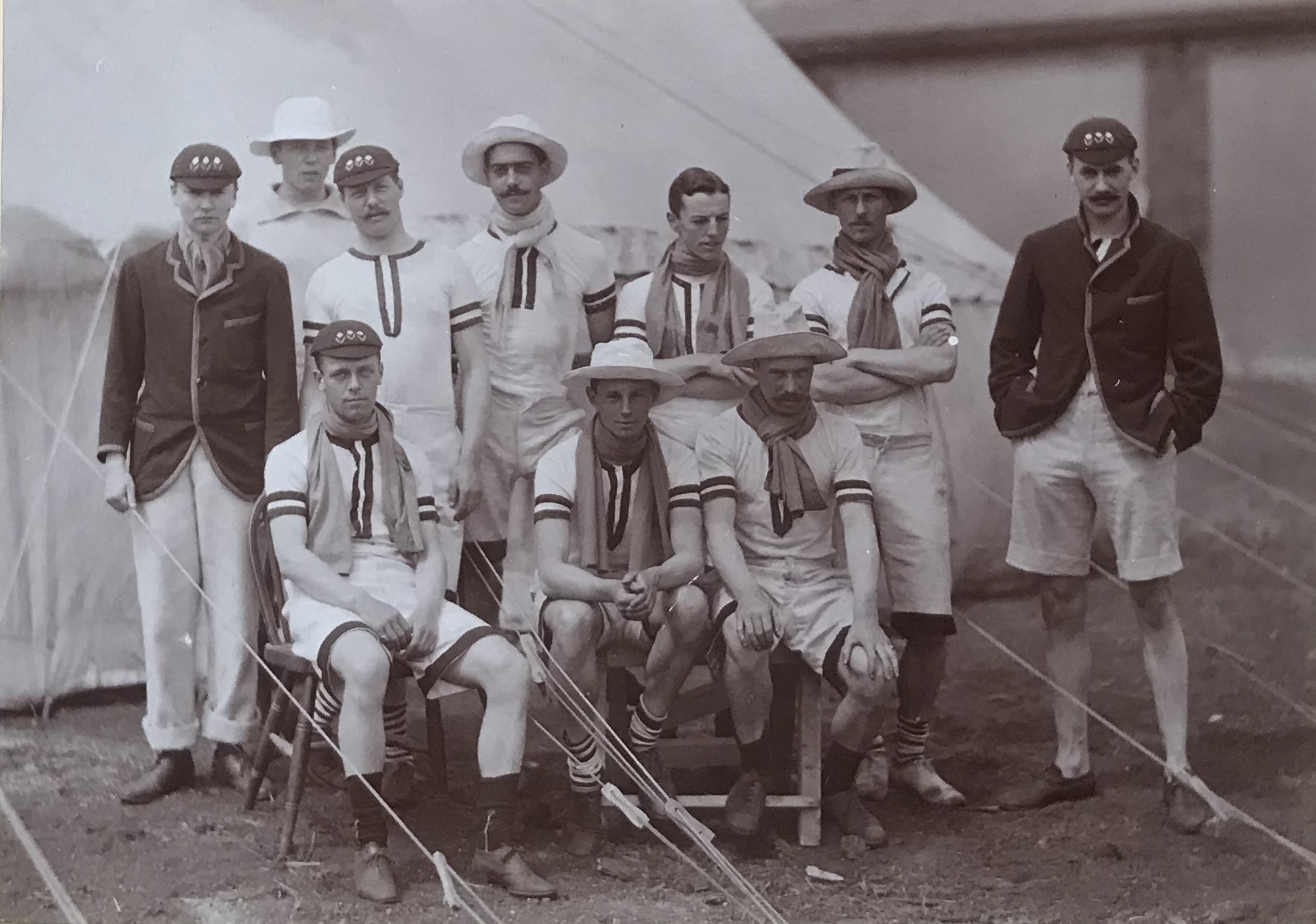
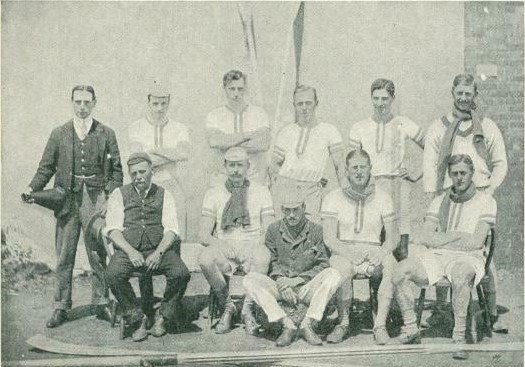
The third heat was won by Berliner Ruder-Club ahead of Newry R.C. and Magdalen College B.C. (above). The Oxford college crew began the season poorly, dropping to fifth in the Oxford Torpids in February. However, by May, they were strong enough to row over in third place on all six days of Eights Week. In Upon the Elysian Stream – 150 years of Magdalen College Boat Club, Oxford (2008), Mark Blandford-Baker had this to say on the club’s efforts in Cork: one wonders if the domestic arrangements had been less than congenial. Based on reports from Berlin, Cambridge, and Henley, I suggest that arrangements were too congenial for the overseas crews; perhaps all part of the plan to slow them down. Magdalen won The Ladies’ Challenge Plate at Henley the following year.
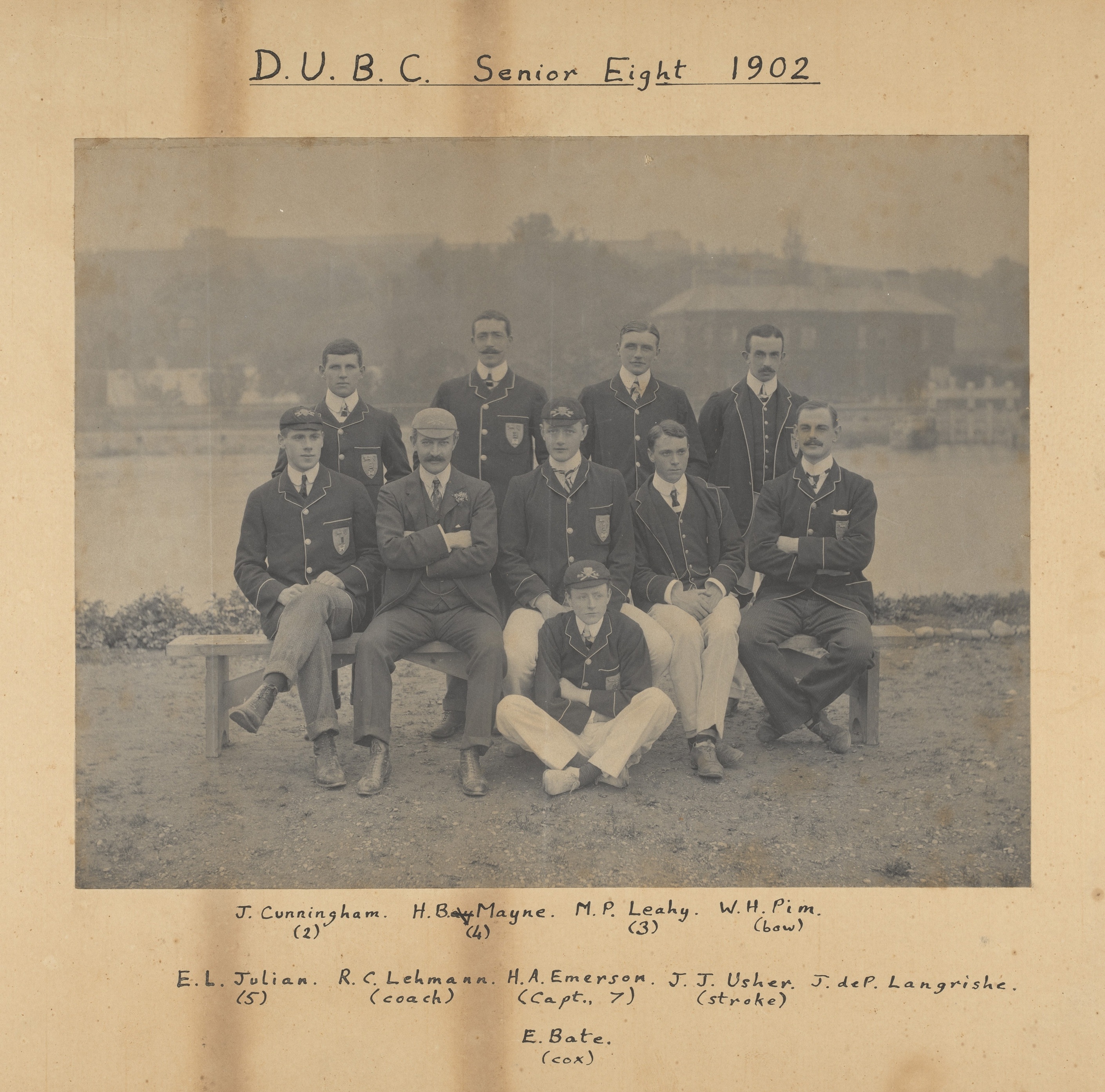
The fourth heat saw Leander Club take on and beat two Dublin crews: Dublin University B.C. and a composite crew that raced as Dublin Metropolitan Crew. D.U.B.C. were Islandbridge residents since 1898, and three of their former neighbours in Ringsend: Commercial, Dolphin, and Neptune (no relation to the current club), joined forces to take on the mighty English crew. Was this the first composite Irish crew?
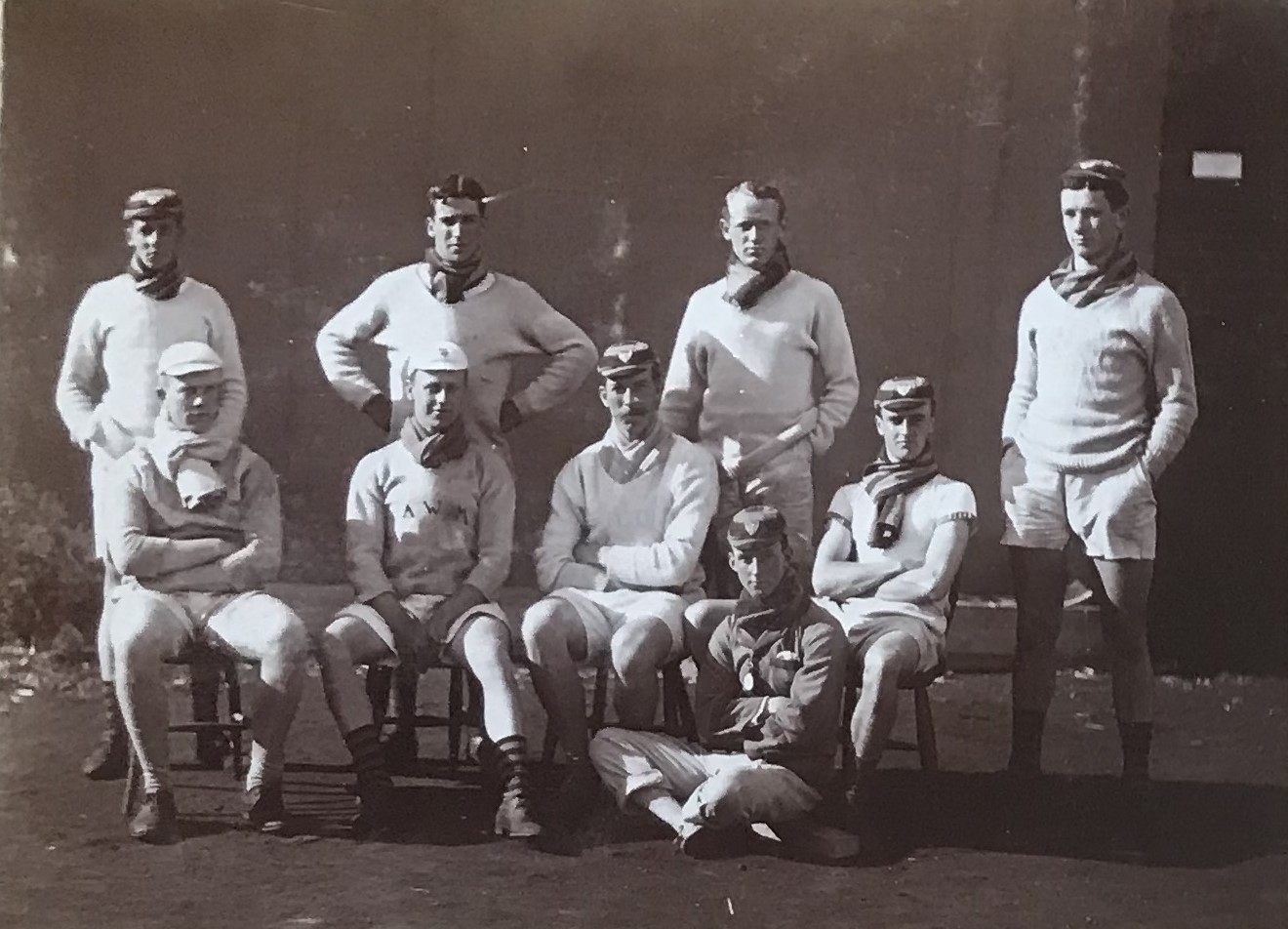
The following year, E. L. Julian (seated left above) joined Lehmann as coach, being replaced by J. de P. Langrishe; and W. F. Fox replaced Pim in the bow-seat, and D.U.B.C., rowing as Trinity College, Dublin, won the Thames Cup at Henley.
Shannon R.C., from Limerick, had a row-over in the final heat. Earlier in the year, they won the Senior Eights at Limerick Regatta and were worthy representatives of the province of Munster, but they were no match for Berlin or Derry in the semi-final.
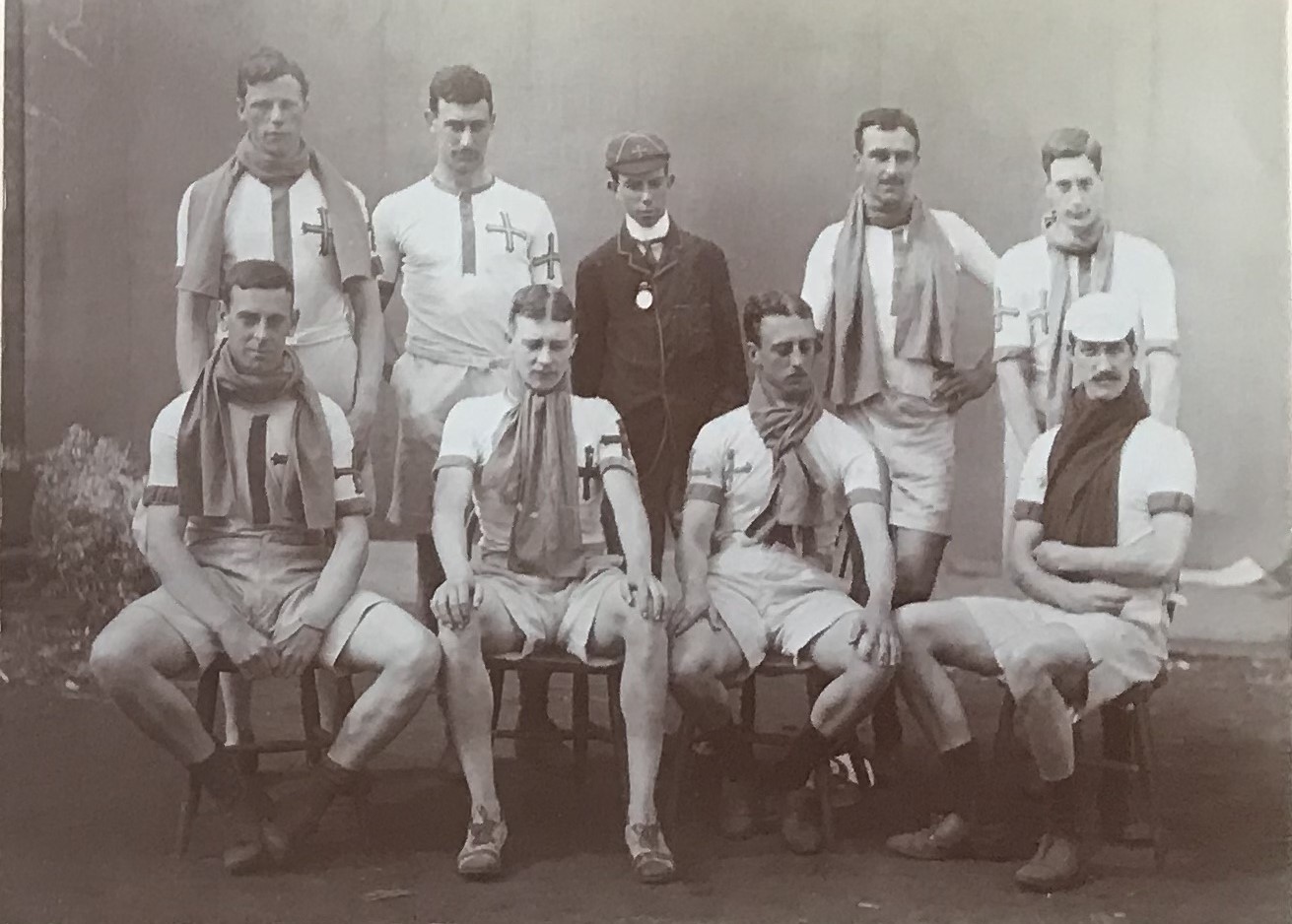
The other semi-final pitted University College B.C. against Leander Club, and to no one’s surprise, the crew from Henley came out on top. The Oxford crew could be satisfied with their year, having retained the Ladies’ Plate in 1902, whilst Leander, the older and more experienced crew, may not have been. They had lost the final of the Grand Challenge Cup at the beginning of July, the only time in eight years (1898 – 1905) that they had not claimed the top prize at Henley Royal Regatta.
The final attracted huge crowds to the Marina in Cork to witness what the Rowing Almanack considered to be “the most important event ever to be held in Ireland.” Leander Club claimed the magnificent cup; Berlin the kudos and experience; both of them, the appreciation of not only rowing supporters but all sports fans in and around Cork.
The English crews enjoyed the hospitality of the locals so much that they joined together to present a trophy to the Cork Regatta Committee as a permanent mark of their appreciation. As they were all members or alumni of the College Boat Clubs of Oxford and Cambridge, the presentation was made through Leander, from whom the trophy took its name. It replaced the Arnott Cup as the trophy for senior eights at Cork Regatta.
The Berliners were equally fêted by the locals. Approximately half of Büxenstein’s report is dedicated to reporting on their time off the water and the hospitality bestowed upon them. This is a sample (AI translation) of what his report said about the evening after the final:
Not only did Cork’s first society strive to show their affection to the German rowers, who were said to combine continental courtesy with Irish warmth, but the common people expressed their sympathy with compelling warmth. A crowd of several hundred residents gathered in front of the hotel where our crew was staying and demanded to see them. However, after twelve weeks of strict training, they were eager to admire the beauties of Cork at dusk. The crowd then went in search of the German crew and discovered them on Cork’s main street, Patrick Street, in front of the marble statue of Father Mathew, the temperance figure of Ireland. The enthusiasm of the good Irish knew no bounds. The stroke man of the crew and the middlemen, who showed a respectable weight of 14 stone, were lifted onto shoulders amid universal cheers and carried through several streets to the Temperance Hotel. But even this did not exhaust the ovations of the almost southernly excited crowd; they incessantly demanded a “speech,” and only when a crew member addressed a few words of thanks to the crowd from the balcony, which were received with lively enthusiasm, could street traffic resume.
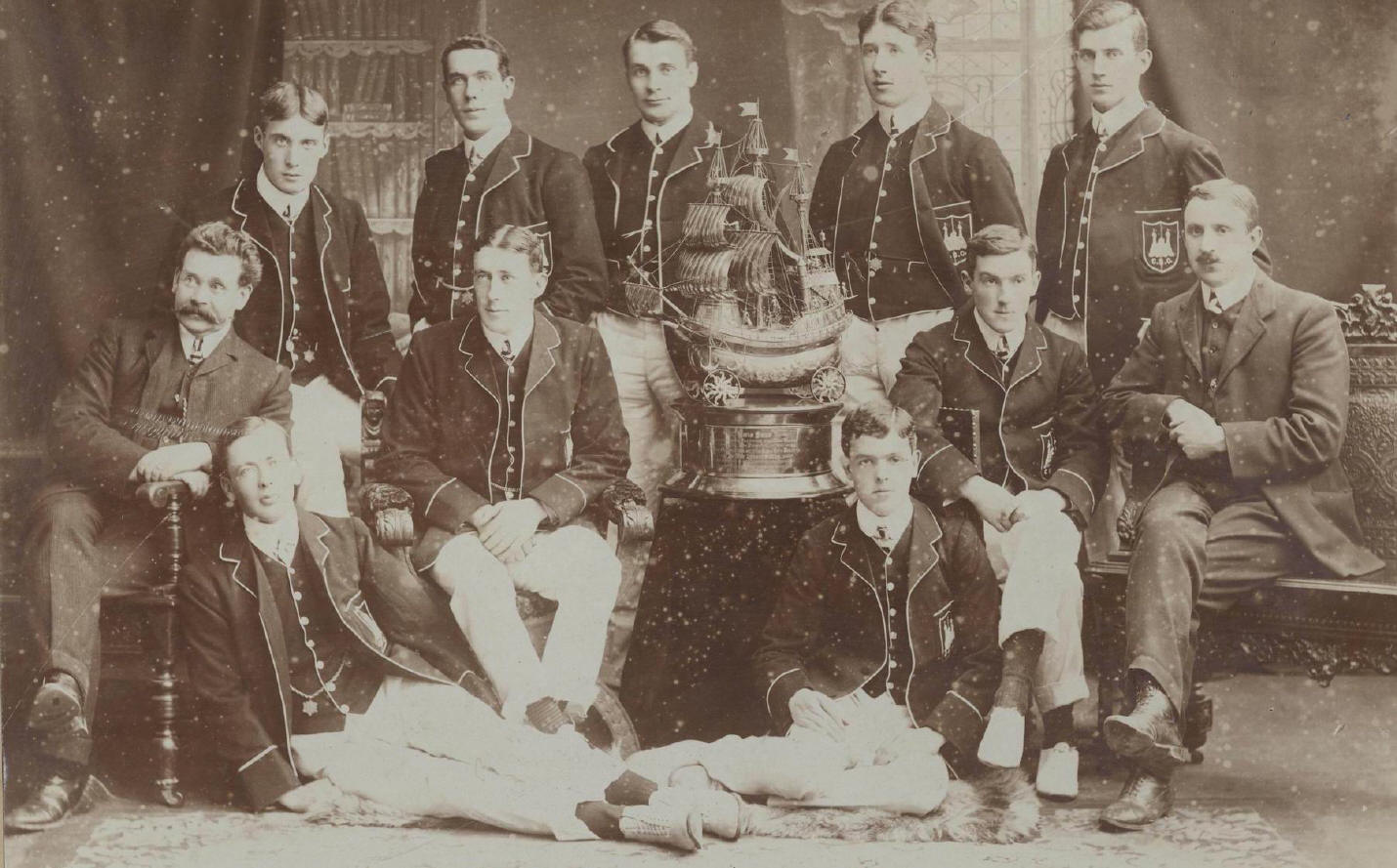
The Leander Trophy was introduced at the Cork City Regatta for the first time in 1904 when Dublin University B.C. won it. The trophy is an artistic representation of a Dutch Galleon in silver, and it was originally gilt all over but very quickly lost its gilding. Personally, I think it is all the better for shedding its golden coat.
* T.S. Eliot’s rowing credentials may not be known to many outside of the nerdy few who see rowing as a metaphor for life and even they might be limited to the closing sentence of The Great Gatsby: “And so we beat on, boats against the current, borne back ceaselessly into the past.” But Eliot did row during his short spell at Merton College, Oxford [1914-15]. In a letter dated 16 November 1914 to his old Harvard University pal, Conrad Aiken, he wrote:
… life is pleasant in its way, and perhaps I am also contented and slothful, eating heartily, smoking, rowing violently upon the river in a four oar, and performing my intellectual stint each day. Oxford, even at this time, is peaceful, always elegiac. It is Alexandrine verse, nuts and wine.
For me, his unintentional rowing reference, found in the poem Little Gidding, sums up the perfect rowing stroke:
What we call the beginning is often the end, and to make an end is to make a beginning. The end is where we start from.
This may be the end of HTBS’s coverage of the Cork International Cup races, but, as I did in my 2018 article, I would like to put out a request to the universe. Help us make a new beginning and find a picture of that Dublin Metropolitan composite crew.
 Hear The Boat Sing