This website covers all aspects of the rich history of rowing, as a sport, culture phenomena, a life style, and a necessary element to keep your wit and stay sane.
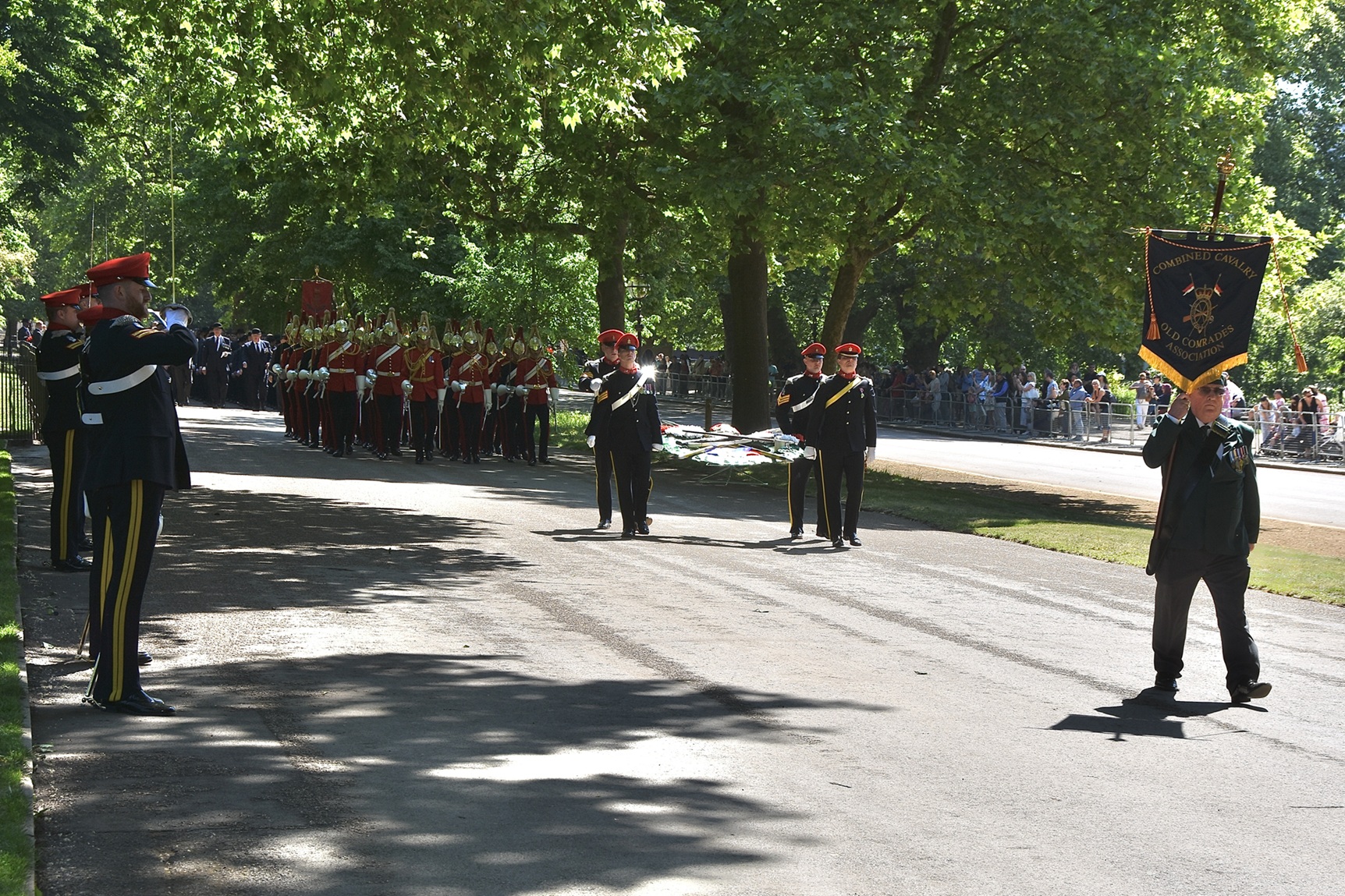
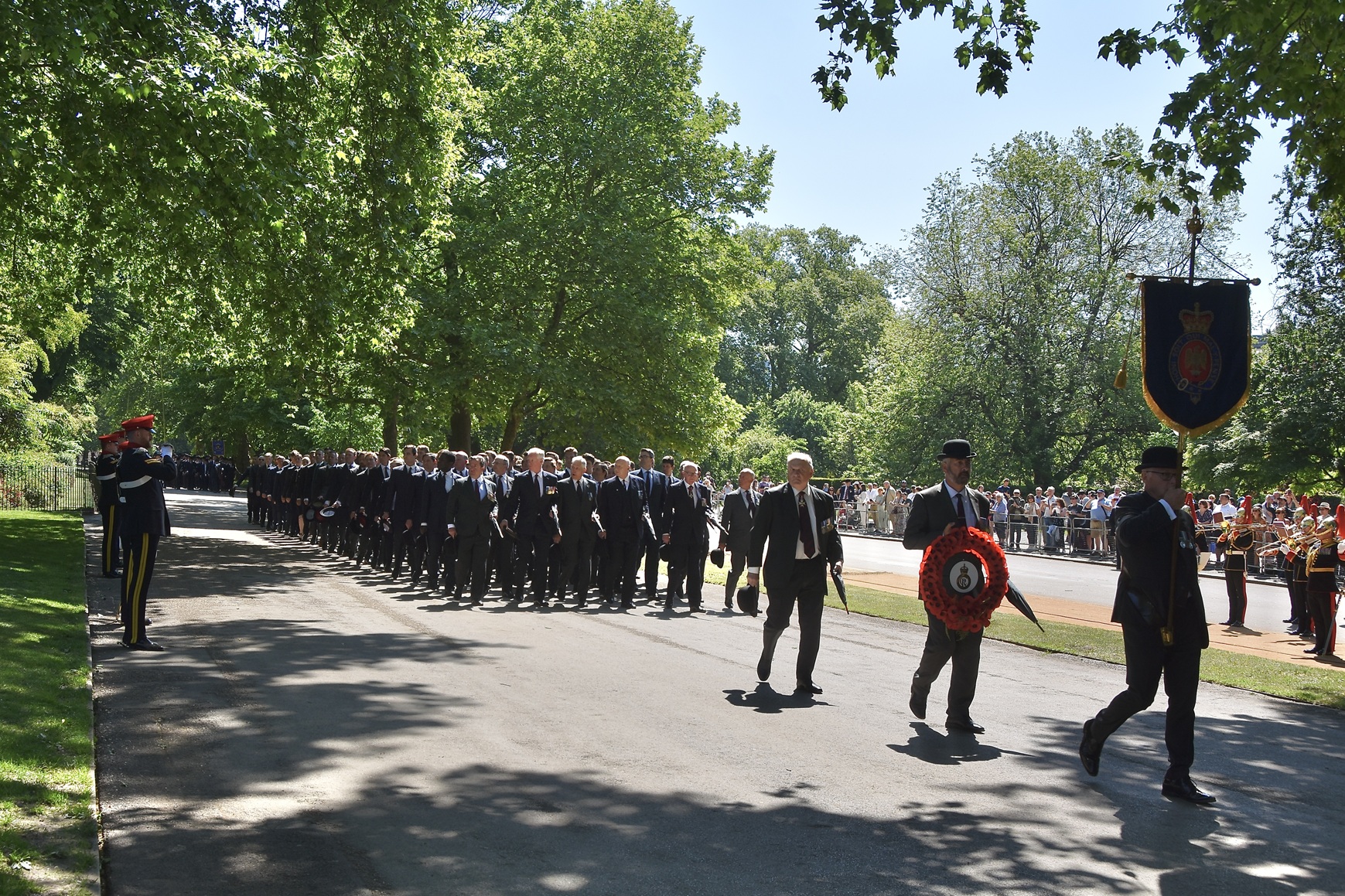
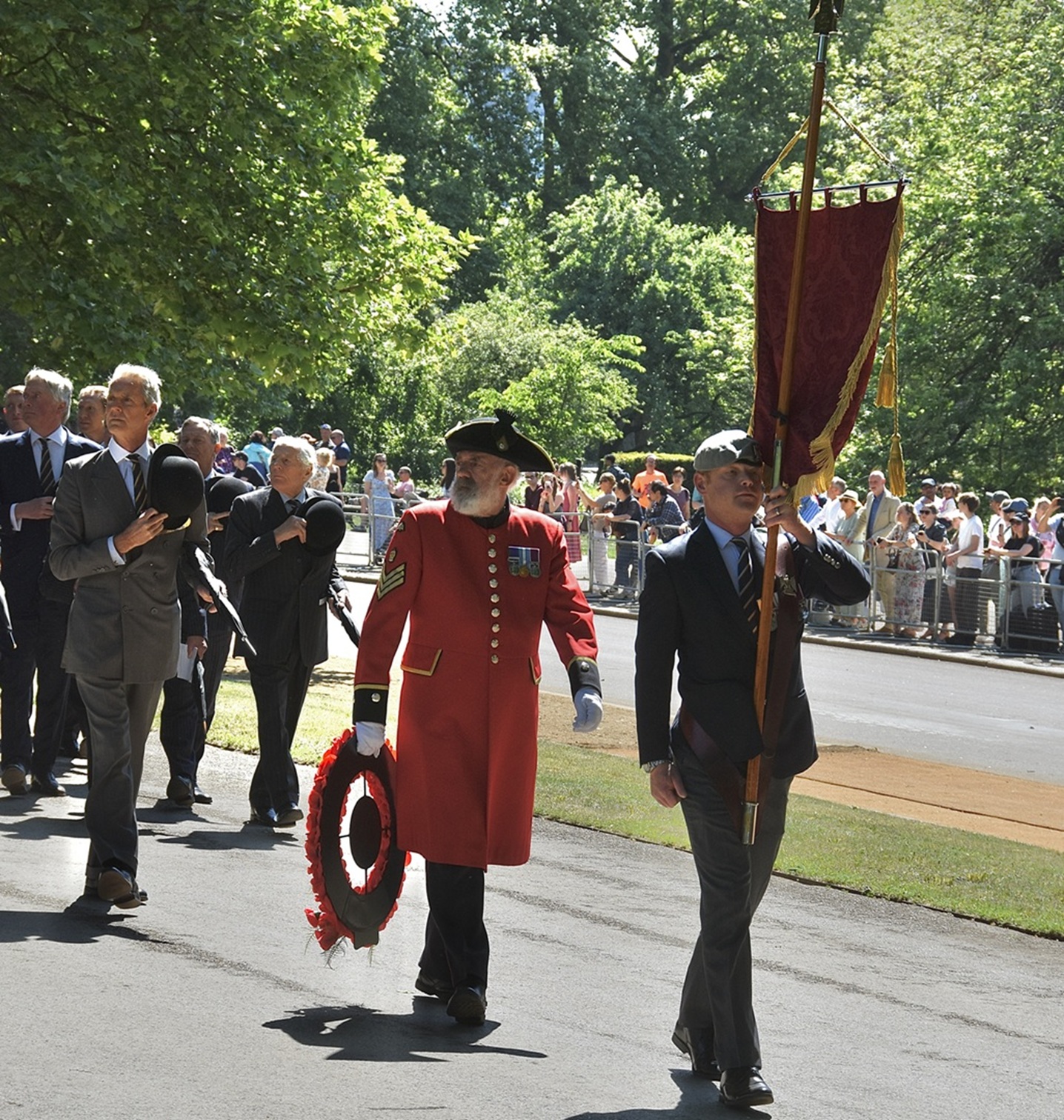
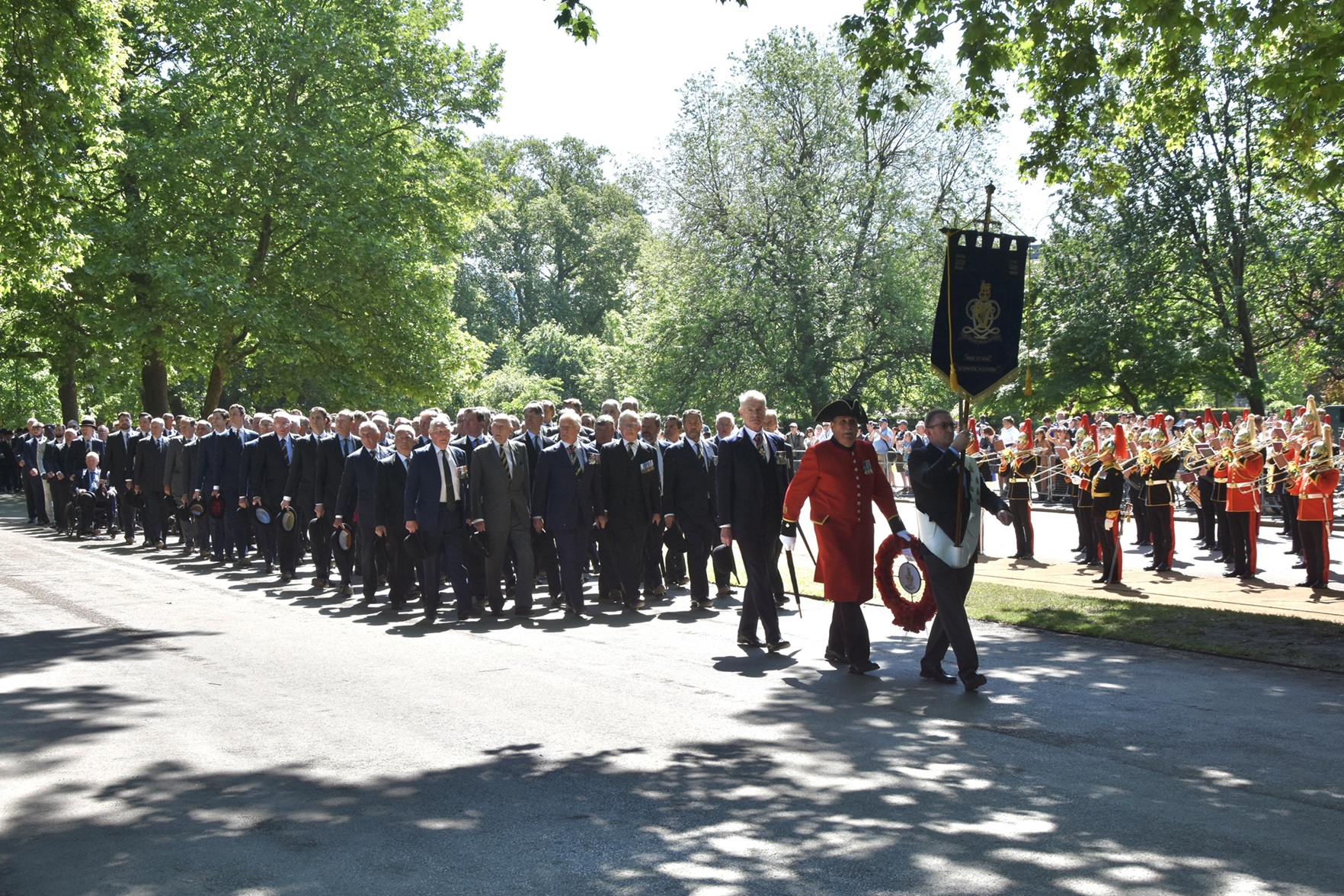
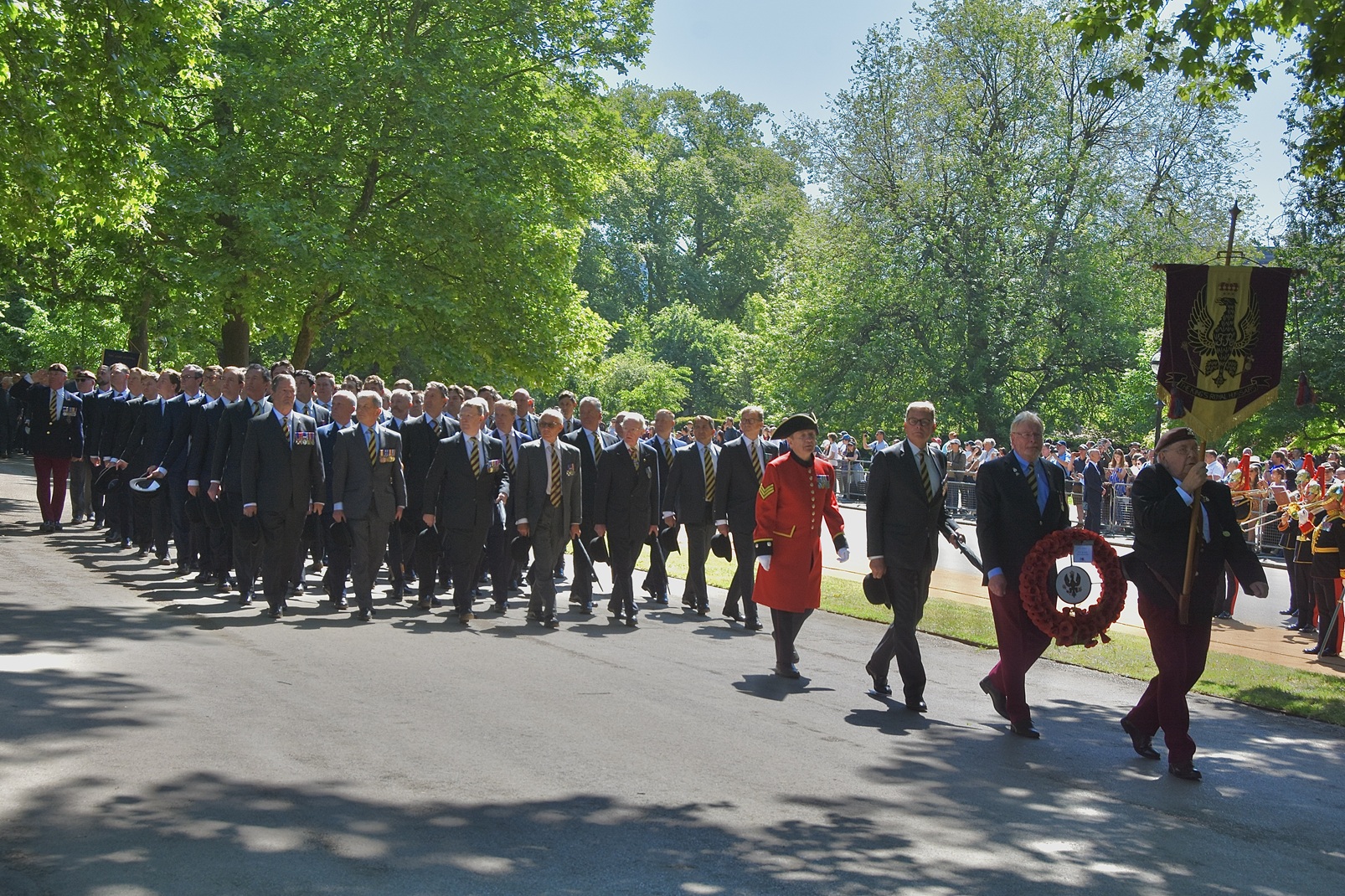
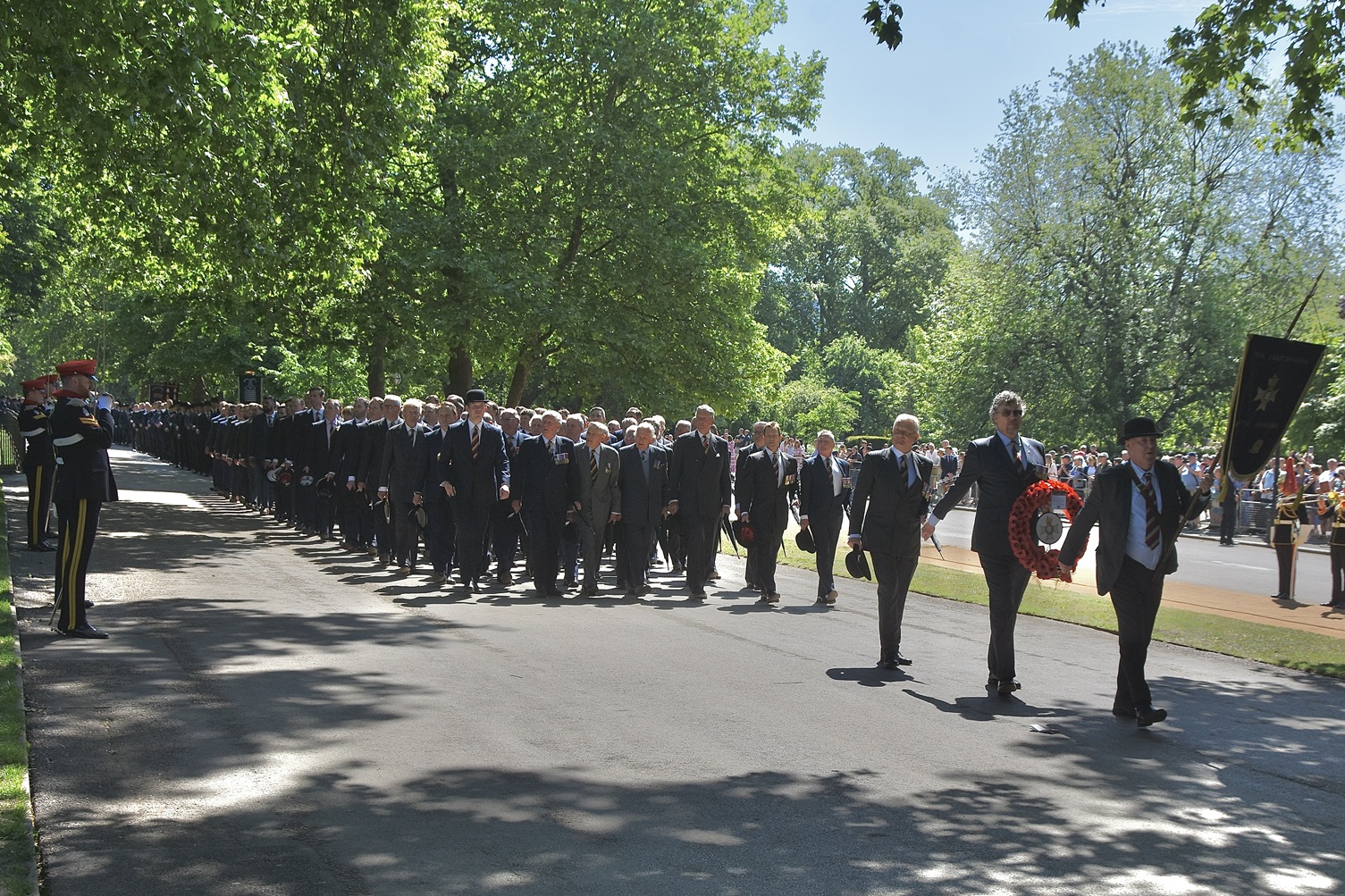
Pictured on 11 May, the Combined Cavalry Old Comrades Association’s banner leads its annual parade to remember cavalrymen killed in action since 1914. It is followed by four members of this year’s sponsoring regiments, The Queen’s Royal Hussars, carrying the Association’s wreath. Behind them are dismounted serving members of The Life Guards and The Blues & Royals, collectively the Household Cavalry. They will be followed by regimental associations in strict order of precedence.
15 May 2025
By Tim Koch
Tim Koch is still in Hyde Park along with 2,000 serving and former cavalrymen and women, their families and other visitors.
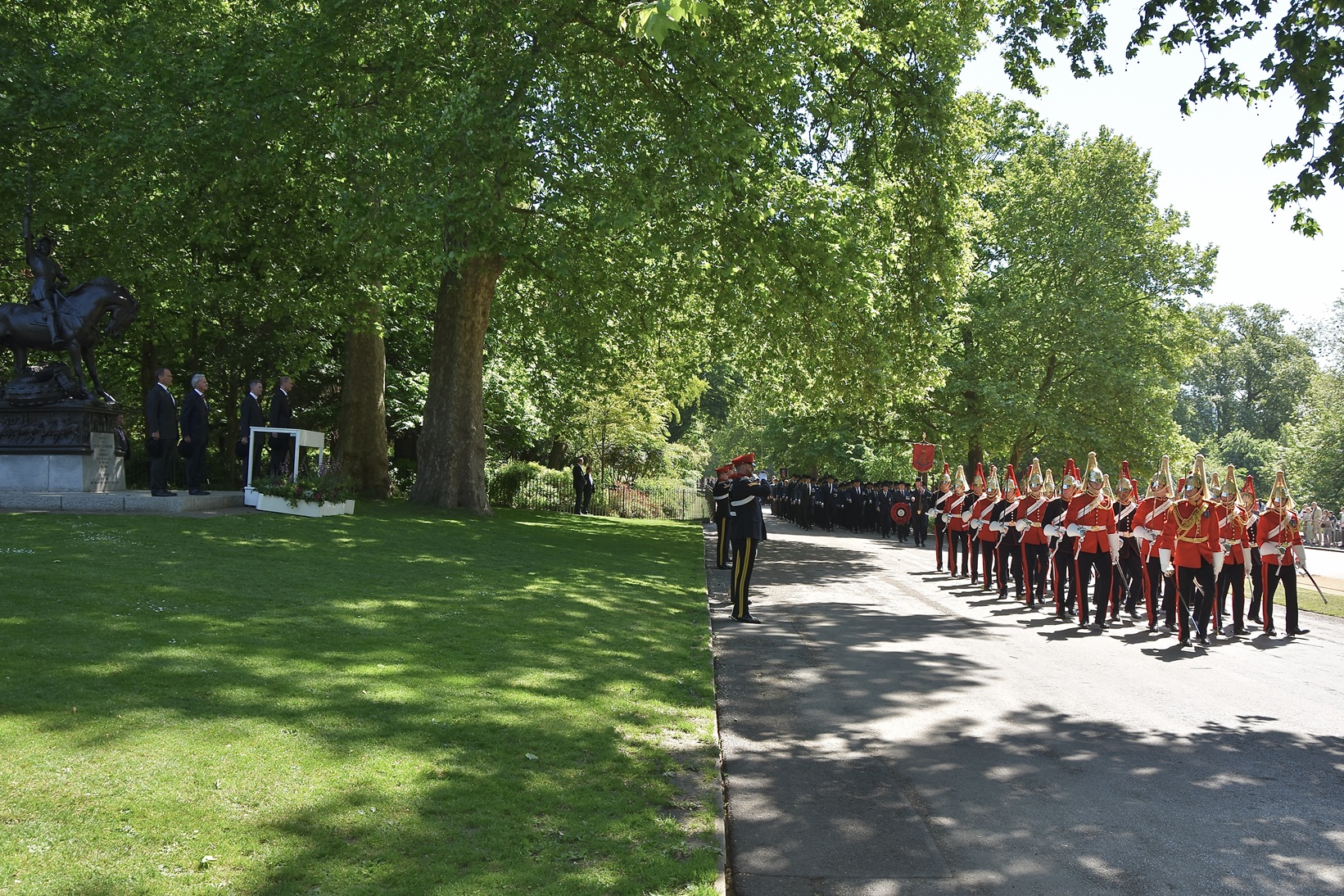
Serving members of the Household Cavalry pass the Cavalry Memorial and the saluting base where Prince Edward, Duke of Edinburgh, Colonel-in-Chief of the Queen’s Royal Hussars, took the salute.
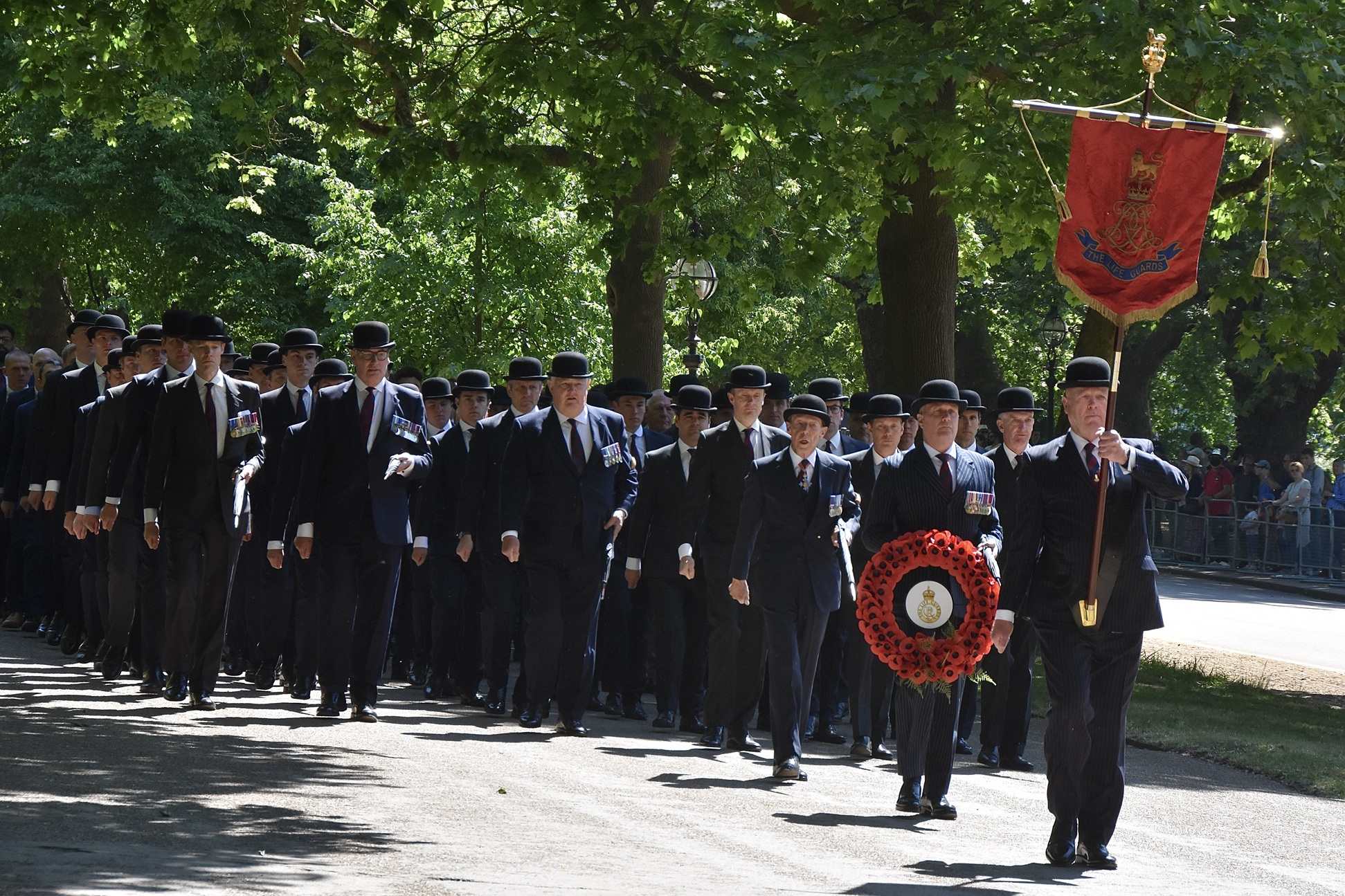
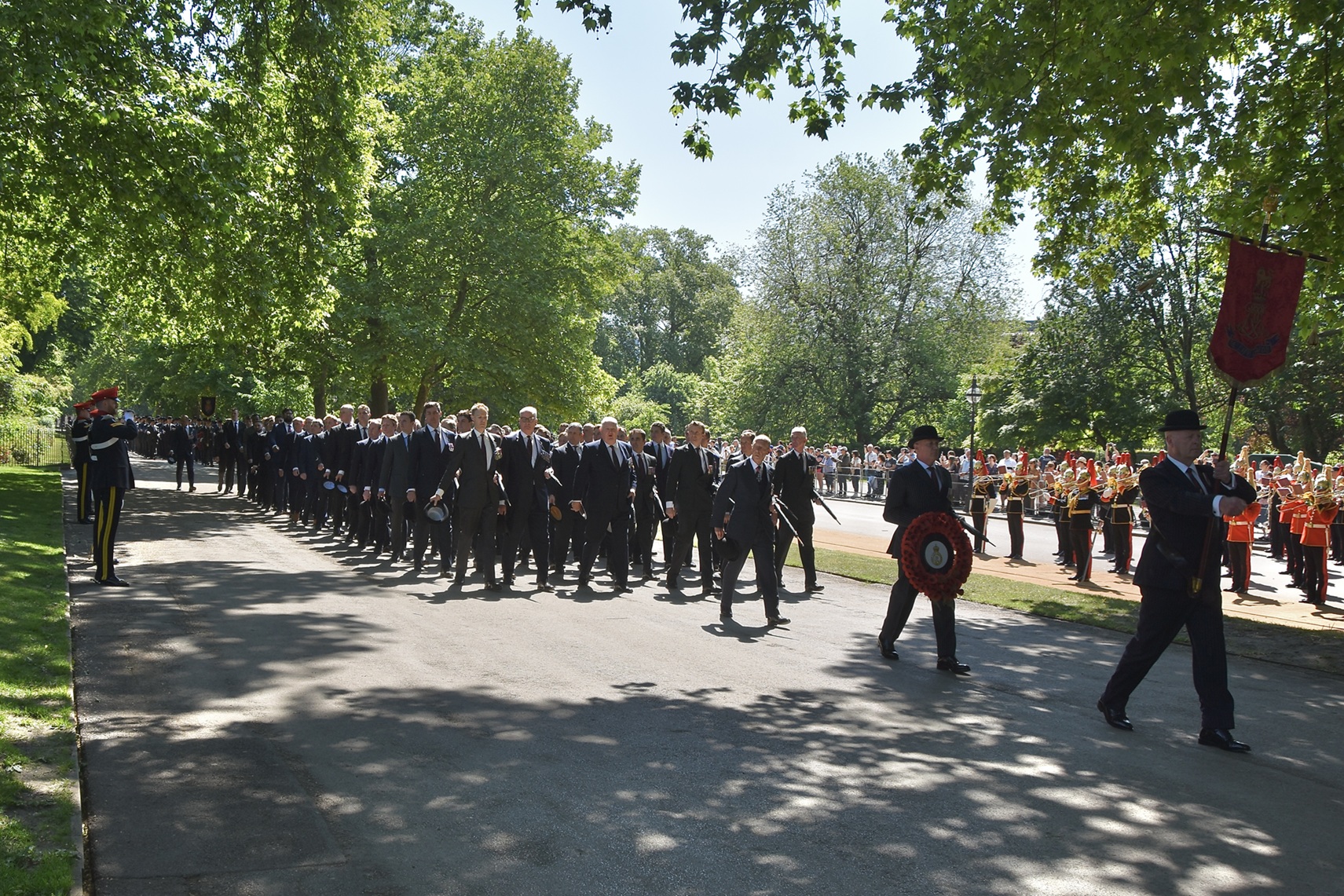
The Life Guards
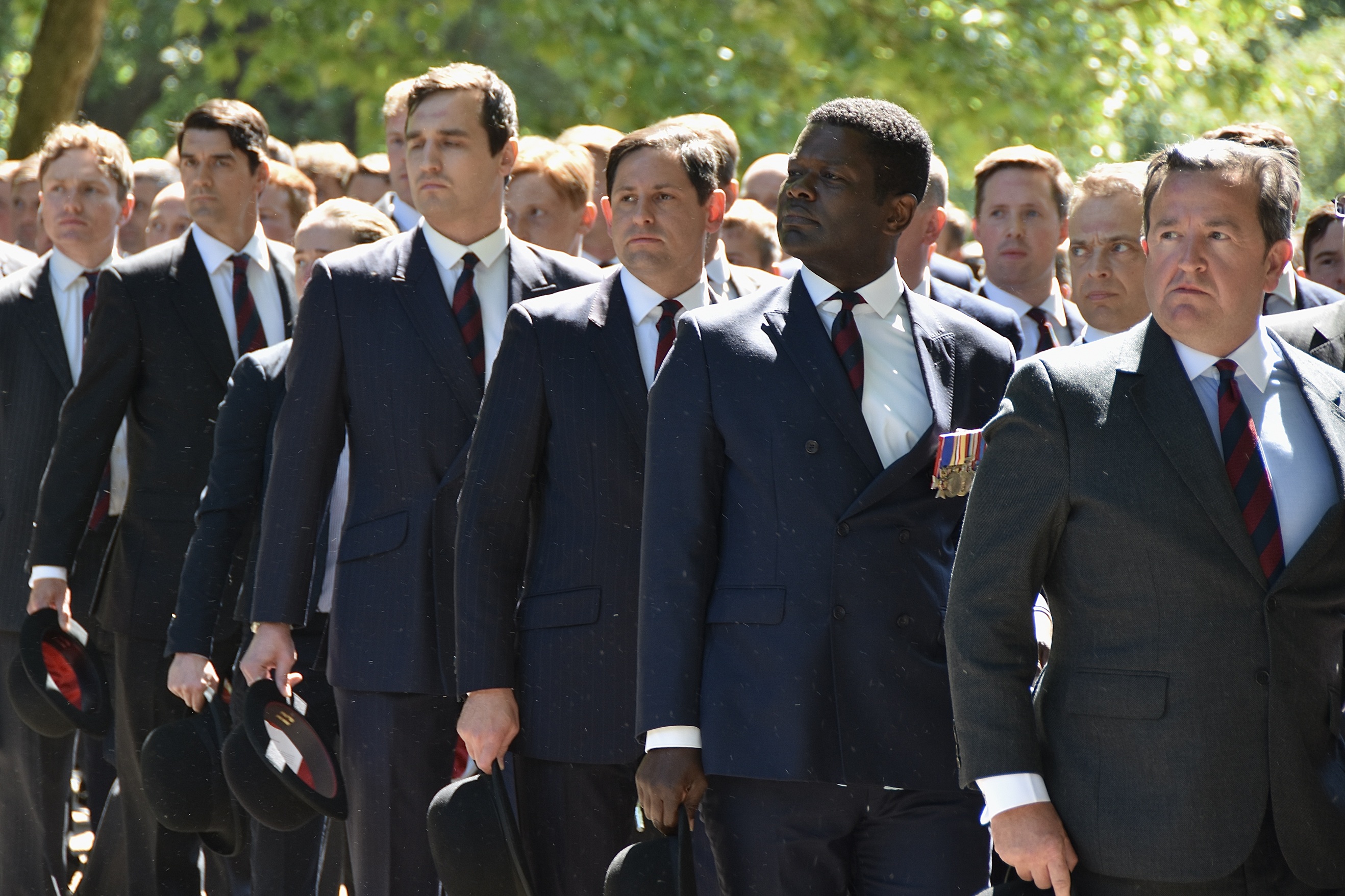
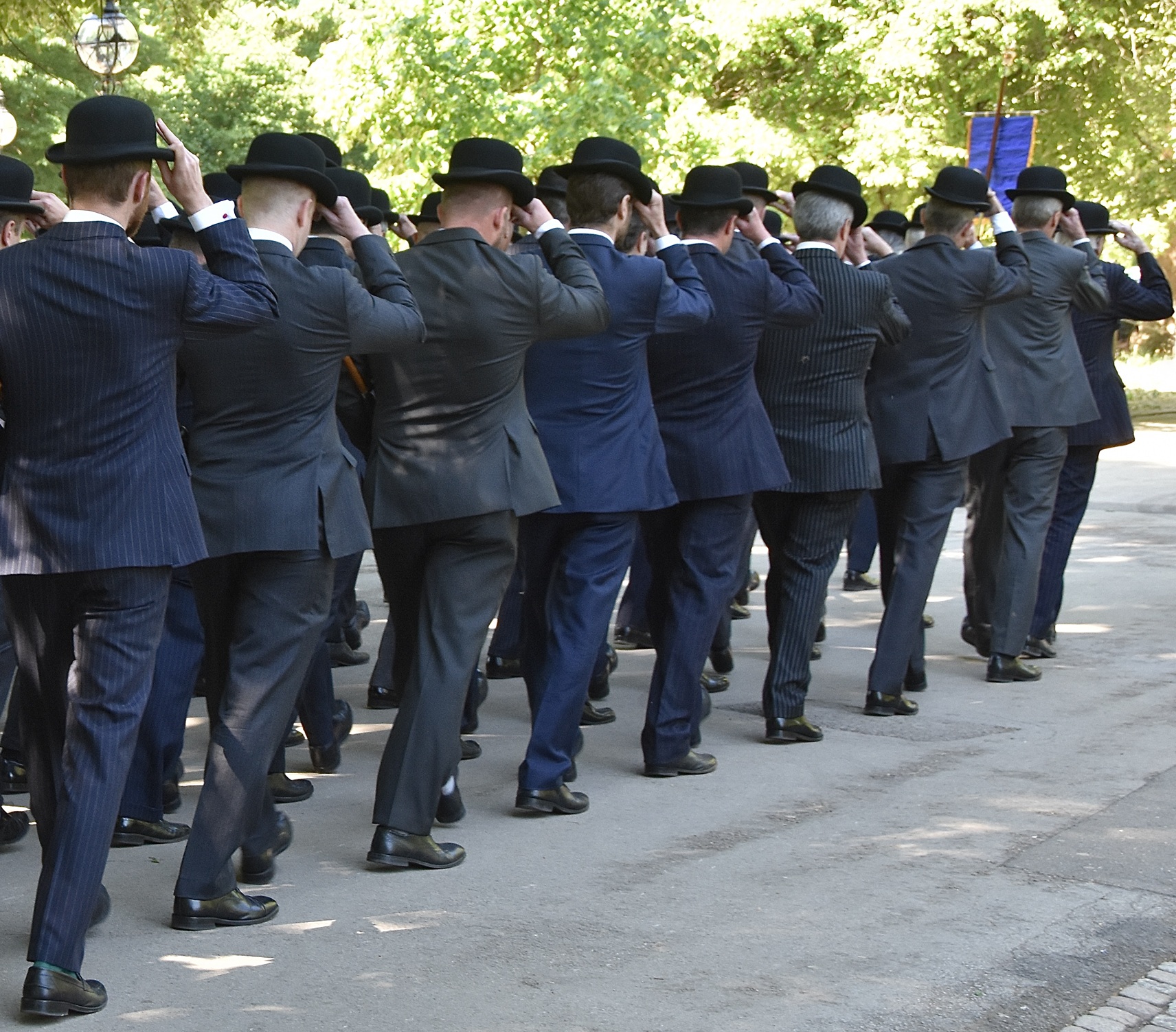
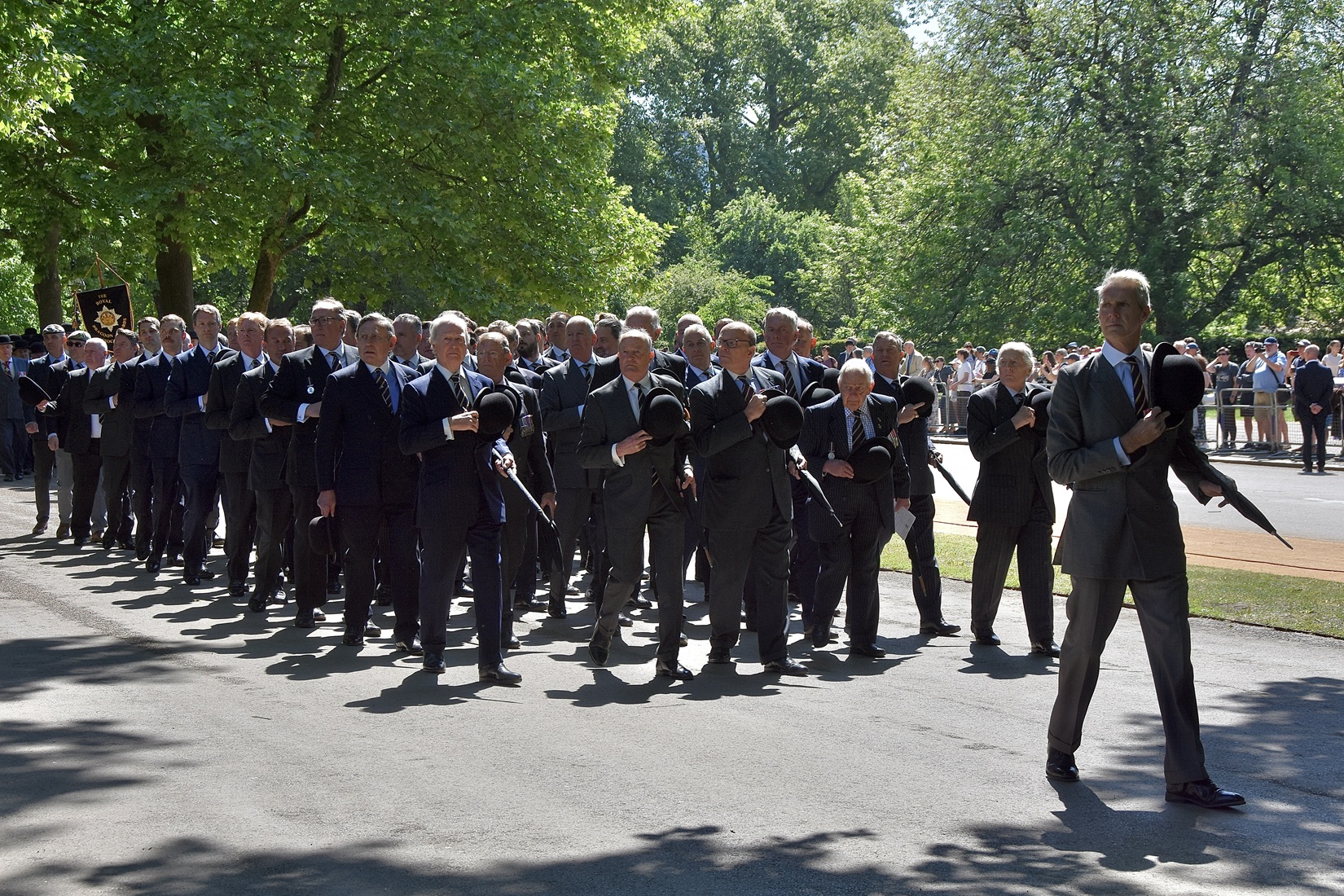
The Life Guards are the British Army’s most senior regiment with its origins going back to 1658.Passing the saluting base – eyes right, civilian hats off.
The Blues and Royals (Royal Horse Guards and 1st Dragoons)
The Blues and The Royals amalgamated in 1969. The Blues (The Royal Horse Guards) were founded as part of Oliver Cromwell’s New Model Army in 1650 following the First English Civil War.The Royals (1st Dragoons) were formed shortly after the Restoration of the Monarchy in 1661.
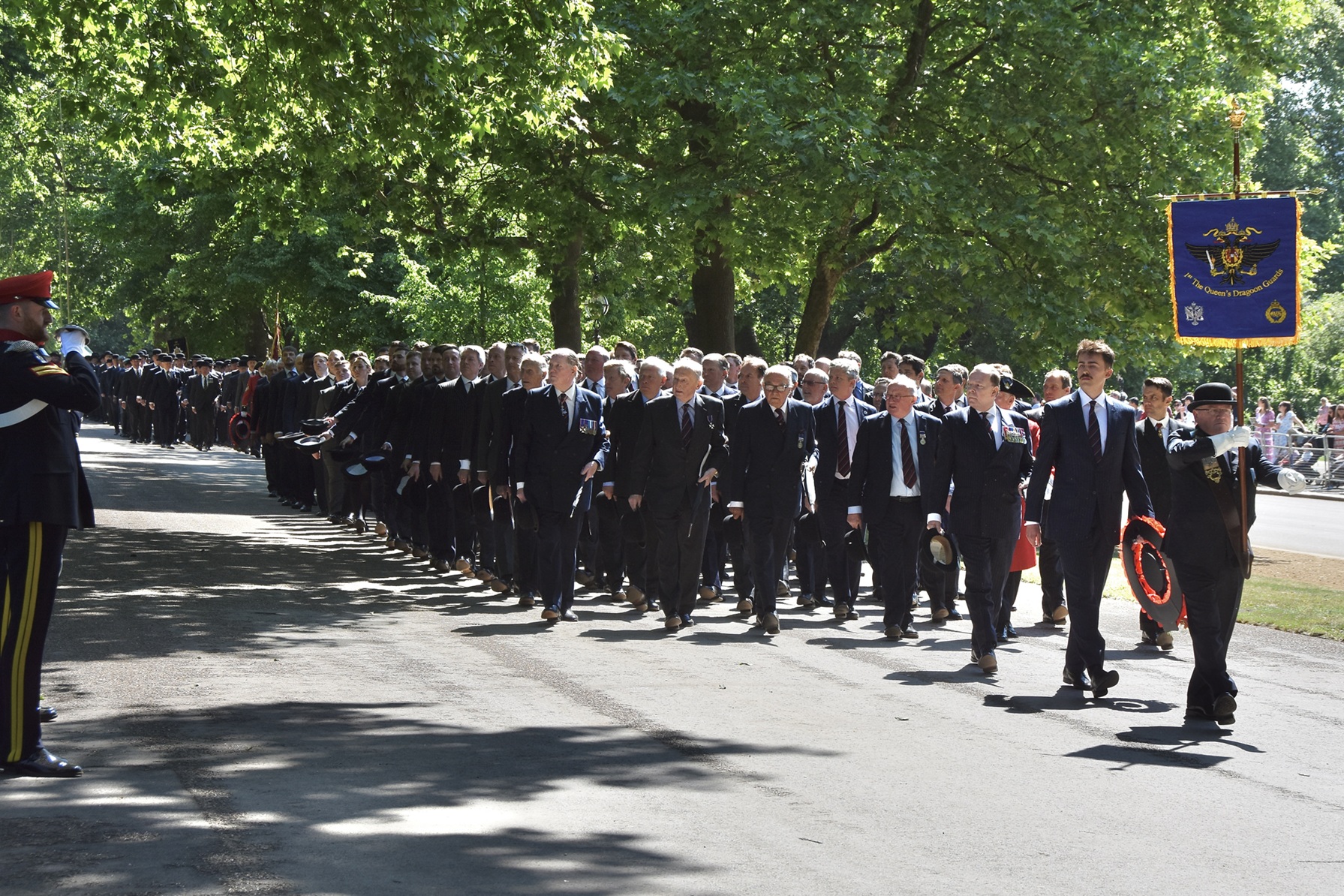
1st The Queen’s Dragoon Guards
1st The Queen’s Dragoon Guards is the Cavalry Regiment of Wales and the Welsh Border Counties with its origins going back to the Monmouth Rebellion of 1685.At the Saluting Base: Eyes right, hats off.Past the Saluting Base: Eyes front, hats on.
The Royal Scots Dragoon Guards (Carabiniers and Greys)
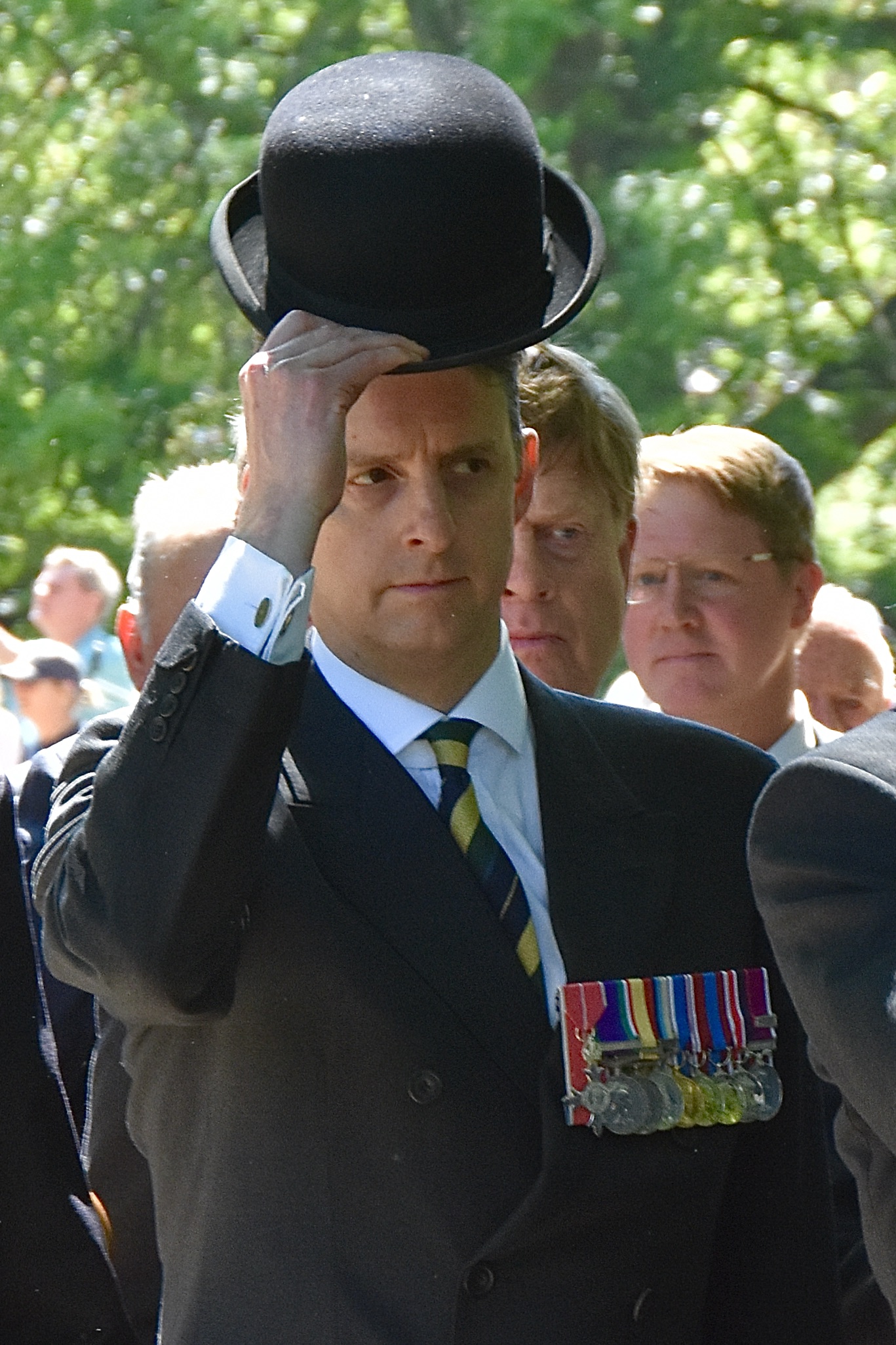
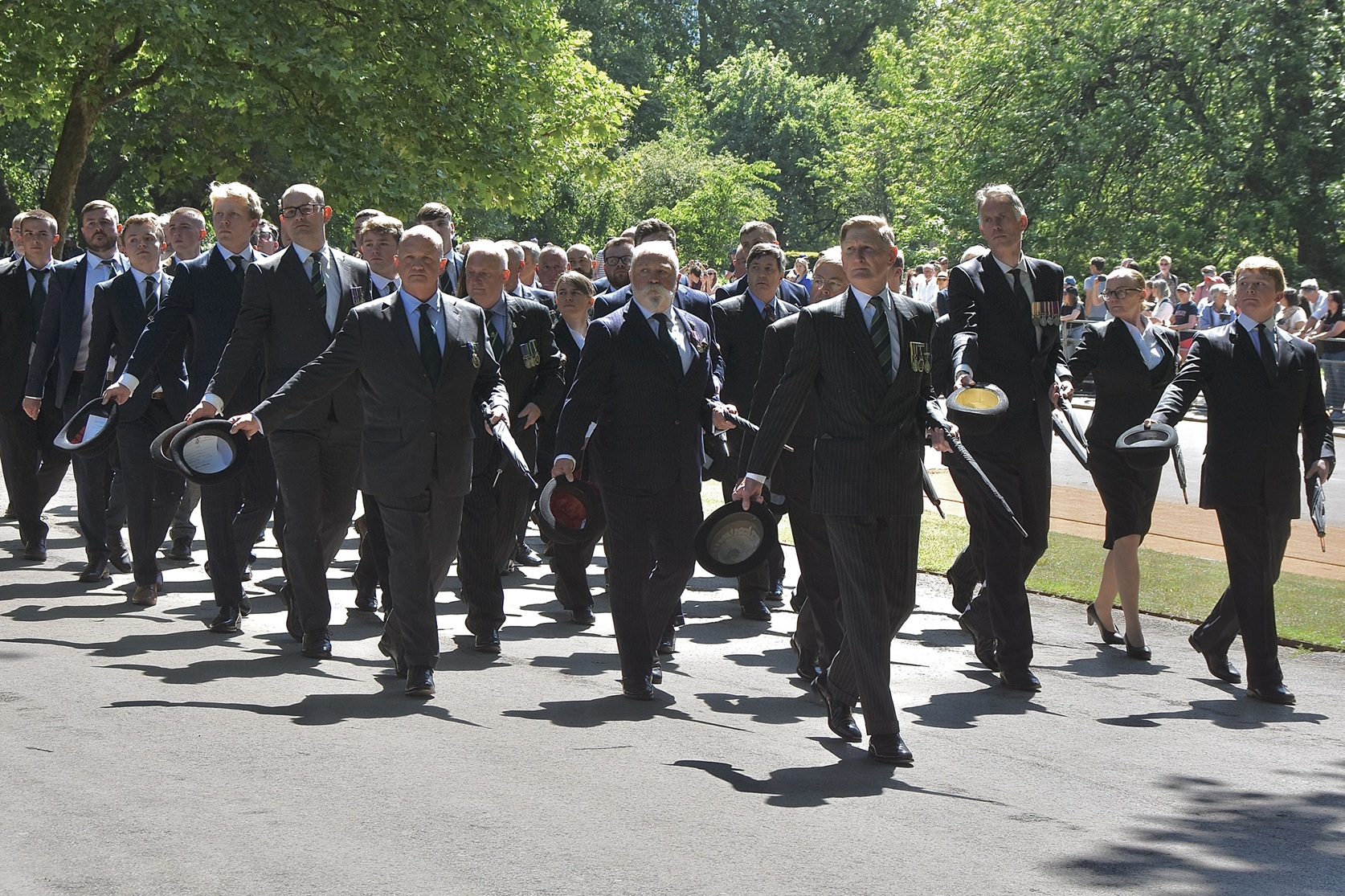
The RSDG is the senior Scottish regiment with regimental ancestors dating back to 1685 and 1681.Uniquely on the Old Comrades parade, the Royal Scots hold their bowler hats over their left breasts when performing “eyes right”.
The Royal Dragoon Guards
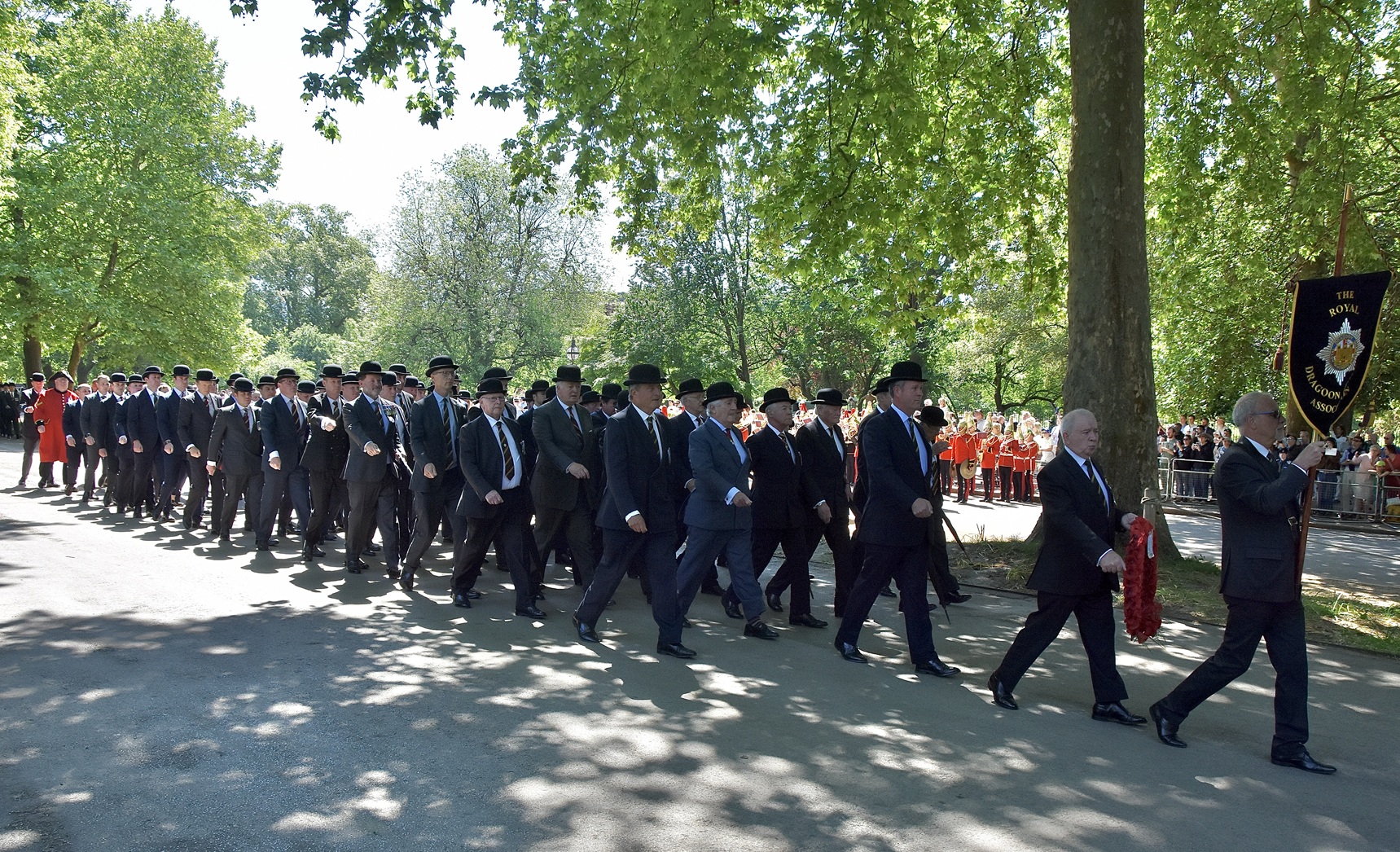
The RDG’s antecedents are typical of many current regiments, it is composed of four regiments raised between 1685 and 1689: the 4th Royal Irish Dragoon Guards, the 5th Dragoon Guards, the 7th Dragoon Guards and the 6th Inniskilling Dragoons. It is the senior Irish Regiment of the British Army.The Chelsea Pensioners present do not parade together but instead march with their former regiments.
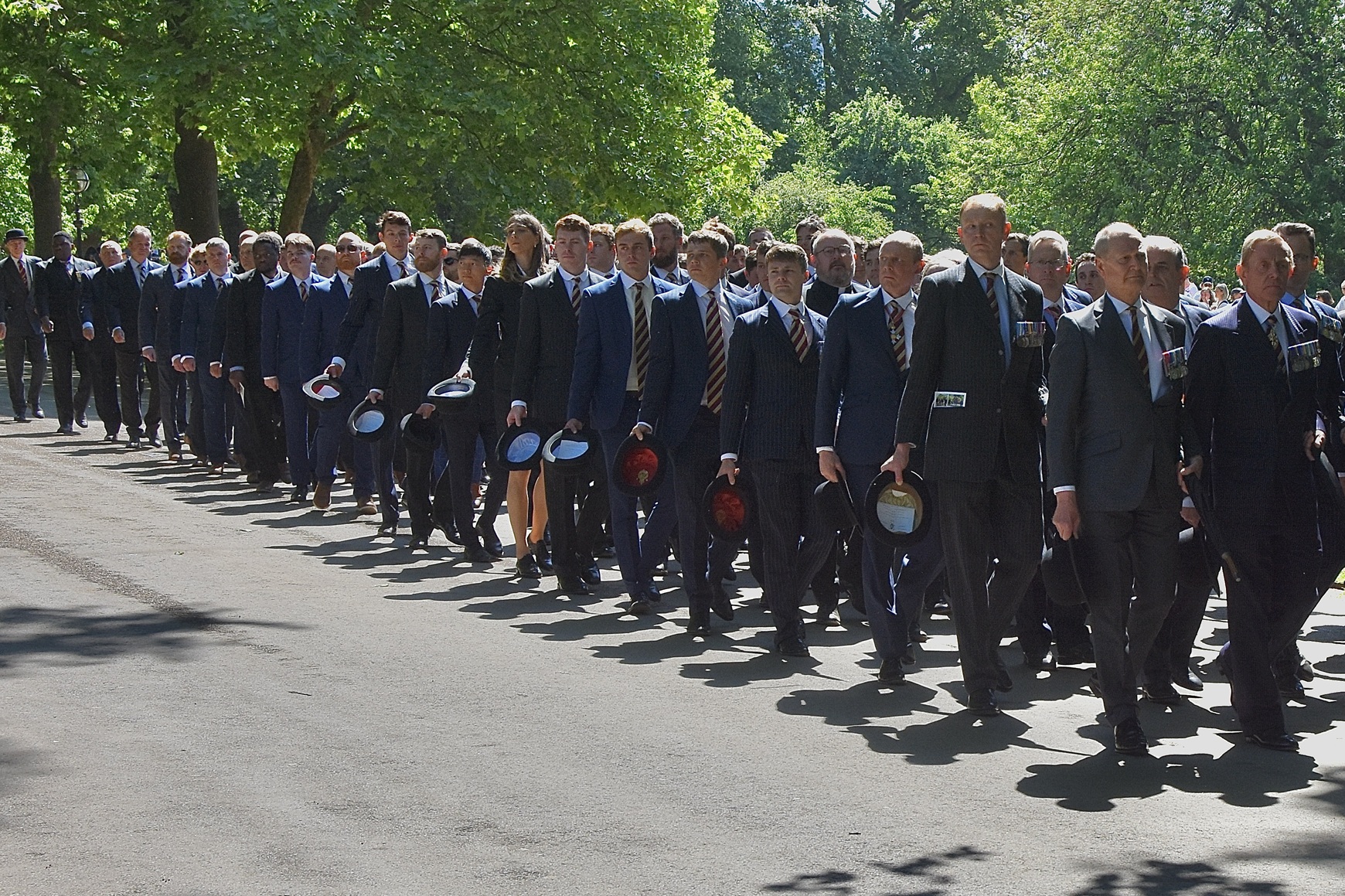
The Queen’s Royal Hussars (The Queen’s Own and Royal Irish)
The Queen’s Royal Hussars are the only regiment to sing their regimental song, A Galloping Queen’s Hussar, as they pass the saluting base.
I’m a soldier in the King’s Army, I’m a galloping Queen’s Hussar, I’ve sailed the ocean wide and blue, I’m a chap who knows a thing or two…
The Royal Lancers (Queen Elizabeth’s Own)
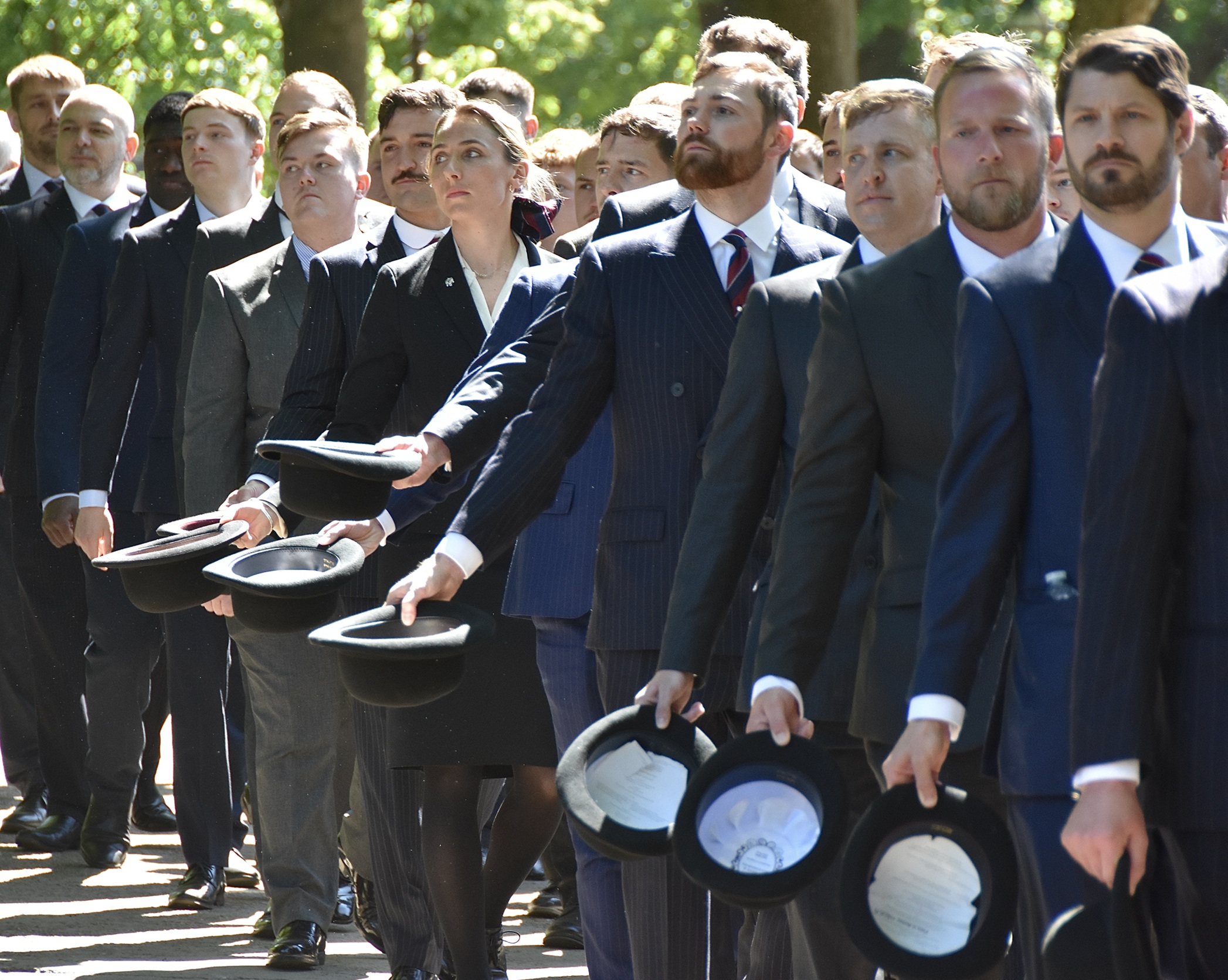
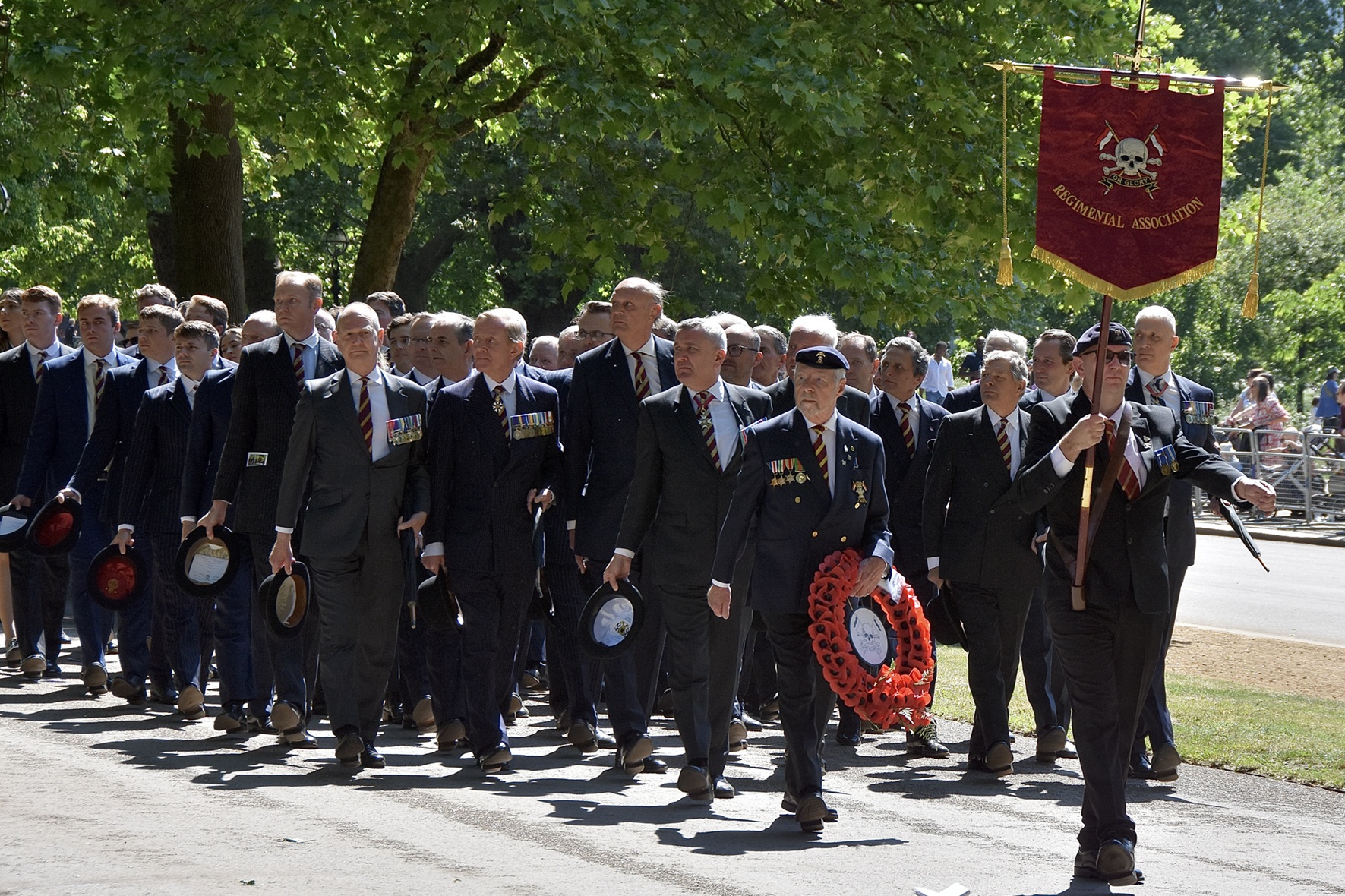
The striking skull and crossbones badge or “Motto” originated with a component RL regiment, The 17th Lancers, notable for its participation in the Charge of the Light Brigade during the Crimean War.The senior component of the Royal Lancers, The 9th Queen’s Royal Lancers, was raised in 1715.The 17th Lancers were known as “The Death Or Glory Boys”. Today, that binary possibility applies to women as well.
King’s Royal Hussars
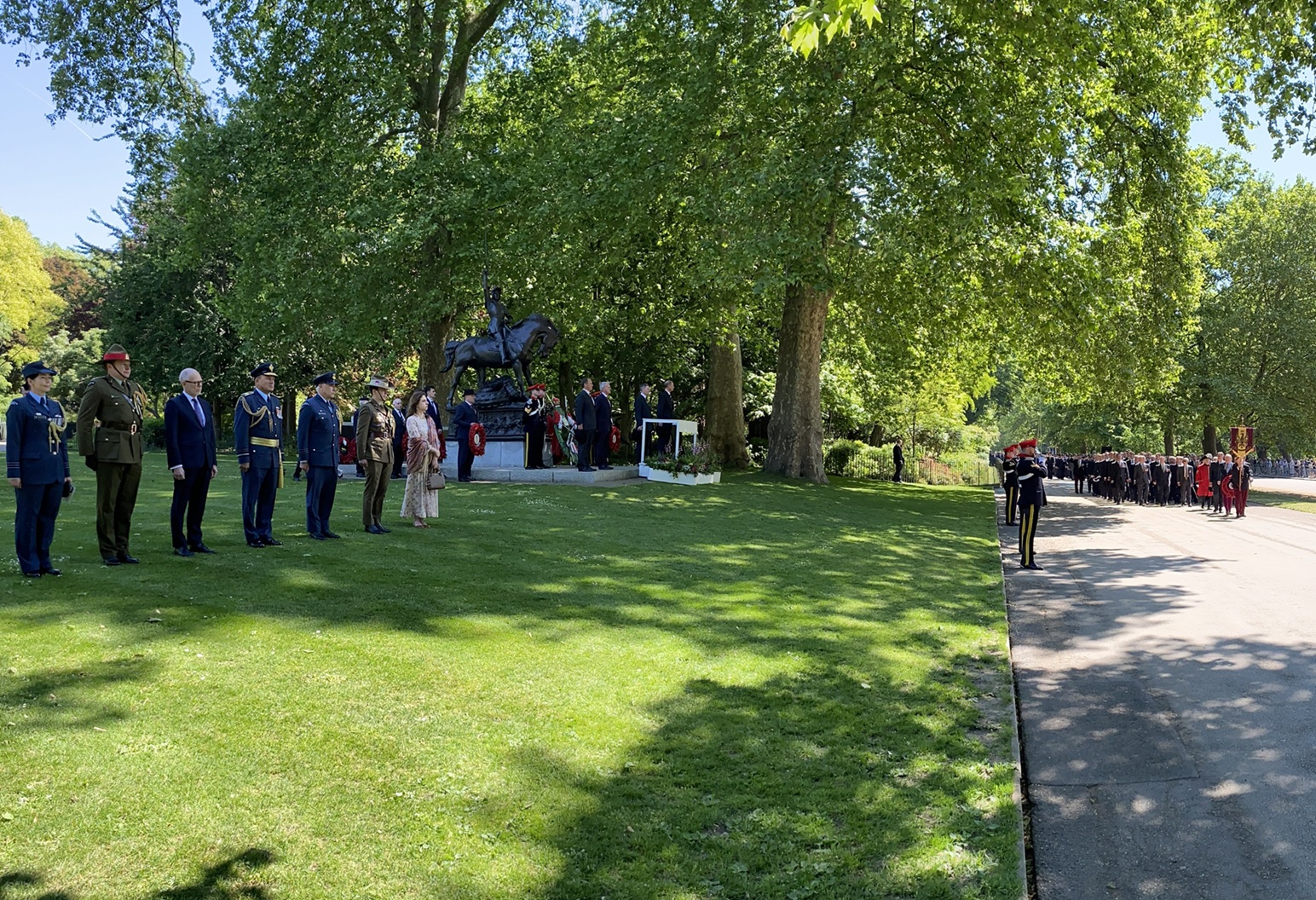
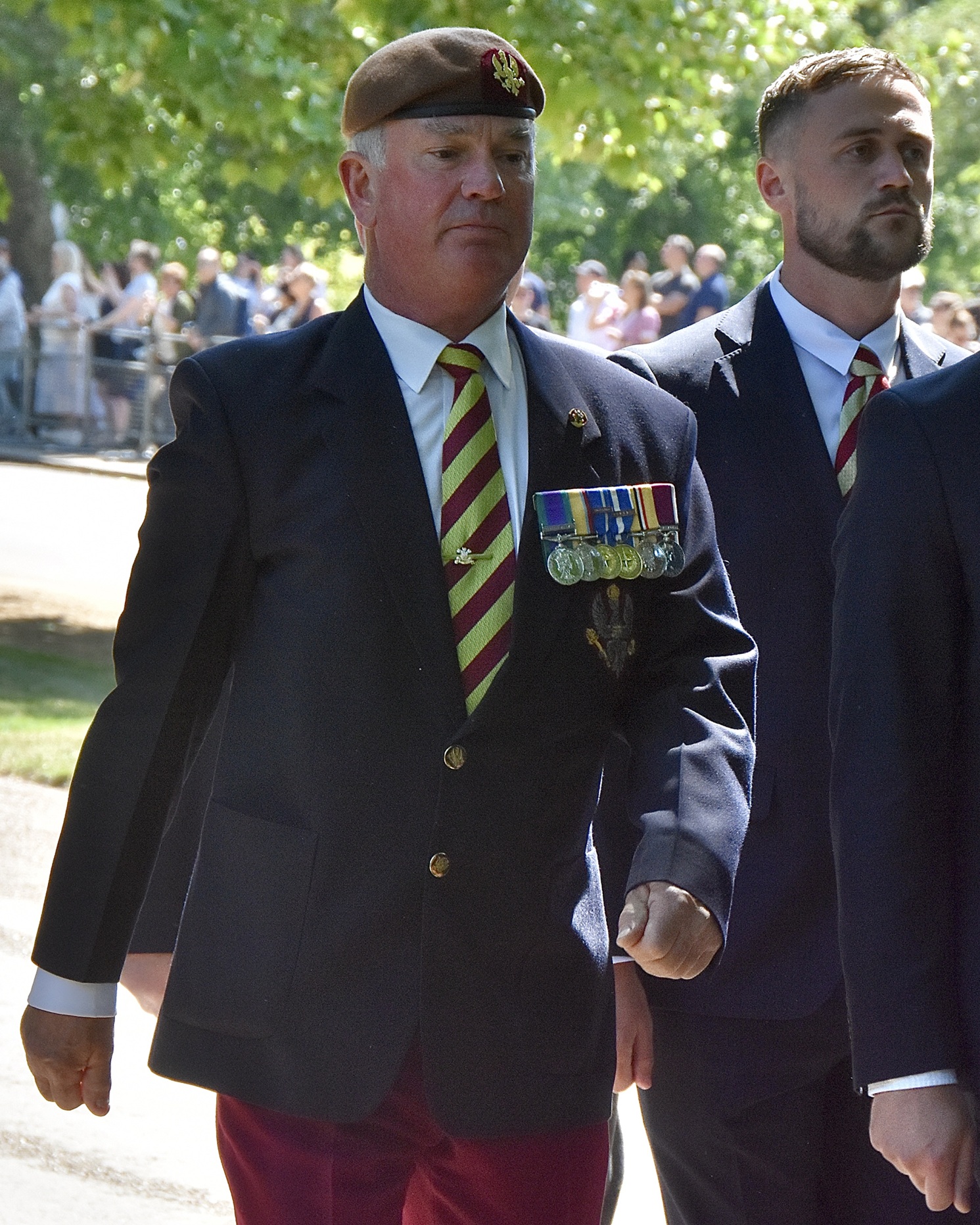
The KRH approaches the saluting base. In line on the left are representatives of New Zealand, Australia and Pakistan. Behind the saluting base party are the wreath bearers who have peeled off from the regimental associations that have already marched past.The KRH is organised into a total of five squadrons, four of which perpetuates the title of one of its antecedent regiments. A Squadron is The Twentieth Hussar Squadron, B is the Fourteenth, C is the Eleventh and D is the Tenth.Crimson trousers and brown berets are unique to the KRH.
The Light Dragoons
The Light Dragoons are known as “England’s Northern Cavalry.”
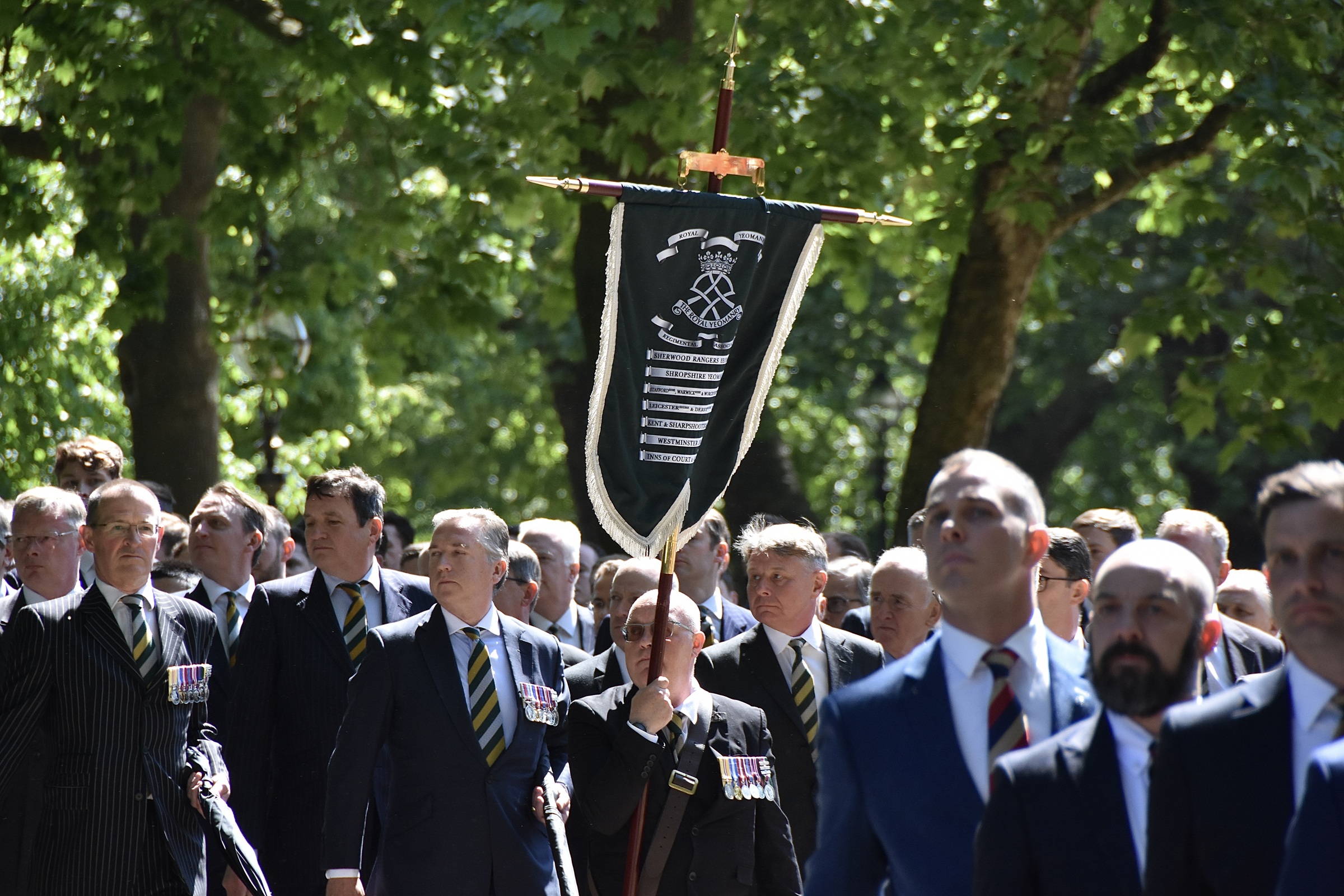
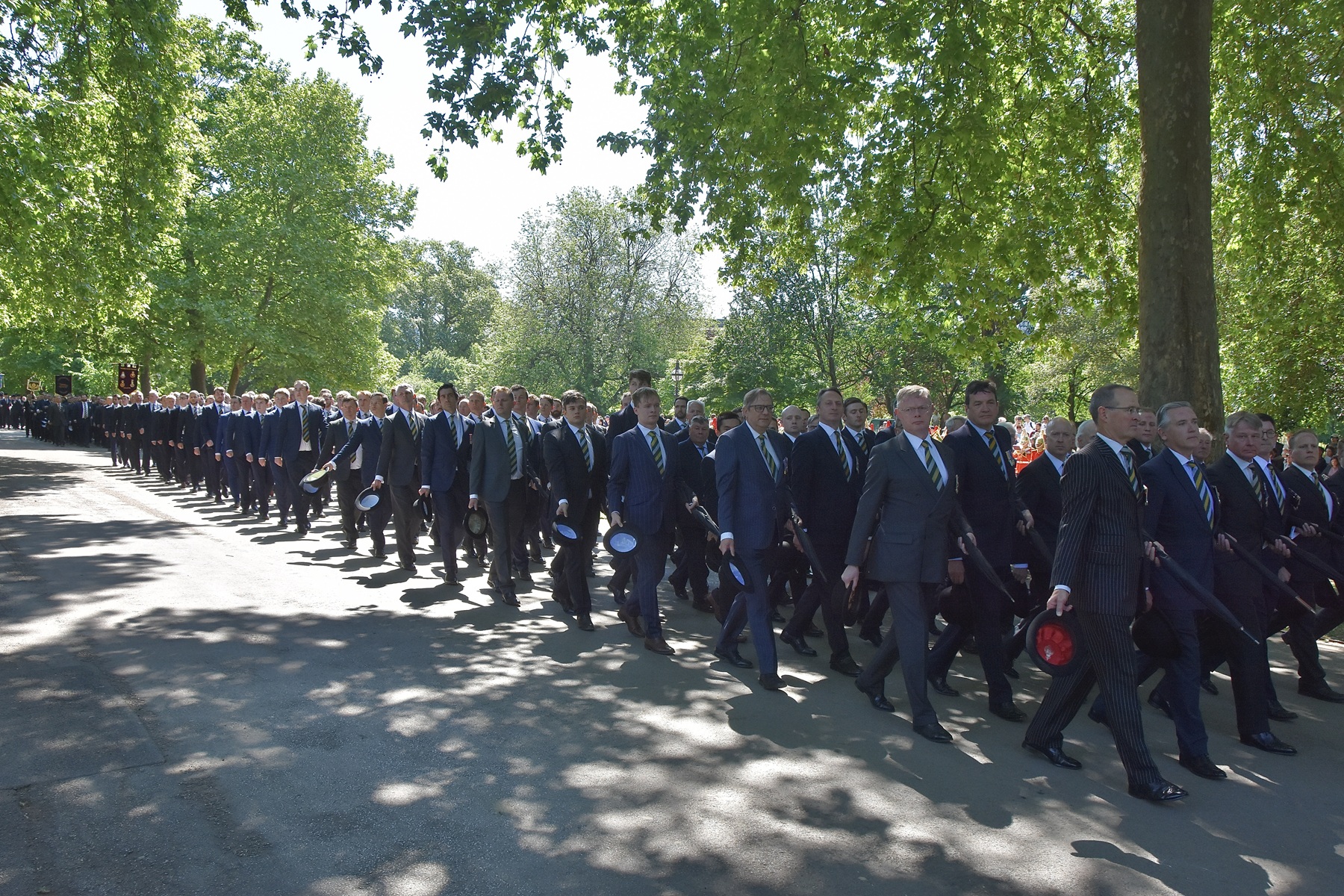
The Royal Yeomanry
The Royal Yeomanry is a light cavalry regiment in the Army Reserve (formerly the Territorial Army).Yeomanry are reserve cavalry that originated with the volunteer units that sprang up with the fear of invasion by Napoleon. A yeoman was one social rank below a gentleman and the yeomanry was initially a rural force that provided their own horses and that was recruited mainly from landholders and tenant farmers.
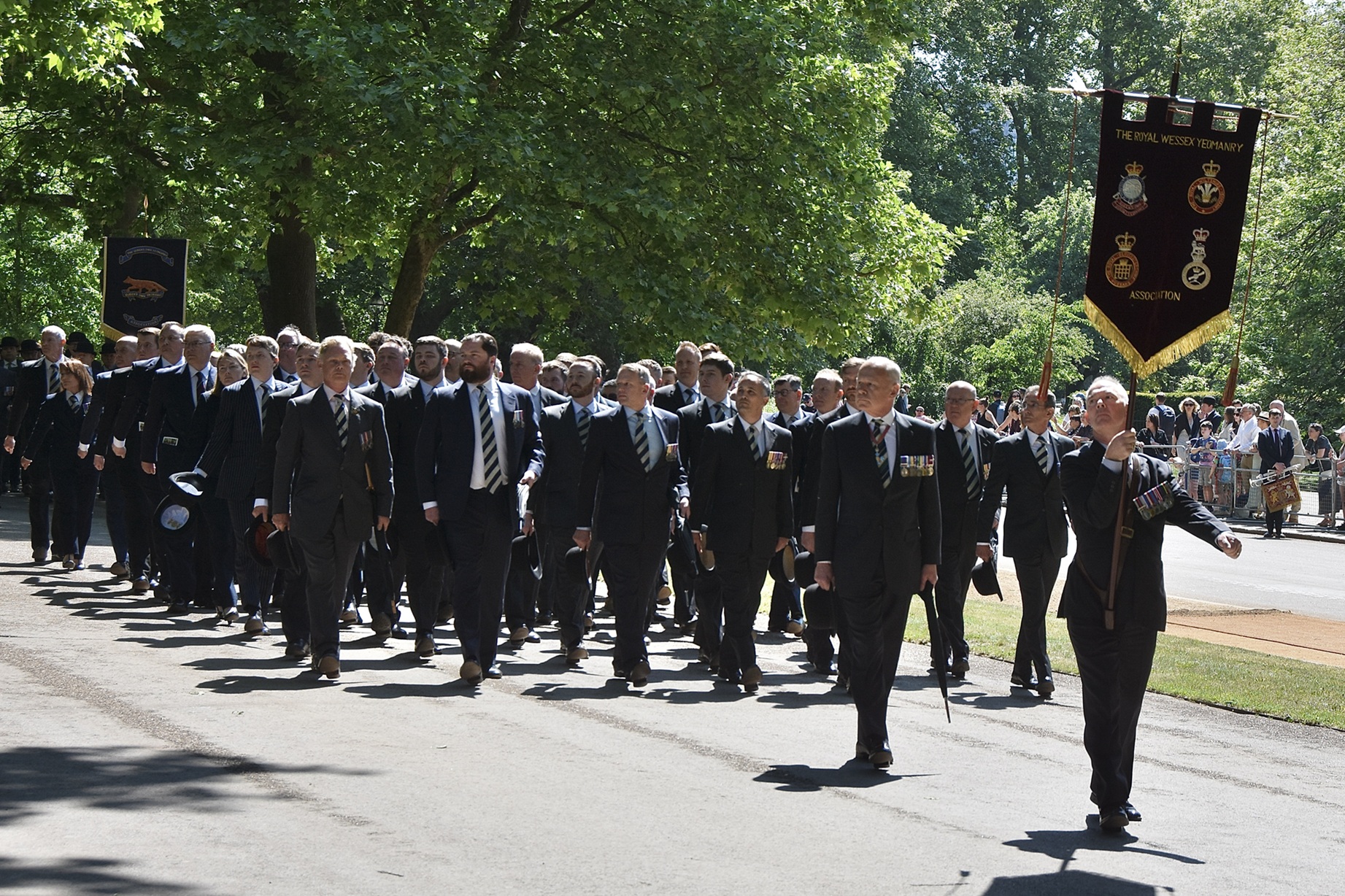
The Royal Wessex Yeomanry
The regiment can trace its history back to 1794, when some country gentlemen met in a pub to raise a body of yeomanry for the county of Wiltshire.
The Queen’s Own Yeomanry
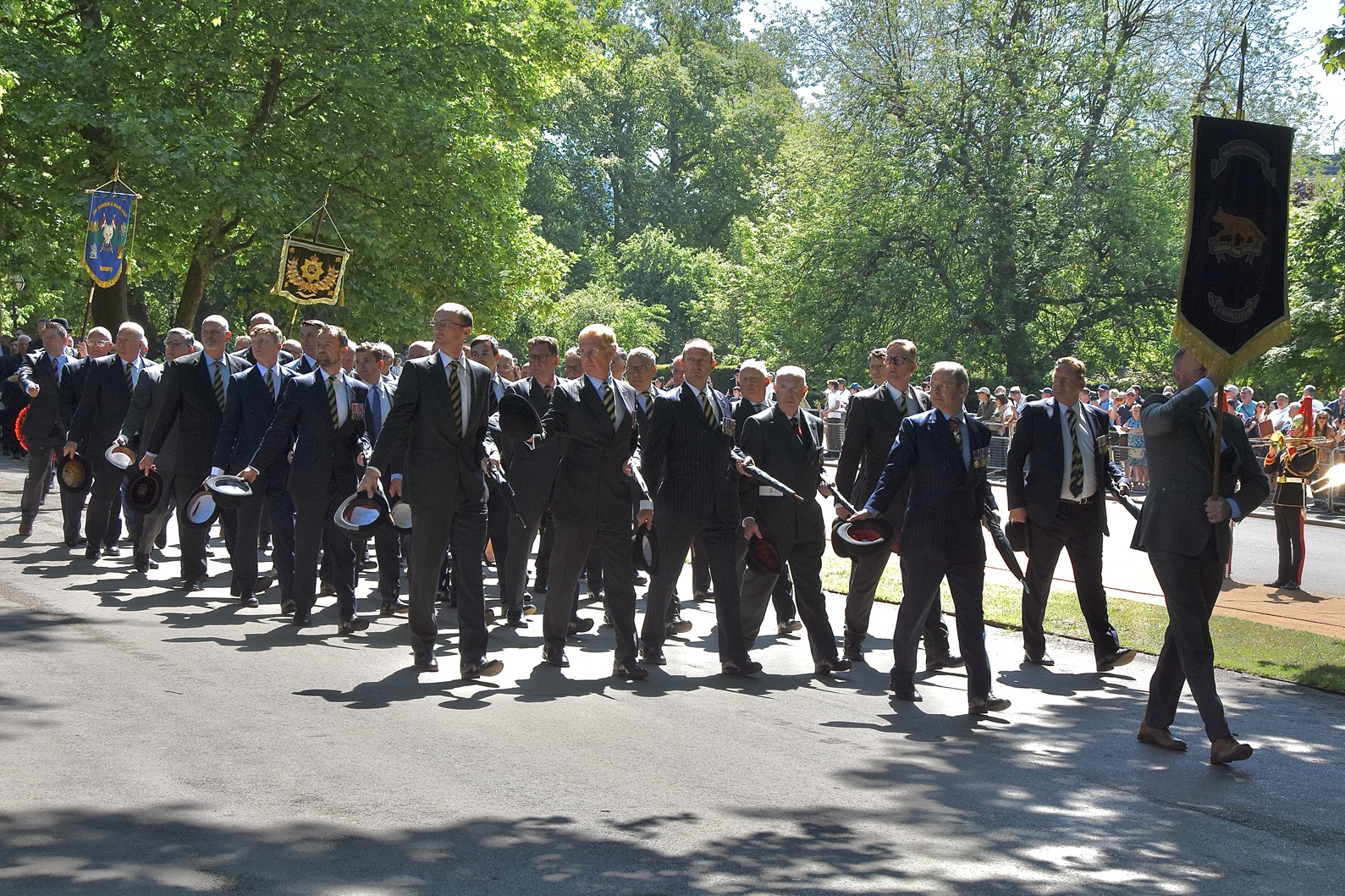
The QOY’s four squadrons, A to D, reflect its origins and recruiting areas: A (Yorkshire Yeomanry); B (Duke of Lancaster’s Own); C (Cheshire Yeomanry, The Earl of Chester’s); D (Northumberland Hussars). Behind the QOY are banners for the Scottish & North Irish Yeomanry and for the Middlesex Yeomanry.
The Scottish & North Irish Yeomanry and The Middlesex Yeomanry
As its name suggests, The Scottish & North Irish has numerous squadrons across Scotland and Northern Ireland. The Middlesex Yeomanry dates from 1797 and retained its cavalry role until it became one of the founding formations of the (Royal) Corps of Signals in 1920.
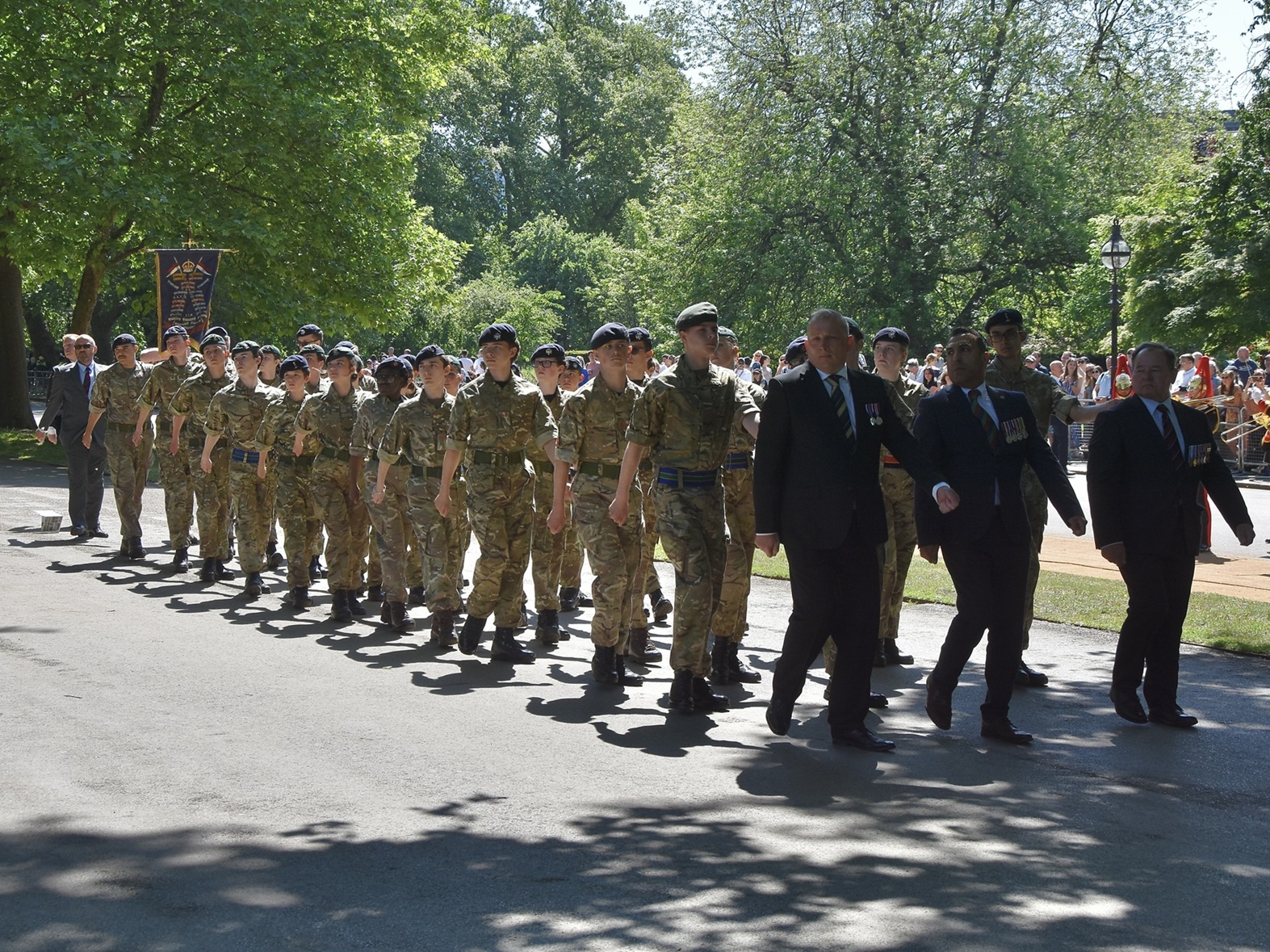
Army Cadets
Representatives of Army Cadet Forces and Combined Cadet Forces affiliated to Cavalry Regiments bring up the rear.
The Wreath Laying
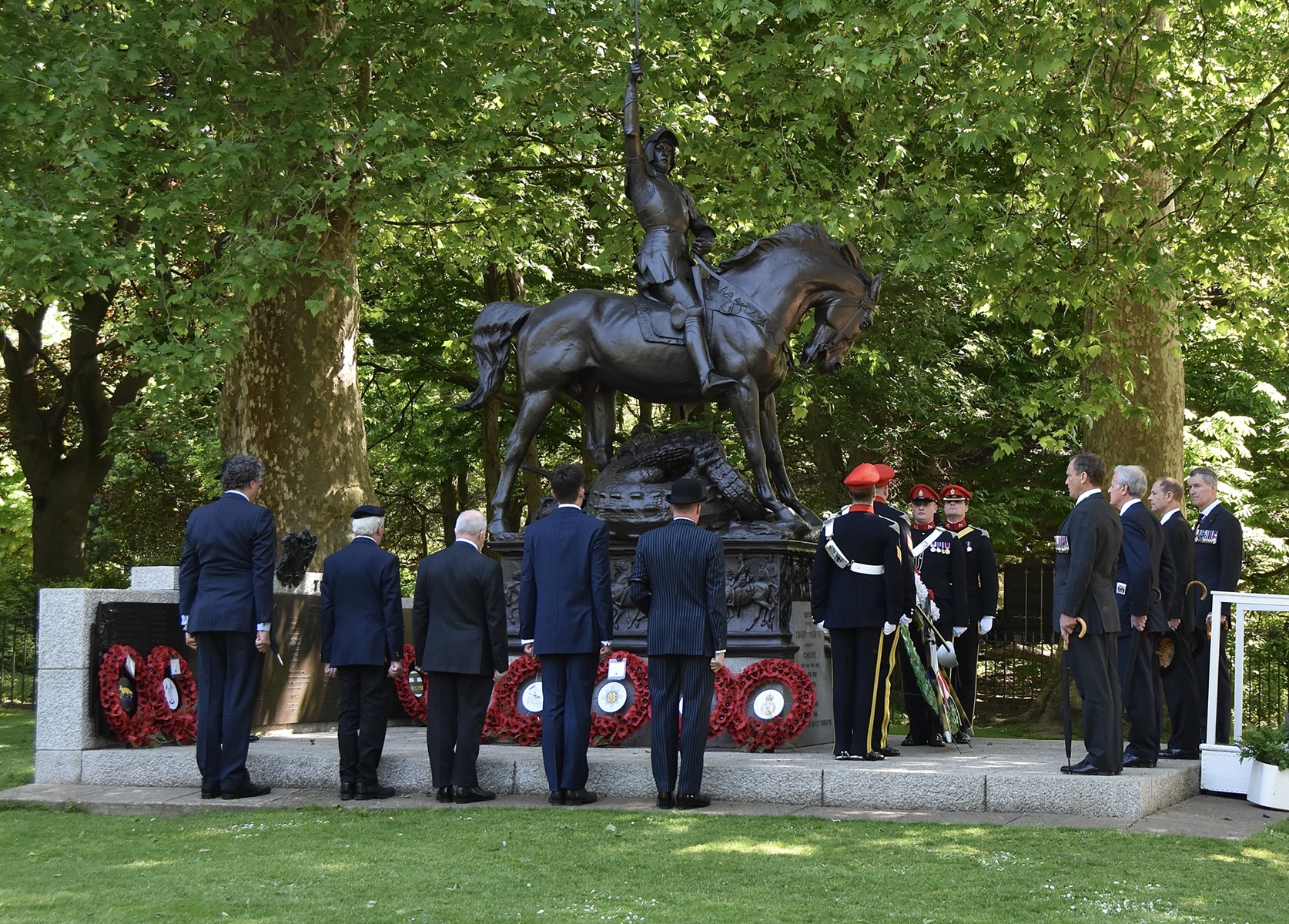
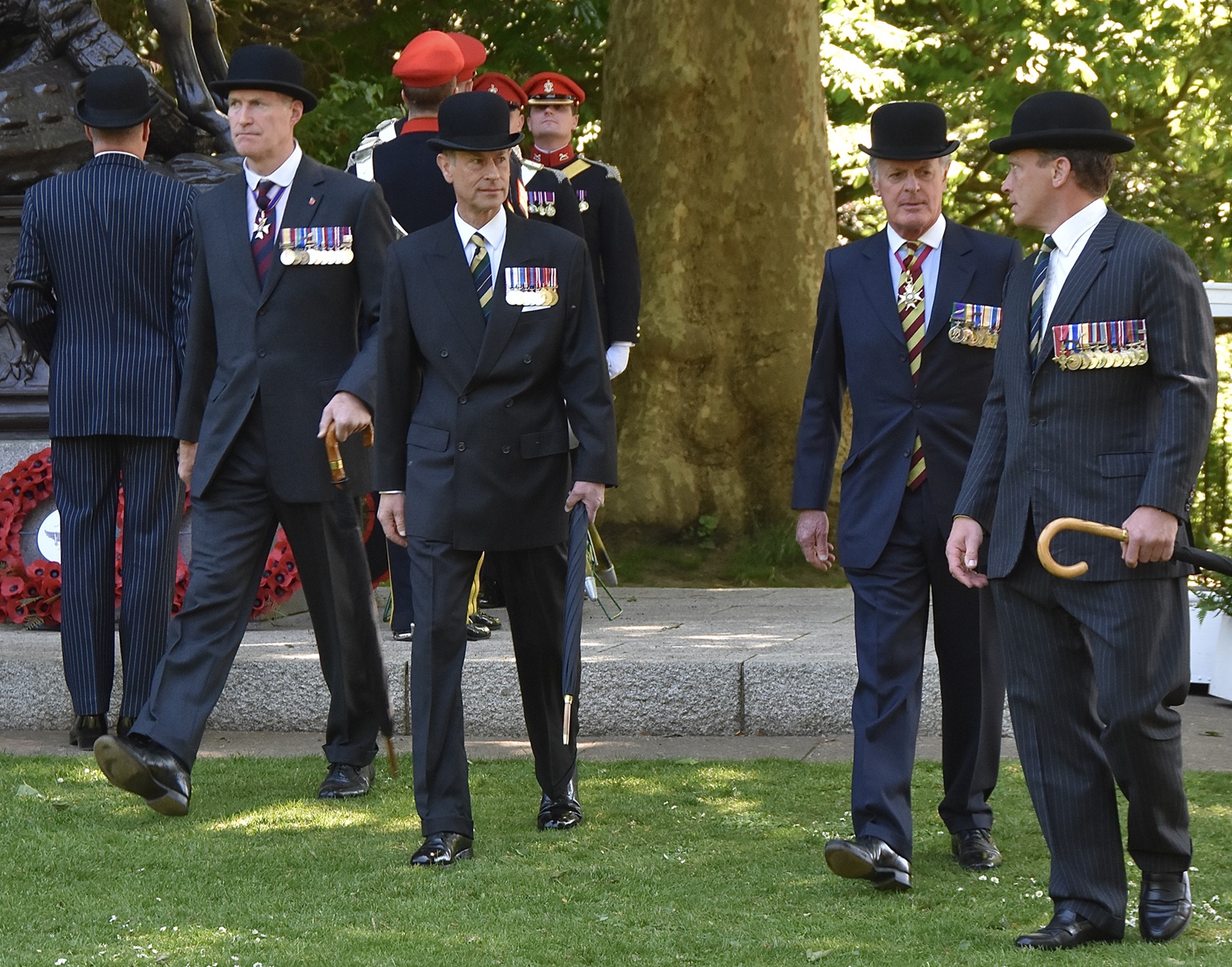
Prince Edward lays the Combined Cavalry Old Comrades Association’s wreath on the Cavalry Memorial, the monument already adorned with the wreaths of individual regimental associations.Lieutenant-General Sir Edward Smyth-Osbourne (President of the Old Comrades), Prince Edward (Colonel-in-Chief of The Queen’s Royal Hussars), General Sir Richard Shirreff (Vice-Patron of the Old Comrades) and Major-General Nick Cowley (Colonel of the Queen’s Royal Hussars and 2025 Old Comrades Parade Commander) make the short walk to the Hyde Park bandstand for the Memorial Service.


 Hear The Boat Sing