

8 May 2025
By Tim Koch
Tim Koch on two works by a great aquatic artist.
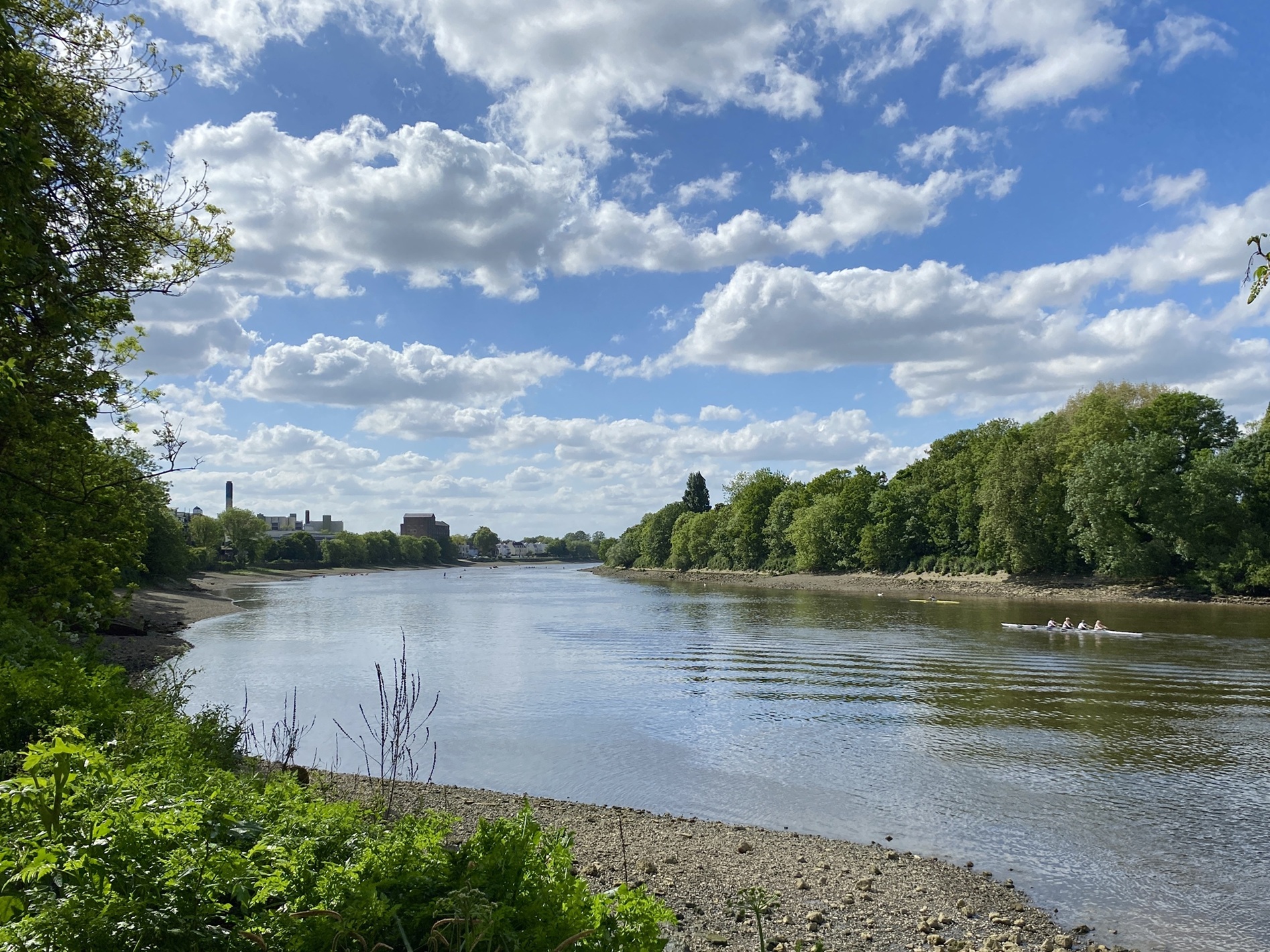
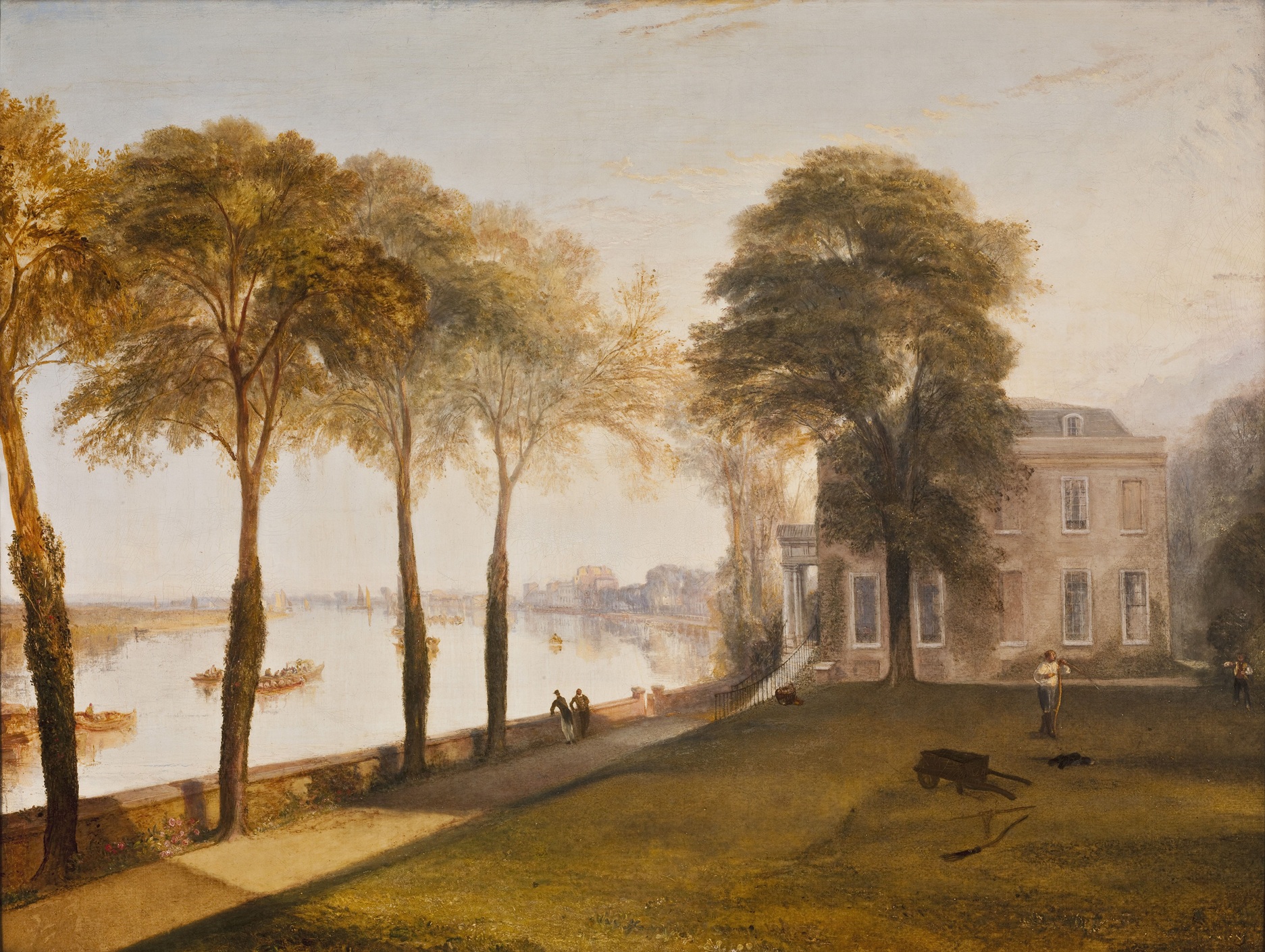
My recent pieces on Putney Embankment inspired rowing historian and HTBS contributor, William Lanouette, to contact me from the United States to say that two views of the opposite end of the Boat Race course to Putney that were once painted by JMW Turner have always fascinated him. They are Mortlake Terrace: Early Summer Morning (1826) and Mortlake Terrace: Summer’s Evening (1827). William wanted to know what the Terrace looks like today and, as this sounded like a nice job for a sunny summer’s afternoon, I cycled to nearby Mortlake to find out.
Joseph Mallord William Turner, 1775 – 1851, known in his lifetime as William Turner, was a much acclaimed artist in both his time and in ours. In 2005, his The Fighting Temeraire was voted Britain’s “greatest painting” in a BBC poll.
The two Mortlake paintings were commissioned by William Moffatt to show The Limes, his house overlooking the Thames. The Grade II listed building of c.1720 still exists as seven private apartments but is now less romantically known as 123 Mortlake High Street.
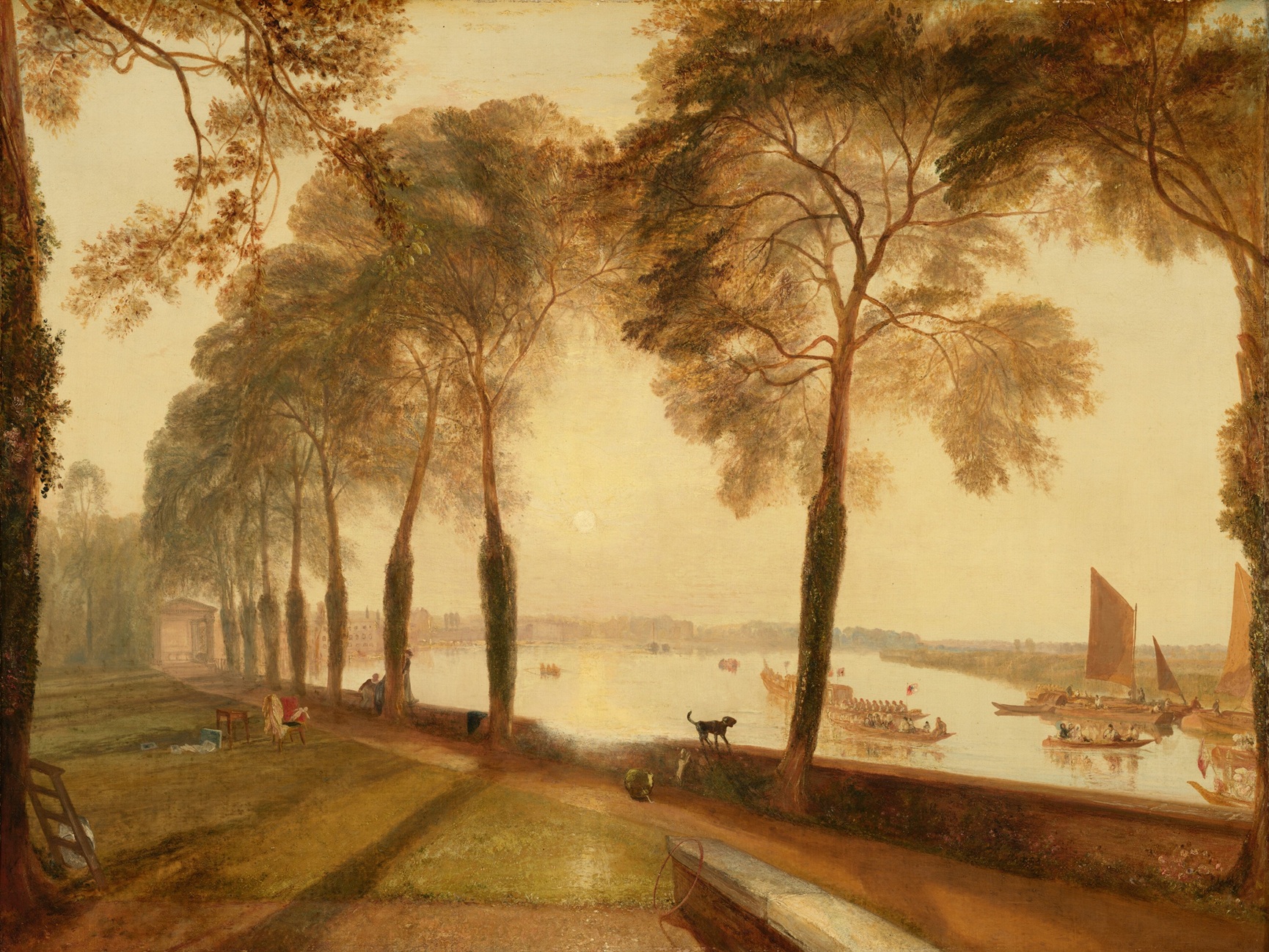
The National Gallery of Art: Turner established the quiet mood of the late-afternoon scene with two ivy-covered elm trees, whose soft, feathery leaves and curving limbs frame the painting. Long shadows create elegant patterns on the lawn that almost obscure the human element in the scene. Scattered about are a gardener’s ladder, a hoop, a doll on a red chair, and an open portfolio of pictures that have been just left behind by figures watching the Lord Mayor’s ceremonial barge. The painting was done about eight years after Turner’s first stay in Venice, where his perception of nature and the physical world was profoundly changed by the city’s unique light and atmosphere.
The Clone Gallery: Turner, a master of the Romantic landscape, uses vibrant colours and dynamic brushstrokes to evoke the fleeting beauty of nature. The (Mortlake) composition, with its reflections on the water and dramatic skies, illustrates Turner’s fascination with the effects of light. This work is a testament to his innovation and lasting influence on landscape art.
The Guardian’s art critic, Jonathan Jones: (Turner’s) Mortlake Terrace is a beautiful riverscape that reaches back to Claude and Canaletto and evokes a lost pre-industrial harmony.
Tim Koch, Hear The Boat Sing: The picture got rowing boats in it.
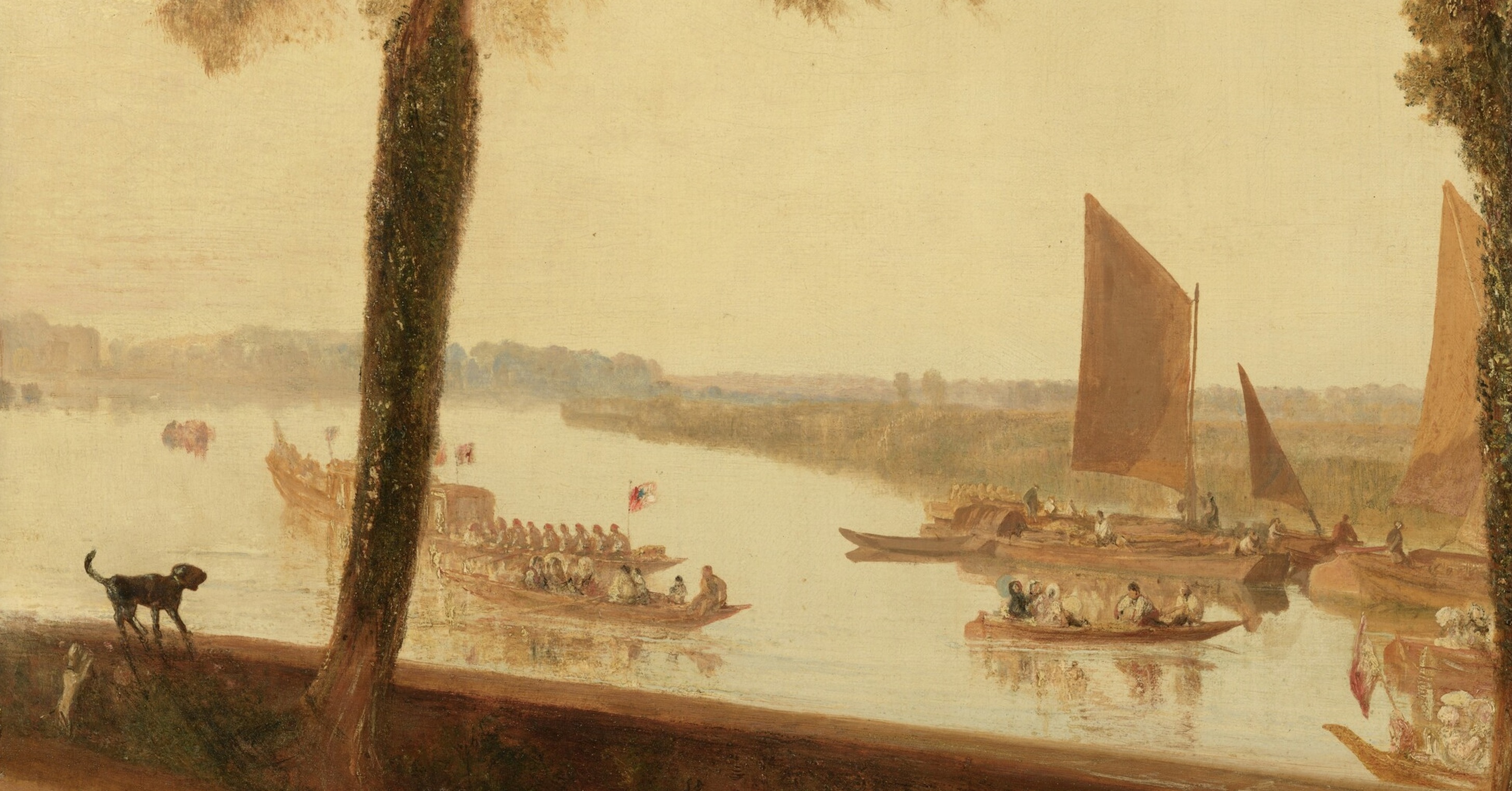
In Art in The Frick Collection: Paintings, Sculpture, Decorative Arts (1996) Harry N. Abrams says of the above:
Like so many of Turner’s works, it is based on numerous preparatory drawings, in which the artist recorded the topography and studied various ways of balancing the mass of the house and land against the open river and sky… Shown in the… Royal Academy exhibition of 1826… Mortlake Terrace was praised for its “lightness and simplicity.” Turner’s penchant for a luminous shade of yellow is again a dominant feature of the painting.
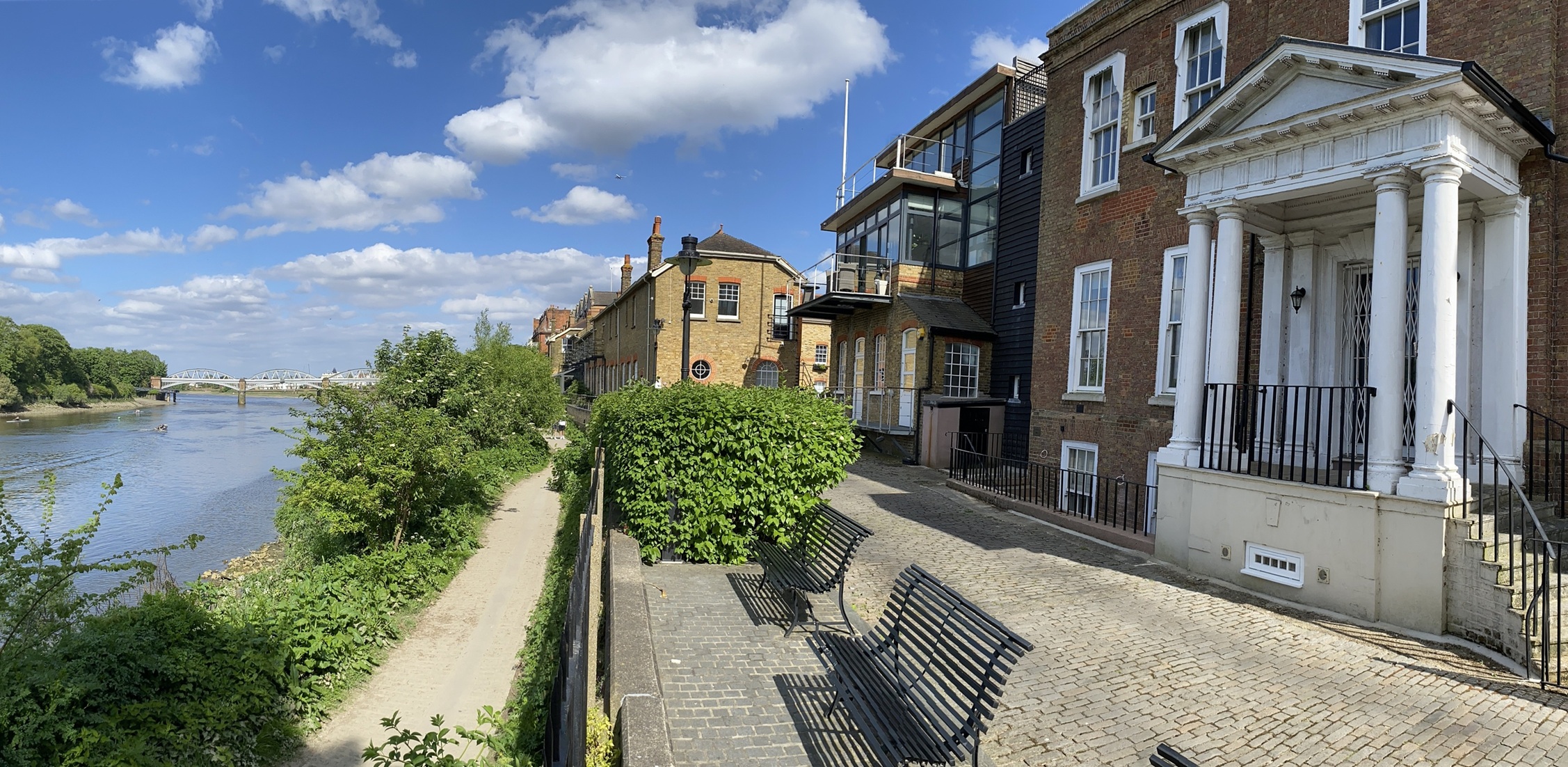
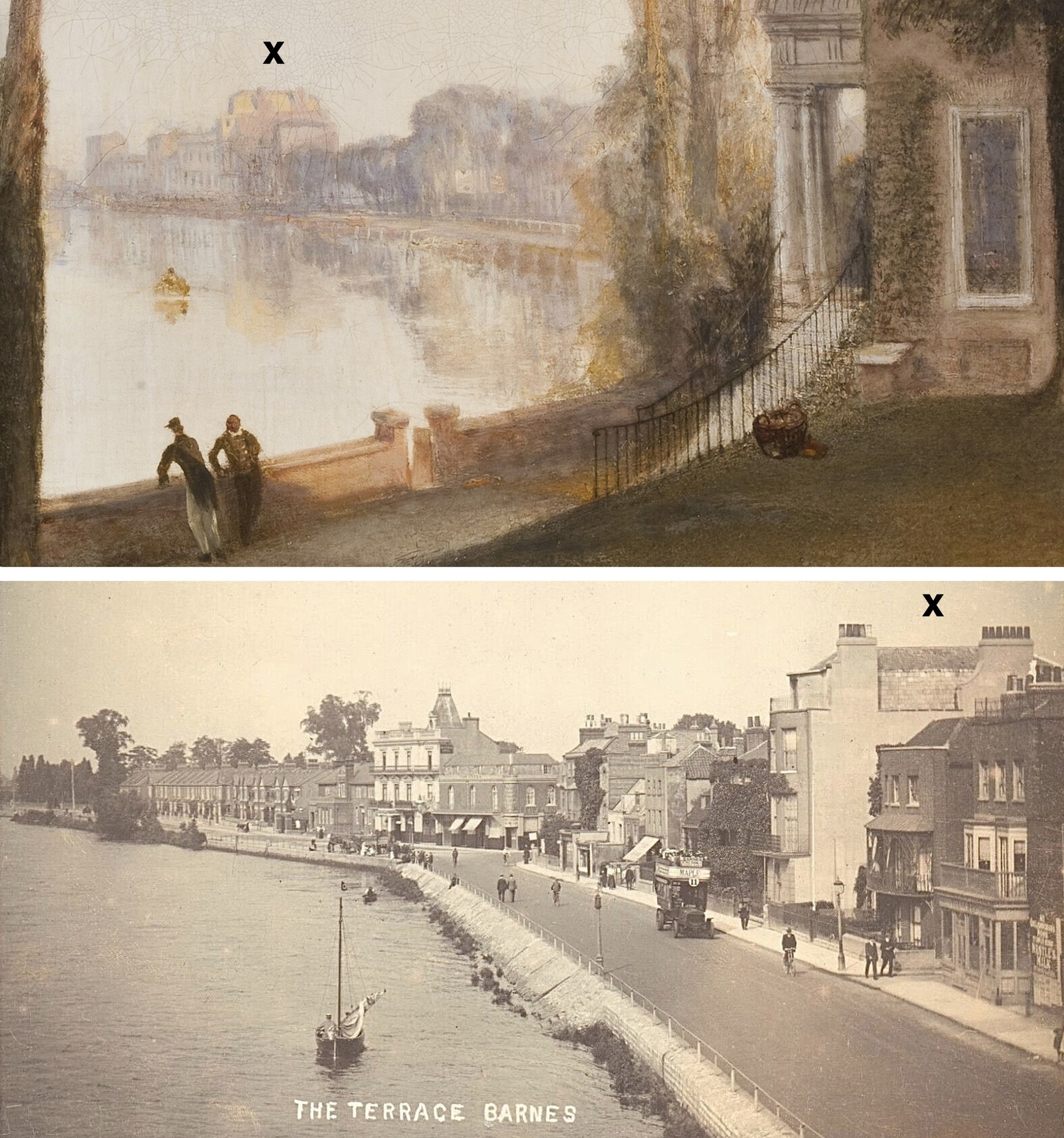
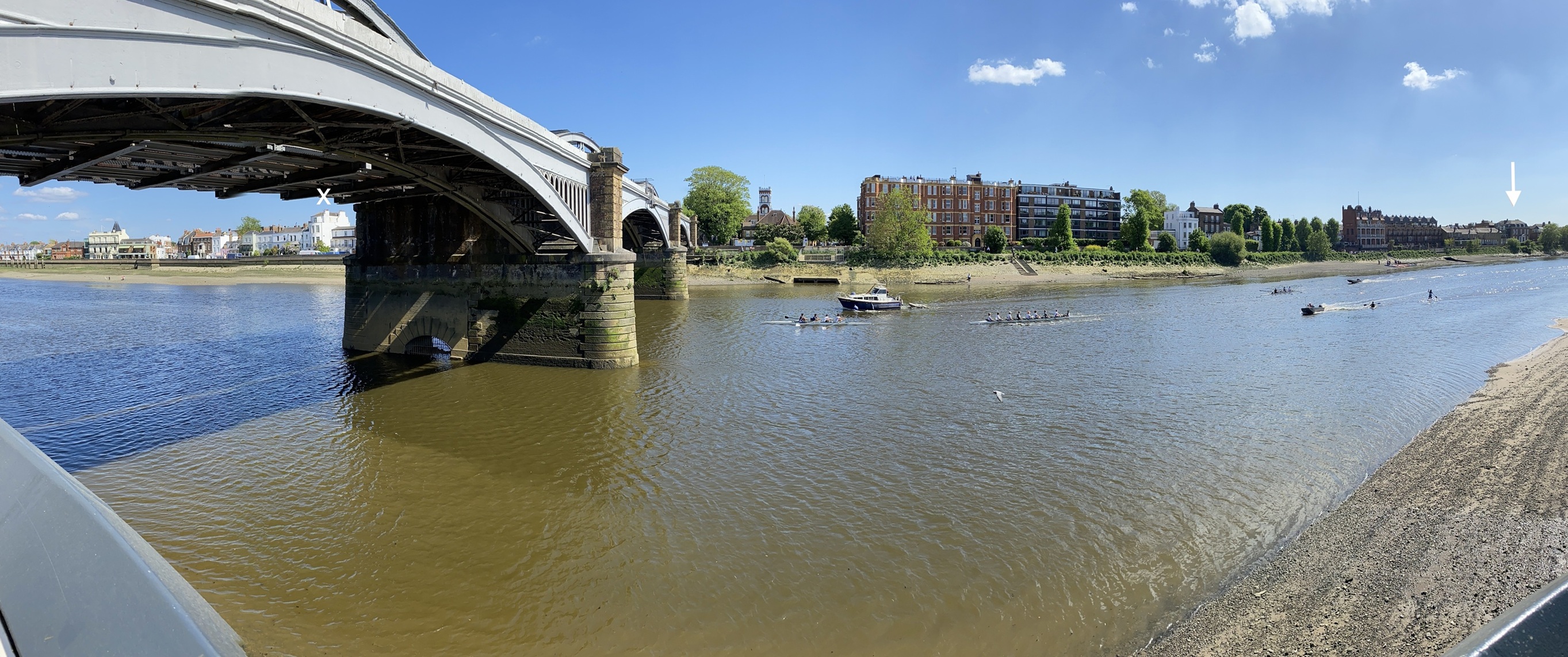
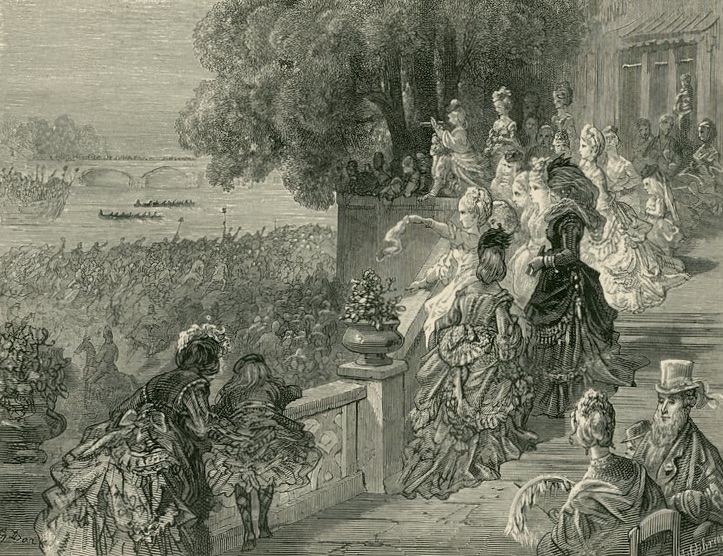
While it was easy for me to visit these sites as they are just a short cycle from my home, William has the best opportunity to see the original paintings that they inspired as Morning is in the Frick Collection, New York, and Evening is in the National Gallery of Art in Washington DC – good homes but both a long way from Mortlake.
 Hear The Boat Sing
Many thanks, Tim, for this research and detailed explanation of Mortlake Terrace today. I’ve rowed past it many times and am finally able to match the river view with these two paintings. It’s a pity the two works are in different cities, but with this piece you’ve united them delightfully. — Bill Lanouette