

28 April 2025
By William O’Chee
Preparations for this year’s Boat Races were marred by a disappointing spat over the eligibility of five Cambridge rowers. Three were enrolled in postgraduate certificate of education (PGCE) courses, and two were more than the maximum twelve years from commencing university study. Underlying it all was an evident surrendering of the race to the tyranny of lawyers.
None of this was helped by some of the vituperative comments that were thrown around. While I deeply respect and admire Imogen Grant as an exemplar of women’s rowing, her suggestion that Oxford’s objections were “a desperate ploy… to gain an upper hand in the most slimy way,” was unbecoming her status in the sport.
One cannot help but think her regrettable outburst exposed the battered soul of these races for all to see.
She should have realised that in diminishing Oxford, she invited a broader inspection that could only diminish Cambridge as well. Surely, she could not have forgotten the then 46-year-old James Cracknell enrolled in an MPhil degree in human evolution and rowed for Cambridge in 2019? Nor how, when Oxford were on a winning streak, Cambridge entered a biological male in the women’s reserve race.

However, since the subject is on the table, it is worth briefly understanding the points in contention.
While the Rules govern the conduct of the races, there is a further document, known as the Joint Agreement, which governs, inter alia, the eligibility of rowers and coxes. One of the requirements is that athletes must be matriculated members of the universities who are undertaking courses which lead to degrees.
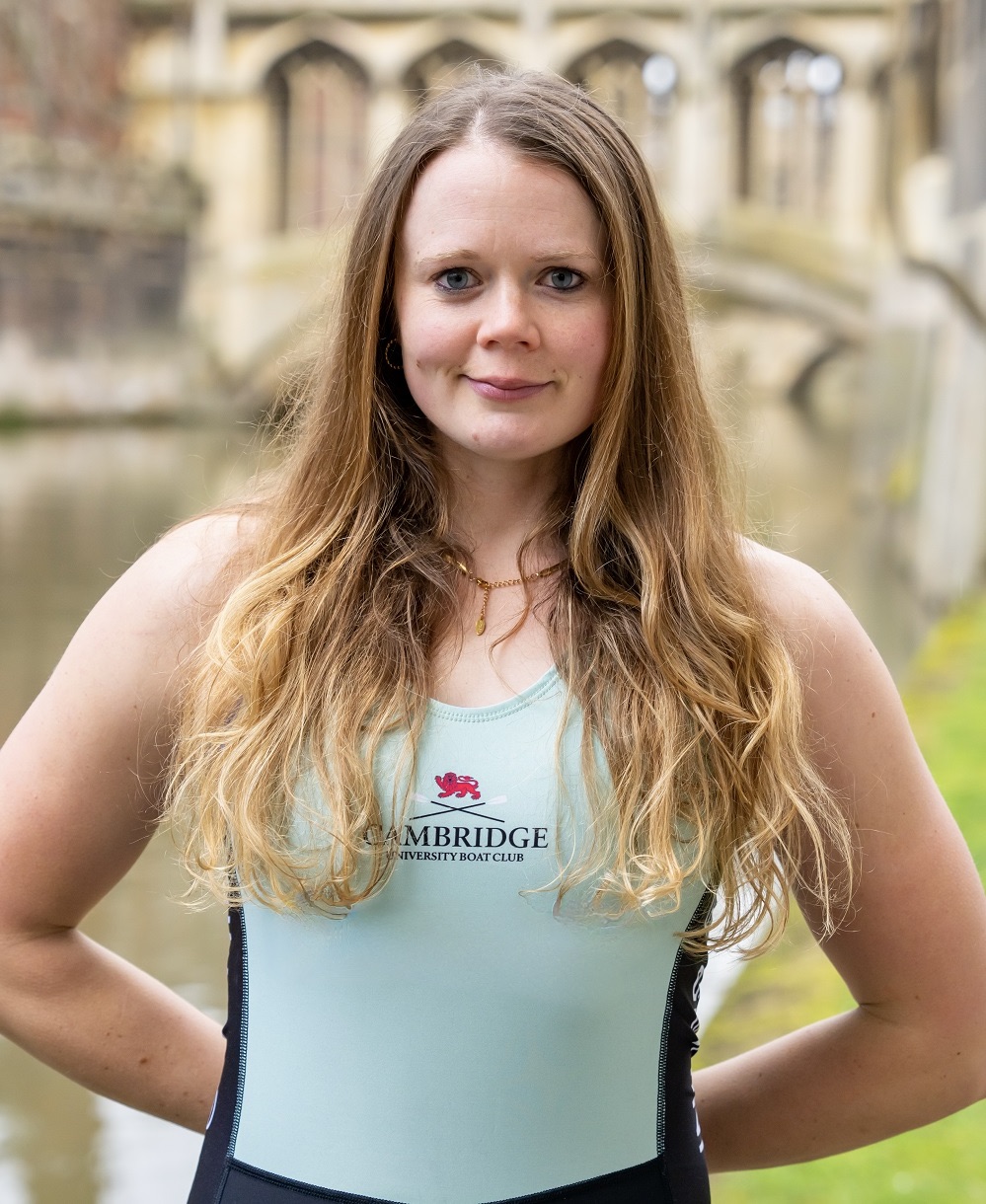
Three of the Cambridge athletes – Matt Heywood, Molly Foxell and Kate Crowley – were undertaking the PGCE. Molly Foxell and Kate Crowley had rowed twice for Cambridge as undergraduates.
Despite some athletes in prior years rowing while enrolled in PGCEs, Oxford challenged the validity of the three athletes, and the matter was referred to an “interpretation panel” which exists under the Join Agreement to resolve conflicts just such as this. At this point the matter becomes farcical. The interpretation panel ruled in December that a PGCE was not a degree, and that all three were ineligible to race. Cambridge then appealed that decision by submitting further evidence that a PGCE was, at their university, of an equivalent standard to a degree. Why they didn’t bother submitting this in the first place is bewildering. The panel then reversed its decision before Oxford pointed out that decisions of the panel could not be appealed, whereupon the panel reversed itself again, and upheld its original decision!
The panel clearly reduced itself to absurdity.
I have to confess a certain frustration here. It should have been obvious to those concerned that all of this meretricious rule making would inevitably lead to disputation. The creation of a body to interpret the rules not only invited disputes about the rules, but made them inevitable.

Then there is the matter of Tom Ford, a two-time world champion and Olympic gold medallist from 2024, as well as CUBC Women’s President, Lucy Havard. Ford graduated from Newcastle University in 2015, before embarking on a stellar career with Leander Club and the GB squad. However, it is clear that he is more than twelve years from commencing his first degree, and it is variously suggested that Oxford warned him he would be ineligible to race before he enrolled at Cambridge. Havard took her first degree, even earlier, in 2010, before becoming a doctor, and then deciding to do a doctorate in history. Despite being well past twelve years from commencing her first degree, she managed to row in Blondie last year and became Cambridge Women’s President.
Part of Cambridge’s outrage seems to have been that the twelve-year rule has not enforced last year, and so they should have been allowed to continue to ignore it. They have publicly argued a similar thing with regards to PGCEs.
While I cannot claim to have been the most diligent nor gifted Oxford law student of my time, even I can tell you that a law is a rule is a rule until it is no more, that is, until it is repealed. The idea that a rule ceases to be a rule because it hasn’t been enforced recently is patently ridiculous. In fact, there is a strong argument that laws perform their normative function best when, like the best armies, they never have to be put to the test. However, when they are tested, they have to be followed.
The grand mischief here is a complete misappreciation of the nature of the Boat Races. While they attract considerable public attention, they are private fixtures between Oxford University Boat Club and Cambridge University Boat Club. Their origin and format lie in the wager races common in the 1820s when the first Boat Race was conducted. That is why there is a challenge by the President of the preceding year’s losing side to a race over the Championship Course on agreed terms.
While the two Presidents delegate the conduct of the race to an umpire, it is their obligation to agree the terms of the race. This must include defining what is an eligible degree, and what makes a person an eligible athlete. Surely, we can trust the student Presidents from two of the world’s foremost universities to manage this task.
What must happen immediately the two clubs elect their new Presidents is that they sit down and agree these matters as they would the terms of a wager. If either club objects to a course being eligible then they have an absolute right to refuse to race against an athlete undertaking that course. No doubt this will result in a certain amount of haggling, but common sense will win the day. This should not need to be revisited unless new courses are added at either university, in which case they can be dealt with before the start of the academic year. And should either club attempt to boat an ineligible athlete, then the other club has an absolute right to refuse to race against them. This is a powerful incentive to do the right thing. Without it there is no race, and there are no Blues.

The resort to legalism is a recent and unwelcome intrusion. In the past both clubs had exercised common sense and due regard for the rules. Moreover, the respective Presidents operated with mutual respect. When Oxford’s Ronnie Howard faced a mutiny in the lead up to the 1959 race, Cambridge President Mike Maltby made it clear he would only race a crew nominated by Howard. A similar thing happened in the lead up to the Men’s Lightweight Boat Race in 1987, when the Cambridge President gave his support to his opposite number.
It would be a folly of the highest order to entrench the rule of lawyers in place of the good natured maturity which has characterised this unique event for almost 200 years. Regardless of who might gain a short term advantage, the event itself cannot but lose some of its soul.
The Boat Race must be saved from the lawyers.

Editor’s Note: This article was updated on 29 April. When James Cracknell was studying at Cambridge, it was for an MPhil degree in human evolution. Also, in an earlier version of the article, Cambridge’s Matt Heywood was mixed up with GB rower Matt Haywood. HTBS would like to thank Rebecca Caroe, who sent the corrections, and we would like to apologise to Heywood and Haywood for the mix-up.
 Hear The Boat Sing
Very interesting, thank you.
William, a good and interesting article and I support your fundamental propositions. And I was not aware of the 1987 Lightweights issue (I coxed CULRC in 1978) – I must reserach that! However, I think you are unfair on Imogen Grant – she is not the Pope or the Queen, she can tell us how she feels if she wants to. But your analysis of the Interpretation Panel is spot on. It is chaired by a Cambridge Corporate Lawyer I believe, and the farcical nature of their contribution is not a good advert for that profession. I also wonder if this all rebounded on Oxford. The Cambridge cox’s recording durig the race includes his saying ‘the next minute is for Heywood’. I feel that Cambridge has developed a genuince ‘club’ spirit which still seems lacking in Oxford. You also don’t mention Oxford parachuting in an Olympic gold medal winner as President – pretty unusual I think. Yet the technical analysis of the race I’ve seen also points out the lack of co-ordination and commoniality of technique between the Oxford 6,7, and stroke, three top Olympians all at Oxford for just a year and all rowing in different styles based on the NZ, Italian and US national squads I assume. Of course, there is a coach who could help Oxford to win within two years I reckon. But the authorities won’t be brave enough to give him a call…