

16 January 2025
By Göran R Buckhorn
In November 2024 on HTBS, Hélène Rémond reviewed Sophie Danger’s book Alice Milliat, La femme olympique about the Frenchwoman Alice Milliat, who helped organize the first Women’s Olympic Games. Then a month later, Katie Taylor, who is a Lecturer in Sociology of Sport at Nottingham Trent University, reviewed another book about Alice Milliat, Nancy Gillen’s La Vie Jamais Racontée: Alice Milliat, a French Heroine and Sporting Suffragette on editor Kjell Eriksson’s brilliant idrottsforum.org.
As we know, the first time women were allowed to row at the Olympics was at the 1976 Olympic Games in Montreal, in six boat classes: single sculls, double sculls, quadruple sculls, coxless pair, coxed four and eight (the men competed in eight classes). It would take 12 Olympic Games until women and men were competing in an equal amount of boat classes, seven categories, in 2024 in Paris.
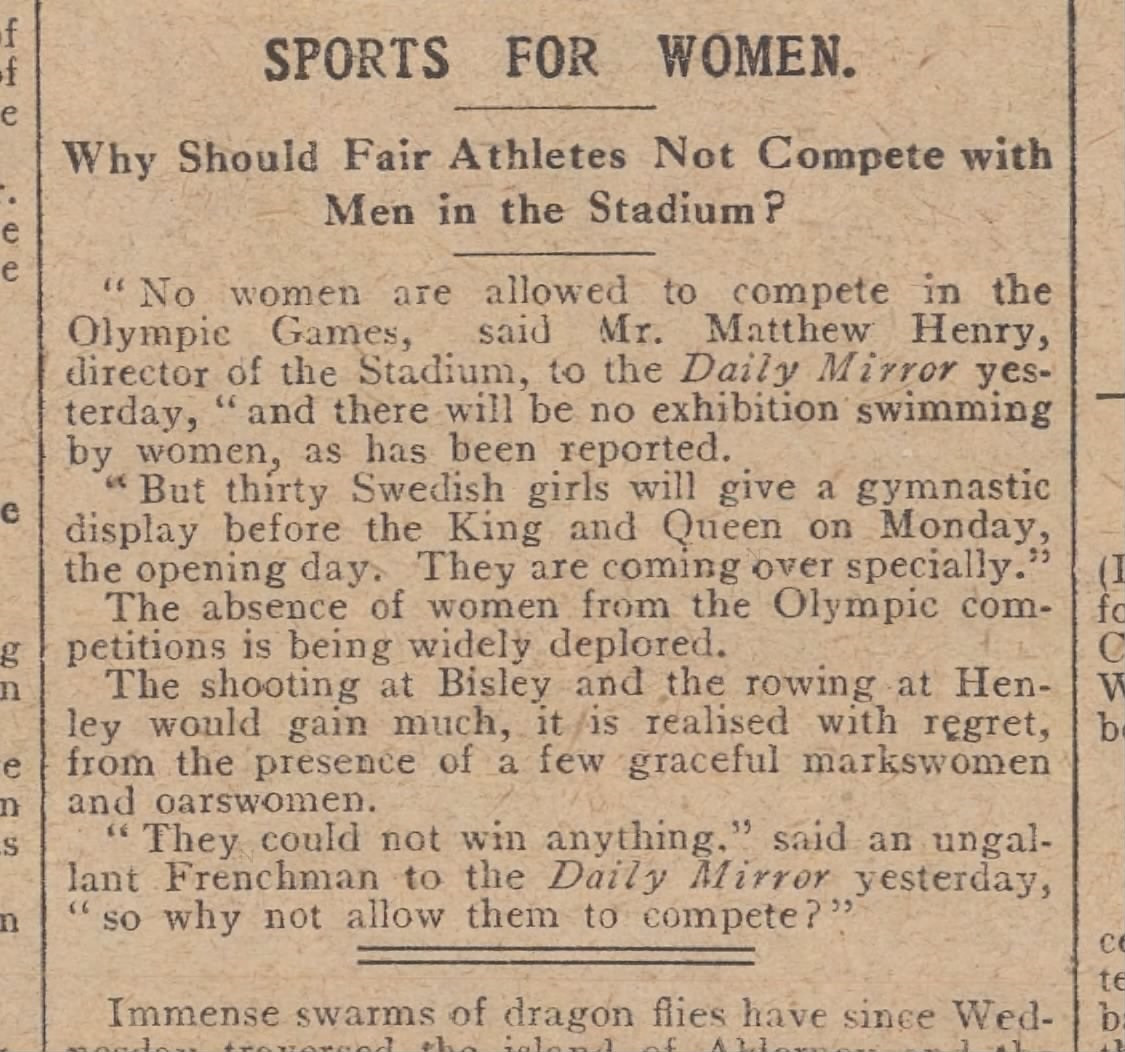
What maybe few people are aware of is that the discussion of women rowing in the Olympics is an old topic. The other day, Olympic historian Hilary Evans sent HTBS a brief notice from the Daily Mirror of London from July 1908. The unknown article writer called for women rowing at the Olympic Games, a four-day event at Henley from 28 to 31 July.
According to the notice, it seems that Matthew Henry, director of the Olympic Stadium, thinks that 30 Swedish girls giving a gymnastic display before the King and Queen on opening day would be enough.
Though there were four competitions for women at the 1908 Olympics: archery, figure skating and indoor and outdoor tennis.
 Hear The Boat Sing