

8 January 2025
By Bill Miller
(Please double-click on the images to enlarge them.)
There is a very rare rowing book that is a fantastic source of early rowing information, The Annual Illustrated Catalogue And Oarsman’s Manual For 1871. The title is a bit deceiving since it was published for only one year.

It was published by Waters Balch & Company of Troy, New York (WB&Co). This company manufactured paper racing shells. Their process was patented in 1868. In the 1870s-1880s, paper shells were the preferred boats used by professional scullers and top college programs.
The building process was similar to the way composite shells are built today, only they used 19th Century materials. Instead of today’s sheets of carbon fiber impregnated with resins and placed in molds, Waters, Balch & Company took multiple sheets of damp paper and placed them over a mold. Then the mold was moved to a heated room to dry, thus forming the shape of the boat. Each shell type and size needed its own mold.
George T. Balch decided to publish the Oarsman’s Manual to promote the superior characteristics of paper shells over traditional wooden boats. The scope of his effort soon exceeded his initial intention. What began as a two-hundred-page promotional publication for paper boats turned into five hundred pages chock full of information. When it was published in 1871, the cost for the book was three times the original budget.
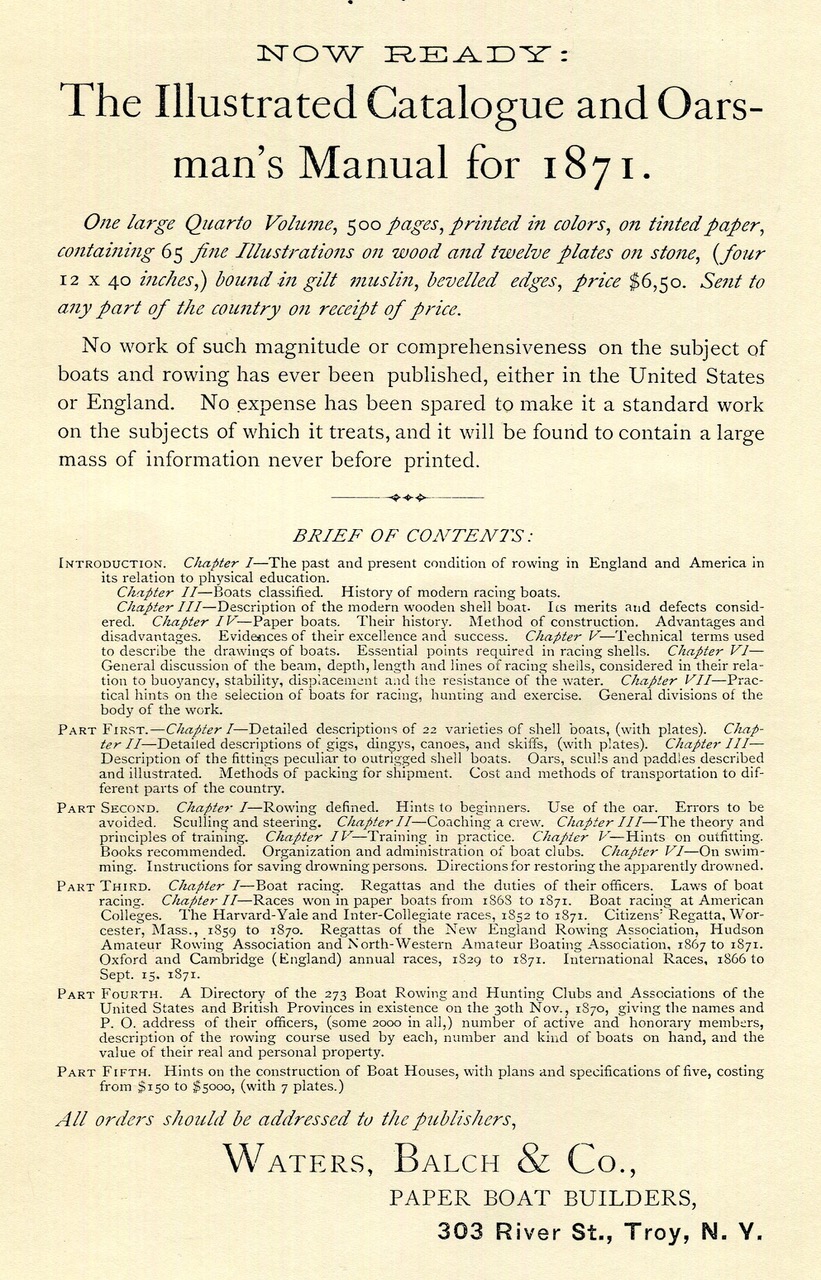
The WB&Co book announcement, NOW READY (image above) states:
Our large Quarto [9”x 12”] Volume 500 pages, printed in colors, on tinted paper, containing 65 fine Illustrations on wood and twelve plates on stone, (four 12 x 40 inches) bound in gilt, beveled edges, price $6.50. Sent to any part of the country on receipt of price.
No work of such magnitude or comprehensiveness on the subject of boats and rowing has ever been published, either in the United States or England. No expense has been spared to make it a standard work on the subjects of which it treats, and it will be found to contain a large mass of information never before printed.
It is a most complete record of all aspects of rowing at an informative time in the history of rowing: the rowing shell design was advancing, the sliding seat was just developed and the swivel oarlock would soon be in use.
The full Table of Contents is seven pages long. Everything about rowing is included. It even includes a printed letter to WB&Co, December 14, 1870, from John C. Babcock, Captain Nassau Boat Club. He describes how he experimented with the sliding seat and how it showed great promise (pages 119-120).

The NOW READY book announcement continues with the title BRIEF OF CONTENTS followed by an abbreviated table of contents:
INTRODUCTION.
Chapter I – The past and present condition of rowing in England and America in its relation to physical education.
Chapter II – Boats classified. History of modern racing boats.
Chapter III – Description of the modern wooden shell boat. Its merits and defects considered.
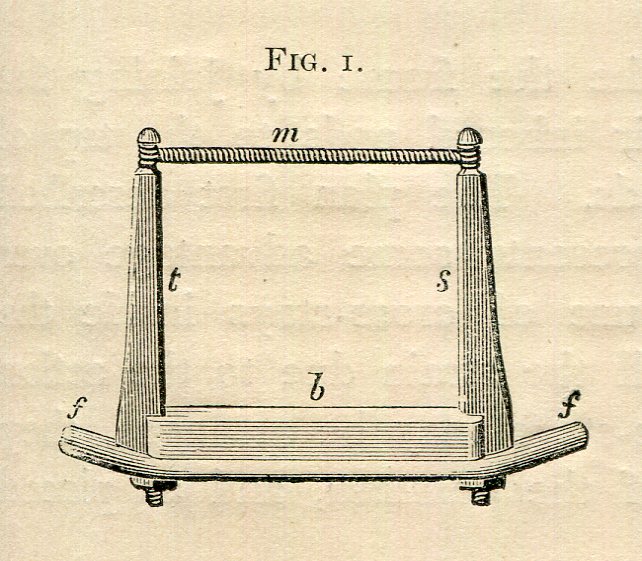
Chapter IV – Paper boats. Their history. Method of construction. Advantages and disadvantages. Evidences of their excellence and success.
Chapter V – Technical terms used to describe the drawing of boats. Essential points required in racing shells.
Chapter VI – General discussion of the beam, depth, length and lines of racing shells, considered in their relation to buoyancy, stability, displacement and resistance of the water.
Chapter VII – Practical hints on the selection of boats for racing, hunting and exercise. General divisions of the body of the work.
PART FIRST.
Chapter I – Detailed descriptions of 22 varieties of shell boats, (with plates).

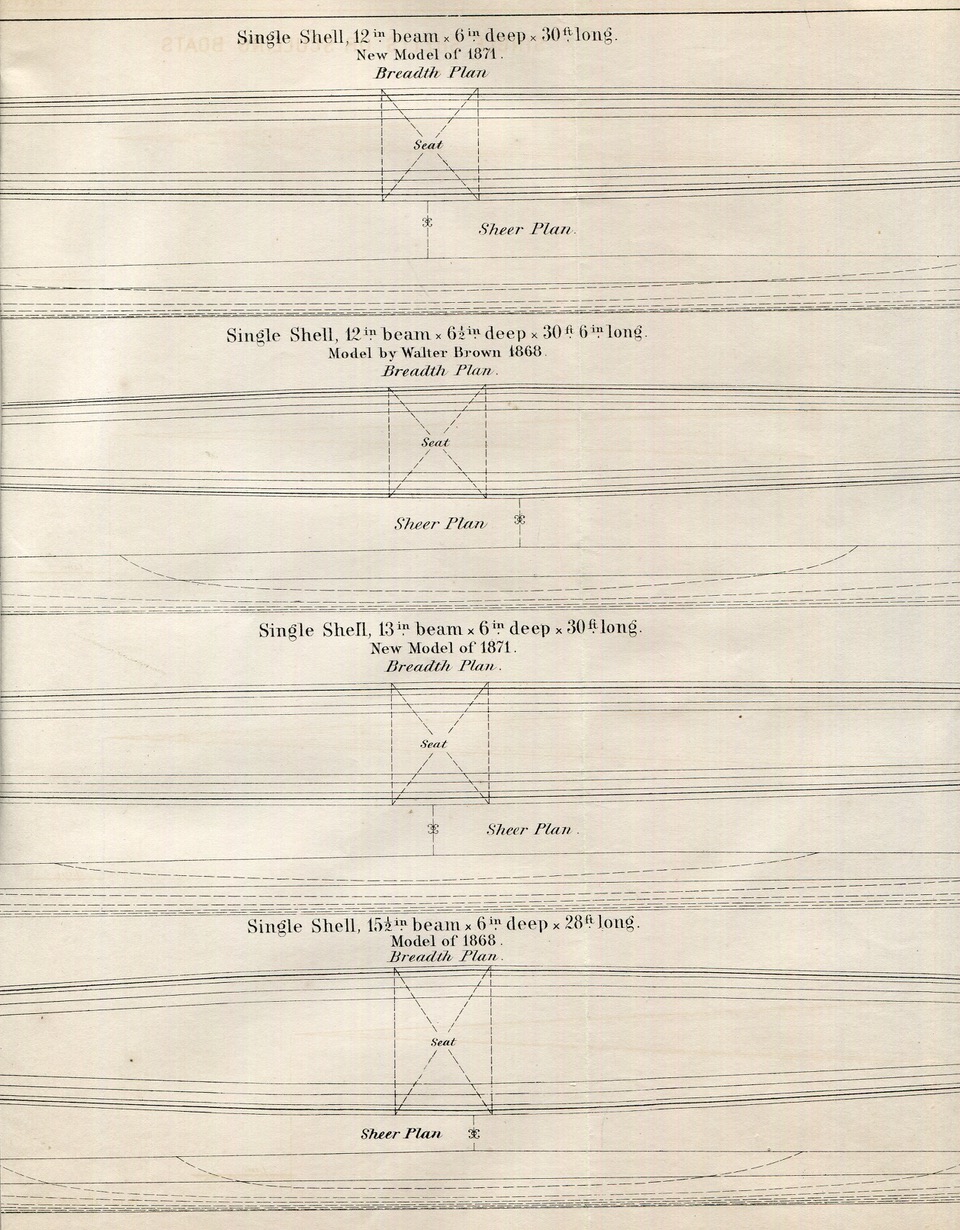


Chapter II – Detailed description of gigs, dingys, canoes, and skiffs, (with plates).
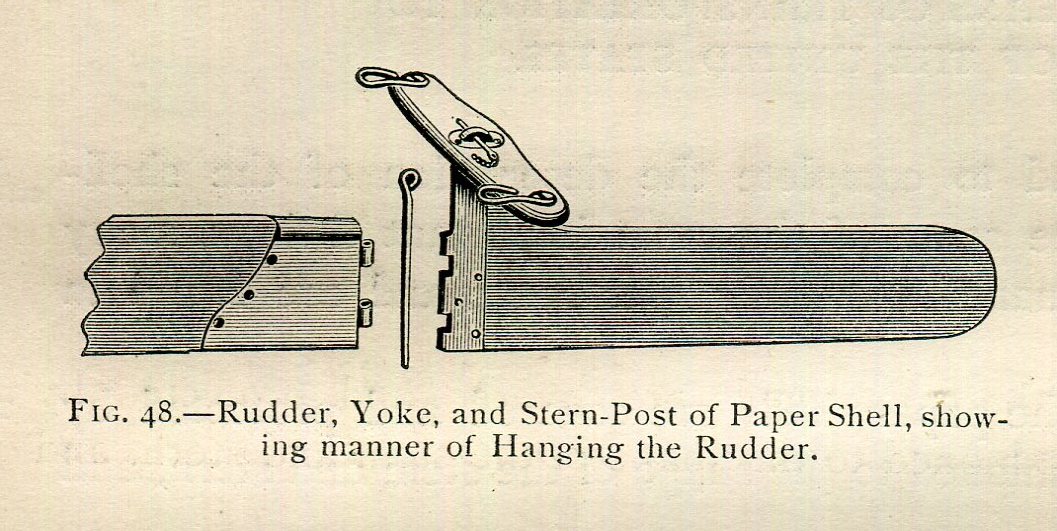
Chapter III – Description of the fittings peculiar to outrigged shell boats. Oars, sculls and paddles described and illustrated. Methods of packing for shipment. Cost and methods of transportation to different parts of the country.

PART SECOND.
Chapter I – Rowing defined. Hints to beginners. Use of the oar. Errors to be avoided. Sculling and steering.
Chapter II – Coaching a crew.
Chapter III – The theory and principles of training.
Chapter IV – Training in practice.
Chapter V – Hints on outfitting. Books recommended. Organization and administration of boat clubs.
Chapter VI – On swimming. Instructions for saving drowning persons. Directions for restoring the apparently drowned.
PART THIRD.
Chapter I – Boat racing. Regattas and the duties of their officers. Laws of boat racing.

Chapter II – Races won in paper boats from 1868 to 1871. Boat racing at American colleges. The Harvard-Yale and Inter-Collegiate races, 1852 to 1871. Citizens’ Regatta, Worcester, Mass., 1859 to 1870. Regattas of the New England Rowing Association, Hudson Amateur Rowing Association and North-Western Amateur Boating Association, 1867 to 1871. Oxford and Cambridge (England) annual races, 1829 to 1871. International Races, 1866 to Sept. 15, 1871.

PART FOURTH.
A Directory of the 273 Boat Rowing and Hunting Clubs and Associations of the United States and British Provinces in existence on the 30th Nov., 1870. Giving the names and P.O. address of their officers, (some 2000 in all) number of active and honorary members, value of their real and personal property.

PART FIFTH.
Hints on the construction of Boat Houses, with plans and specifications of five, costing from $150 to $500, (with 7 plates.)
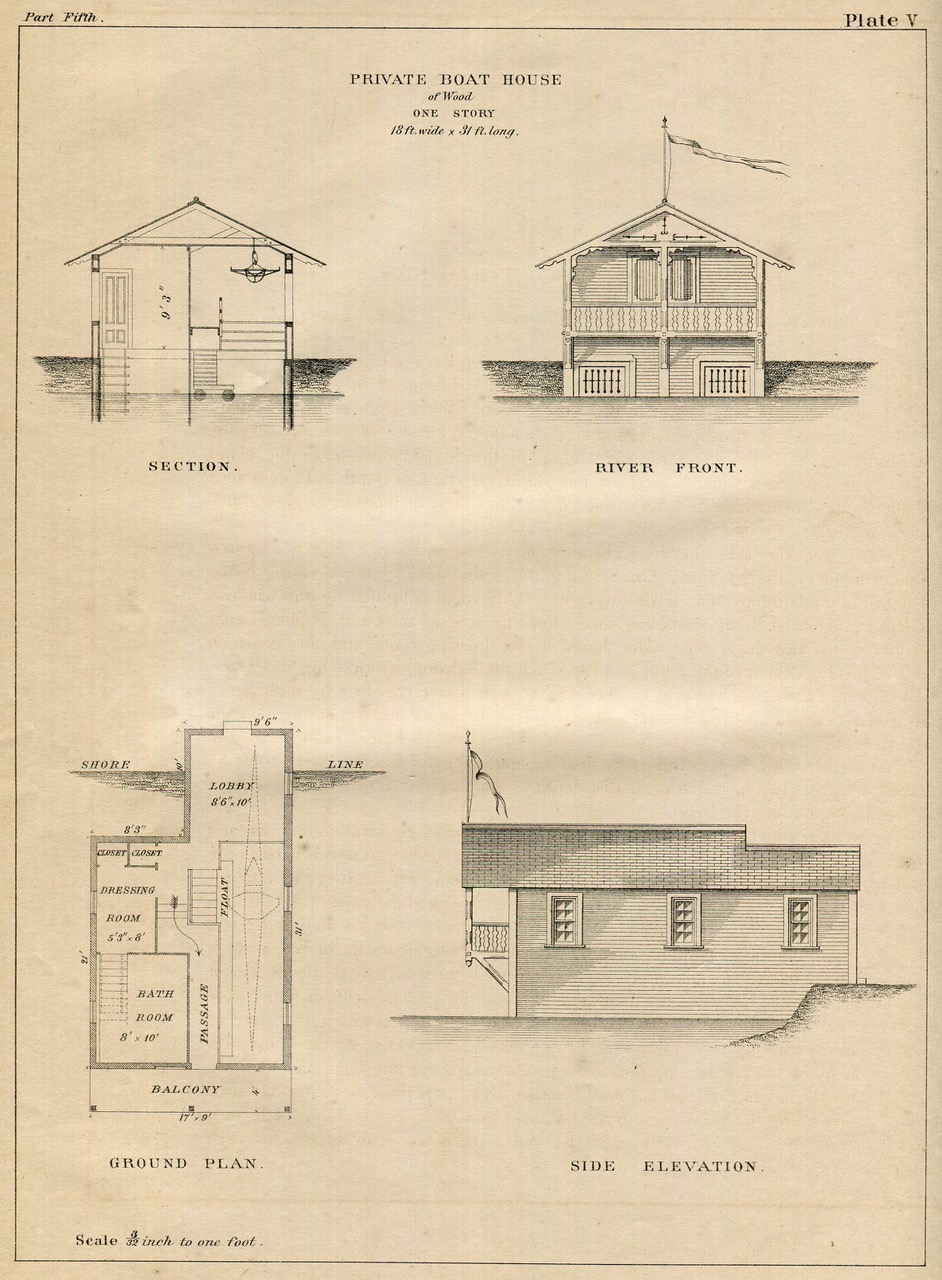

The illustrations and plates are fabulous.
The book was a commercial failure. The price in 1871 was $6.50, a sizable investment. Sales were dismal. The few that were distributed were presentation copies. In the directory of rowing clubs in America (PART FOURTH), WB&Co promised each club that submitted details about their organization, that they would receive a complimentary copy. I’ve seen about a dozen copies and every one is a presentation copy. I’ve never seen a retail copy. So, the huge effort to publish the Oarsman’s Manual and its poor sales caused WB&Co to abandon any attempt to publish another one.
It continued to manufacture paper boats for about twenty more years until a fire destroyed the factory and by that time wood, again, became the favored shell material.

The 1871 Manual is packed with details at a time when rowing was advancing and growing at a quick pace. I would describe it as the bible of rowing.
 Hear The Boat Sing
Because the book is so rare, the few libraries that have it are understandably not willing to lend it out. However, I have successfully been able to obtain digital copies of specific sections of the book through my local library via interlibrary loan. The key is knowing the section you want and limiting your request so that it does not become too burdensome since someone has to physically scan each desired page. You can see the few libraries that have the book by visiting WorldCat.org (the world catalogue) and entering the name of the book in the search box.
Bill Miller’s review of this book is great. The book is amazing, particularly in its description of paper boat technology, which, as Bill alludes to, if they had fiberglass in those days the wood boats would have disappeared much earlier, they had the concept and techniques way ahead of their time. As the book documents the paper boats were competitive to the best wood boats of the era.
There is actually an original Waters Paper shell single in very good condition, circa 1871, at the Finger Lakes Museum in Hammondsport, N.Y.
I have seen two original books, one in the book collection of the Free Library of Philadelphia, which they allowed me to view and take photos of sections. The other at the Seaport Museum also in Philadelphia, which is the copy given to Undine. I also have a digital copy of the entire book.
Hi Rick, is there any chance to get a copy of your digital copy of this magnificent book?