

30 December 2024
By Chris Dodd
Chris Dodd remembers the coach who changed the world of women’s rowing.
When Penny Chuter began to mess about in a rowing dinghy as a toddler and water sports as a teenager, rowing clubs were gentlemen’s clubs, European championships and the Olympics were open to men only, and the council of Britain’s Amateur Rowing Association (ARA) hardly ever saw a woman at their table.
Some 50 years later, clubs opened their doors to female members, world regattas and Olympics offered equal numbers of open events for women and men (so today does the traditional Henley Royal Regatta), and the headcount of women who row had undergone humongous growth in schools, universities, clubs, competitions and world-wide participation.
Much of this transformation rests on the oars of Penny, the girl who became a tough sculler, an inventive coach and an effective trainer to athletes and top-level performers at British Rowing (as the ARA is now called) and World Rowing’s world-wide development programme.
The Chuter family lived by the river at Laleham from where Penny rowed her little pulling boat across the Thames to primary school from the age of five. She could also swim the river at that age, and she joined Laleham skiff and punting club because it accepted women as members. Consequently, she learned to shove a skiff, pole a punt and scull a two-oared racing shell with a sliding seat. Thus emerged a remarkable multi-talented champion.
She won the first of her 27 punting championships at age 15 in 1957 and the first of 21 skiff championships in the following year, both disciplines achieved in singles, doubles and mixed categories. Settling to a future in rowing, she found little coaching material available at that time, so she sought help from top-level practitioners such as Neville Miroy, ‘Jumbo’ Edwards and Stuart ‘Sam’ Mackenzie, an Australian who won the Diamond Sculls at Henley in six consecutive years.
British coaches were obsessed with style – straight or arched backs, knees jammed at ‘front stops’ to take an explosive stroke or hesitation on the slide until blade is locked in the water. So Penny studied technical books by athletes such as Gordon Pirie, Herb Elliott and Derek Ibbotson, and she joined Sam and GB’s Rand brothers training on Henley reach while Sid Rand’s star track-and-field wife Mary ran the towpath. After training, Penny and Sam would roar up the Fairmile in his soft-top Austin Healey to the pub at Bix.
Penny aimed to compete in the 1960 Olympics in Rome until she found out that Olympic regattas were for men only. She won a silver medal in 1962 at the women’s European championships, her best result in five entries from 1960 to 1964. With no money and minimal support from the ARA, she travelled alone to east European regattas carrying her oars into Berlin’s Soviet zone through Checkpoint Charlie. When opportunity arose she travelled with Sam who was then the superman among world scullers and whose car’s roof rack contraption was large enough to carry two boats.
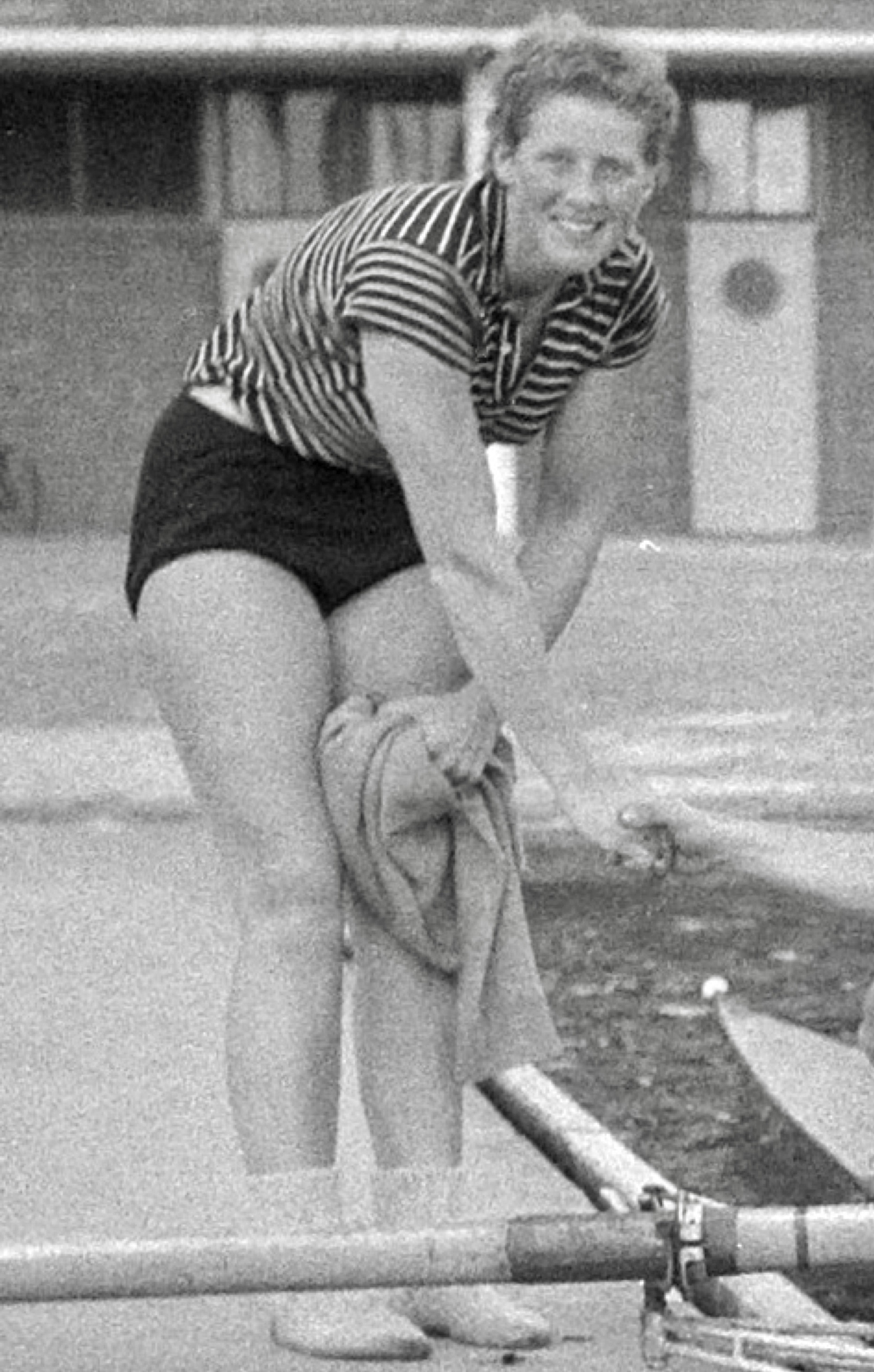
Penny was born in Dunfermline, the younger daughter of Gladys Chuter (née Jackman), a swimming champion, and Richard ‘Dick’ Chuter who worked in the film business and moved his family south after wartime service with the Royal Navy in Scotland. She trained as a physical education teacher specializing in exercise physiology and strength training, to which she later added boat rigging and gearing, activities that earned her the nickname ‘Rigger Mortis’.
Penny worked for the Bank of England as an audio typist until the ARA hired her to complete the coaching award scheme started by Bob Janoušek, the men’s chief coach. She completed the programme with flying colours and was soon coaching Britain’s women’s squad. But in 1978 she guided Jim Clark and John Roberts to a silver medal at the world championships in New Zealand, a result that broke the taboo of women coaching men at a time when the women’s lib movement was making inroads into sexism. The two oarsmen discovered that their coach was a very proficient masseur.
Two years previously she took the women’s team to the first Olympic regatta for females in Montréal where she was shocked by the apparent effects of doping on the results. She became an ardent opponent of the suspected practice, and was threatened with a beating in the athletes’ village according to Jim Clark in his delightful eulogy at her funeral. Her international medal successes included the men’s eight in 1981, the pair Beryl Crockford and Lin Clark and the lightweight women’s four in 1986.
But success on the water was not always matched by relations ashore. The changes in Penny’s ARA job description did not always clarify whether each new title indicated promotion or demotion. Titles ran from national coach through senior national coach, director of rowing and director of international rowing to the crowning of the final one, principal national coach, in 1980. Relations with officials and coaches such as the strong-willed Mike Spracklen were often fraught. She was given a huge workload, and her relations with the selection board were often strained.
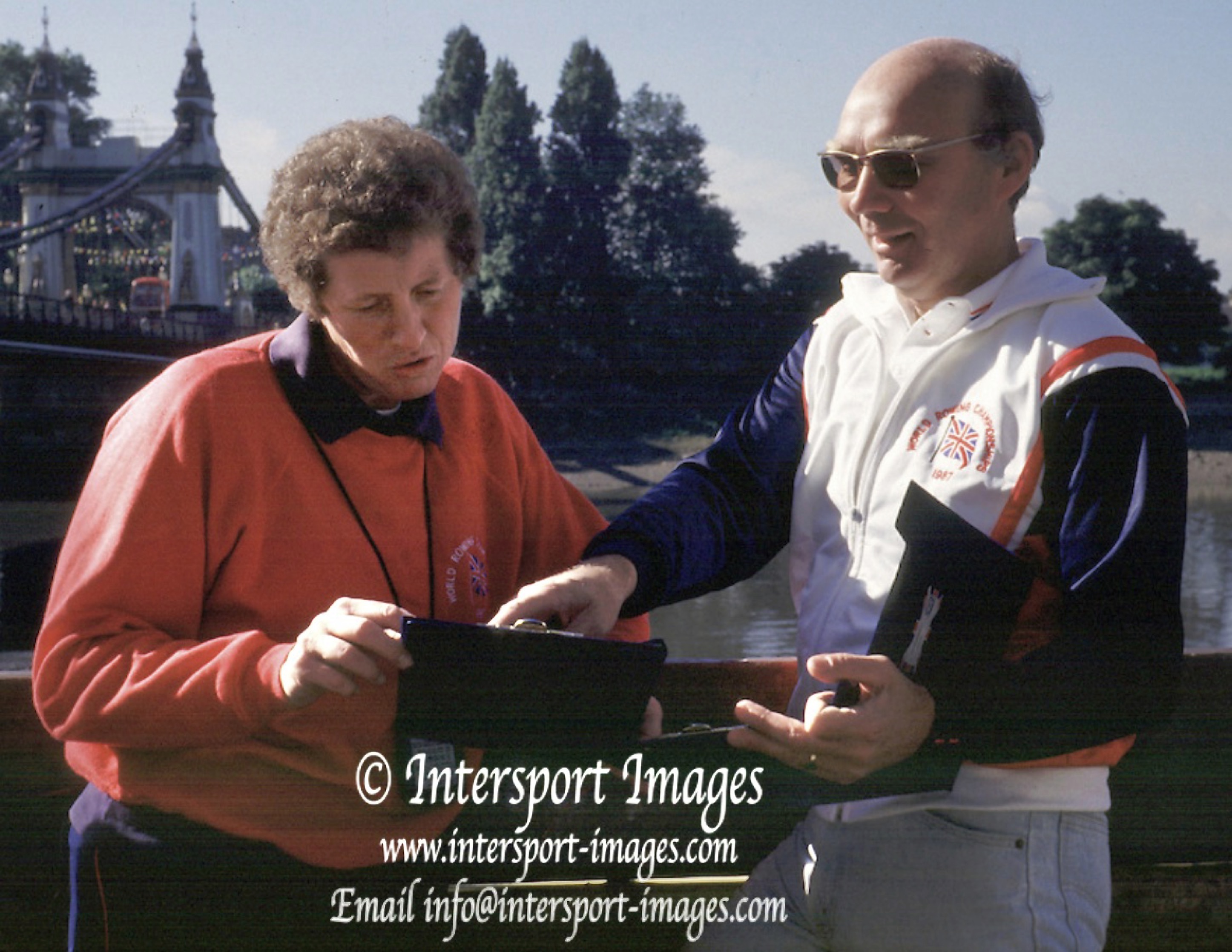
Her relationship with the press also began awkwardly, partly explained by her coaching career being rooted in the Cold War when information was seldom exchanged between aficionados east and west of the Iron Curtain. She preferred to keep her knowledge and coaching schemes close to her chest, suspecting journalists of pumping her rowers for info and leaking her strategies. An excellent example of this occurred when the developer of Thorpe water park in Surrey gave chief coach Chuter and her rowing squad exclusive use of the extensive and secluded gravel pits that they were converting into a place of recreation with its own boating lake.
One day a young photographer who was shooting botanical specimens at the gravel pits came across the rowing squad and turned his shutter on them. Penny was suspicious and asked him – or perhaps ordered him – to refrain from taking pictures. Just then another shell came into view, and the man with a megaphone driving a rubber duck invited the snapper on board.
The photographer had experience of rowing at his school in Chiswick and at Quintin Boat Club, and he accepted the invitation from coach Spracklen. Mike Spracklen was in charge of a quad-load of young scullers that included one recently arrived on the block by the name of Steve Redgrave. Thus began a new era for the botanist with good eye and a zoom lens, Peter Spurrier, who became a glorious image-maker and stood on the shoulders of the best rowing photographers in the world. Not to mention Spurrier’s major meal ticket, the oarsman Steve Redgrave, who was about to begin a run of five consequential gold medals in five Olympic regattas (1984-2000).
Mike Spracklen and Penny Chuter never became bosom pals, but Spracklen had a long career producing impressive results for Great Britain as well for Canada and the USA. He restored Britain to the Olympic medal podium that it had not stood upon since1948 (with the exception of a silver medal in 1964) by coaching the British coxed four of Martin Cross, Richard Budgett, Steve Redgrave, Andy Holmes and coxswain Adrian Ellison to gold at the Los Angeles Olympics in 1984.
Meanwhile at home she moved to Oxford University Boat Club in 1994 as chief coach, but here again was tangled in controversy. Three years later she moved to Sport England and retired in 2002 she moved to Cornwall from the home she shared in Crowmarsh with Edward Sturges, an oarsman who ran a gym frequented by rowers, and died in 1996.
A happier place than the ARA for Penny was World Rowing where she joined the women’s commission in 1983 and switched to the competition commission in 1985. She was influential at increasing the distance rowed by women from 1000 to 2000m, making racing conditions fairer, establishing the series of world cup regattas and running international camps in Italy and Spain.
She was a coach after Thor Nilsen’s heart. Nilsen was a Norwegian who did not suffer fools, and who made use of literature and techniques about any sport that would help his boats go faster. He began rowing in his teens in Bærum, near Oslo, in the only sport available when the Nazi occupiers surrendered in 1945. He represented Norway before moving into coaching and chancing upon Scandinavian scientists who had done significant work on physiology and related topics. His lectures on such subjects for FISA, the international rowing federation, now known as World Rowing, commanded attention and, incidentally, led this writer to recognize a new language dubbed ‘Fisaspeak’ while listening to Scandinavians and Germans endlessly talking about gearing or interval times in monosyllabic metronomic steady-state English at a conference in Peterborough, England.

While style remained a concern of British coaches, Nilsen and Chuter experimented with new ideas and observed the East Germans and other Soviet satellites spending their wealth on physiology, athleticism and equipment. Penny sat at Thor’s feet and he attributed her contribution to his FISA ‘Be a Coach’ manuals as fantastic, even though he did her an injustice by leaving her name off the team who created them.
The manual was completed over a long weekend when 25 experts, including Penny, gathered at the West German Rowing Academy at Ratzeburg and were discouraged to leave until they had signed off each chapter. Penny s contribution stood out, but her name was omitted from the publication. Such was the sexism of the age that the prevailing view presumed that the appearance of a woman’s name would downgrade the manual in men’s eyes.
Years later Nilsen told his biographer that the omission was a bad mistake, and he had set about recognizing it. ‘Penny was fantastic,’ Nilsen said. ‘From breakfast to bedtime, talking rowing from 7:30am to 9pm without breaks on water, on land, giving instruction on technique all over the place. Fantastic.’
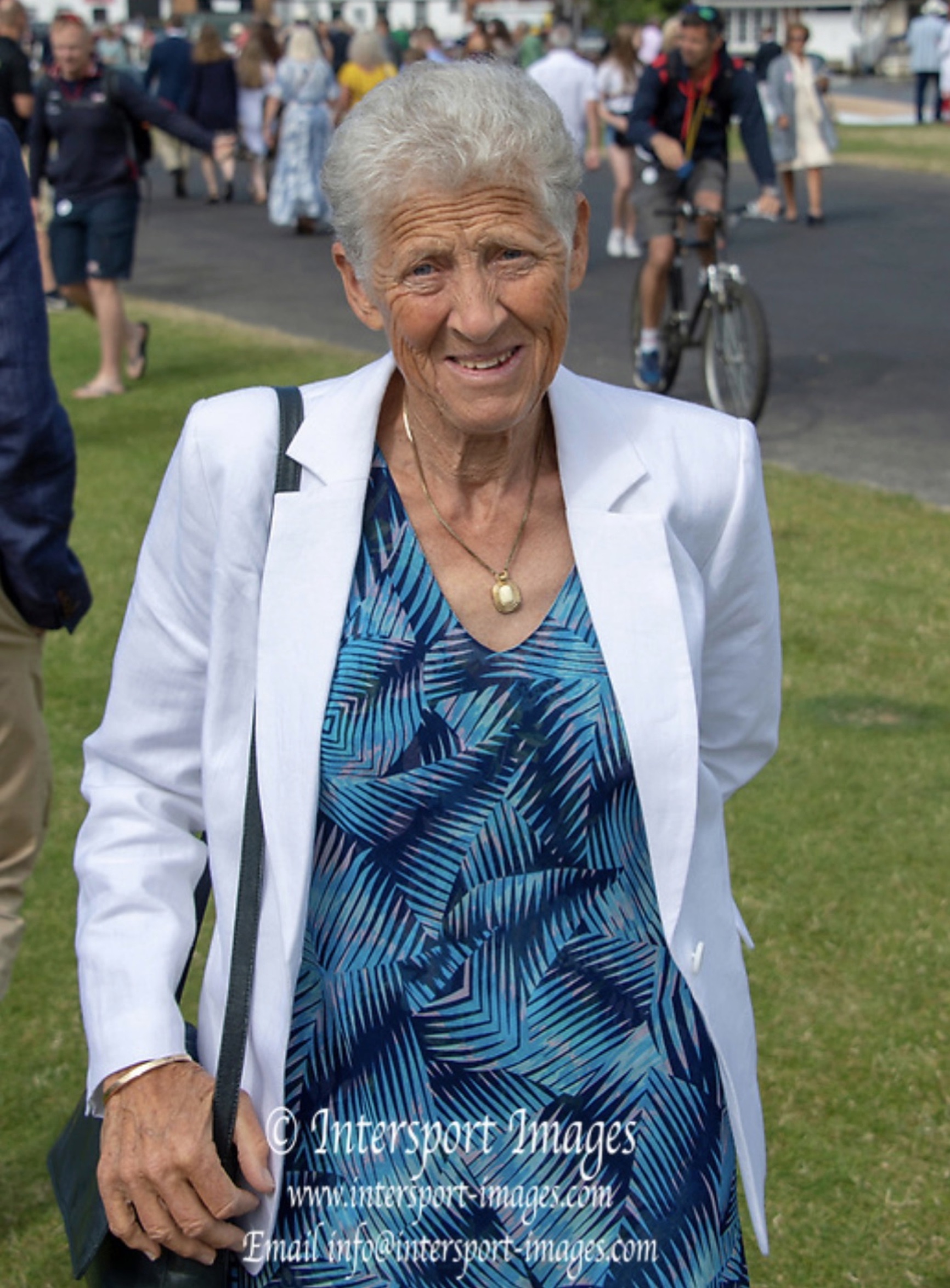
In 1993 Thor opened a training centre in Seville, Spain, near the 1992 world’s fair site alongside the River Guadalquivir and engaged Chuter, Gianni Postiglioni and Ricardo Ibarra to teach the ‘Be a Coach’ programme and run its two-week courses that concluded with a regatta involving crews of mixed nationalities.
In Cornwall she indulged in her fanaticism for sailing. She also took to coaching at Flushing and Mylor Pilot Gig Club and guided them to a silver medal in the gig championships in 2019. She also took part in a debate on whether ocean-going gig rowers should adopt underhand or overhand holds to connect their levers (arms) to their oars. Penny also became a founder of Carrick Rowing Club. She was awarded an OBE for services to rowing in 1989 and both British Rowing’s medal of honour and World Rowing’s distinguished services medal in 2006.
Jim Clark’s eulogy reminded a large congregation at her funeral that Penny possessed a huge collection of tracksuits, garments that she was passionate about, but he also gave assurance that she also harboured a remarkable collection of dresses for the social life that she took part in enthusiastically, especially at Henley Royal Regatta.
Penny may have seldom trod lightly when indulging in workability, but she always carried a big rigger measuring stick.
Penelope Ann ‘Penny’ Chuter, born 28 July 1942 in Dunfermline, Scotland; died 16 November 2024 in Mylor Bridge, Cornwall. Her sister Scilla predeceased her. She is succeeded by a nephew, Toby, and a niece, Charlotte.
This article is an extended version of Chris Dodd’s obituary of Penny Chuter in the Guardian on 20 December 2024.
 Hear The Boat Sing
Thank you for this excellent article about Penny Chuter. I’d love also to read Jim Clark’s eulogy for more stories. Do you think that he would give permission to publish it on HTBS? Thank you for considering the request!