This website covers all aspects of the rich history of rowing, as a sport, culture phenomena, a life style, and a necessary element to keep your wit and stay sane.
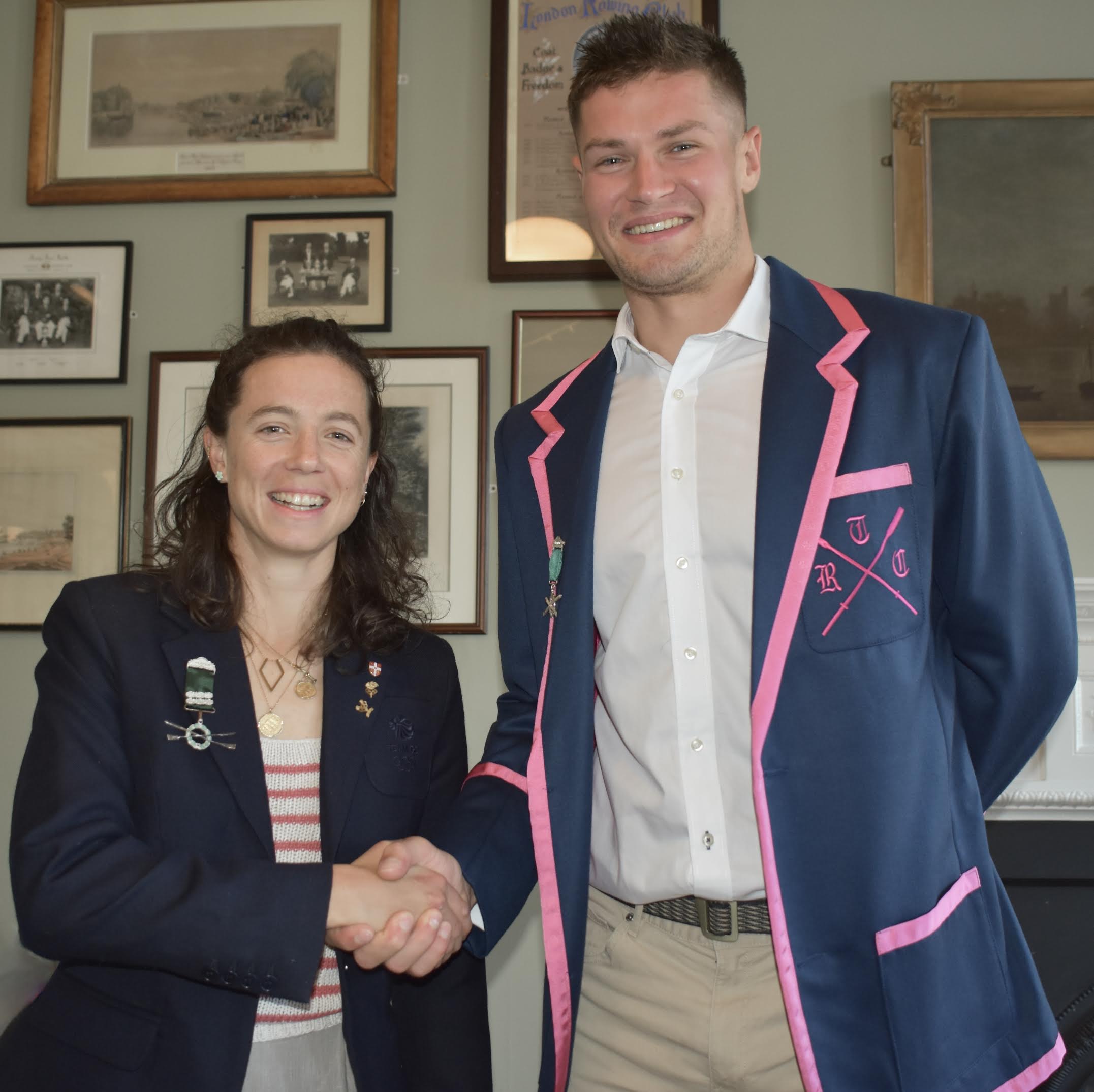
Spoiler alert: The 2024 Wingfield Sculls incorporating the 184th race for men and the 18th race for women, took place on Sunday, 27th October. The Women’s Wingfields was won by its defending Champion, Imogen Grant (left) and the new men’s Wingfield’s Champion is Callum Dixon (right).
29 October 2024
By Tim Koch
Tim Koch on an old event heading in a new direction.
On Sunday, 27th October, the title of “Champion of the Thames” was contested for in the 184th (men’s) Wingfield Sculls and the 18th Women’s Wingfield Sculls. Historically, the race has also carried the titles of the “English Amateur Championship” or the “British Amateur Sculling Championship.”
In 1830, Henry Colsell Wingfield established a race for amateur scullers and presented a pair of miniature silver sculls “to be held by the best”. Today, the Wingfields is also an opportunity for the best male and female scullers in the UK to race off against each other in the lead up to GB November Trials.
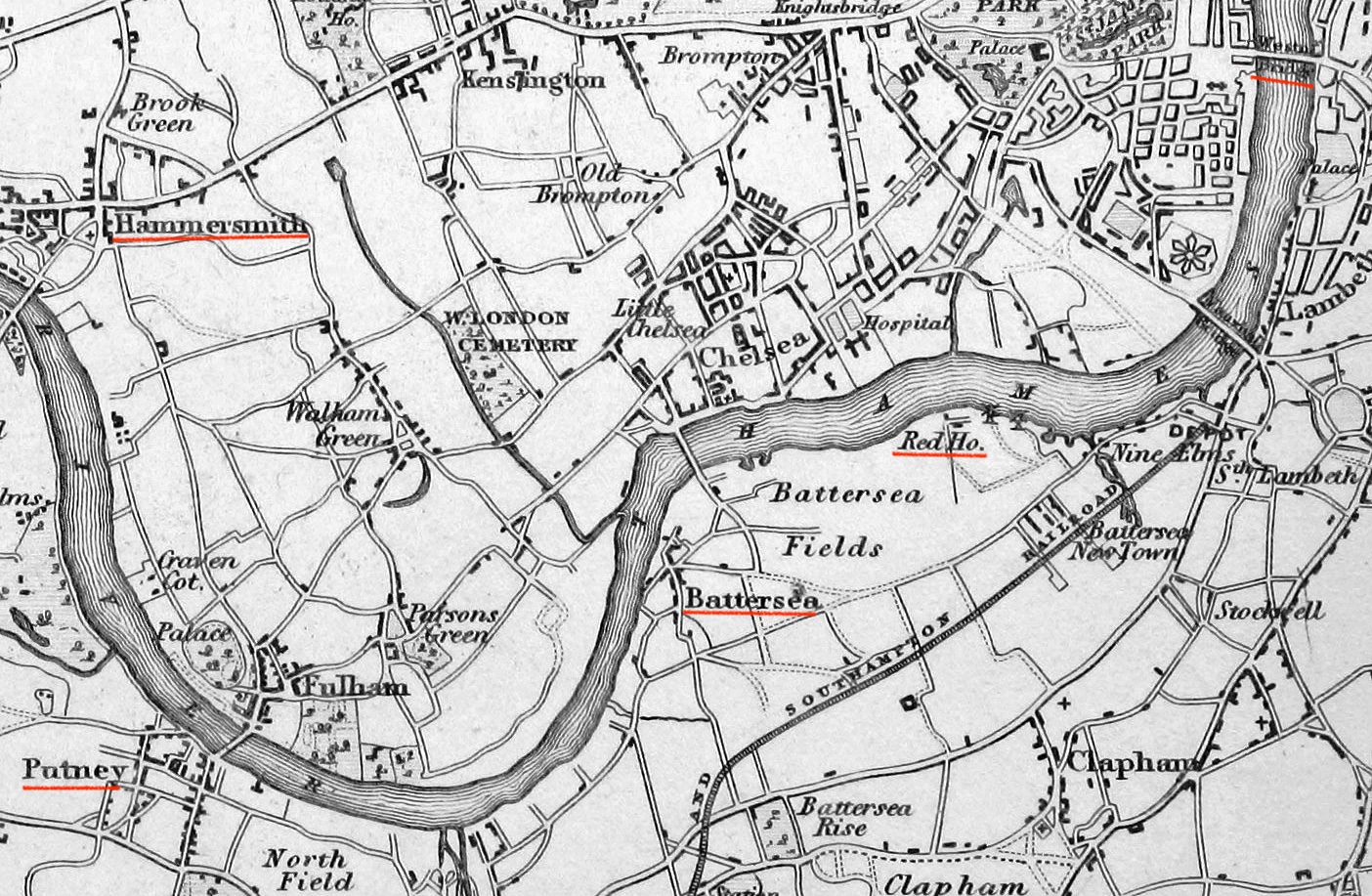
When the Wingfield Sculls was founded, the initial conditions were that it should be run on the Old Championship Course, Westminster to Putney (though the first race actually went from the Red House, Battersea, to Hammersmith).
The Old Championship Course in 1842.
In 1848, the course was changed to run between Putney Bridge and Kew Bridge (this must have been the second Kew Bridge of 1789, today’s third span dates from 1903).
Later in 1861, the course was again changed, this time to the 6,780-metre “Championship” or “Boat Race” course between Putney and Mortlake (though in 2020, the race was run between Hammersmith and Kew due to the temporary closure of Hammersmith Bridge).
This year saw the sixth variation, the race started opposite the University of London boathouse at Chiswick and finished at London RC, a distance of 7,480 metres, thus making the Wingfield’s course seven hundred metres longer than the University Boat Race and forty metres longer than that of the Doggett’s Coat and Badge.
All these courses have come with tides, bends, shallows, rough water, driftwood, headwinds, cross winds, tailwinds and other river users. These can be unsettling conditions for those who usually only race in the (near) sterile conditions of World Rowing approved 2000-metre rowing courses. The Wingfields requires skills of watermanship that top scullers and rowers do not necessarily possess in modern times.
This year, there were five entrants in the women’s race, presumably each sure that they had the skills needed.
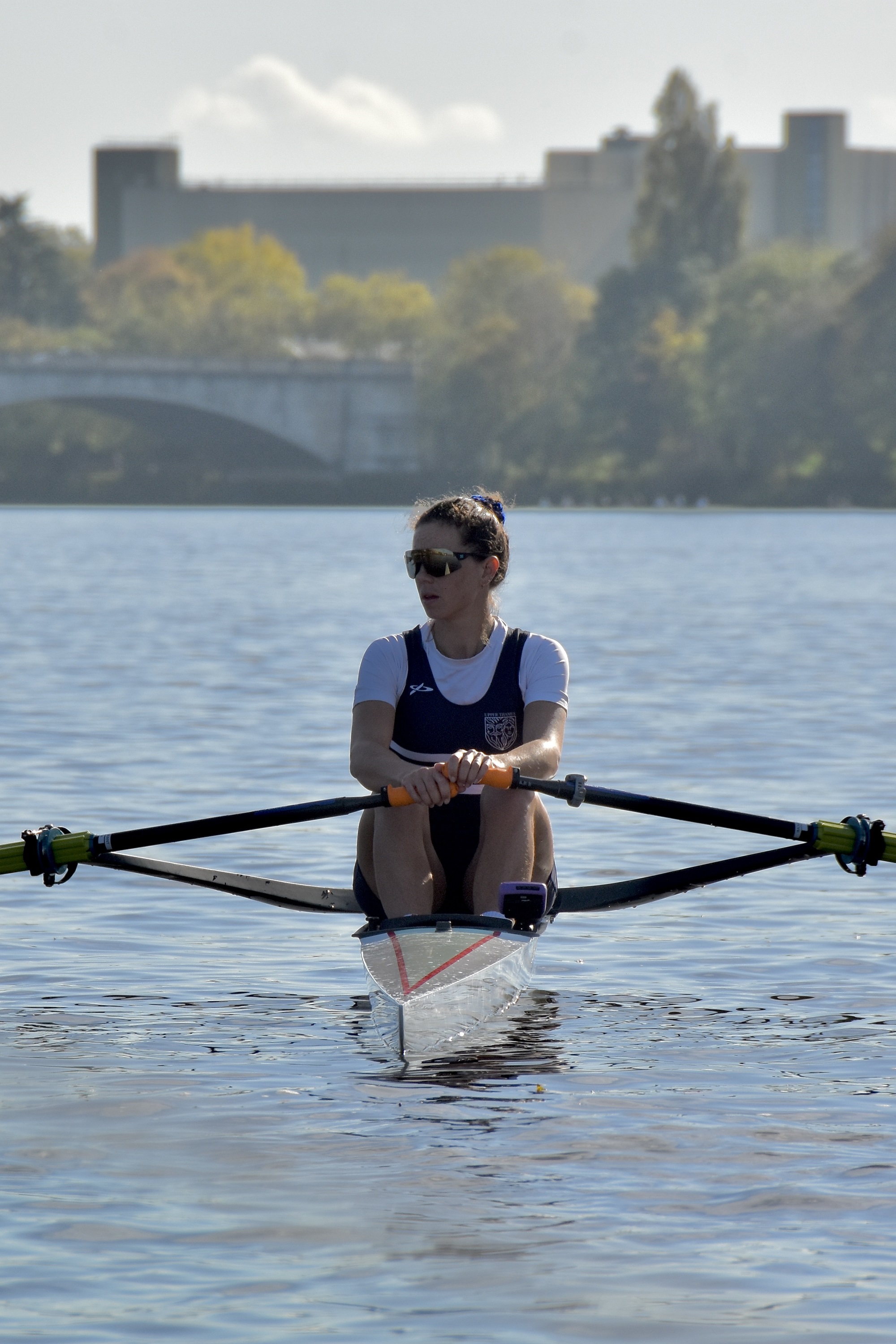
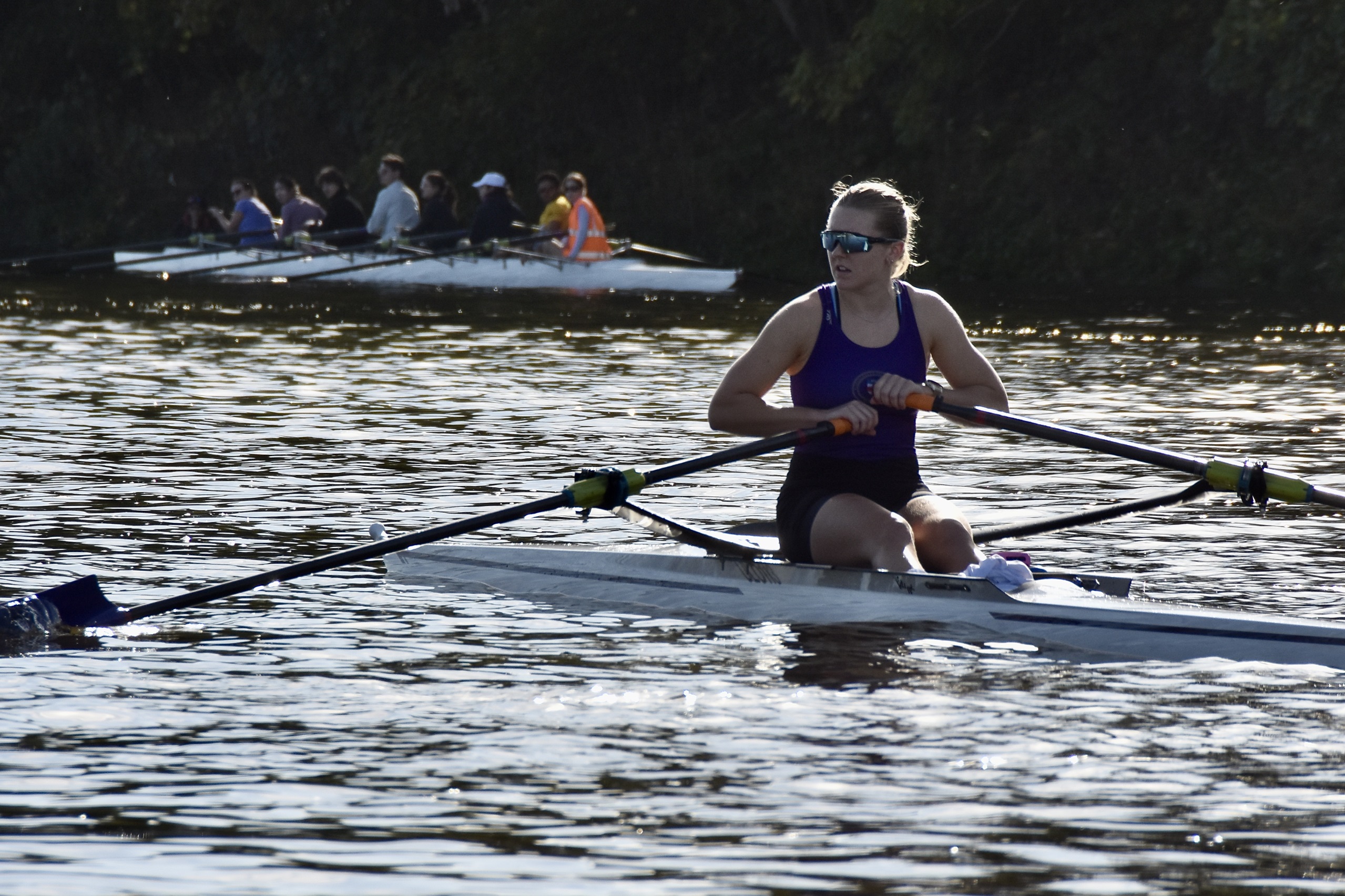
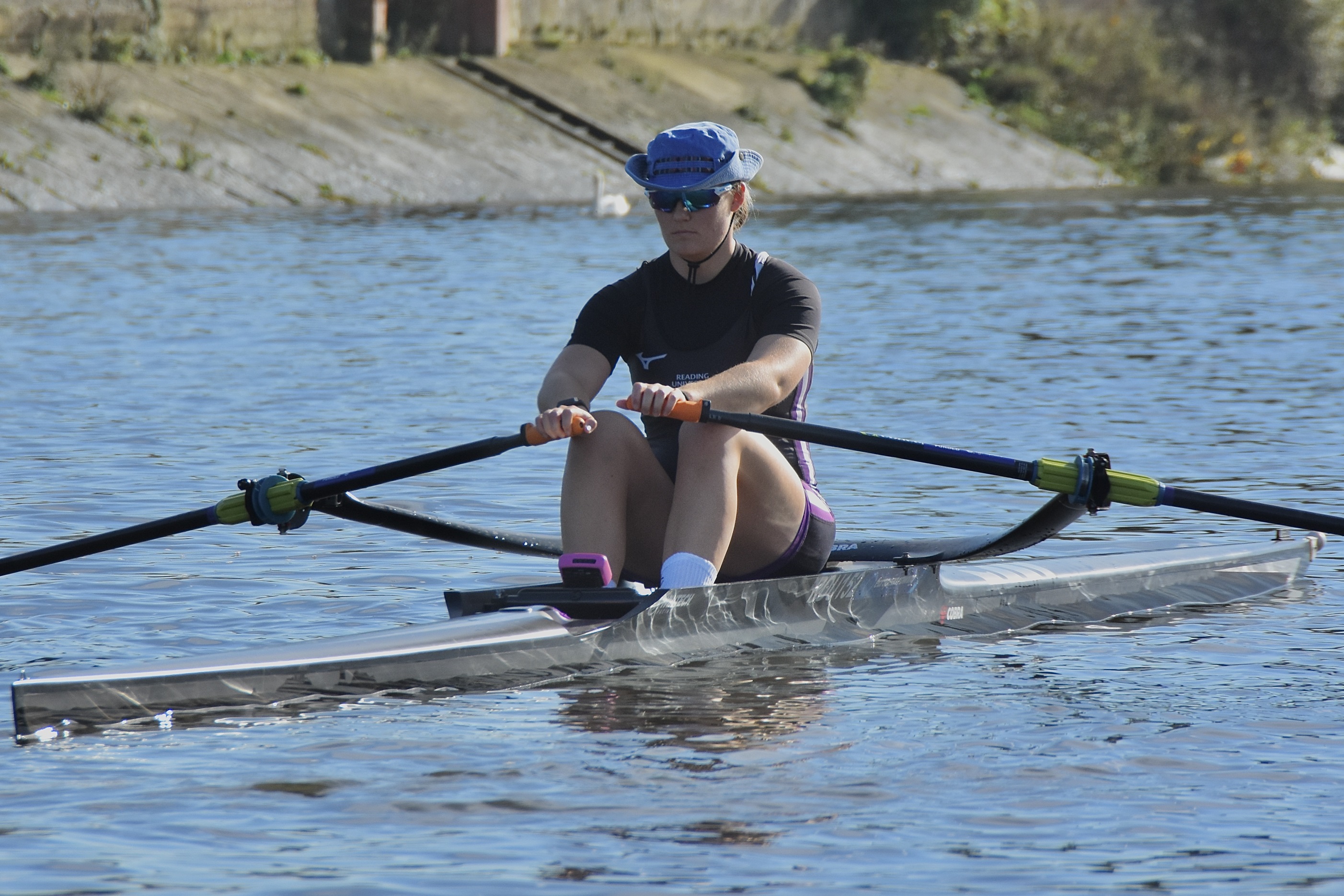
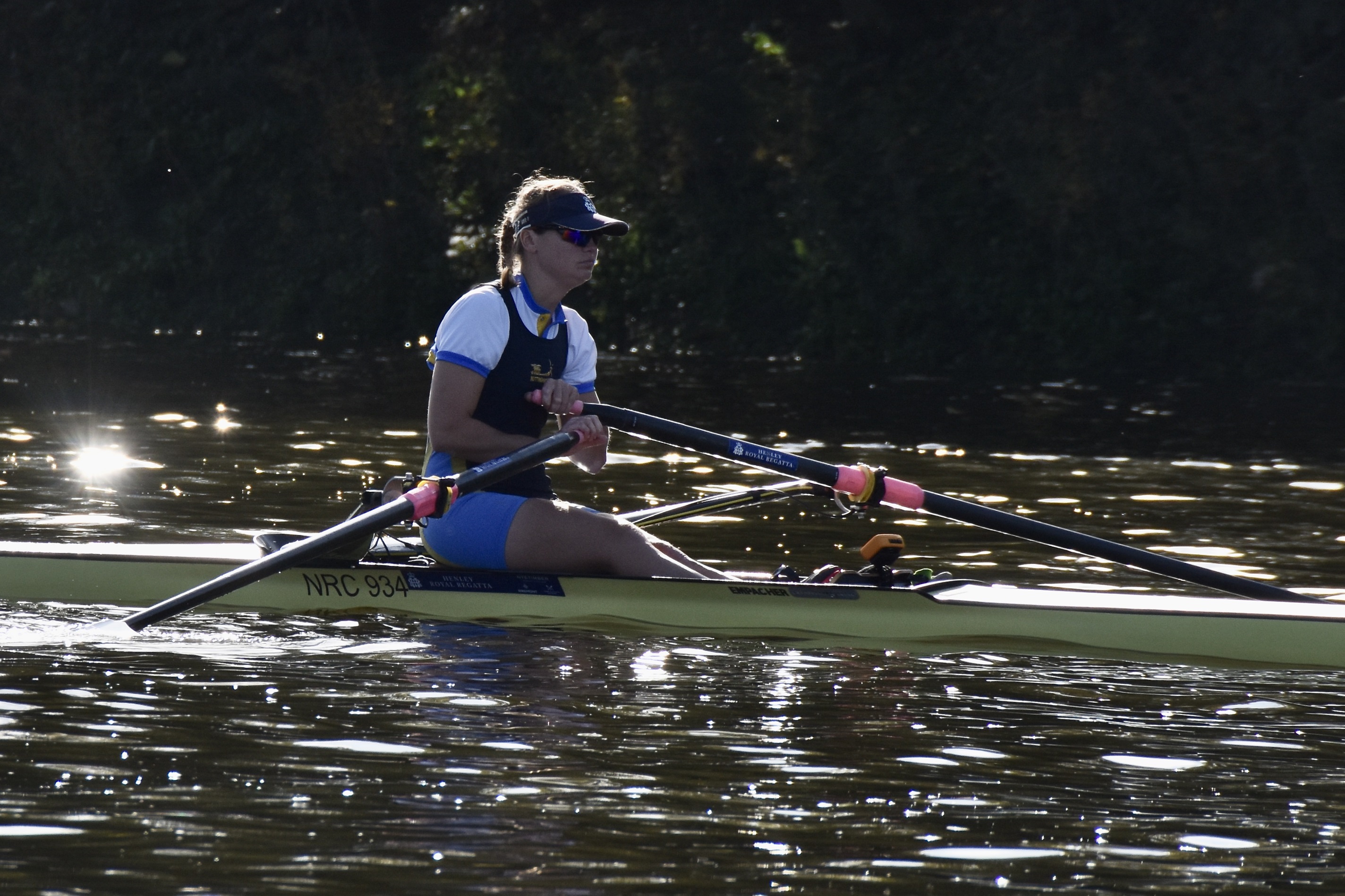
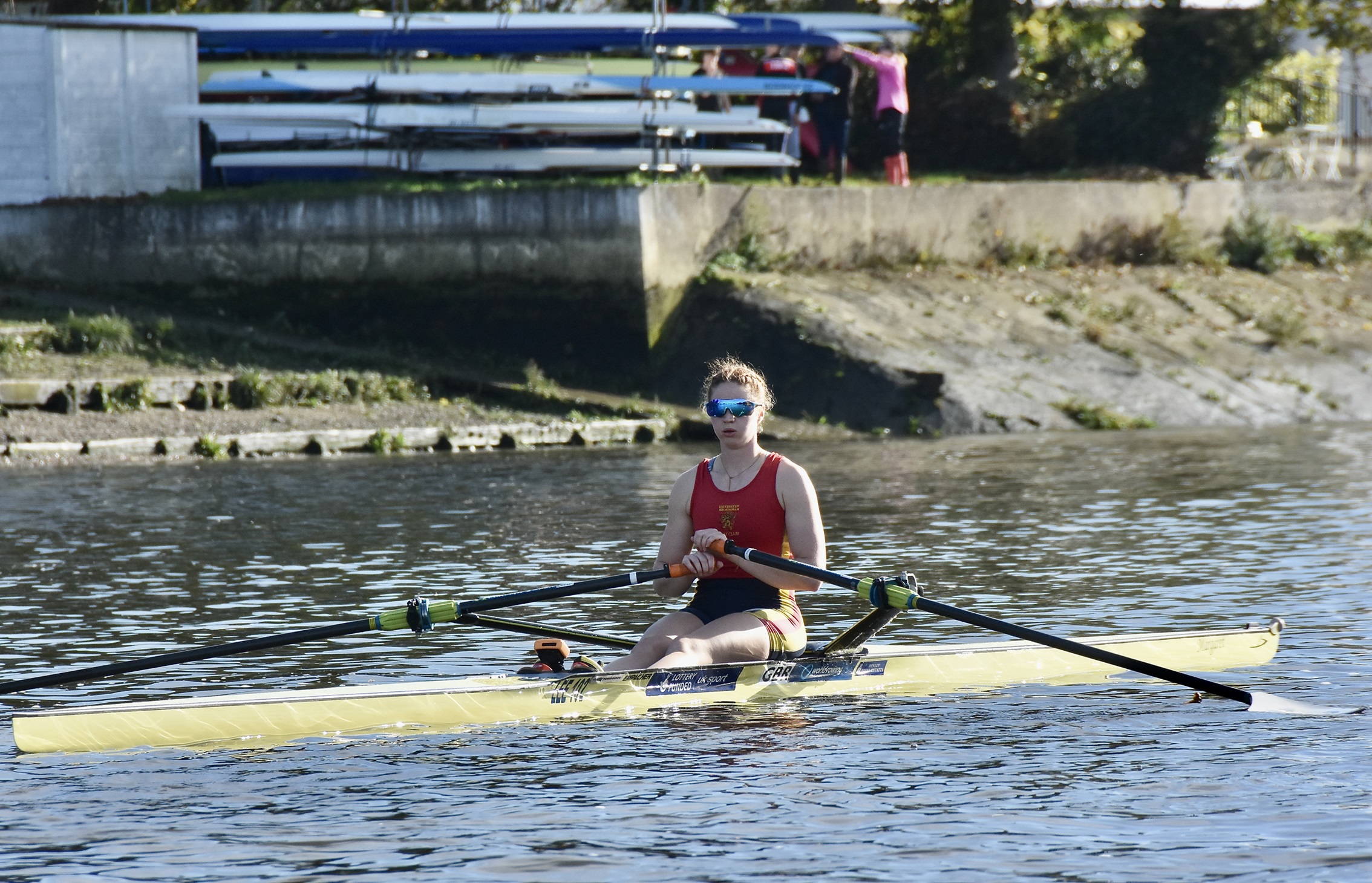
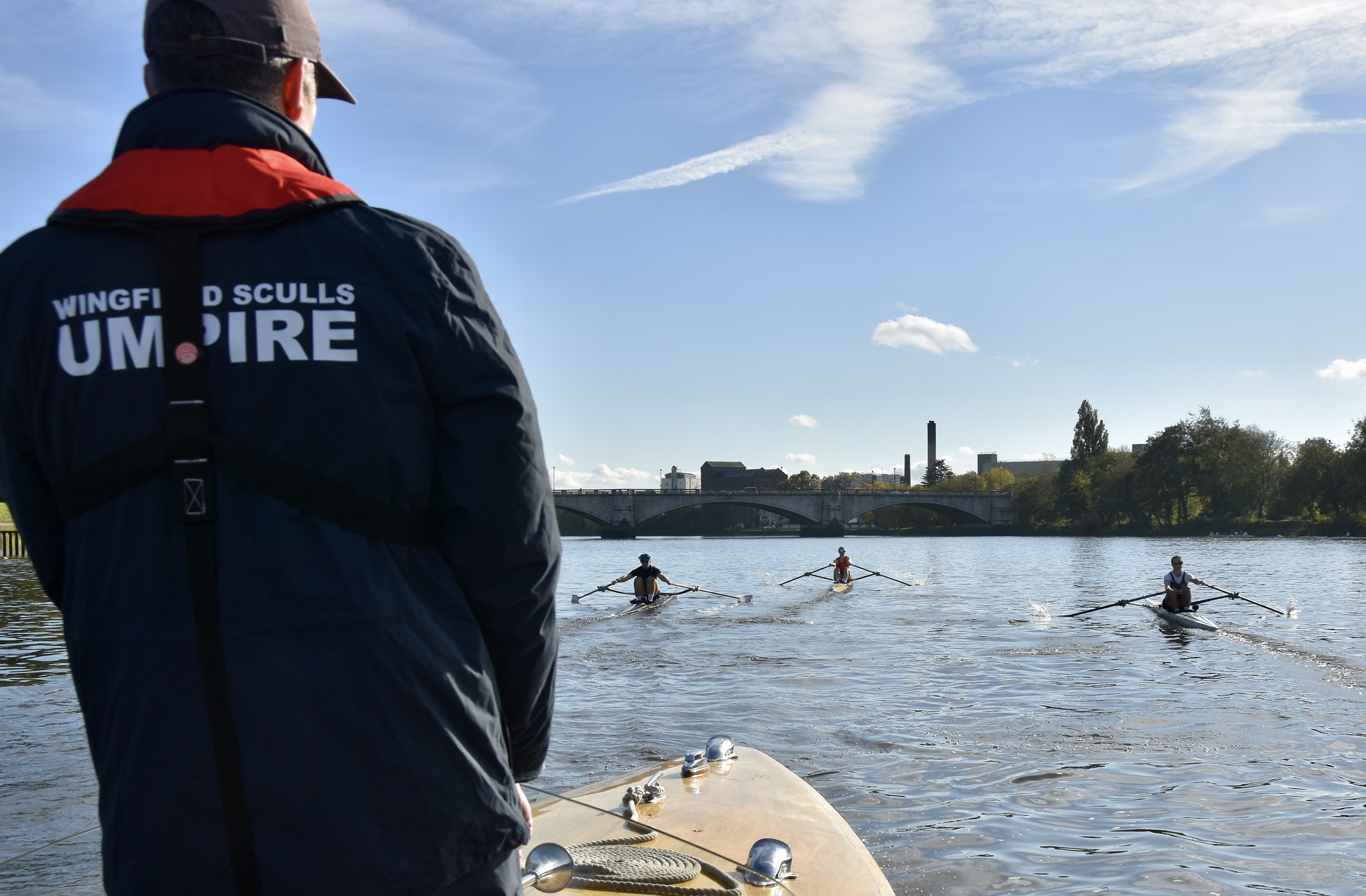
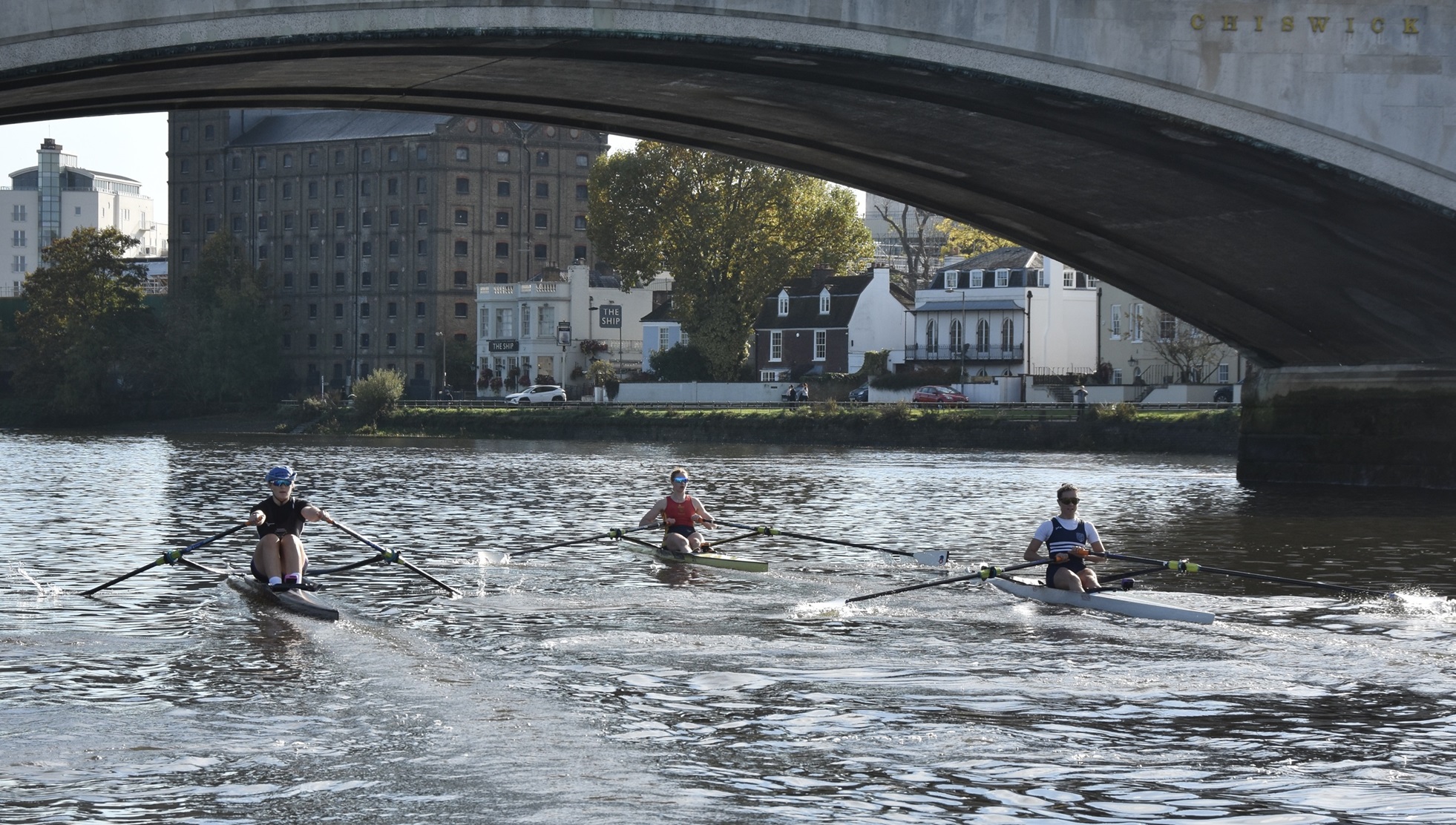
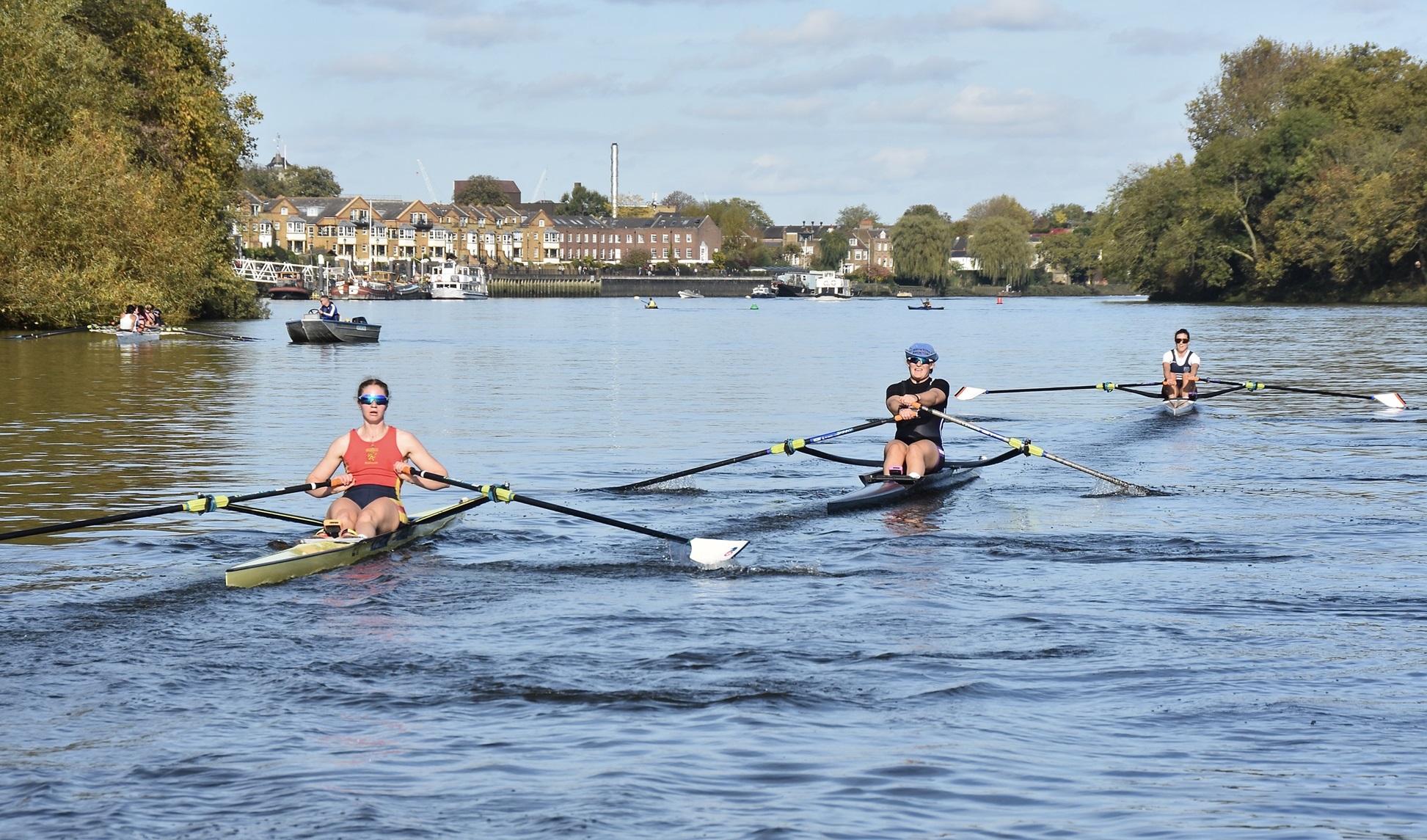
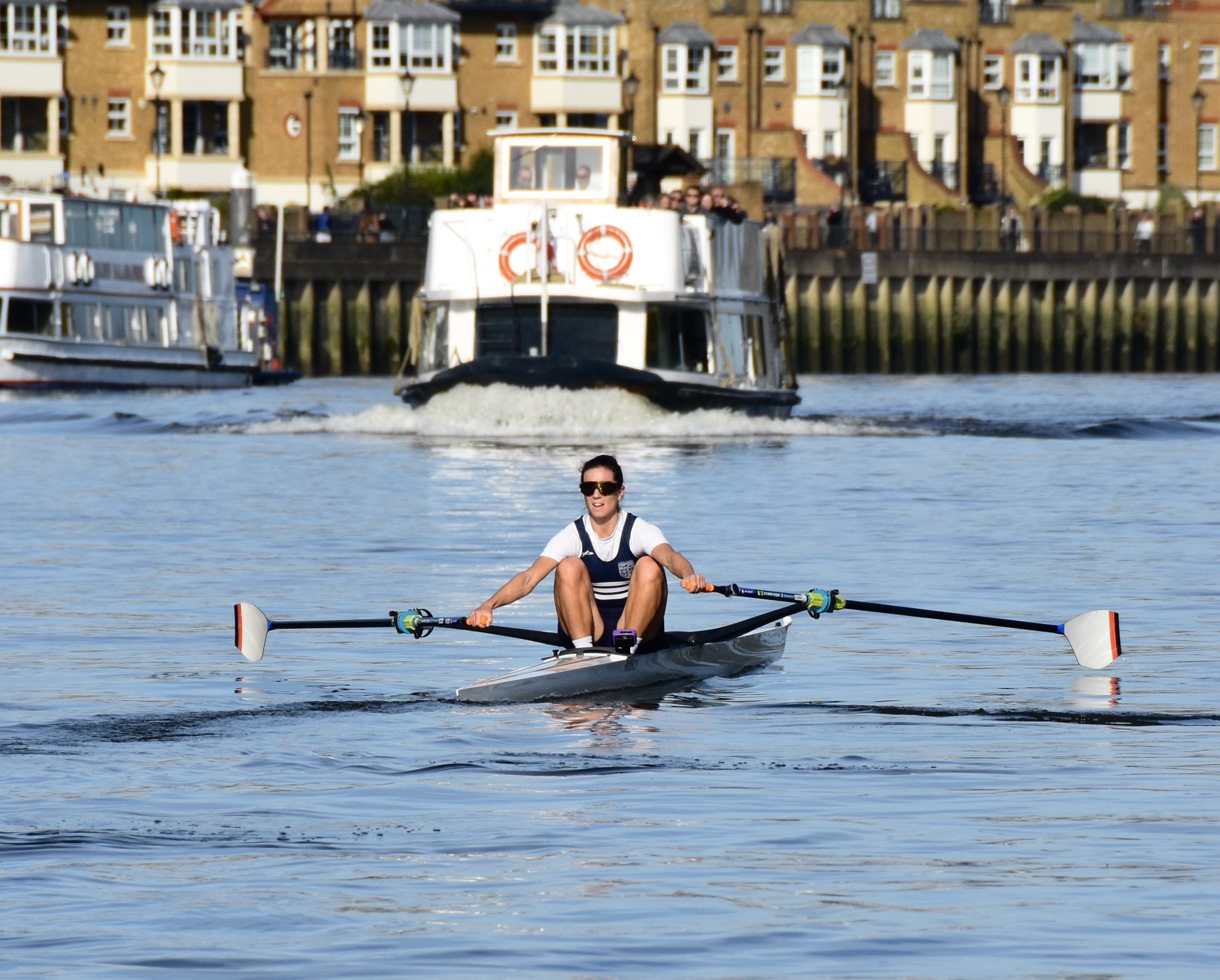
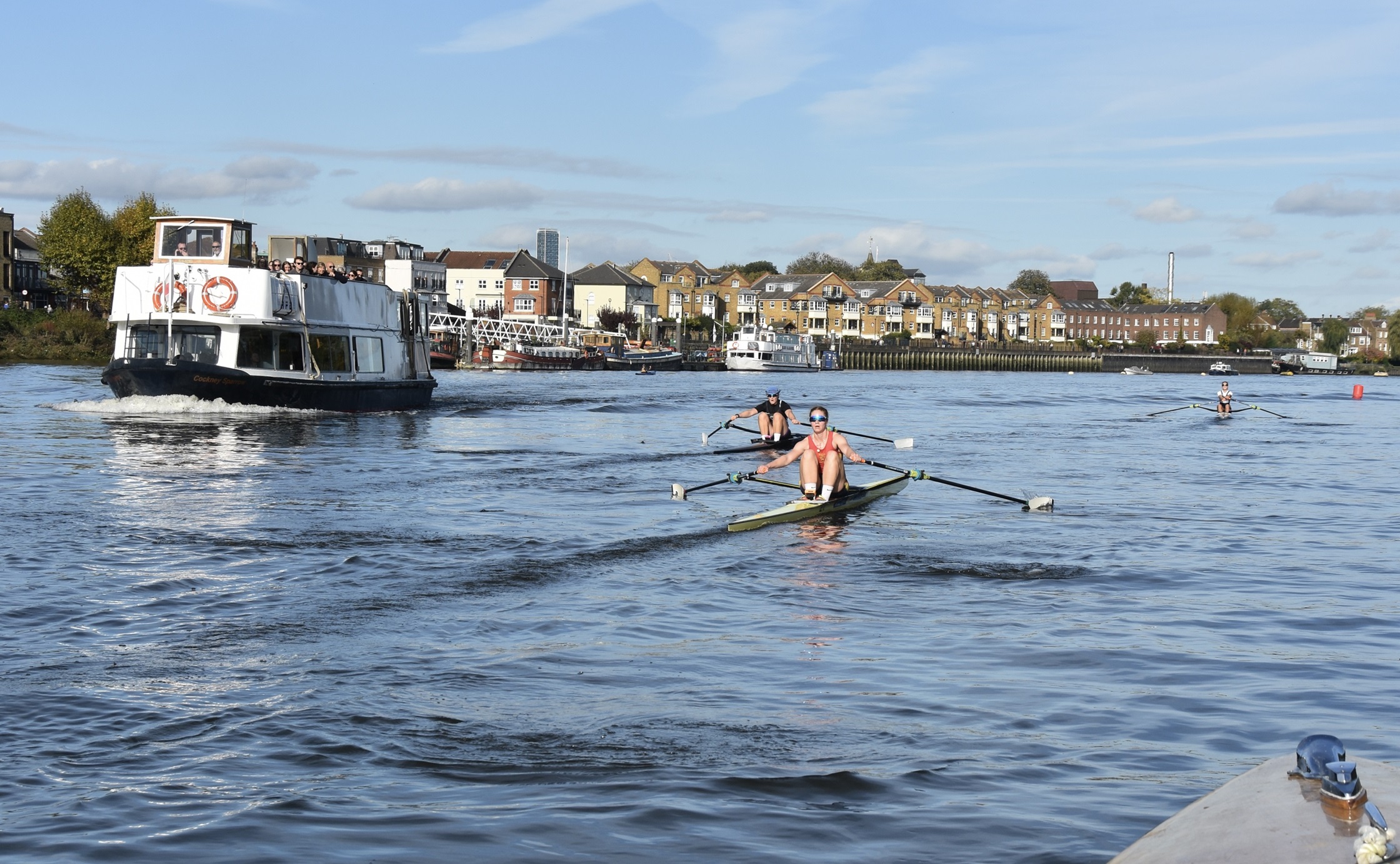
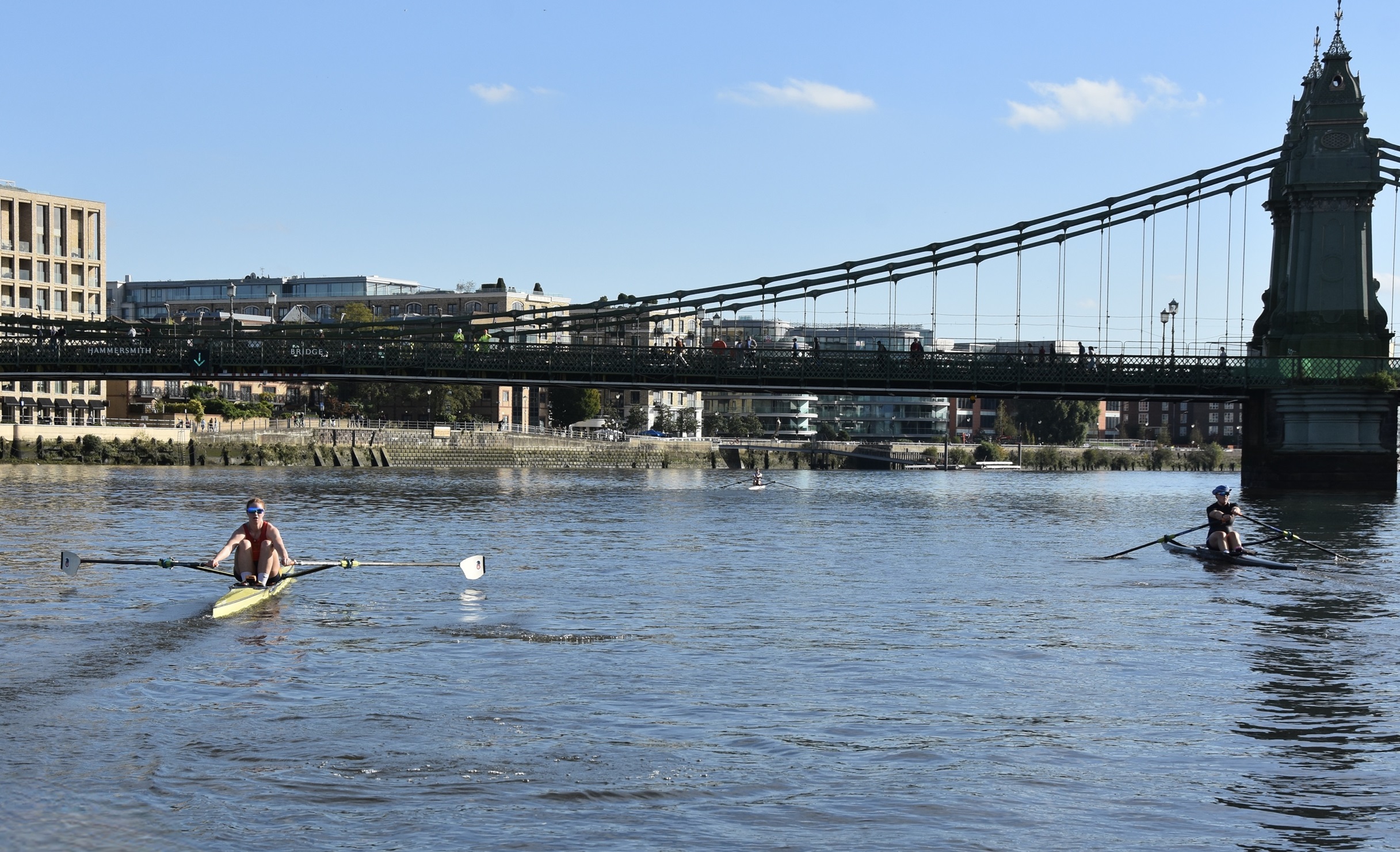
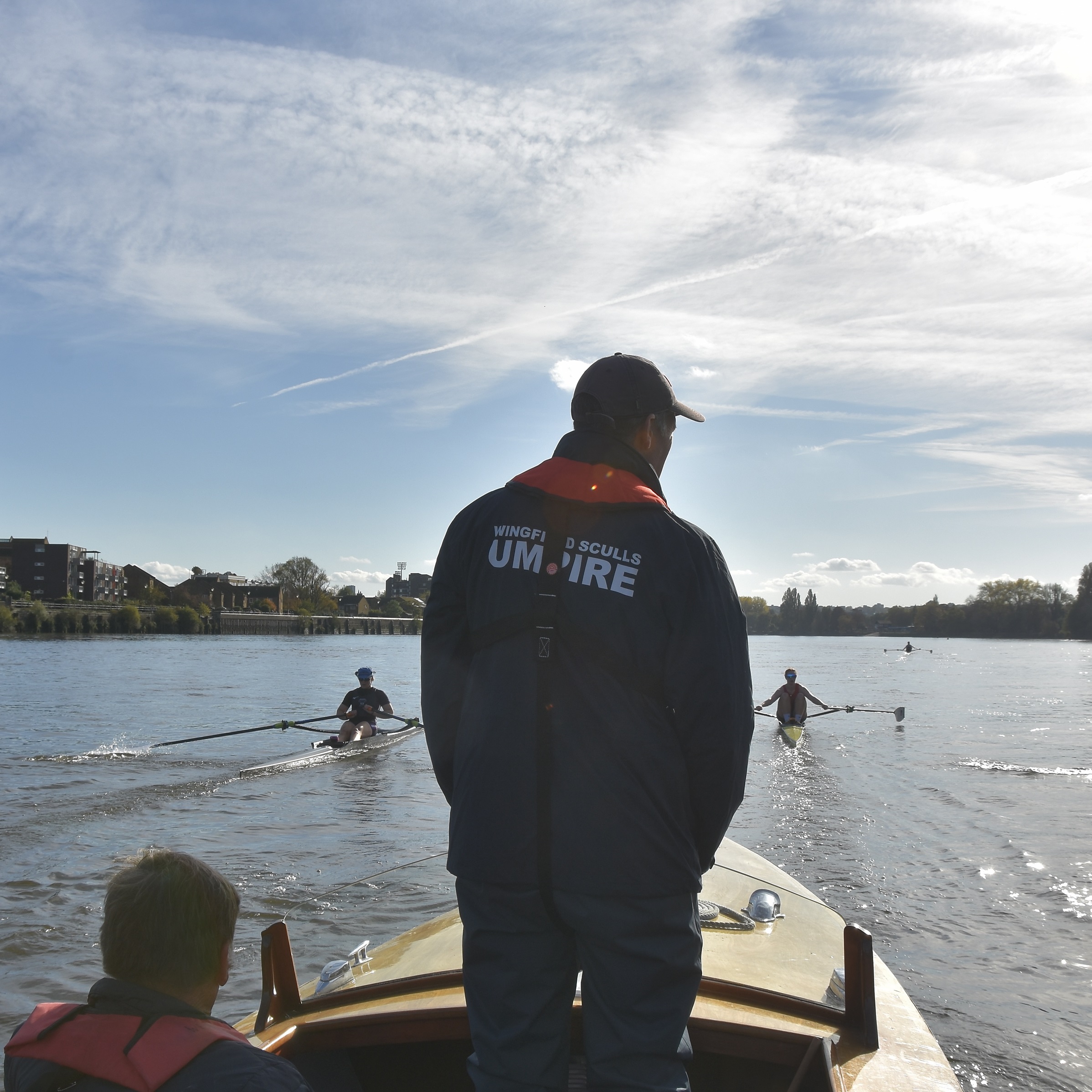
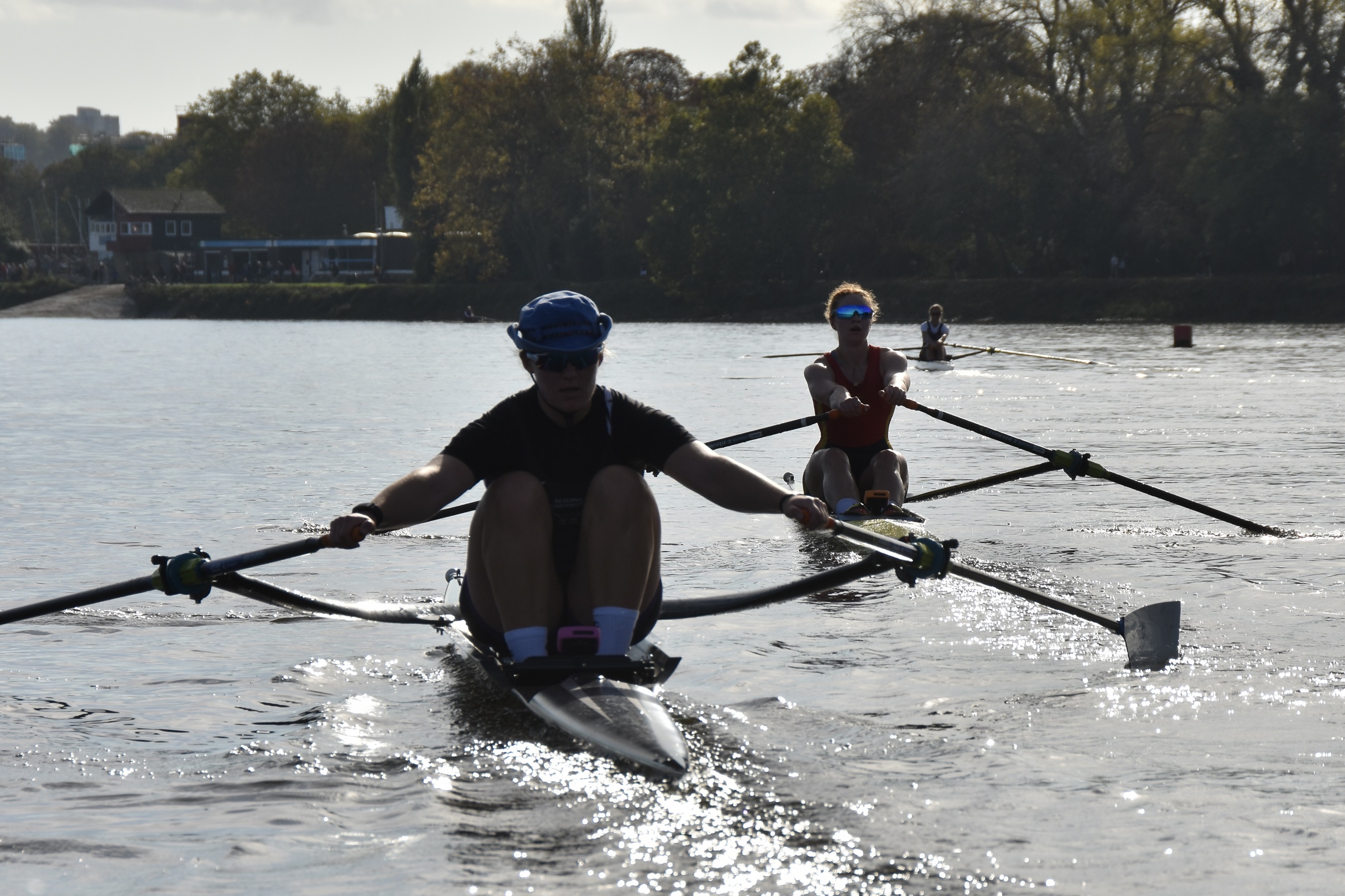
Jessica Martin of the University of London BC.Finnola Stratton of Reading University BC.Jennifer Titterington of Nottingham RC.Katie Mole of the University of Birmingham BC.On the start and under the eye of umpire, Greg Searle. From left to right, Middlesex to Surrey: Mole, Stratton, Grant, Martin and Titterington.Pictured at 2mins 20secs in, Mole had taken the lead with Stratton second and Grant third.Martin (4th) and Titterington (5th) were left off the start and were at least five lengths down after 1,000 metres. Umpire Searle made the decision to pass them after about two-and-a-half minutes.At the first timing point on the new course, Chiswick Bridge, it was still Mole first, Stratton second and Grant third. Leader Mole reached it in 3mins 33secs.Just under three minutes after Chiswick Bridge and approaching Barnes Bridge (pictured), Grant had made her expected move and had passed Mole and Stratton to take the lead. Grant reached Barnes Bridge in 7min 45sec.Grant No Mercy.Between Barnes Bridge and Chiswick Pier, Grant continued to edge away, leaving Mole and Stratton to fight for second place – which they did.At Chiswick Pier, the race encountered a tourist boat coming upriver.While there was no danger as all the parties involved took the correct course and kept to starboard, the master of the motor vessel (a boat that produces a famously large bow wave) did not attempt to slow his craft, despite the fact that it was obvious that a race of small unstable boats was going to pass him.Uniquely, Wingfields allows the old practice of allowing each competitor to be steered by someone in a following launch.Approaching Hammersmith, it seemed that the finish order would be Grant, Stratton and Mole. Grant had reached Chiswick Steps in 13min 10sec.Grant’s time to Hammersmith Bridge was 17min 16sec.After Hammersmith and passing Harrods, third placed Mole began a serious attack on Stratton’s second place.After about a minute, Mole broke Stratton and left her in third place.Approaching Barn Elms, it was Grant, Mole, Stratton. Grant had reached the Mile Post in 21min 27sec.The positions were unchanged at the finish at London Rowing Club: Grant, Mole, Stratton, Martin and Titterington. Grant’s finish time was 26min 04sec.Stratton, Mole, Grant, Titterington and Martin in a sisterly and sporting pose at the finish.
Tomorrow: The Men’s Race and the prize giving.
Editor’s Note: An update of times has been made late on 29 October.
Clearly, I am no Latin scholar either and my attempt to appear to be clever has failed. I’ll hide my mistake by claiming that it has something to do with equality…
Without getting too anal …. I would say that if Tim is using secundus numerically then he is correct but if adjectivally – as in second woman (femina secunda) then David would be right.










 Hear The Boat Sing
I’m no Latin scholar, but for the women’s race shouldn’t it be ‘nulli secunda’ ?
David,
Clearly, I am no Latin scholar either and my attempt to appear to be clever has failed. I’ll hide my mistake by claiming that it has something to do with equality…
Tim
Without getting too anal …. I would say that if Tim is using secundus numerically then he is correct but if adjectivally – as in second woman (femina secunda) then David would be right.
Final word to the Pythons: https://www.youtube.com/watch?v=0lczHvB3Y9s