
16 September 2024
By Tim Koch
Tim Koch witnesses the culmination of one man’s “honourable quest.”
Many people think that rowing cannot be too difficult – until they try it. Equally, if we gave it any thought, most of us would think that getting a commemorative plaque put on the side of a building would not be too demanding in time or effort. However, as Thomas Wigley has shown in several HTBS posts over the last year, it is about as easy as single sculling.
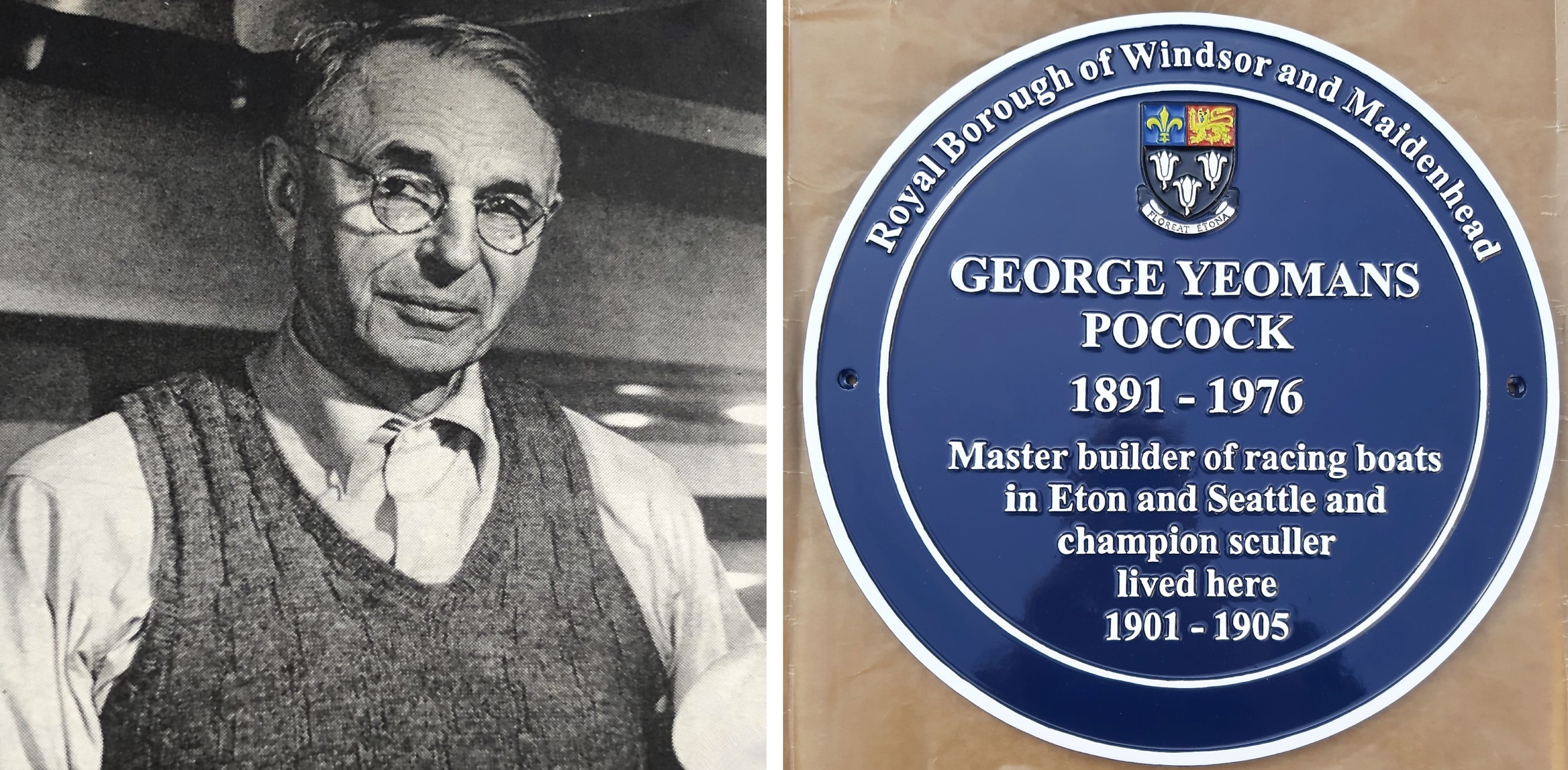
Last October, in a post titled Pocock Plaquery, Thomas wrote that research revealed that in 1901, the 10-year-old George Pocock was living with his siblings and widowed father Aaron at number 78 Eton High Street, only a stone’s throw from the River Thames and Eton College’s ‘Rafts’ boat house where Aaron worked….
Thomas then revealed that he was on an honourable quest to make sure that rower and boat builder George Pocock will get a so-called Blue Plaque on the wall of the pub The George Inn in 78 Eton High Street… A voice in my head said “get thee hence and erect a blue plaque for George”. And that’s what I’m trying to do. Blue plaques are a British tradition to celebrate the link between well-known people and the buildings in which they lived or worked.
Six months later, a post titled Pocock’s Progress in April 2024 revealed the good news that Eton College and the Windsor and Eton Brewery had agreed without hesitation to fund the plaque. Hoorah! The symmetry is pleasing; George’s dad, Aaron, built boats for Eton College and the brewery manages the George Inn.
Unfortunately, approval from The Royal Borough of Windsor and Maidenhead came slowly and, as the George pub is Grade-2 listed, Thomas also needed “Listed Building Consent” to alter its external appearance, another slow process.
By Christmas, the George Clooney film, The Boys in the Boat had been released and George Pocock’s profile was, as a result, as high as it had been for many years. Unfortunately, George C did not respond to requests to be involved with the plaque project.
By this June however, Thomas was finally able to announce Pocock Plaque Approved and an unveiling date was set.

On the evening of 13 September, about one hundred people gathered outside the George Inn in Eton High Street. The plaque had not yet been affixed to the wall and stood on an easel on the pavement outside the pub. The master of ceremonies was James Marshall, the Captain of Eton Excelsior Rowing Club. First, he introduced the man who had made it all happen, Thomas Wigley.
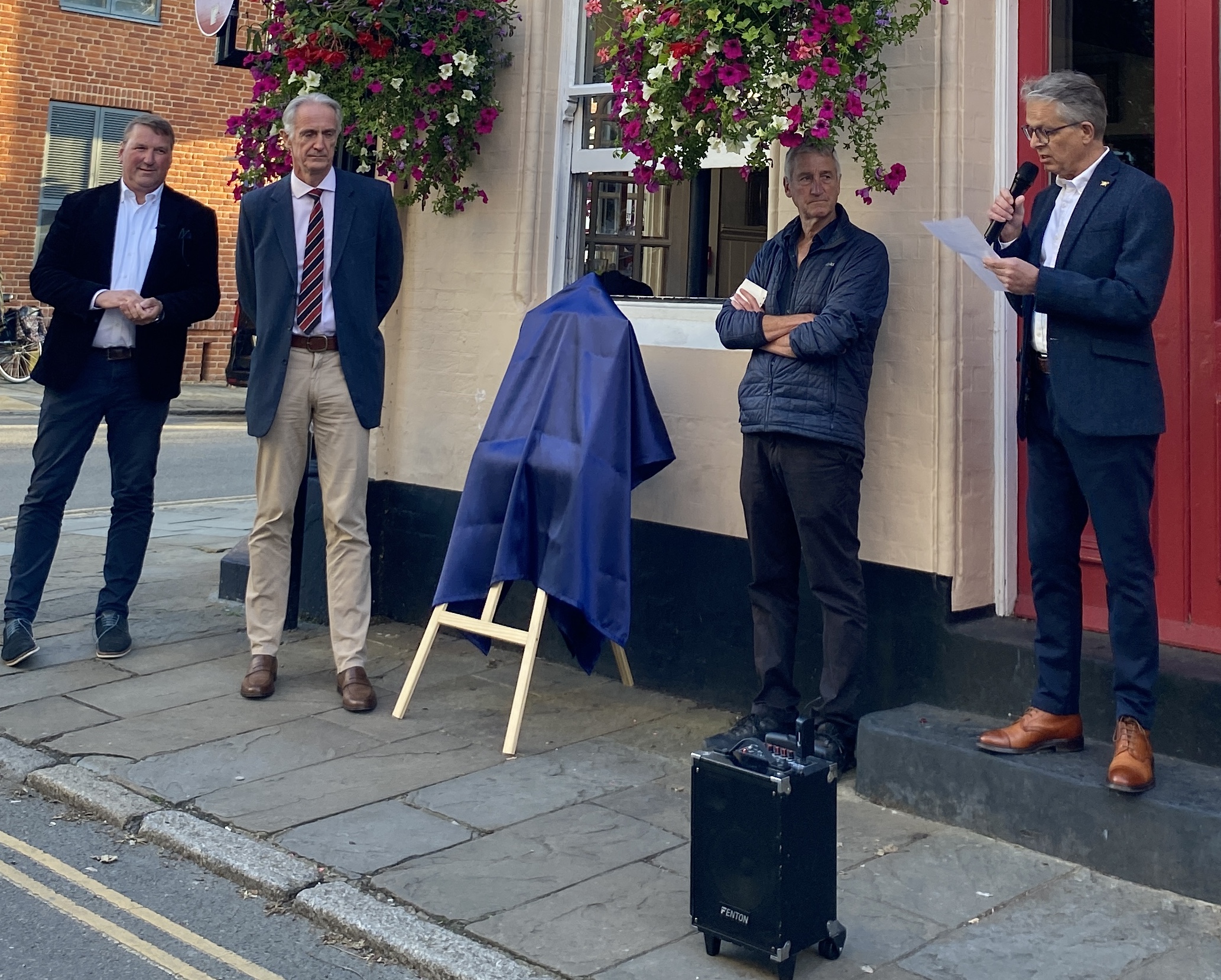
In his speech, Thomas said:
With the unveiling of an iconic blue plaque this evening we celebrate the achievements of George Yeomans Pocock and his association with Eton and the George Inn.
Pocock was a legendary builder of racing boats in Seattle; widely respected, he was also an accomplished rower, coach and a bit of a philosopher.
I’m delighted that he will be conspicuously recognised in the town where he lived as a boy thanks to the generosity of Eton College and the Windsor and Eton Brewery; simply, these benefactors made George’s plaque possible and I thank them.
Historians believe that, in the 18th Century, Eton College was one of the prime instigators in establishing the sport of rowing which we recognise today.
And it is rowing which brought George’s father Aaron, with his young family to Eton to build rowing boats for the College. As a ten-year old boy in 1901, George lived in what is now part of the pub… and his plaque will be fixed to the wall, facing the High Street for all to see.
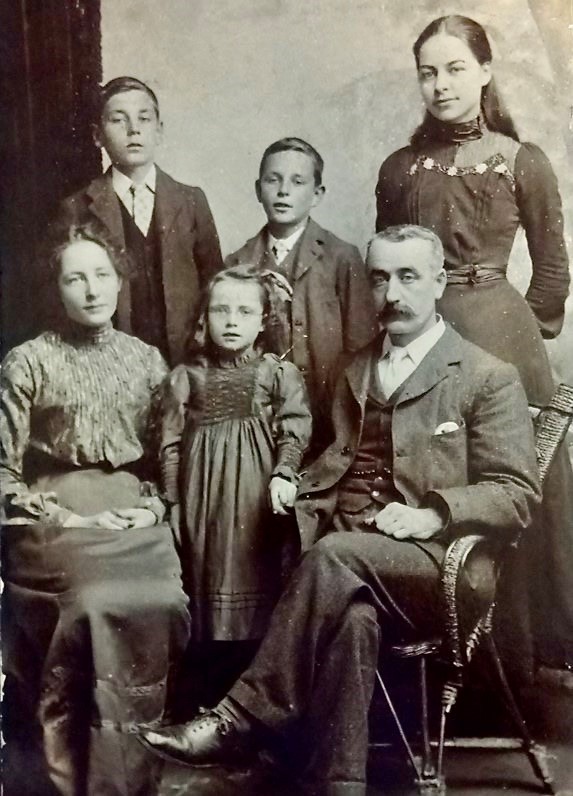


In his memoir, George said “The days at Eton will never be forgotten: the formative years; the association with the Eton boys; training the hands and mind for boatbuilding; the physical development in sculling. What a blessing Dad’s job at Eton was to us”.
Boat building and rowing were in the Pocock genes. The family would row together and they loved to race the steamers on the Thames…
In 1909, George built his own scull from workshop offcuts, rowed it 35 miles down the Thames from Eton to Putney where he won a professional rowing handicap race and a £50 purse which he used to fund his passage to Canada in 1911.

In 1910 his brother Dick won Doggett’s Coat and Badge, the oldest boat race in the world. Two years later his sister Lucy won the Women’s Sculling Championship of the Thames, the same year that George began building boats in Seattle for the University of Washington ‘Huskies’.
Those ‘Huskies’, helped by George, formed the US Men’s Eight crew who won gold at the 1936 Berlin Olympics. Their boat was called the ‘Husky Clipper’ and George Pocock built it. The inspirational, true story of that crew’s zero to hero journey is told in the film of the book “The Boys in the Boat”.
Pocock’s skills also contributed to US rowing success in the 1948 and 1952 Olympic Games.
An Olympic rowing legend will unveil a plaque celebrating the legend who was George Pocock; born an Englishman in 1891 but died an American in 1976 who said “Where is the spiritual value of rowing? The losing of self entirely to the cooperative effort of the crew as a whole”.

Young rowers, Jimmy Harlow and Ava Devereux, then read extracts from George’s memoirs. Jimmy’s ended:
It’s a great art, is rowing. It’s the finest art there is. It’s a symphony of motion. And when you’re rowing well, why it’s nearing perfection. And when you near perfection, you’re touching the Divine. It touches the you of yous. Which is your Soul.
Ava’s ended:
Harmony, balance, and rhythm. They’re the three things that stay with you your whole life. Without them civilisation is out of whack. And that’s why an oarswoman, when she goes out in life, she can fight it, she can handle life. That’s what she gets from rowing.
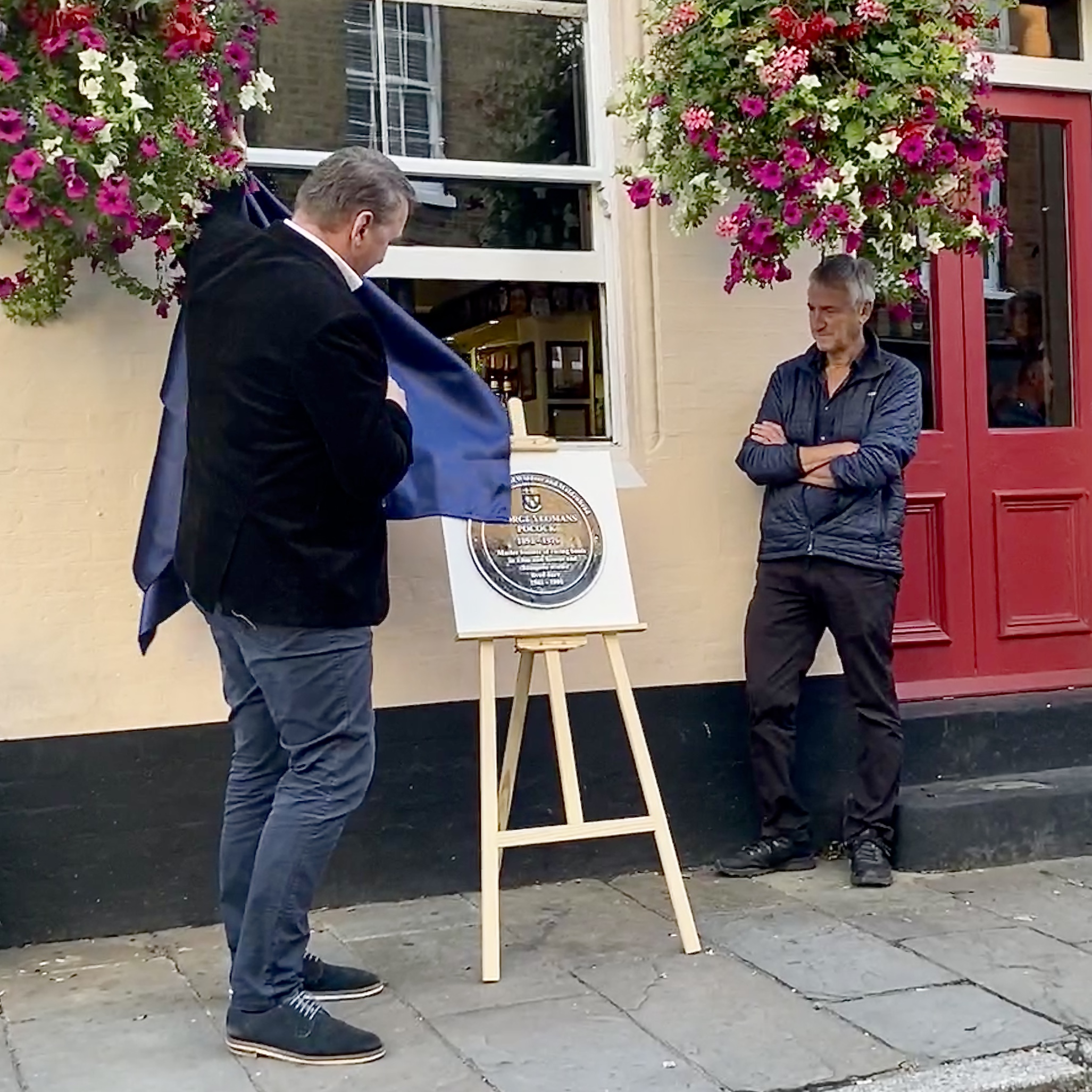
There followed some well chosen words from Will Calvert of the Windsor and Eton Brewery and from Guy Pooley, Head of Rowing at Eton College, before four-time Olympic Gold Medalist, Sir Matthew Pinsent unveiled the plaque after noting that he had learned to row on the river not many metres away and after telling a story about his one outing in a wooden Pocock eight in San Diego in 1990. The expectation was that he had loved the experience but the reveal was that the boat was too old and too small for the crew and they swapped it for an unromantic plastic one. As Matt noted, it was not the ending George Clooney would have made.


 Hear The Boat Sing