

29 August 2024
By Göran R Buckhorn
Sad news arrives from Sweden that one of the country’s most celebrated oarsmen, the Olympian Gösta Eriksson passed away on 21 August at the age of 93.
Eriksson was born in the small village of Skee in 1931 and moved to the town of Trollhättan in 1949. There, he and a friend, Olle Larsson, started rowing for the rowing club Trollhättans Roddsällskap, and they were very successful.
In the summer of 1952, the Swedish Rowing Federation invited the Syracuse coach Gösta “Gus” Eriksen to Sweden. Eriksen’s parents came from the Swedish-speaking western part of Finland and had emigrated to Seattle where Gus Eriksen had rowed for Al Ulbrickson. When Eriksen arrived to Sweden, he toured the rowing clubs and soon realised that the country had, he said “many good rowers, but no good crews.” Eriksen came back to Sweden with his family to spend the two summers of 1954 and 1955 to train some oarsmen.
A new thing for Sweden was that Eriksen picked oarsmen from three clubs, Strömstads Roddklubb, Kungälvs Roddklubb and Trollhättans Roddsällskap – the two rowers from the latter club were Gösta Eriksson and Olle Larsson – to form the crews for the coxed four and eight. At the 1955 European Championships in Ghent, the Swedes came home with two silver medals in the coxed four and the eight, Gösta Eriksson was rowing in both crews.
The Swedish four and eight were training hard for the next year’s Olympic rowing in Ballarat. Gus Eriksen had moved to Sweden with his family in 1956 and was hired as the natrional coach for the Swedish team. However, a miscalculation at the 1956 European Championships, the Swedes came late to Bled and never had the time to become acclimatized to the rowing course and the food, and two crew members in the eight rowed with stomach bugs. The eight never made it to the final, while the four placed 5th in the final.
But Eriksen had an extra card up his sleeve for the eight. He took the nine Swedes, who had formed a club called Roddklubben Three Towns, to Henley to race in the Grand Challenge Cup. It was the first time a Swedish crew were racing at Henley Royal. There were seven boats in the event and Gösta Eriksson and his crew mates were lucky to not have to row in the first round. In the second round, Three Towns beat London Rowing Club by 1 1/2 length, but in the final, the French Army crew, Centre Sportif des Forces de L’armée, overpowered the Swedes.
Despite the somewhat disappointing results during 1956, the Swedish four and eight qualified for the Olympic Games in Australia in November. In Ballarat, the Three Towns four easily won both the qualifying heat and the semifinal. In the final, the Swedes took the silver, Italy became Olympic champions and Finland took the bronze. At the European Championships in early September in Bled, the Finnish crew became champions and the Italian crew took the bronze. The Soviet crew, who took the silver in Bled, never reached the final in Ballarat.
In the eight final, which had four crews and was three hours (everything from an hour to three hours have been mentioned) after the final in the coxed four, the USA won followed by Canada and the home crew took the bronze. The Swedish eight, with four oarsmen who still felt the four race in their legs, placed 4th as the only European crew making the final.
Gus Eriksen also took the Swedes to the next Olympics in Rome. Gösta Eriksson then raced in the coxless pair with Lennart Hansson. They also competed in the coxed pair with Owe Lostad in the cox seat. They never qualified for the finals in either of the boats.
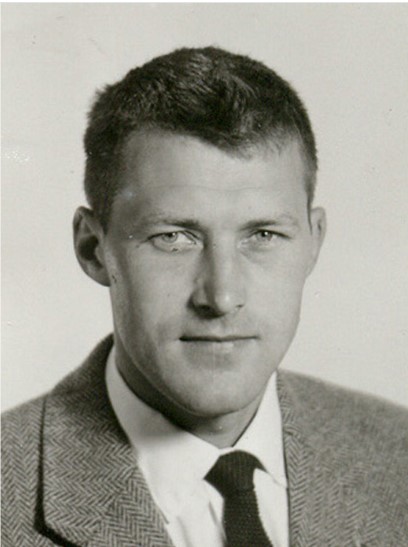
Altogether, Gösta Eriksson was the Swedish champion 12 times, winning the gold in the single sculls, double sculls, coxless pair, coxed pair, coxless four, coxed four and eight. He was also Nordic champion three times, and had a victory in a FISA Veterans race under his belt.
In late summer of 2021, I had a phone conversation with Gösta Eriksson, who proved to be a kind and humble man, and he told me that it was a wonderful experience to race at Henley. When I asked him how it was racing in the Olympics on the other side of the world, he surprised me by saying that, at the time, he and the other crew members took it as any other regatta, “it wasn’t much different from the regattas at home [in Sweden]”. After the race, he thought, “alright, that was that”. Though, later it dawned on him that he had actually won an Olympic silver medal.

For the Swedish readers it might be fun to listen to a radio interview from 21 July 2021 that a Swedish radio station did with Eriksson in time for the Tokyo Olympics. Go here.
Four more details on Gus Eriksen and Three Towns, please see the obituary about Evert Gunnarsson’s passing from 10 February 2023 here.
Gösta Gunvald Eriksson, born on 26 January 1931, died on 21 August 2024.
 Hear The Boat Sing