
15 May 2024
By Tim Koch
Tim Koch on a welcome revision.
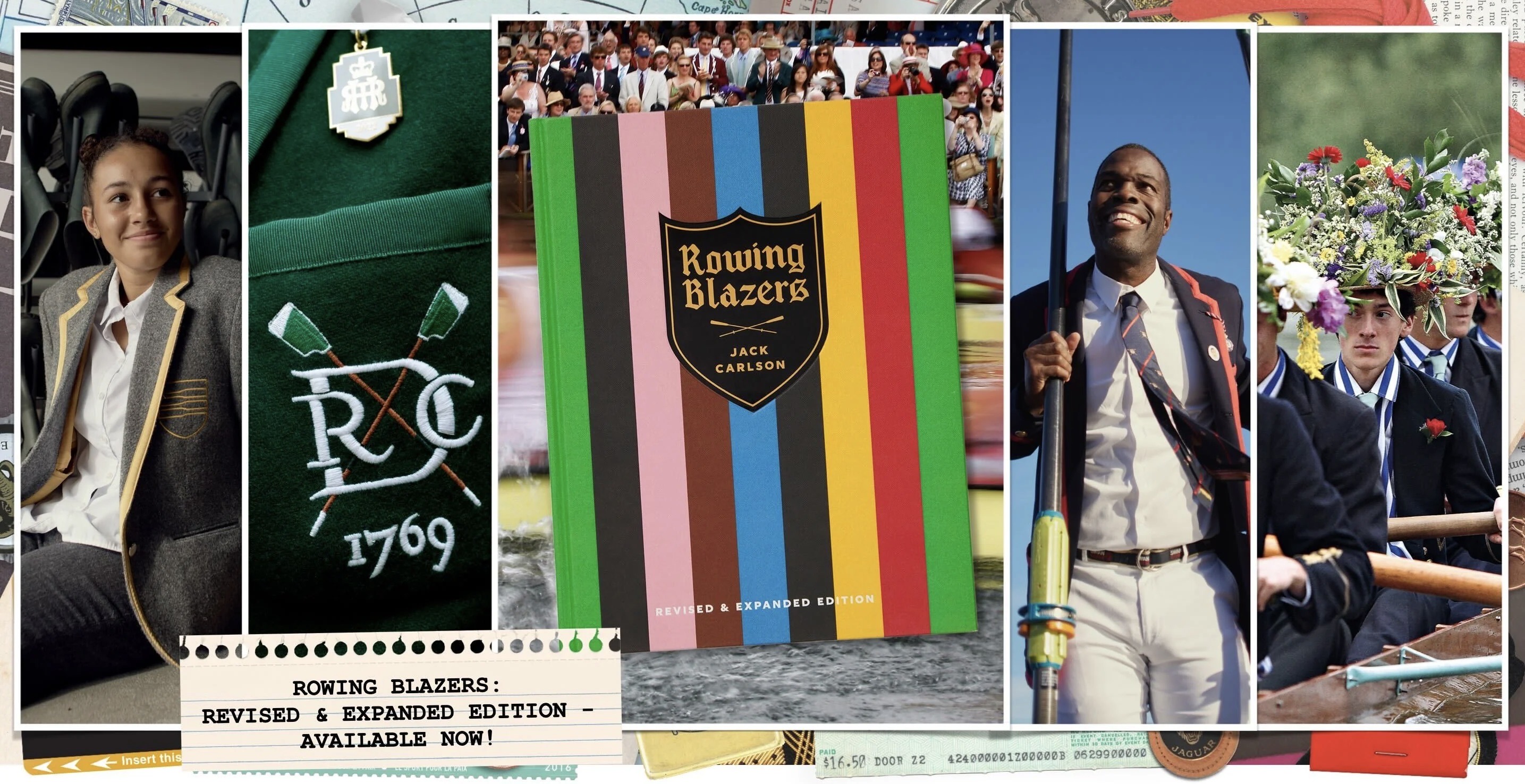
Remarkably, it is ten years since I reviewed the first edition of Jack Carlson’s Rowing Blazers. I began that appraisal by noting that:
The term “coffee table book” is often used pejoratively – and for good reason. Large format, lavishly illustrated publications, frequently with minimal text, can sometimes be “hack jobs” produced by those who don’t know and don’t care in order to make a quick profit from those who happily accept superficiality over substance. It is presumably for this reason that some publishers prefer to use the rather less satisfying term “adult illustrated non-fiction” for such productions. Labels notwithstanding, Jack Carlson’s “Rowing Blazers,” is at the top of the illustrated book category. It is clearly a “labour of love” by someone who knows and cares about the subject and who has spent an inordinate amount of time and trouble producing not only the pictures but also the text.
Announcing a new edition in April 2024, the website rowingblazers.com said:
Ten years ago, Jack Carlson released his richly photographed book about the history and tradition of the rowing blazer at colleges and clubs around the world: an ode to the striped, piped, and badged garments that epitomize the “preppy” look, and the colorful myths, rituals, and races associated with them.
The book was a passion project, intended primarily for the rowing community. But it became an instant classic in fashion circles, and laid the foundation for the @rowingblazers brand. Now, Carlson is launching a revised and expanded new edition of the book to coincide with the tenth anniversary of the original.

It would have been very easy for Jack Carlson to produce more of the same and, if he did, I am sure that most HTBS and other rowing types would have accepted it enthusiastically. However, the world has moved on in the decade since Rowing Blazers first appeared and many of the forty clubs added to the revised and expanded edition are a recognition of this. As Jack says:
Fashion, the sport of rowing, and even the connotations and meaning of the word “preppy” have changed enormously since the original edition of the book… The sport is far more diverse than it used to be, and the blazer tradition is much more widespread.
Rowing has long had an image problem, particularly in the UK and North America. It is still seen by many as an elitist sport primarily for private schools and ancient and inaccessible universities. Many (including sections of the International Olympic Committee) regard it as a predominantly white sport done by wealthy nations. Ironically, some of the most popular and high profile aspects of rowing – such as Henley Regatta, Oxford-Cambridge, Harvard-Yale and, yes, the wearing of “esoteric” blazers – do not help in attempting to dispel these not entirely unjustified ideas.
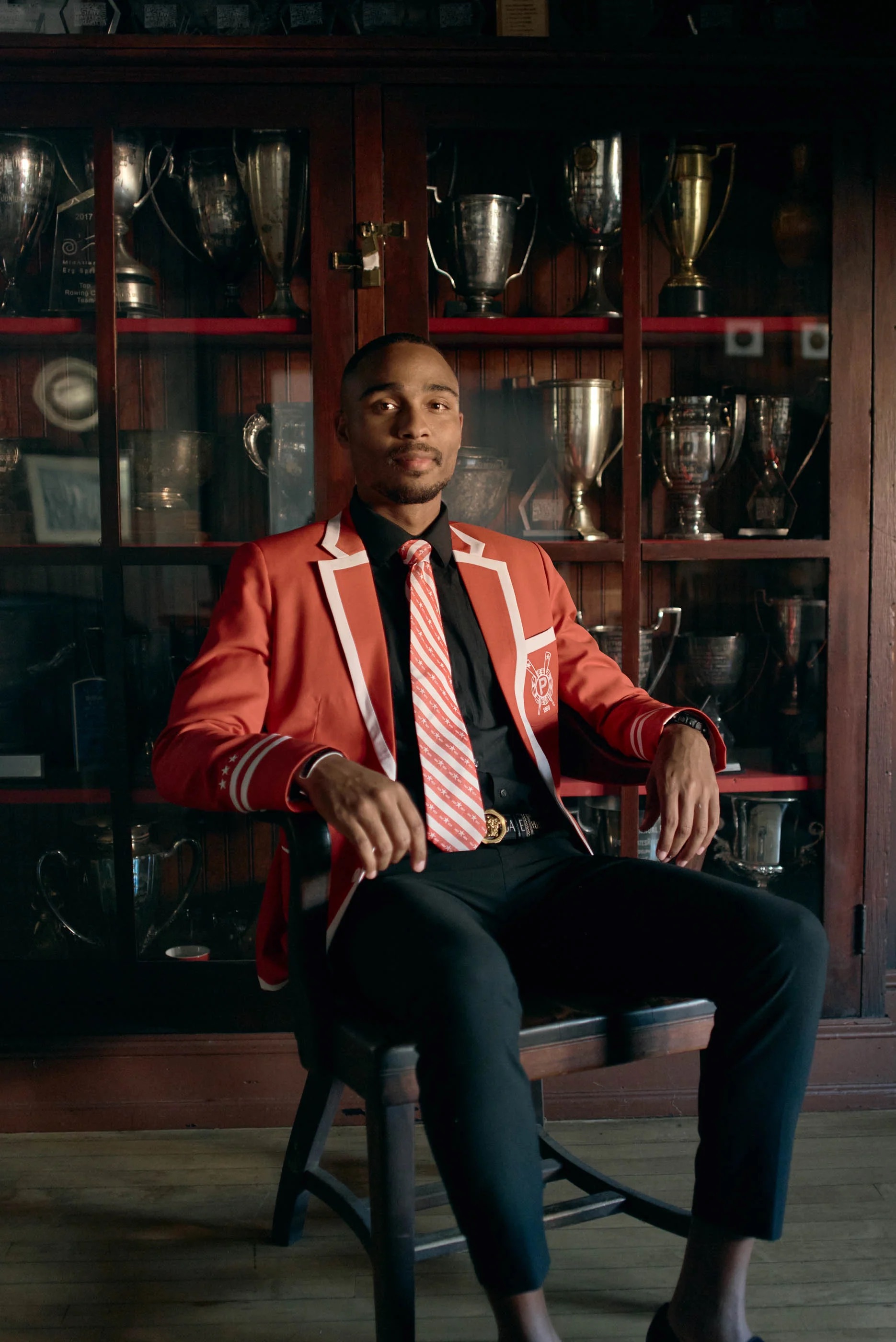
The new edition of Rowing Blazers seeks out those that are evidence that rowing is trying to change and to become more accessible but at the same time is attempting to preserve some of the more positive and admirable aspects of its heritage. What could be more symbolic of this than the fact that the London’s Fulham Reach Boat Club, NYC’s Row New York and Chicago’s Manley High School have all adopted blazers while strenuously trying to make rowing open to all, particularly those social and ethnic groups that are vastly underrepresented in the sport?
Motivated by the idea of “see it to be it,” the revised edition has more people of colour in its pages than ten years previously, but the still comparatively low numbers emphasise how far the sport still has to go.

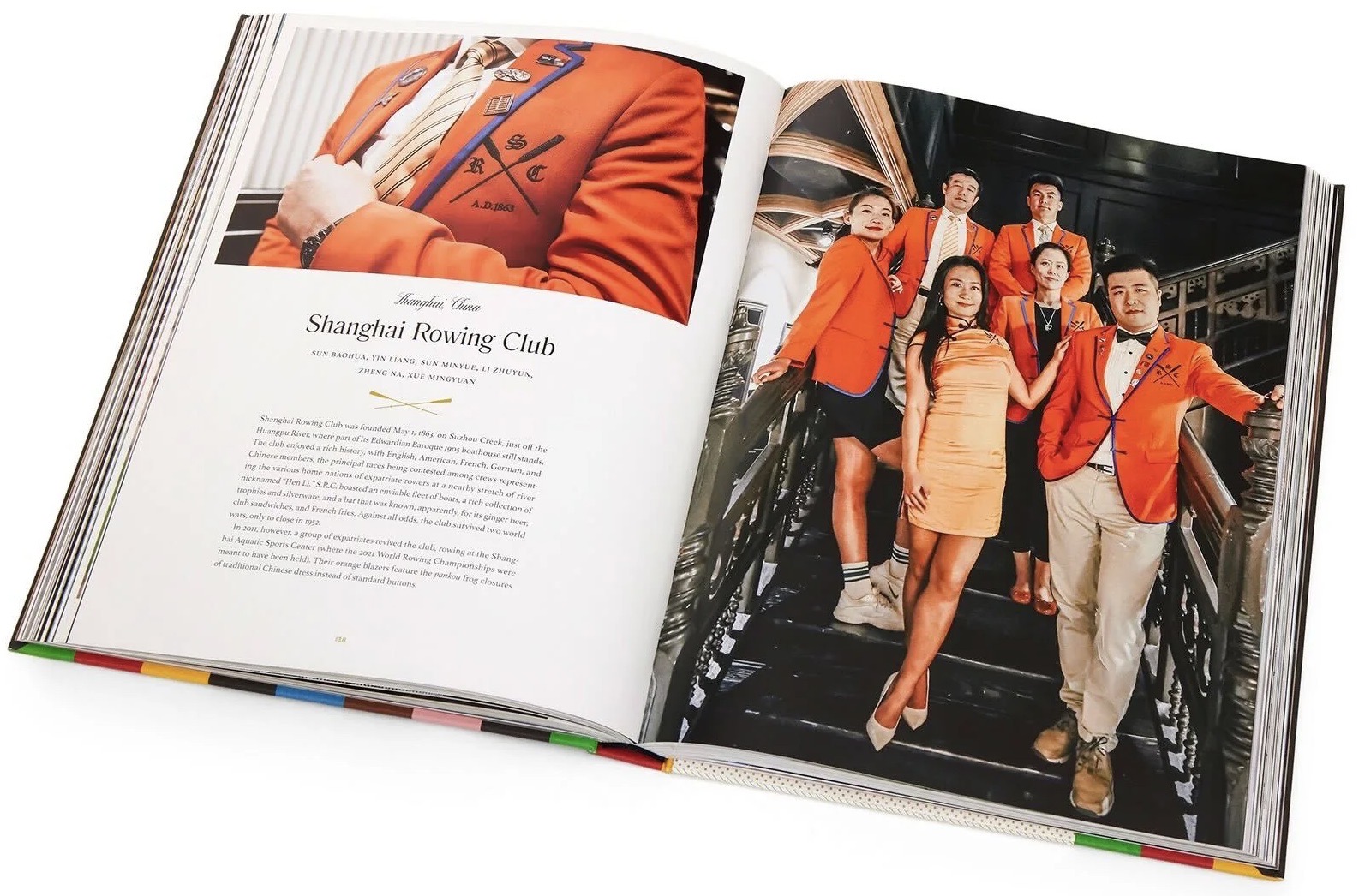
Further, while the 2014 edition of Rowing Blazers concentrated on clubs in Europe, North America and the older members of what was once called the British Commonwealth, new pictures in the 2024 version show blazers from places such as the Shanghai Rowing Club and the Bumblebee Rowing Club in China, the Buenos Aires Rowing Club and the Tigre Boat Club in Argentina, the Nassau Rowing Club in the Bahamas and the Partez Rowing Club in Japan.
More traditionally, rowingblazers.com tells us:
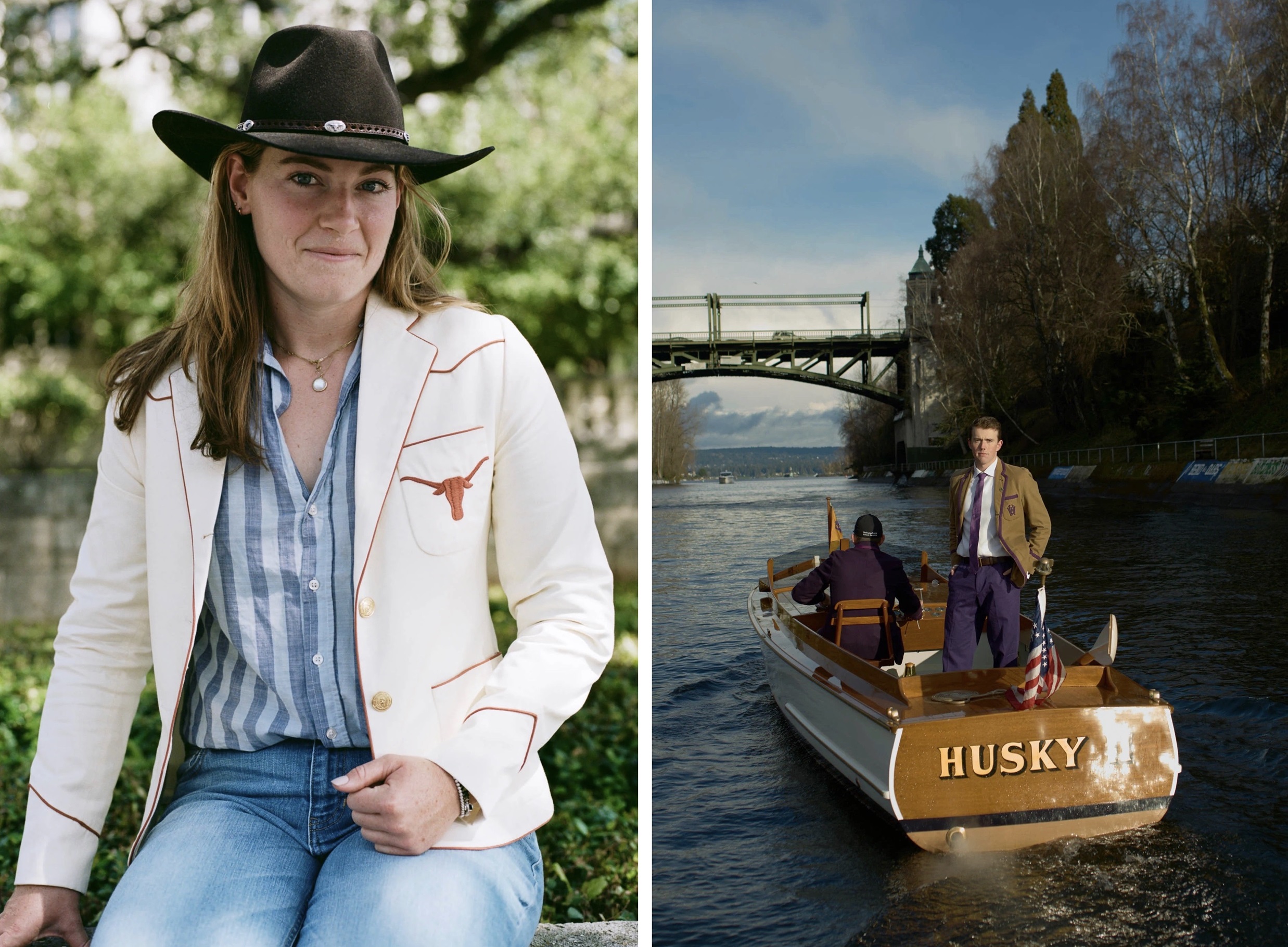
New US clubs include the storied program at the University of Washington, recently featured in George Clooney’s film, The Boys in the Boat, as well as Penn, the University of Texas… alongside prep schools like Groton and Deerfield. The book also features… Olympic champions from Britain, Germany, South Africa, the United States, and more.
Turning to one of Jack Carlson’s other businesses, the clothing and accessories brand, Rowing Blazers, he has recently sold a majority stake in the company to the investment firm, Burch Creative Capital, for an undisclosed sum. The announcement comes after a good year for Rowing Blazers during which the brand launched major collaborations with strange bedfellows, Italian luxury fashion house, Gucci, and discount store chain, Target. Carlson will remain as Creative Director, and co-founder David Rosenzweig will remain as Director of Strategy. More on the acquisition is here.
As its Wikipedia page indicates, Carlson’s clothing business has moved a long way from producing just blazers for rowing clubs and has reimagined so-called “Preppy” or “Ivy League” clothing for a younger and apparently more egalitarian customer. I could be snotty about turning classic style into transient fashion, but I have to note that the 200-year-old classic American clothiers, Brooks Brothers, filed for bankruptcy protection in 2020 and admit that none of my business ideas have ever attracted an “undisclosed sum” from venture capitalists.
Rowing Blazers, Revised and Expanded Edition by Jack Carlson (2024) Vendome Press ISBN: 978-0-86565-398-6. Hardcover, 304 pages and 375 colour illustrations.
 Hear The Boat Sing
I don’t see any need or efficacy in attempting to “democratize” rowing; that is bring it to the masses. Let it remain an elite endeavor. I came from relatively modest beginnings but was enamored with rowing as a boy watching the sport on the Olympics. I set out of my own interest and volition to put myself in a place where I could do it.
Why this push to deliver to every door a product that may hold little interest for the resident.
Next you’ll be proposing trophies for all showers up.
Dear Dwight,
You want rowing to be “an elite endeavour”. I think you mean “an elitist endeavour.”
You seem to equate opening up the sport with the lowering of athletic standards (“trophies for all showers up”). Just possibly, some from a new intake could be as good as the young Dwight Jacobson.
I note that you come from “relatively modest beginnings”. I suspect that you are American but not so long ago in Britain, those from your background were designated as “professionals” and could only row with and against those from a similar social class and certainly not at Henley or in the Olympics.
Fortunately for those from “relatively modest beginnings,” the people who blindly opposed change were eventually defeated. It is the same with women’s rowing (and women’s sport in general), for a long time marginalised, mocked and opposed by the defenders of the status quo.
You also say that you became enamoured with rowing by watching the Olympics. Remember, the people who enamoured you probably looked like you (I am guessing that you are white).
Take comfort in the fact that your possibly un-American concern that rowing will be “brought to the masses” (shock, horror) is probably unfounded. Rowing will always be a minority sport, it is just that it is one that needs to be more open to minorities.
That is all from me.
Tim