

26 February 2024
By Tim Koch
Tim Koch follows crews in Blue, Burgundy and Orange.
I have previously written that:
The Boat Race Club Fixtures, when top British and foreign crews race potential Oxford and Cambridge Blue, reserve and lightweight crews over sections of the Putney to Mortlake course, are an important part of the Boat Race Season. They are both a selection test and a provider of key race practice, giving the experience of competing against top-class opposition and also providing opportunities for the rowers and coxes to simulate race day as much as possible. They get to know the course, can practise routines and starts, get to race on both the Surrey and the Middlesex stations and have the experience of being officially umpired.
While the benefits of the fixtures for crews are clear, what is less obvious is that the results of the encounters are the nearest indicators of “form” that these two-horse races have. Predicting Boat Race results is particularly difficult as the crews that will meet on the big day have never raced each other before and will never race each other again (except in the winners’ dreams and the losers’ nightmares).

There were no shortage of fixture races this year. A press launch was made available on 28 January to follow the Oxford Women racing Oxford Brookes and the Cambridge Men racing a Dutch national crew, contests that are covered in this post. A press launch was also in action on 25 February to cover the Cambridge Women racing Thames and the Oxford Men racing Leander and these fixtures will be covered in Part II of this post.
Oxford Women v Oxford Brookes, Race 1 (Start to 5-minutes)
In his commentary on the live feed, Martin Cross acknowledged that the Brookes crew, possibly the boat club’s entry for the Remenham at Henley this year, would be difficult to beat and that if the Oxford Blue Boat finished within one length of them, it would be a good result. Oxford went off at 46.5 and Brookes at 41.5, going down to 40 and 39 respectively after a minute and both down to 37 after two.

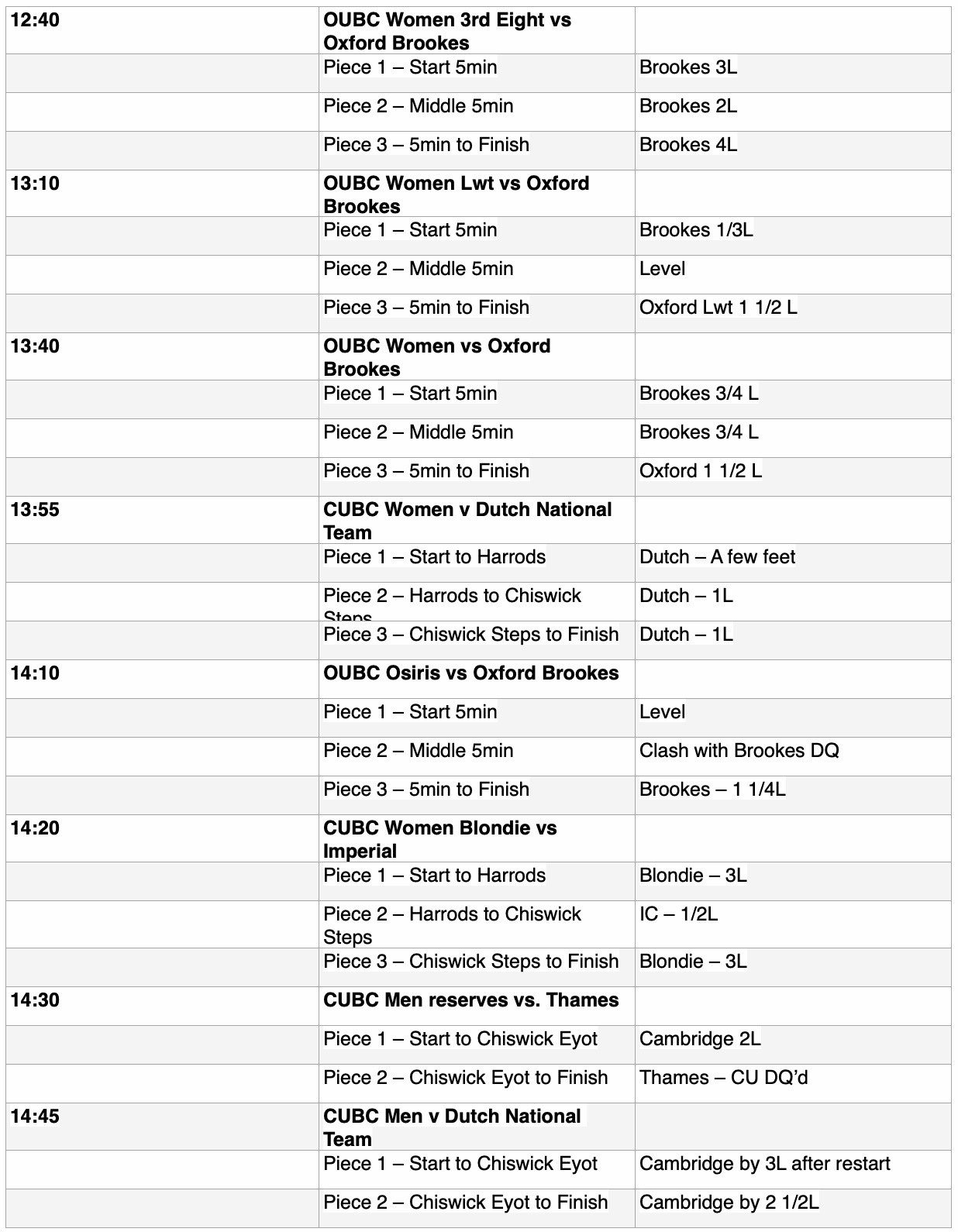
Brookes settled well and looked sharp and in control. Oxford seemed hurried and less relaxed. Even with the bend largely in their favour, Oxford went 1/4 length down but maintained overlap to lose by 3/4 length.

Oxford Women v Oxford Brookes, Race 2 (Downstream of Hammersmith Bridge to 5-minutes)
The course for the second race meant that Oxford had to hold Brookes around the outside of the Surrey bend for much of it. Martin Cross again held that any finish within one length would be a positive for Oxford. This they achieved and Oxford looked more confident and settled in this piece, hitting 40.5 to Brookes’ 38.5 after a minute.

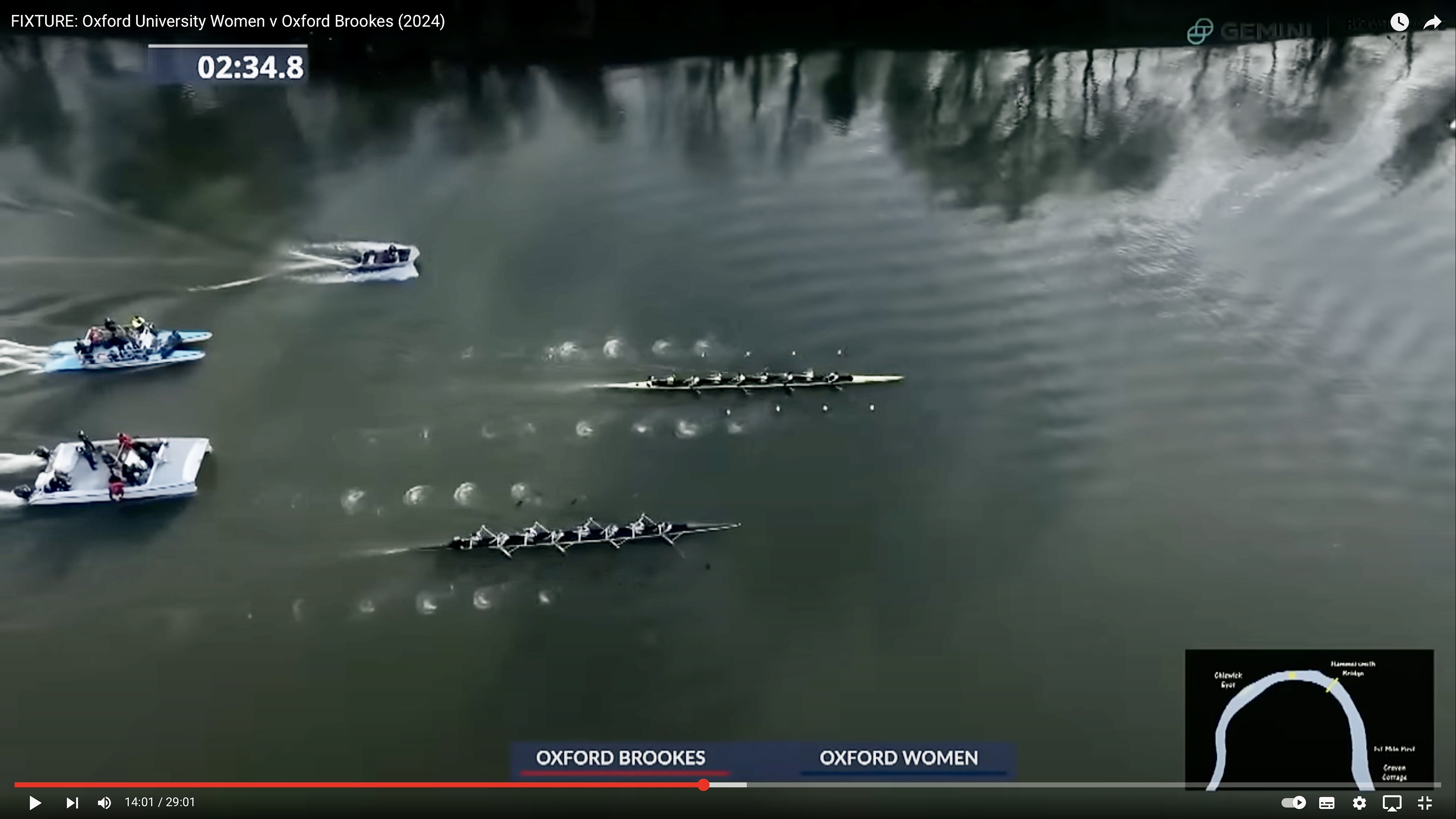


Oxford Women v Oxford Brookes, Race 3 (Upstream of Chiswick Eyot to the Boat Race finish, approximately 5min 40 secs)
A more aggressive start by Oxford saw them take the lead for the first time, slightly underrating their opponents, 38.5 to 39.5 after the first minute. After four and a half minutes, Brookes drew level briefly but there was a clash which Oxford came out of best, regaining a small lead. In the last minute, Brookes looked increasing under pressure and Oxford hit a good rate and rhythm and moved away dramatically to win by one-and-a-half lengths. Martin Cross said that it was one of the best Oxford women’s crews that he had seen in recent years.
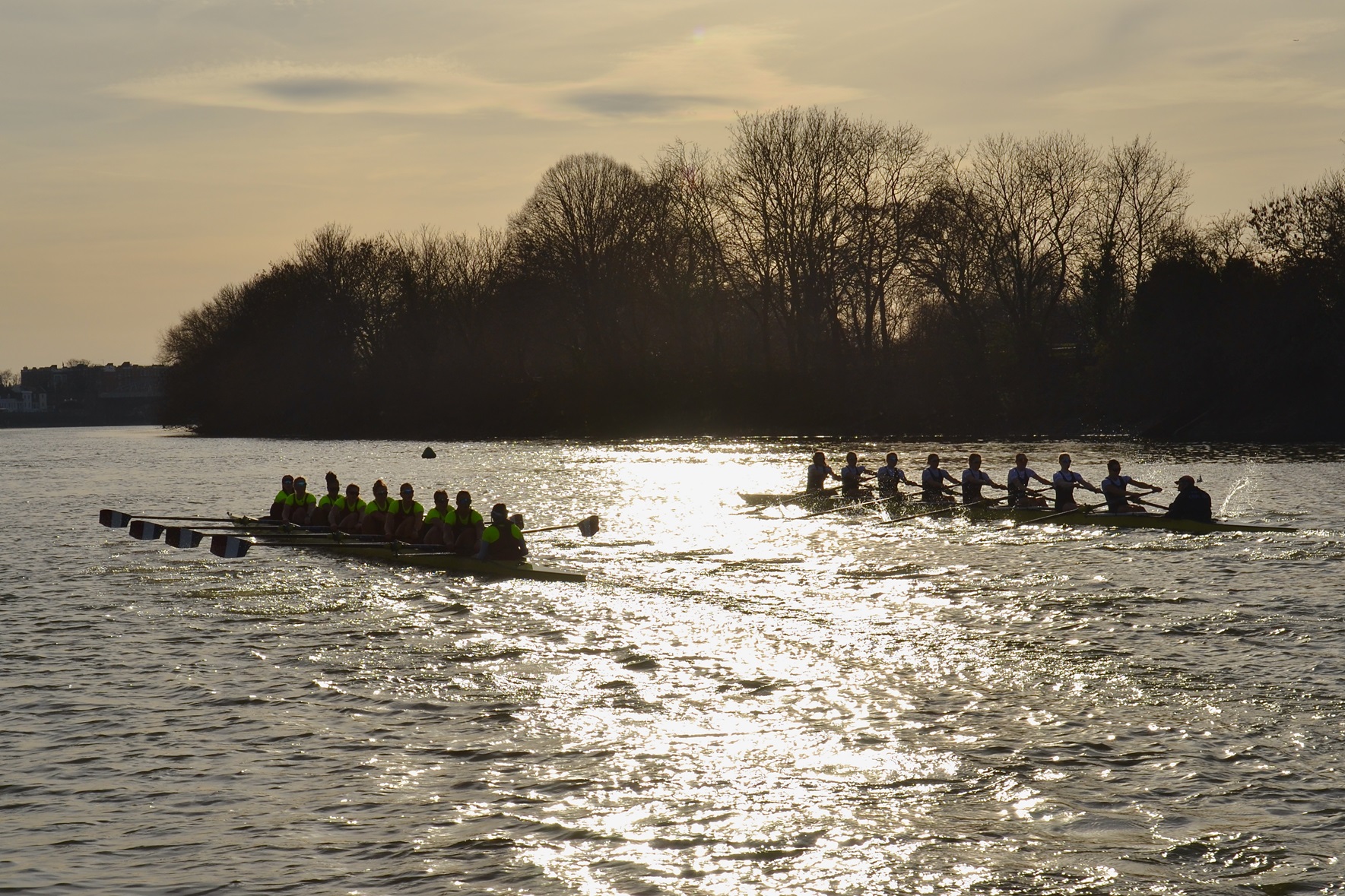

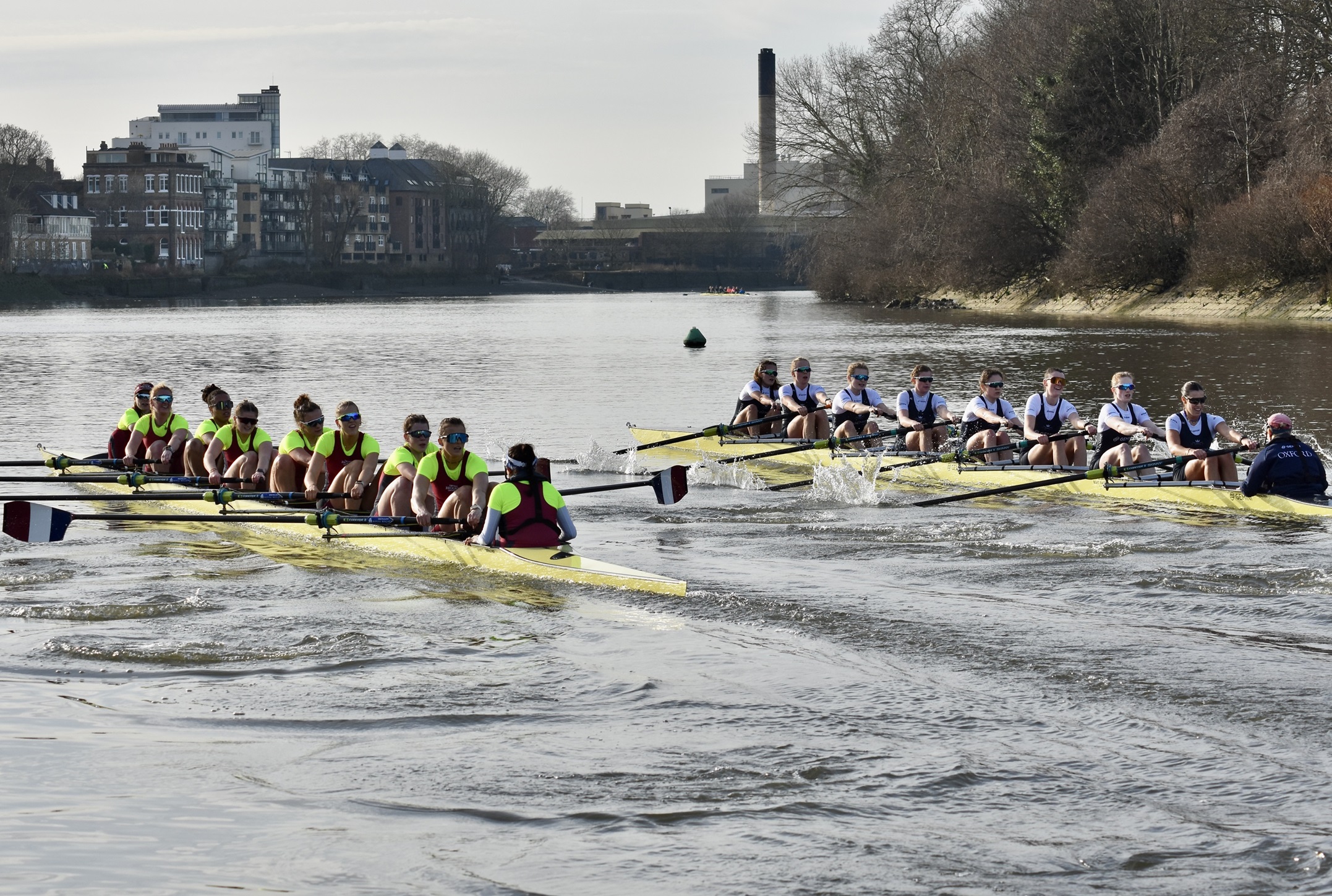

The official website wrote:
Among the standout athletes was Annie Sharp (6), a graduate from the University of London, who caught the attention of commentator Martin Cross. Sharp, with two successive Henley Royal Regatta wins in the Wargrave Trophy and a record-breaking 2023 campaign, brought valuable experience to the Oxford squad. Accompanied by new additions Lucy Edmunds (7, Yale) and Tessa Haining (3, Harvard), the crew blended fresh international perspectives.
All the races are on YouTube, the crew lists are here.
Cambridge Men v Dutch National Development Crew, Race 1 (Start – Stopped at 5m 20s – Half Way)
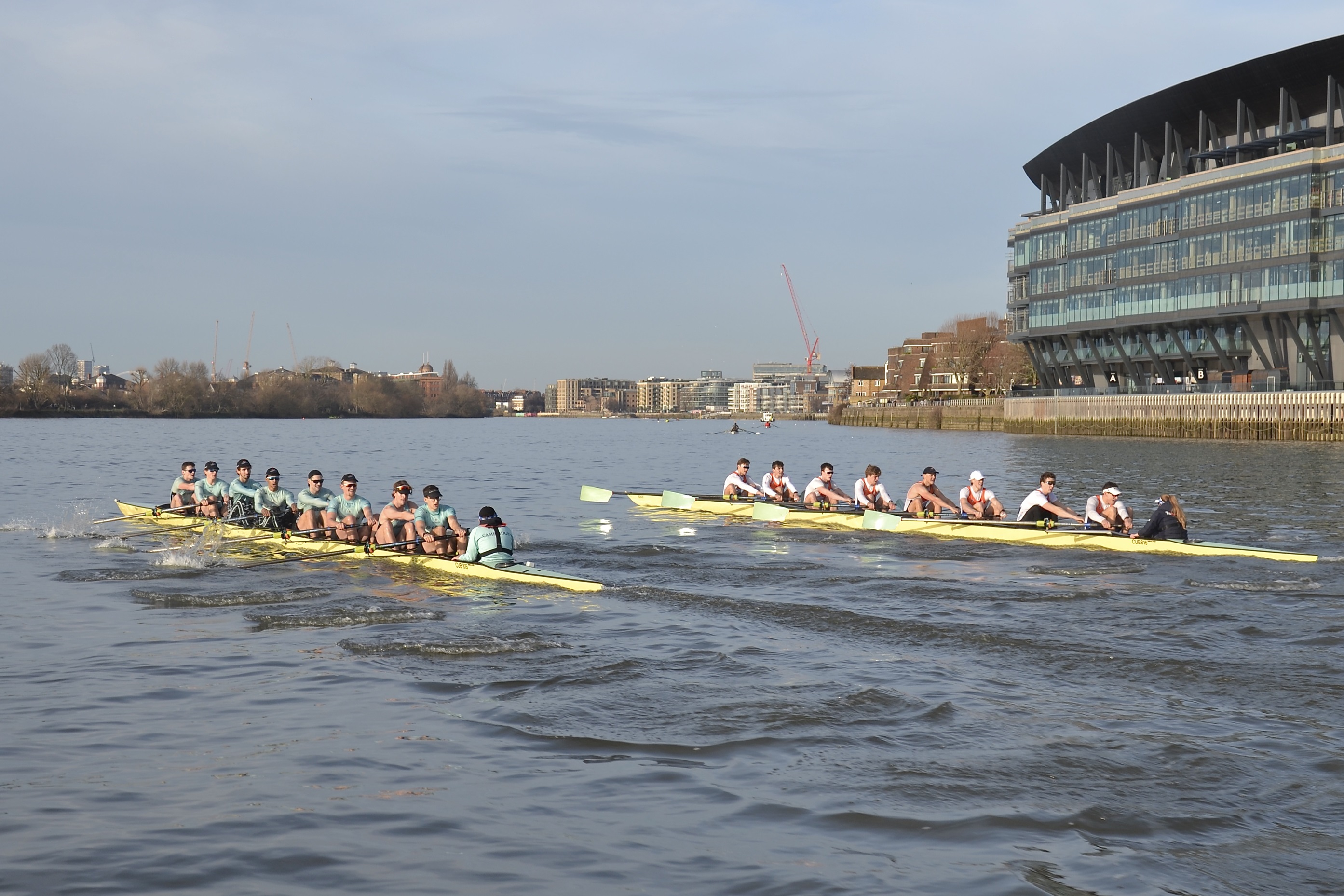
Initially, the crews remained level but Cambridge gradually got its bow in front. Commentator Henry Fieldman held that the Dutch were probably more powerful but that Cambridge had a more efficient rhythm. All along Fulham reach, the Dutch seemed to be steering towards Cambridge despite their strategic advantage of the Middlesex station. At two-and-a-half minutes there was a clash of blades from which Cambridge got away quicker. However, another clash at three minutes allowed the visitors to get back.
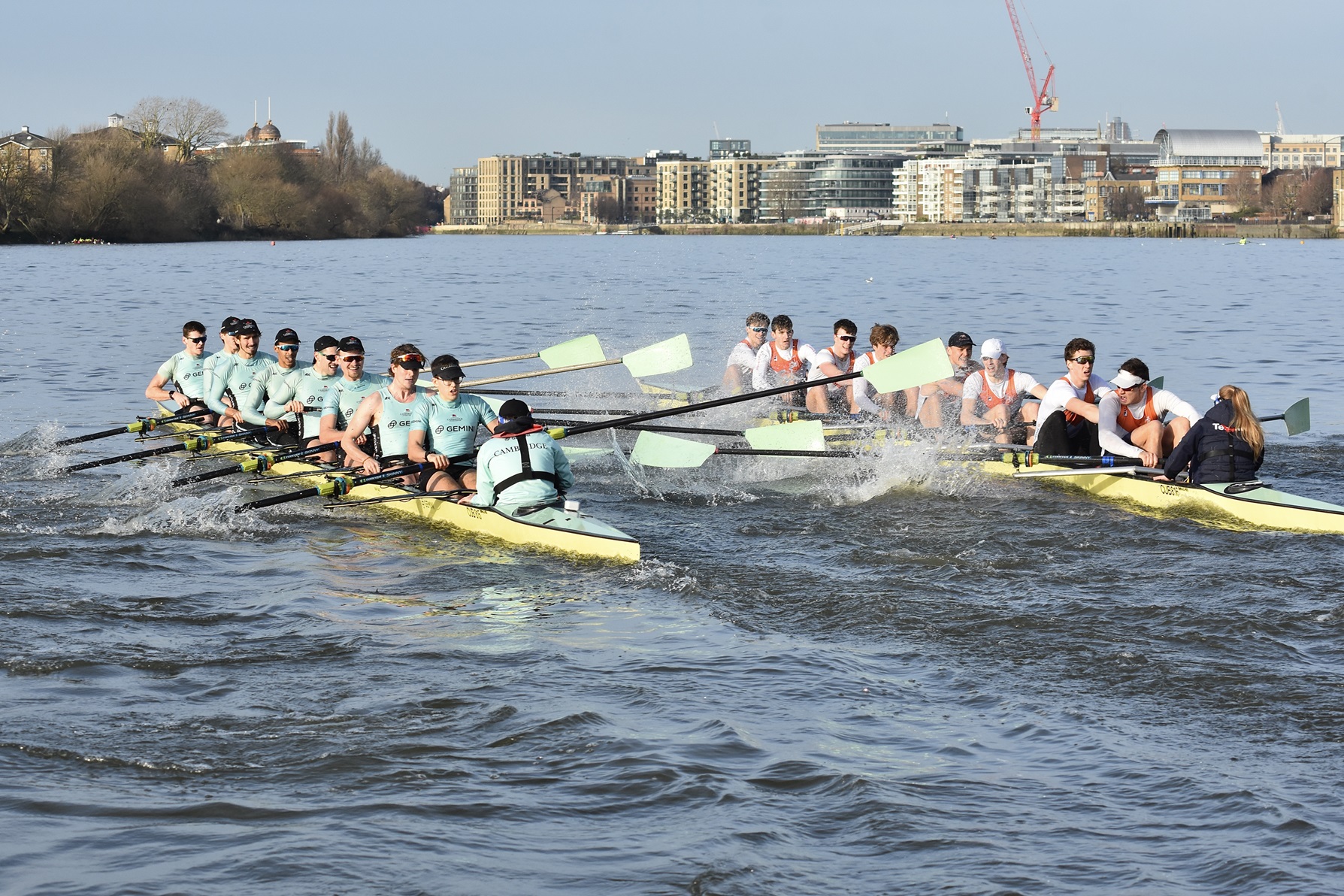

Inevitably perhaps, another clash at 4 minutes 20 seconds resulted in a crab by the Dutch “2” man and he took 20-seconds to recover his oar. Cambridge coach, Rob Baker, took a little time to persuade umpire Matt Pinsent to stop the race. Pinsent said that, if this had been the Boat Race, he would have let it continue, a clear indication that he thought the Dutch were at fault.


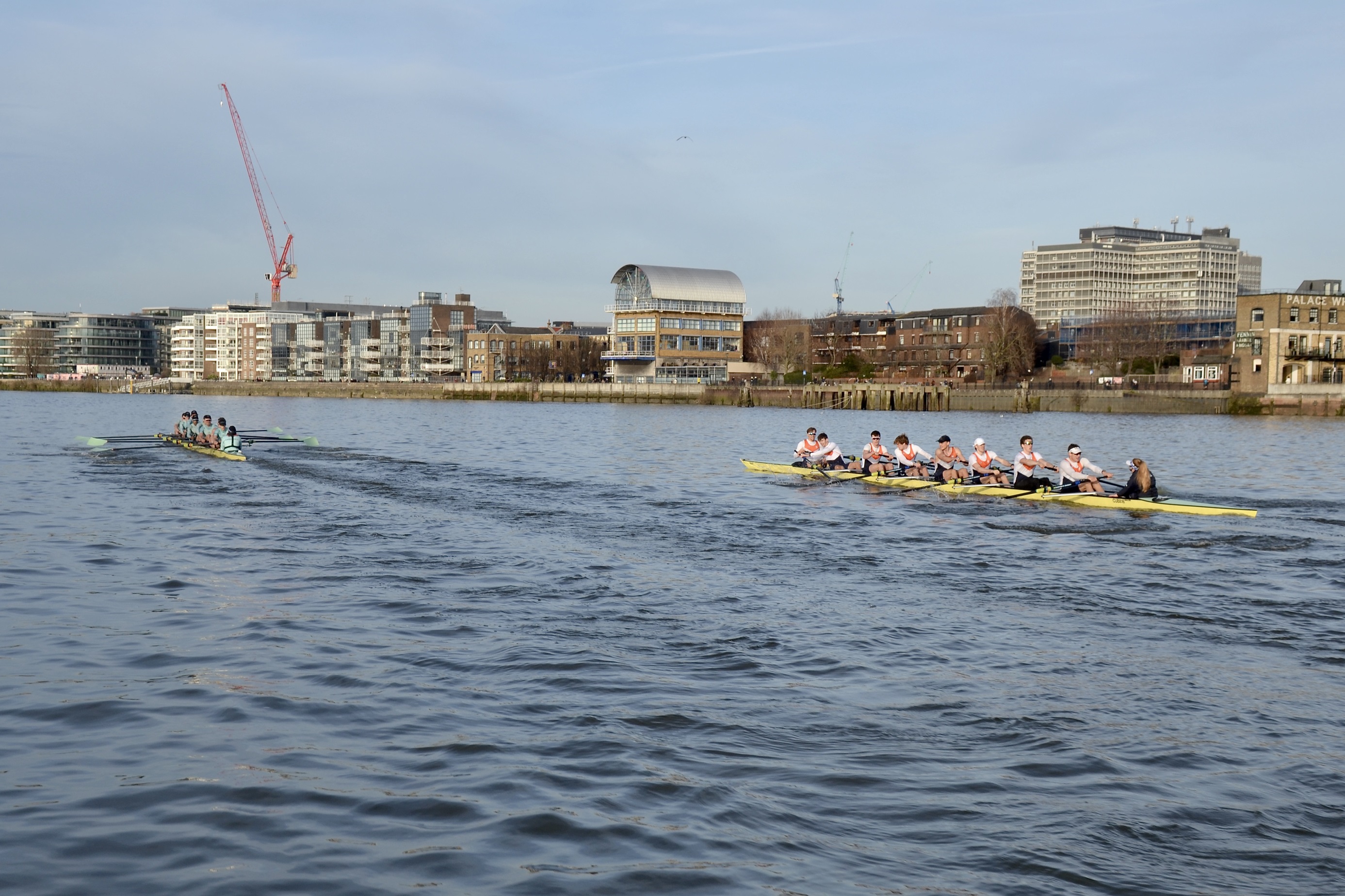
The crews re-started opposite Fulham Reach Boat Club, 250 metres downstream of Hammersmith Bridge. Cambridge initially had the advantages of the inside of the Surrey bend and a more aggressive start and soon established a half-length lead. Under Hammersmith Bridge, Cambridge extended their lead to three-quarters of a length.
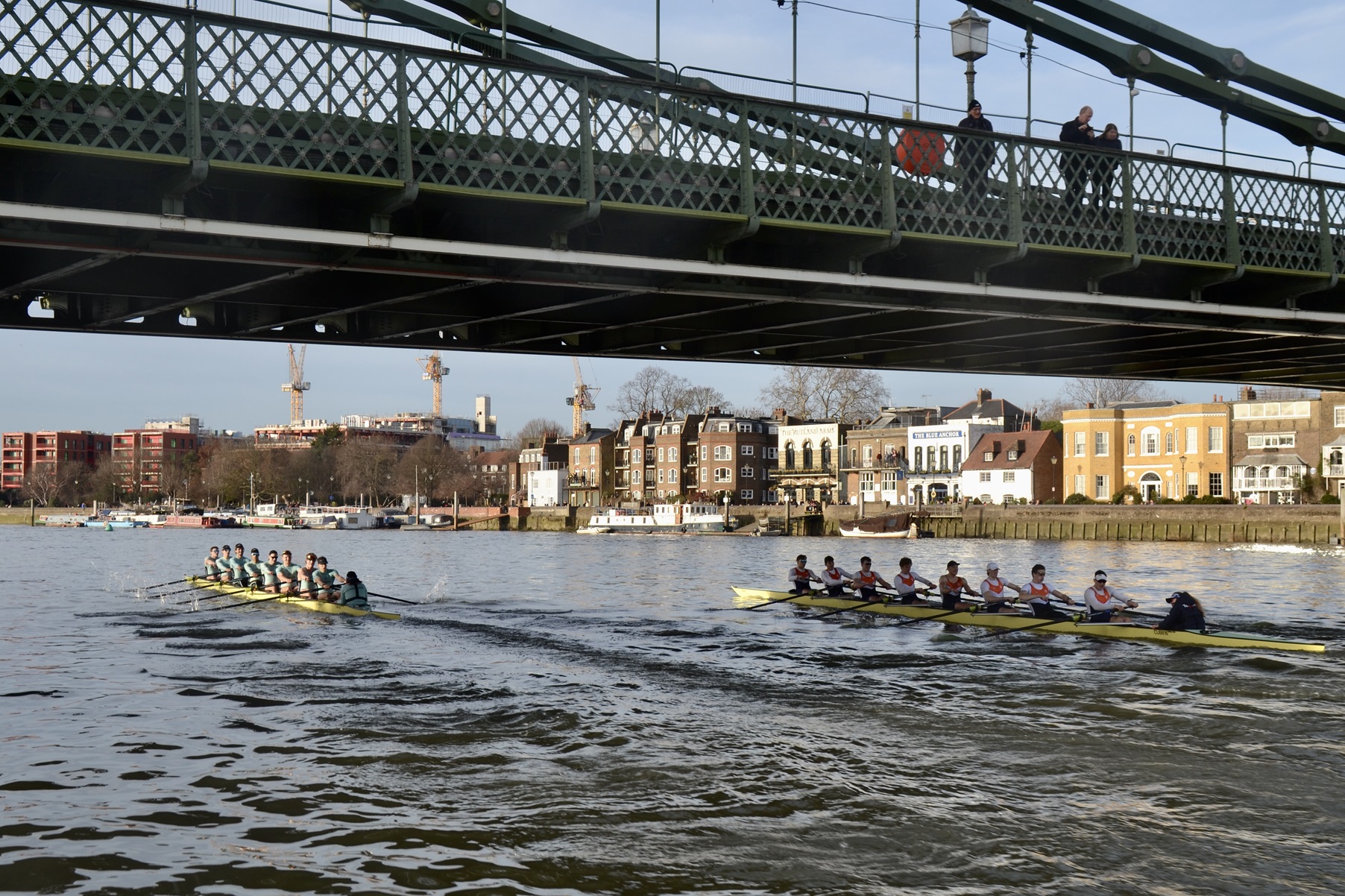
The impression was that the Dutch had not fully recovered from their boat stopping crab and Martin Cross was of the opinion that Cambridge were taking full advantage of their “Tideway Savvy” which, naturally, the visitors did not have. At the finish at the full course half-way mark, the verdict was three lengths to Cambridge.


Cambridge Men v Dutch National Development Crew, Race 2 (from halfway to the finish)

Despite Cambridge having an inside bend advantage for the first minute, initially they went down to the higher rating Dutch. However, they found their rhythm and steadily closed the gap. As the crews approached Barnes Bridge, there were clashes and both coxes received warnings. After four minutes, Cambridge took a one-third length lead and the Dutch began to look ragged. By 5 minutes 30 seconds, Cambridge had a half-length lead on the outside of the bend and eventually won the second piece by two-and-a-half lengths.


Cambridge Women v Dutch National Development Crew
This race was not followed by a press launch and the reports below are from the official website.
First Piece: Neck-and-Neck Battle
As the first piece commenced, Cambridge’s Women’s A Crew drew Middlesex and found themselves locked in a tense battle with the Dutch. Despite the Dutch team drawing out to nearly a one-length lead, Cambridge refused to be daunted. Displaying remarkable composure, Cambridge improved their pace through the Fulham bend, narrowing the margin to inside one length. The surge continued as the crews navigated the Crabtree Reach, with Cambridge gaining seats. However, in a tightly contested finish, the Dutch emerged victorious by a mere few feet.
Second Piece: Dutch Dominance Continues
With Cambridge positioned on the inside of the Surrey Bend for the second piece, they faced a disadvantage. Capitalising on this opportunity, the Dutch launched another fast start, propelling themselves to a clear-water lead past Hammersmith Bridge. Despite rowing in the Dutch wash, Cambridge regrouped and mounted a fierce comeback, narrowing the margin to one length at the finish at Chiswick Steps.

Final Piece: Cambridge’s Last Stand
In the final piece from Chiswick Steps to the Finish, Cambridge sought to overturn the Dutch dominance. Despite being positioned on the outside of Barnes Bend, the Dutch once again surged ahead, establishing a clear-water lead. Cambridge responded closing the gap and bringing their bow ball level with the Dutch stern. However, despite their efforts, they were unable to surpass their opponents, highlighting the Dutch team’s formidable control over the course.


 Hear The Boat Sing