

3 January 2024
By Tim Koch
One of Tim Koch’s almost-nothing-to-do-with-rowing posts.
Harold Macmillan (1894-1986) was the last British Prime Minister to be born in the reign of Queen Victoria, the last to have served in the First World War (wounded three times) and the last to wear a moustache. If you (unwisely) get your knowledge of modern British history from The Crown on Netflix, you will have the idea that he had the persona of a slightly ineffectual suburban bank manager.
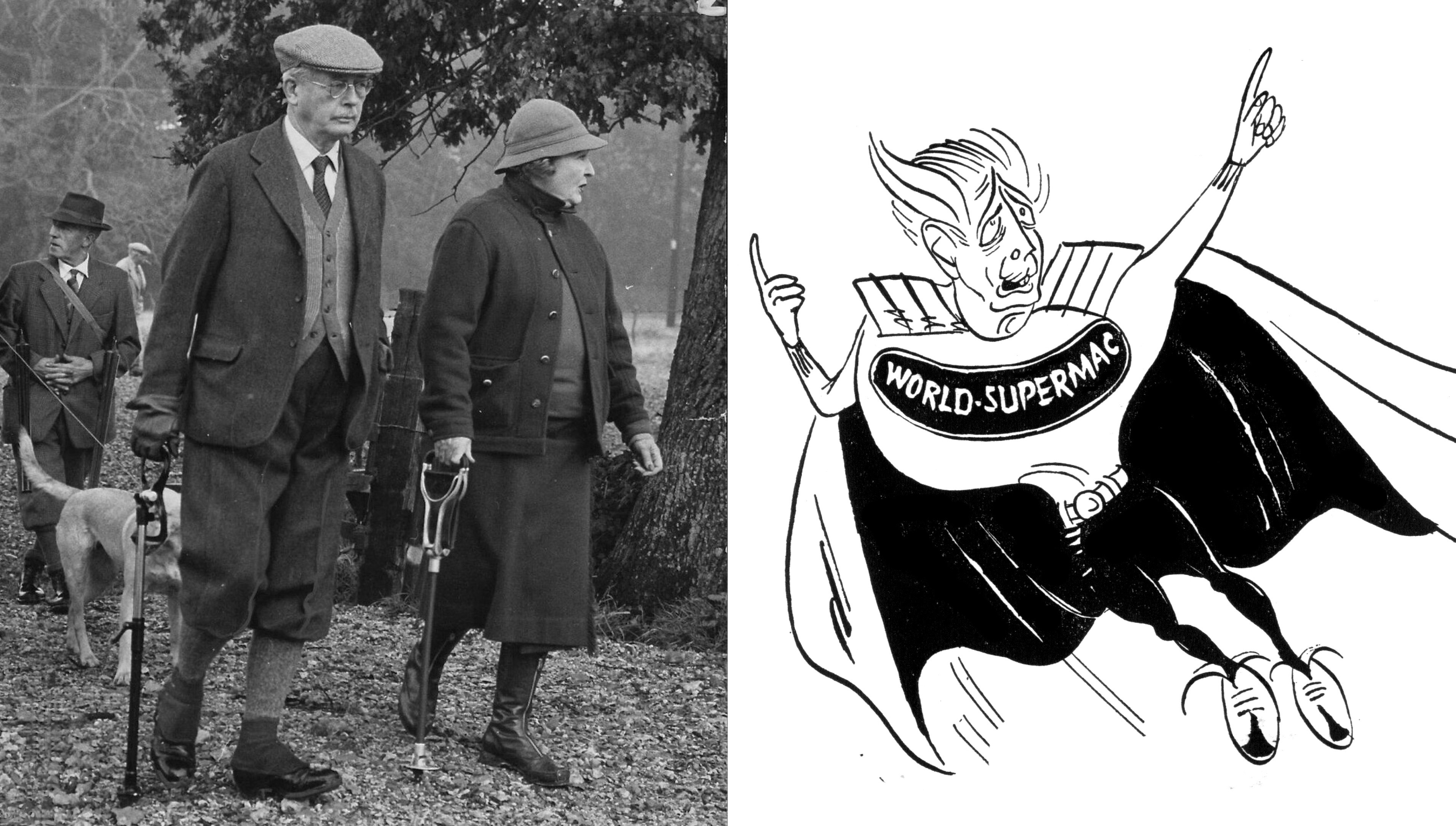
In fact, Netflix should have depicted Macmillan as a charming Edwardian gent, albeit one who successfully transitioned into the mid-20th century. It was a carefully nurtured self-deprecating image that hid a shrewd and sometimes ruthless political player.
Near the end of his life Macmillan said, “When a man becomes Prime Minister, he has to some extent to be an actor.” He particularly cultivated his “unflappable” image. For example, he wrote that, when he was lying wounded in a shell hole on the Somme for twelve hours in 1916, sometimes feigning death when Germans were near, he spent some of the time reading Aeschylus’ Prometheus in the original Greek.
The man who was frequently pictured discharging a shotgun at hapless game birds while wearing a tweed suit that had been fashionable four monarchs previously incongruously held that, “Too many people live too much in the past. The past must be a springboard, not a sofa.” He was the first Prime Minister to use the new medium of television well, the first to successfully exploit the new post-war affluence, the first to warn racist white settlers in Africa that, “the wind of change” was blowing through the continent.
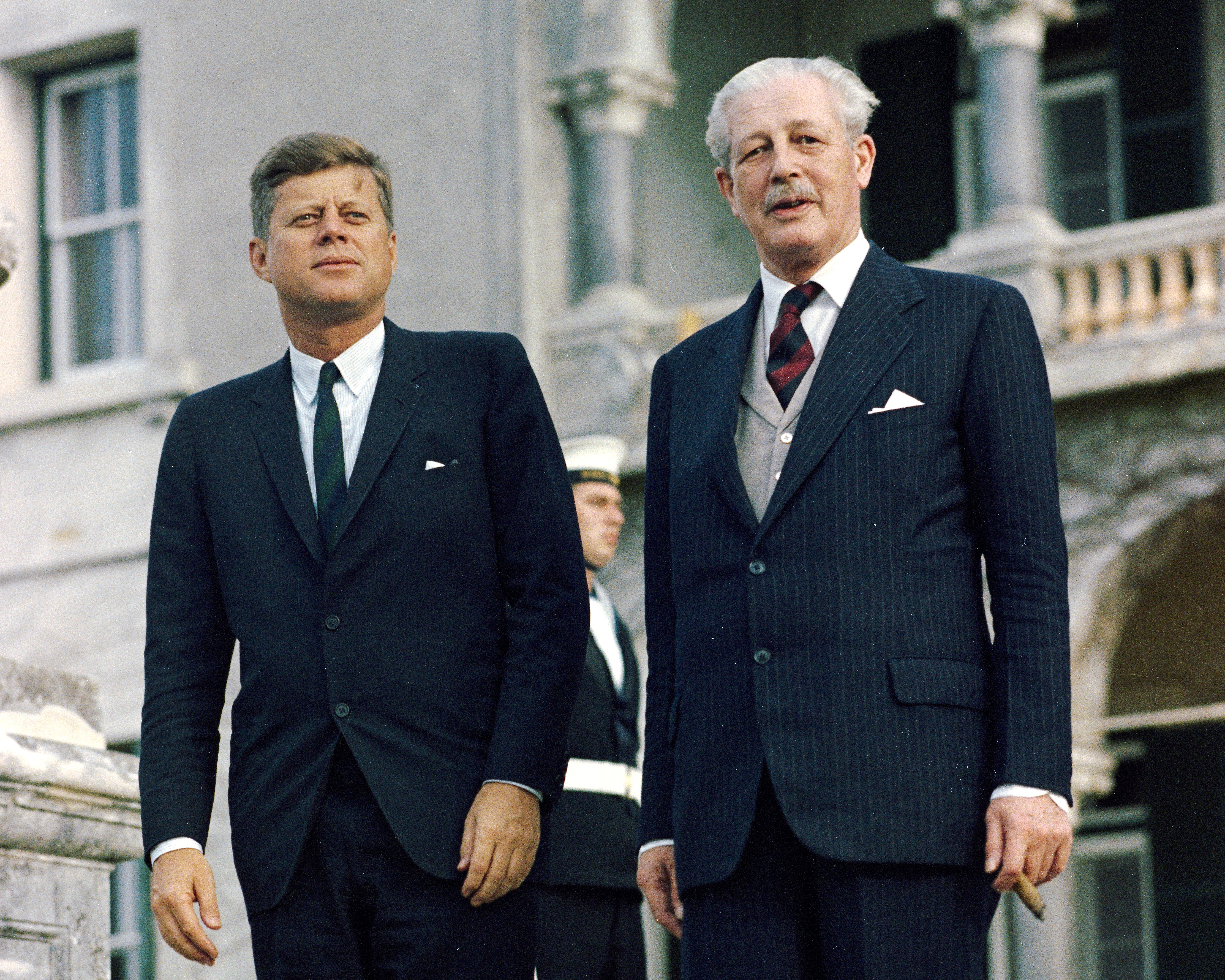
Famously, all political careers end in failure and Macmillan’s was no exception. When he was asked what the greatest challenge was for a statesman, he replied: “Events, dear boy, events.”
By the early 1960s, the urbane Edwardian seemed increasingly anachronistic, something ruthlessly exploited by the magazine and television satire boom of the period. Following his resignation in 1963, Macmillan lived out a long retirement as an elder statesman, revealing in and carefully preserving his Bertie Woosterish image.
After Margaret Thatcher became leader of the Conservative Party in 1975 and Prime Minister in 1979, Macmillan was increasingly critical of her abrasive form of Conservatism, something very different from his consensual “One Nation” approach that followed the liberal economist, JM Keynes. In doing this he sometimes made reference to what we would now call the age of Downton Abbey, a world ended by the First World War. He was no doubt perfectly aware that his archaic comments would enhance his “national treasure” persona with many.
In one House of Lords speech, Macmillan wondered about Thatcher’s monetarist economic policy:
Many of Your Lordships will remember it operating in the nursery. How do you treat a cold? One nanny said, “Feed a cold”. She was a neo-Keynesian. The other said, “Starve a cold”. She was a monetarist.
Macmillan’s best remembered speech in retirement was widely interpreted as critical of Thatcher’s policy of selling off state owned assets such as water, gas, electricity and rail to the private sector. With aristocratic disdain, he supposedly likened it to “selling off the family silver”:
The sale of assets is common with individuals and the state when they run into financial difficulties. First the Georgian silver goes, and then all the nice furniture that used to be in the saloon. Then the Canalettos go.
He questioned using the huge sums made from privatisation as if they were income, warning the House of Lords:
Modern economists have decided there is no difference between capital and income. I am not so sure. (In the 1929 Crash) your Lordships had friends, very good friends, who failed to make this distinction. For a few years everything went well, and then at last the crash came, and they were forced to retire to some dingy lodging-house in Boulogne.
While few of us can relate to the analogy, the sale of public assets and the squandering of the resulting income has continued. Further, the current criticism of UK privatised energy and water companies whereby they produce large profits for their shareholders but poor and expensive services for their customers could make us wonder at The Last Edwardian’s insight. Also, because of Brexit, even retiring to a dingy lodging-house in Boulogne is not as easy as it once was.
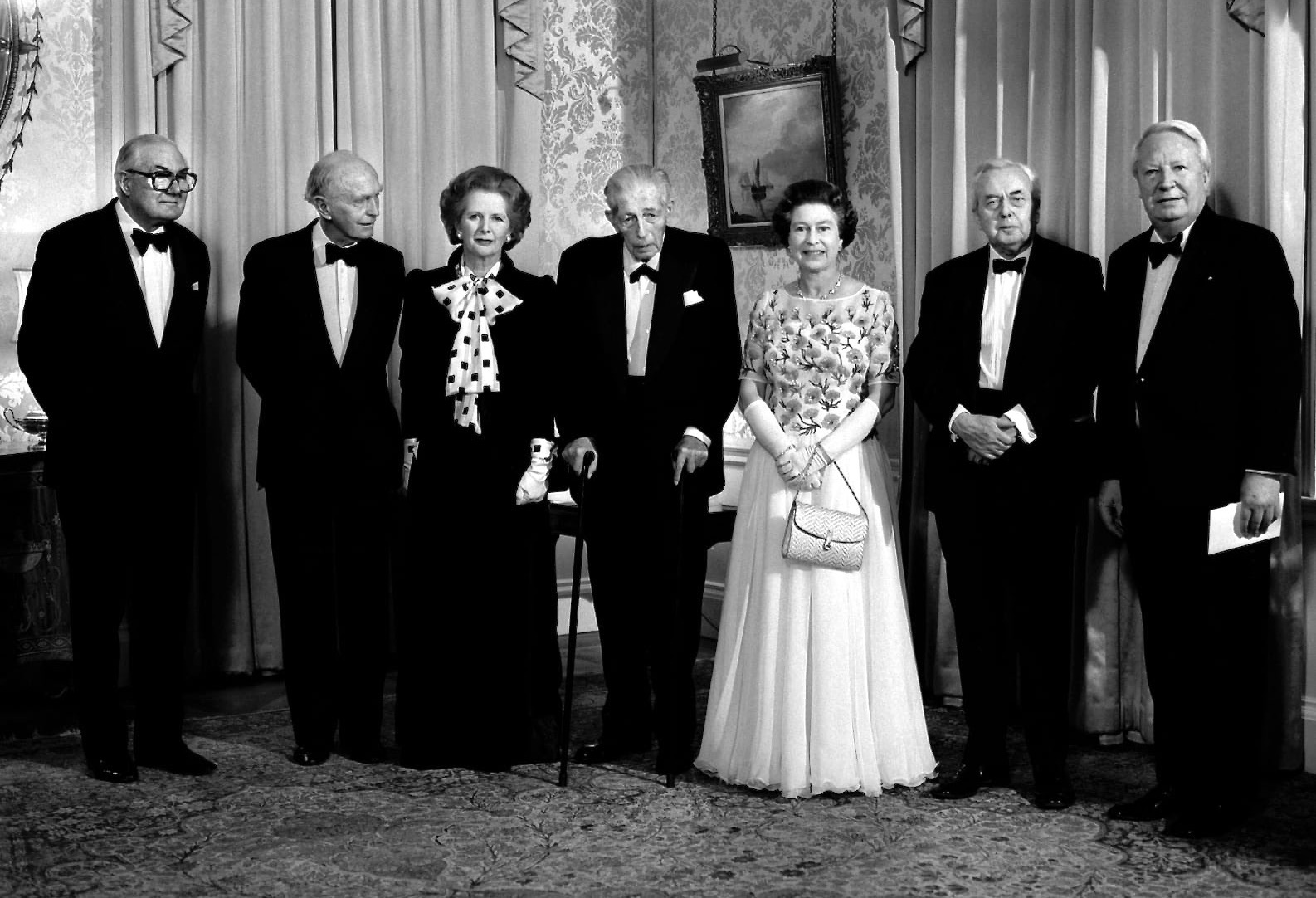
In 1979, Macmillan, as Chancellor of Oxford University, spoke at the Boat Race Night Dinner that also marked 150 years of the Oxford-Cambridge Boat Race:
My Lords and Gentlemen, that genial but eccentric Monarch, William IV, once addressed a meeting, not unlike this, with these words, “Dear friends, if my affection for you were equalled by my total ignorance of what you expected me to say or do, it would be unbounding”…
How well I remember the Boat Race as it was, in that Victorian world which I suppose it would be thoroughly reactionary to call agreeable – but it was agreeable, it was very agreeable… In my childhood, when London was a country town, with carriages and carts and horses, smelling not of oil and carbohydrates, but of horse dung and straw in the streets…
And then Boat Race Day! It meant something quite extraordinary to London. Not just to you chaps who care about rowing – why you care about rowing, God knows – but the whole of London…
And everyone… the costermongers, the drivers of the four wheelers, those delicious Hansom cabs – the Gondolas of London as Disraeli called them – everyone cared about the Boat Race. All wore the colours, light blue or dark blue.
In every household between everyone, the housemaid, the butler, there were great divisions. My father was at Cambridge, so as a child we were Cambridge. Nanny was violently for Oxford.
Macmillan concluded his speech by urging the assembled company to go out and generally break up the town. If Piccadilly Circus stands tomorrow I shall be disappointed. If Eros has not been moved, or draped with suitable decorations it will not be a good night.
As I recently pointed out, raucous Boat Race Night celebrations in the West End of London last occurred in 1939. Forty years later, Macmillan appeared unaware of this. However, when analysing many of his pronouncements, it is probably important to remember what he once said to a biographer, Alistair Horne: It’s very important not to have a rigid distinction between what’s flippant and what is serious. While this philosophy did not ultimately work for a more recent Prime Minister, Boris Johnson, it functioned well for Supermac.
YouTube has a speech that the then Earl of Stockton gave to the House of Lords in the last year of his life when he was 91. Although physically frail and nearly blind, he spoke strongly without notes for 30 minutes, essentially summarising the socioeconomic history of 20th century Britain in an informed, witty and articulate manner. This year, 2024, will see many important elections taking place around the world and, while political rule by patricians motivated by noblesse oblige has had its day, modern politicians could learn a lot from this man born in 1894, notably how to conduct themselves with dignity and authority. Some hope.
 Hear The Boat Sing
As an American, I think this is a British response at toasts, Hear, Hear, which I think means I agree with the toast master or writer in this instance.
(Slightly edited by HTBS editor!)
If David is referring to the utterances of “hear, hear” in the House of Lords video, there is a long established convention against clapping in both the Commons and the Lords. The Parliamentary etiquette guide, Erskine May, says: “Members must not disturb a Member who is speaking by hissing, chanting, clapping, booing, exclamations or other interruption… When not uttered till the end of a sentence, the cry of ‘hear, hear,’ offers no interruption of the speech.” It is a short form of “hear them, hear them” and dates from at least the 17th century.