

7 November 2023
By Tim Koch
Tim Koch looks down Putney’s new sewage shaft.
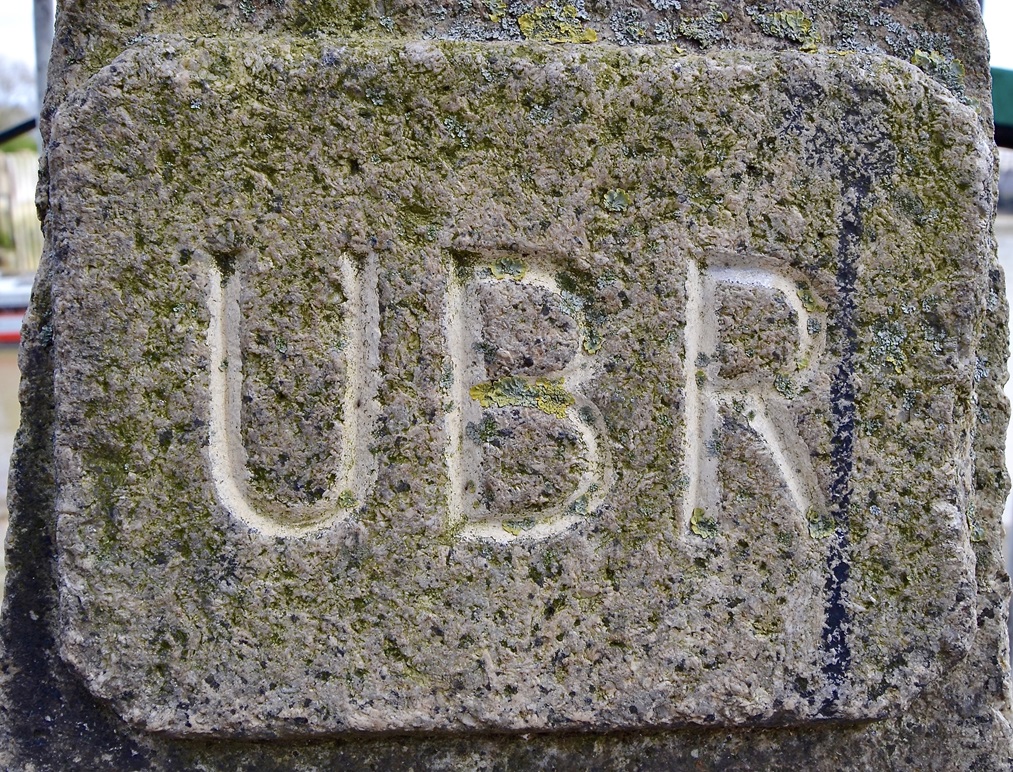
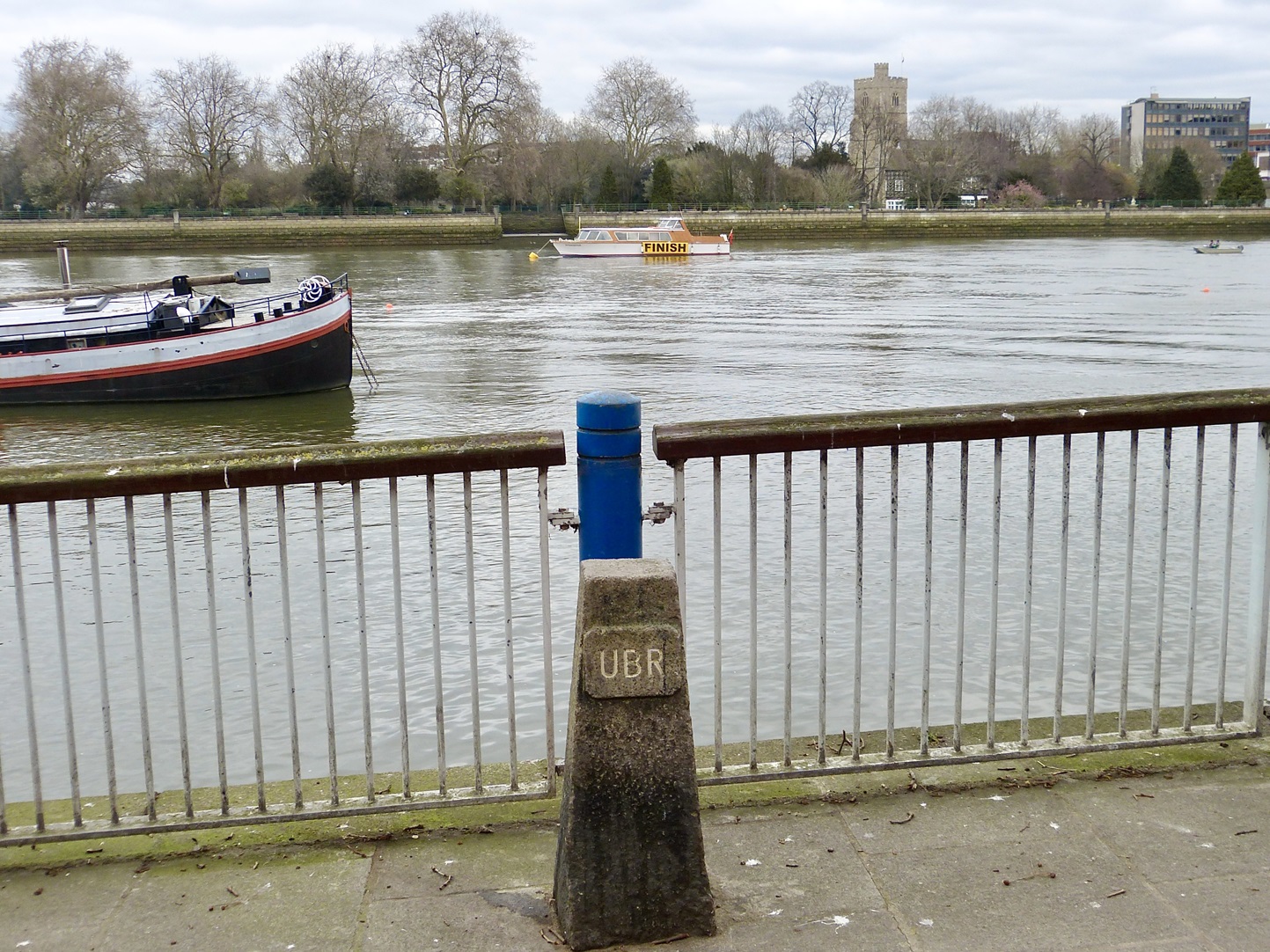
HTBS Types will be aware of the stones that mark the start and finish points of the Oxford – Cambridge Boat Race and, more generally, the Tideway Championship Course. Wikipedia says:
The University Boat Race Stones are two tapered, granite cuboids on southern embankments of the Tideway in west London, one 129 metres west of Putney Bridge and the other at Mortlake, 112 metres east of Chiswick Bridge. The stones define the starting and finishing points of the Championship Course. The course… is 4 miles and 374 yards (6,779 m) from Putney to Mortlake as measured along the centre of the river…
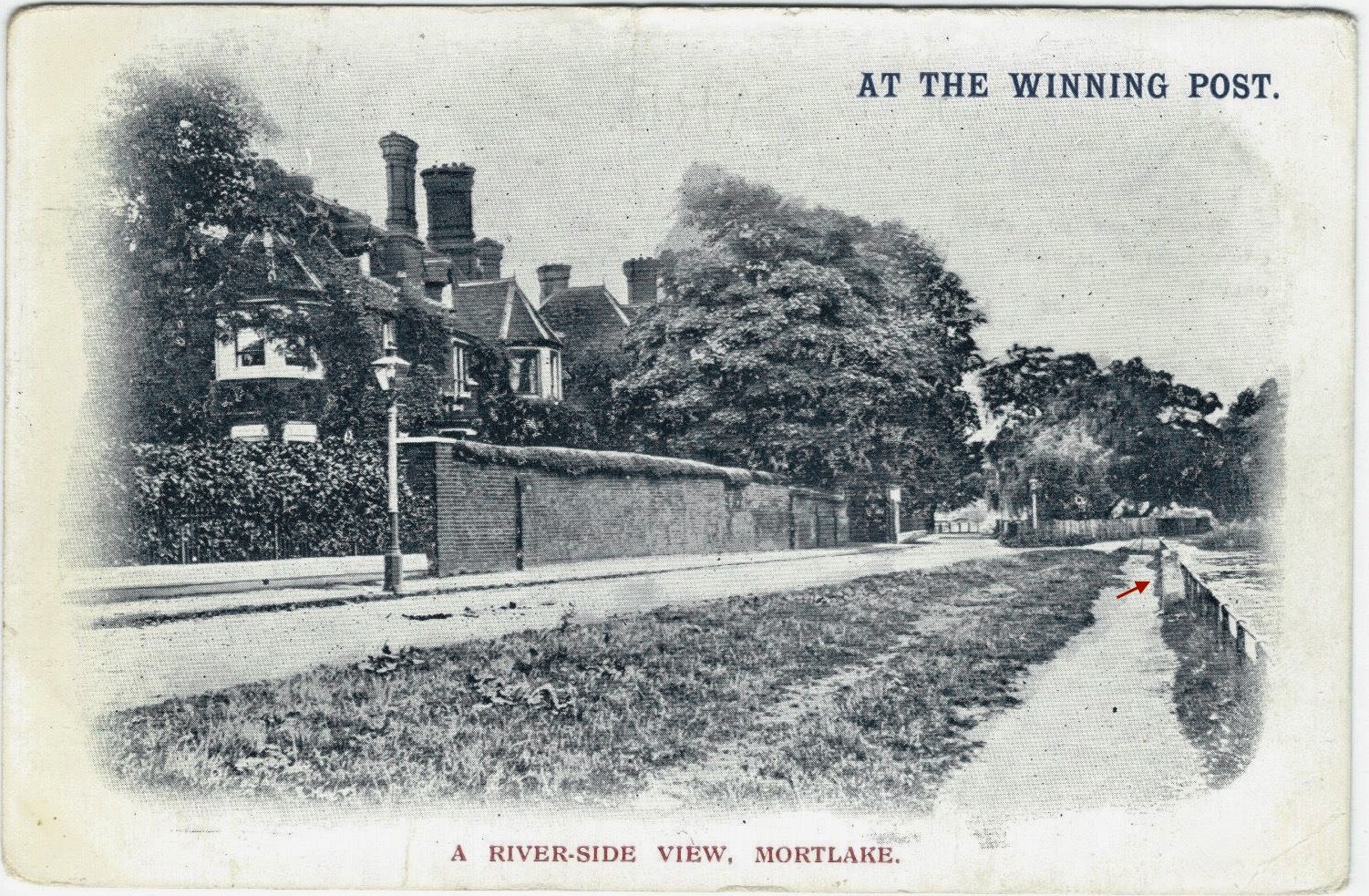
I have attempted to discover when these stones were installed but I have found no specific reference to their placement. However, The Globe of 22 September 1902 wrote on some boat races at Putney “decided on a course quite new to aquatics, the description being from ‘University Stone’ to Hammersmith.” This seems to be the first mention of either of the stones in a newspaper but press reports referred to them regularly after that. Thus, I am assuming that they date from 1902.

In 2017, the Putney Stone was temporarily removed by Tideway, the engineering company building the new “Tideway Tunnel.” Their website tells us:
London relies on a 150-year-old sewer system built for a population less than half its current size. As a result, millions of tonnes of raw sewage spills, untreated, into the River Thames each year. That’s where we come in. We’re building a 25 km Super Sewer under the Thames to intercept those nasty spills and clean up our river for the good of the city, its wildlife and you.

Referring specifically to their Putney site, Tideway recently wrote:
The completion of our work at Putney is an important milestone before the project ‘goes live’ in 2024. This is when the system will be switched on and will start to protect the Thames from sewage pollution for the first time. The tunnel is due to be fully operational in 2025, when it will prevent an estimated 95 per cent of sewage spills that currently overflow into the River Thames, improving the water quality for fish and other wildlife – and for people who use it for recreation and leisure.
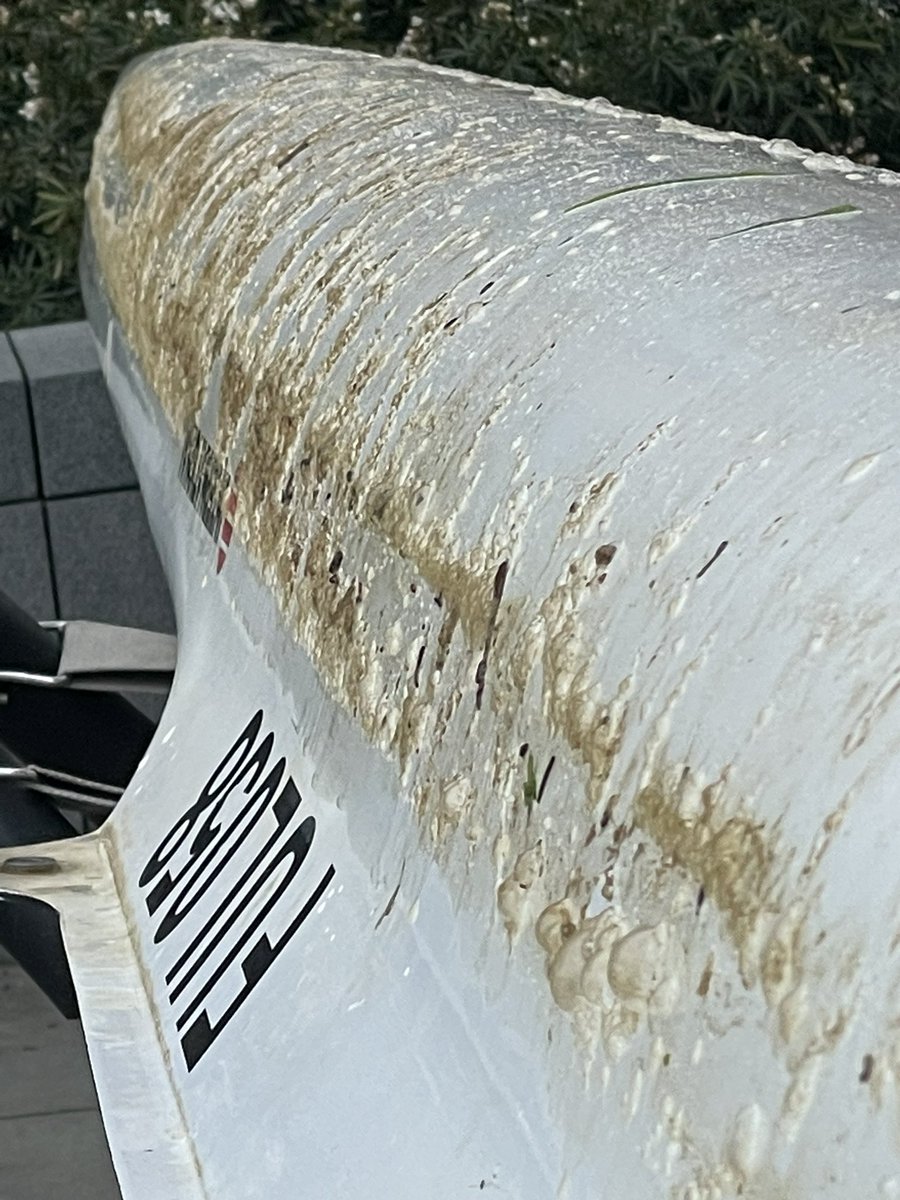
All this is particularly good news for rowers who currently have to contend with releases of untreated excrement into the Thames when heavy rain overwhelms the existing sewage system. However, one could ask why this 19th century state of affairs has been allowed to continue into the 21st century. Britain’s privatised sewage and water companies paid £1.4 billion to shareholders in 2022 despite rising household bills and a surge of public criticism over sewage outflows.
Tideway again:
At the Putney site we have… Excavated a 36m-deep shaft and built a connecting tunnel to intercept the Putney Bridge Combined Sewer Overflow… linking it to the main sewer tunnel beneath the Thames. (We have also) created a new riverside space with artworks inspired by the River Thames…
The new riverside space and the 36-metre-deep shaft are related as the former is built on top of the latter.

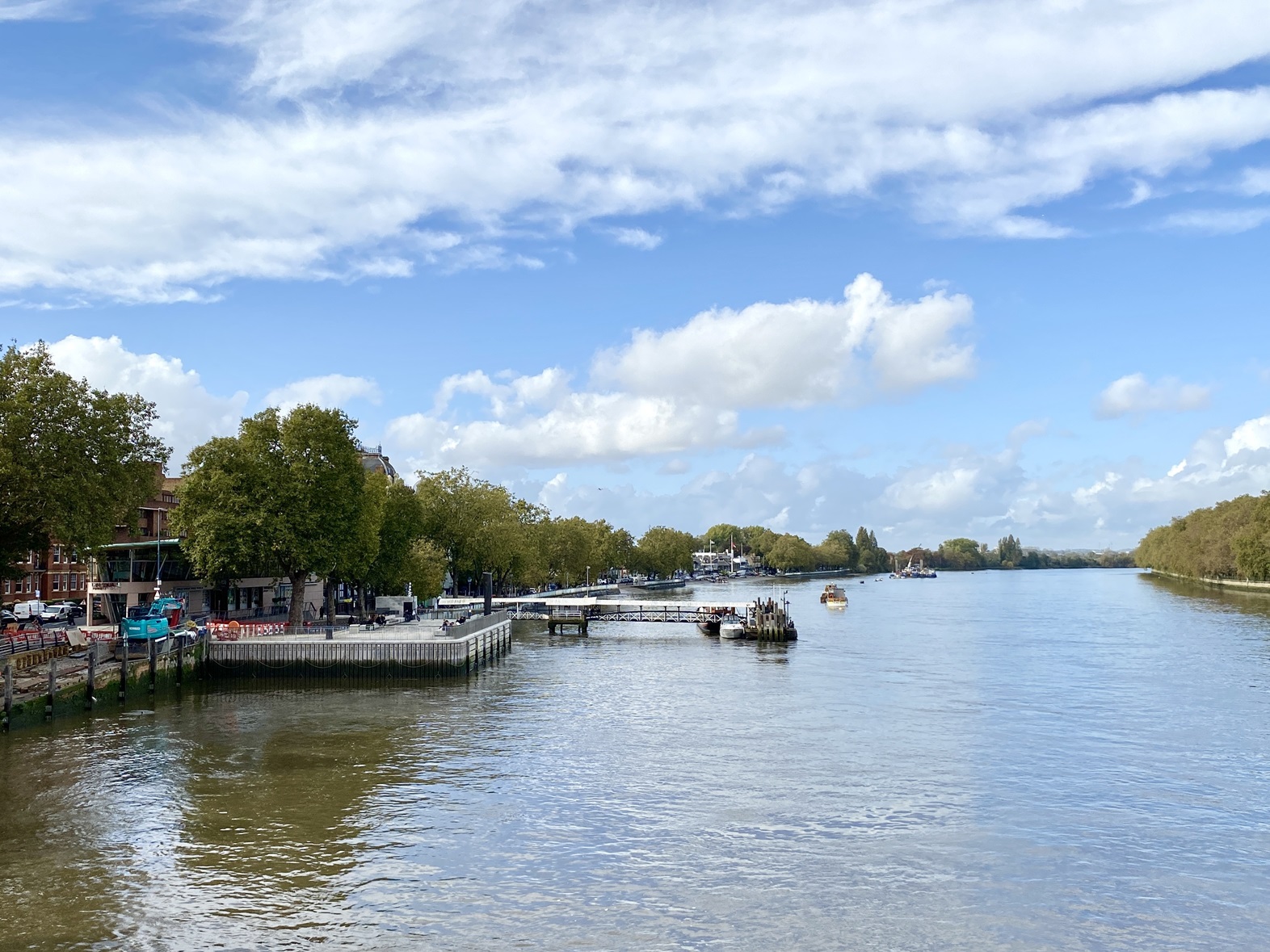
While I obviously have no objection to the long overdue project to produce a cleaner river or the creation of a new riverside space, I do have a problem with an admittedly minor aspect of this necessary but also huge, complex and expensive scheme – the choice of some of the artwork for the new space, particularly the new bronze marker for the start line of the University Boat Race and the repositioning of the Putney Stone.
The Tideway website:
As part of our public art programme, we have installed artworks borne out of Putney’s rich heritage… Timber-laid benches facing the river are positioned to make the most of the view upstream to Hammersmith and downstream, through the bridge arches. The Cornish granite on the space comes from the quarry used to construct Putney Bridge, nearly 140 years ago.
Claire Barclay has been commissioned to create a series of artworks for the new public realm site at Putney. The artist’s proposal responds to the site’s history as set out in Tideway’s Heritage Interpretation Strategy.
“Responding to the site’s history” sounded promising, despite the pretentious nonsense that followed:
The ‘cultural meander’ for the West section of the tunnel is ‘Recreation to Industry: Society in Transition’ and the site-specific narrative for Putney relates to ways in which cultural context influences popular movements advocating social change, to generate varied forms of political engagement.
In a more sensible mode, Tideway points out that:
In the 17th century the Putney foreshore was busy with commercial boatmen ferrying people and cargo across the river, predominantly in clinker-built wooden boats called wherries. Putney was also home to a number of boat builders and boat related services. With the advent of bridges and steamboats, however, there was a gradual shift from commercial to recreational boat use on this area of the Thames and from 1830 onwards the Putney Embankment became associated with elite rowing through the establishment of the University Boat Race.
Pedantically, Putney Embankment actually began to become associated with elite rowing, or at least rowing by gentlemen amateurs, when London Rowing Club was established there in 1856.
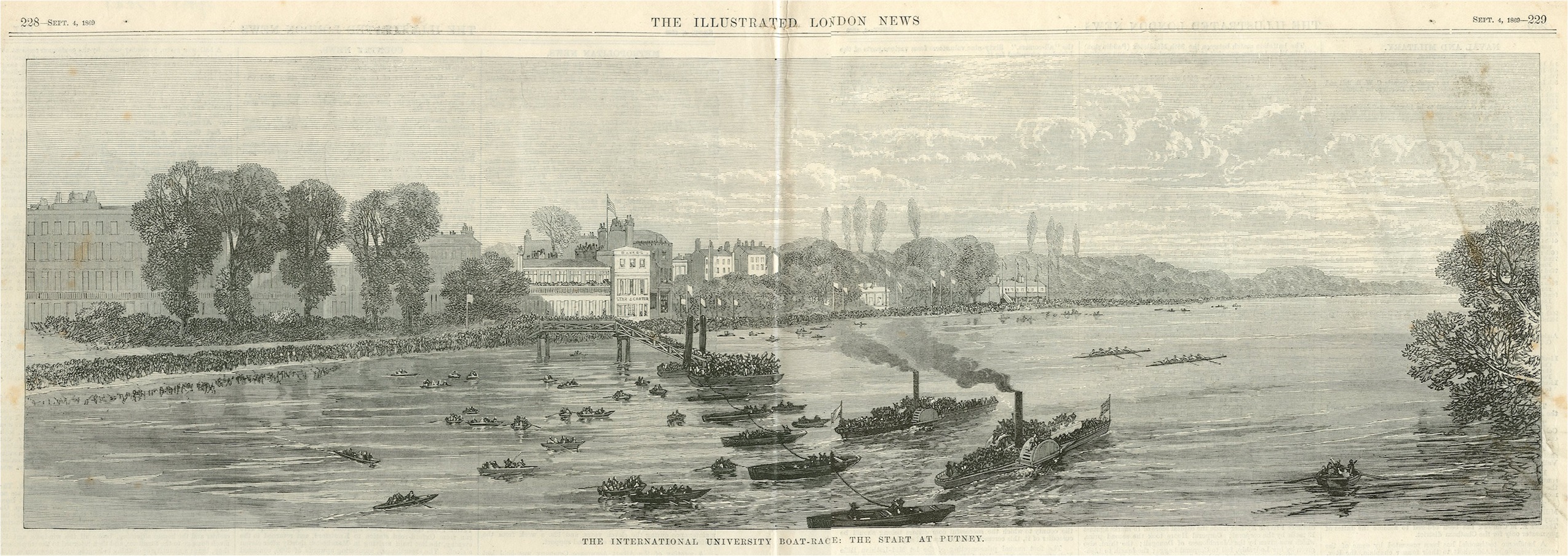
Claire Barclay has produced artworks for the new Putney riverside space which apparently “aim to draw attention to the democratic use of the Thames.” I will list them in my order of merit.
Balustrade bronze oars


Barclay chose three different types of oar from which bronze casts were made and formed into handrails. The idea was to refer to the different vessels and people that historically have used the river for work and leisure:
The largest of the cast oars is a seven metre-long wooden barge ‘sweep’ used by Lightermen for manoeuvring barge boats of goods or cargo by using only long sweeps, the wind and the tide. The wherry oar measures 4.6 metres in length and the skiff oar, as the shortest, 2.8 metres. Both oars are traditionally and commonly used on smaller boats for transporting everyday passengers and goods across the river. Over the decades they have been adapted into new forms of boat that are ideal for recreational and competitive rowing.
While it seems a little unbalanced to have the oar handrails on the downstream corner only, this sort of thing obviously gets the HTBS seal of approval.
Skiff graphic facades
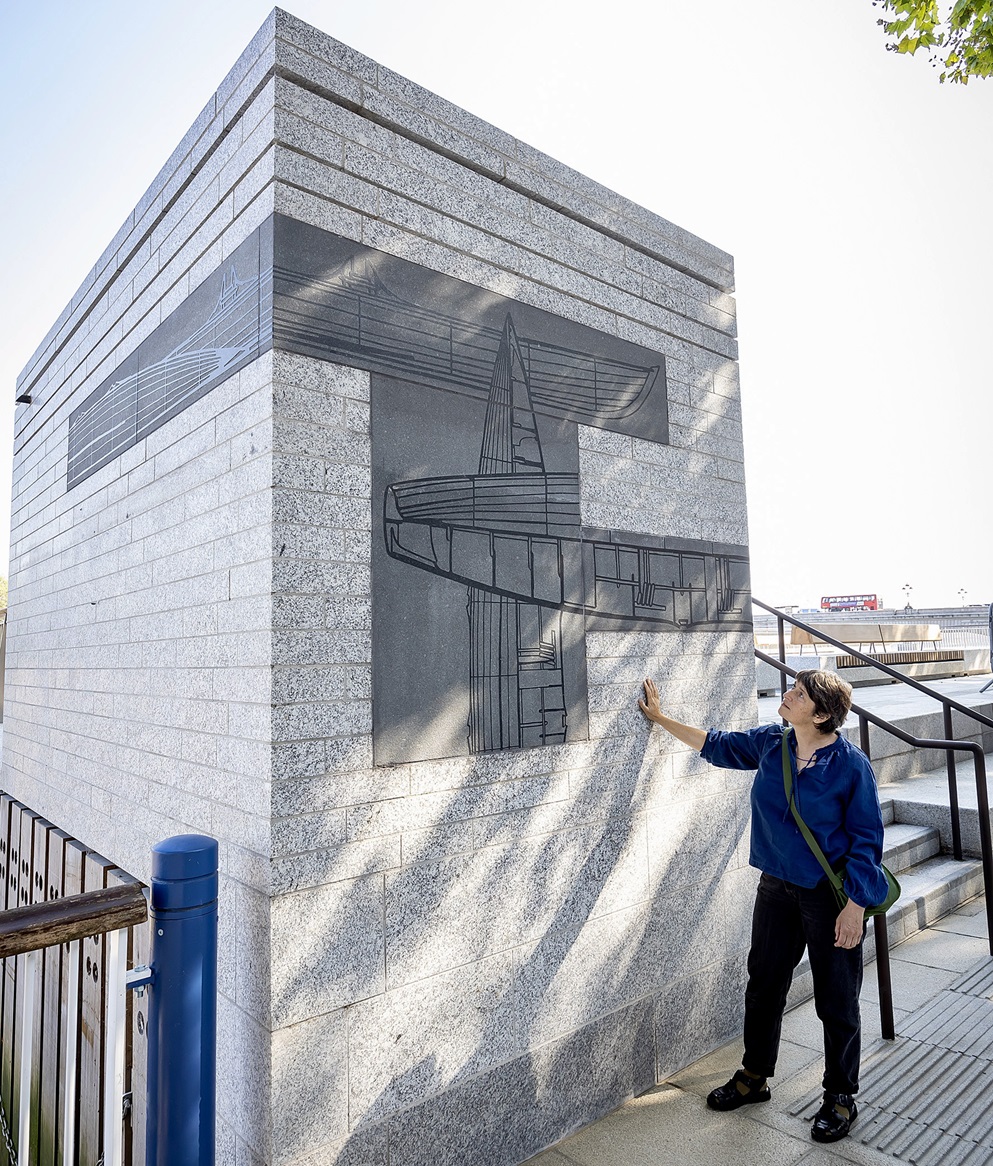
In a small building housing technical equipment, Barclay has created graphic artwork that has been sandblasted onto the granite walls.
The artwork uses authentic plans and illustrations from books, archives at the National Maritime Museum, and local traditional boat builders and enthusiasts as its source to depict details of plans of a Thames skiff boat.
Again, a nice idea that is nicely executed but more could have been got out of this, notably by including one or two other different craft, particularly a Boat Race eight.
University Boat Race Marker

Saving the worst for last, it may be unfair to blame Barclay for what has been done to the Putney Stone. Tideway and the London Borough of Wandsworth would have had to “sign off” all the plans for the new space and perhaps they directed the artist to produce what she did.
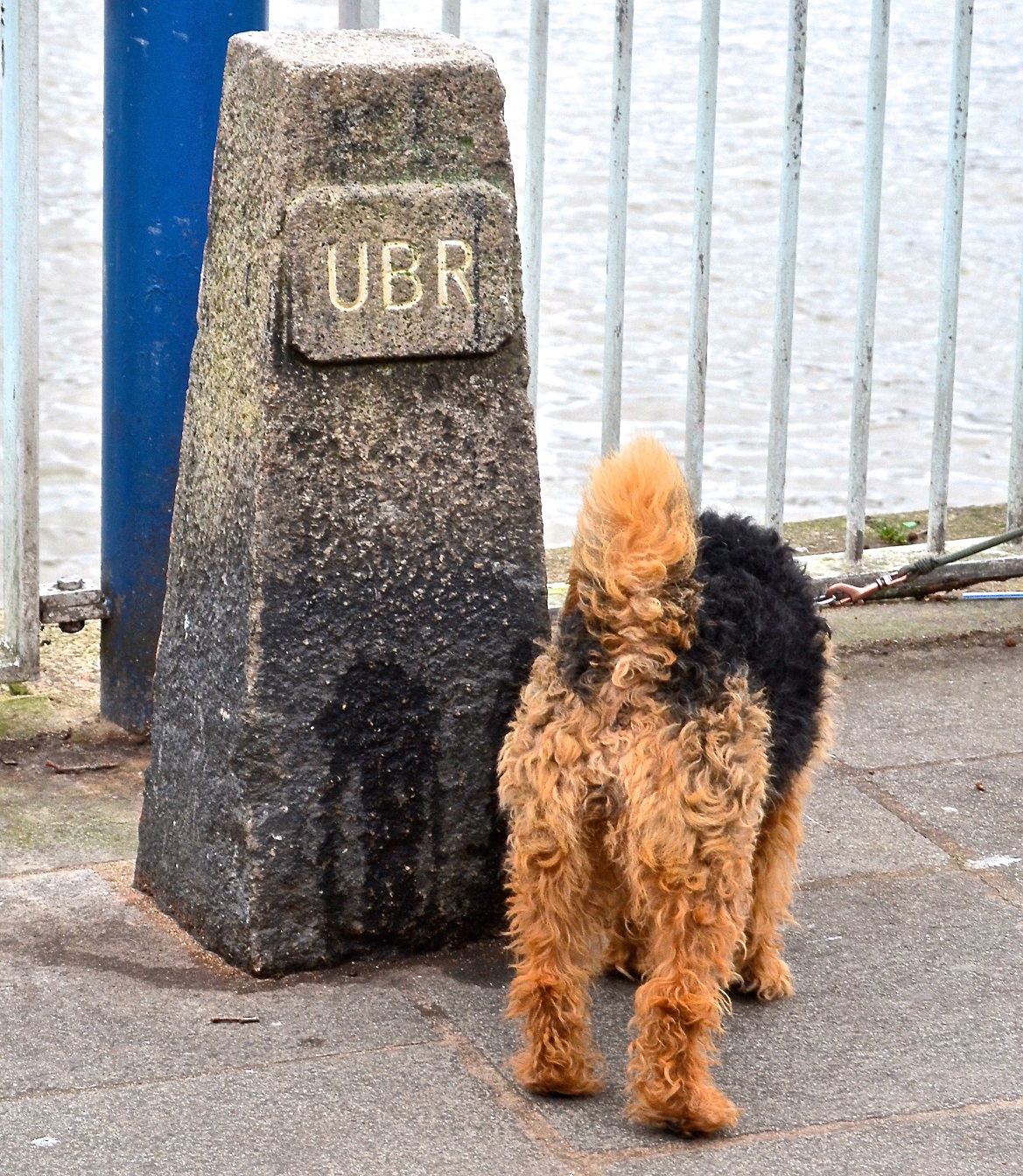
The Putney Stone has been moved about ten metres back from the river edge where it was (just) visible from the water and it has been unceremoniously placed a few steps down from the new raised space sitting almost as an obstruction on the pavement and giving the impression of being an afterthought. According to thamespath.org.uk, it was moved back to allow “a large viewing platform” to be erected.
It would be preferable for the stone to overlook the river and be covered by a viewing stand for one day a year than to always be visible but exist more as a trip hazard on the pavement. Every Boat Race Day the stone at Mortlake is obscured with television camera equipment and the finish judge’s viewing platform so covering the Putney Stone for one day a year would not be unusual.


The crassness of moving the Putney Stone has been compounded by the strip of bronze inlaid into the granite paving that runs from the stone to the edge of the river wall. Inscribed in the strip are the words “The Best Leveller is the River we have in Common” and “The Tide and the Wind Direct our Paths”. Apparently, this is supposed to “reiterate the democratic use of the Thames and speak to anyone that has experience of working and playing upon the river.”

Not using the words on the bronze strip to explain that it marks the start of the University Boat Race is a very peculiar decision. Indeed, there is nothing new in the riverside space that references the world famous annual event. The spot’s association with races between two elite institutions seems to be treated as an embarrassment.

I can only conclude that the decision to have the existing inscription “UBR” on the 121-year-old Putney Stone as the only (and little understood) reference to the University Boat Race at its start point was made because the race is regarded as somehow “elitist” and not a “democratic use of the Thames.” The clues are in some buzz words that Tideway/Wandsworth/Barclay have used: “popular movements,” “social change” and “political engagement”. I do not object to any of those things as such, but I do object to using them to airbrush history.
The irony of regarding the Boat Race as unfashionably elitist is that, while (for some reason) it is very difficult to get into Oxford or Cambridge and even more so to row in the Boat Race, the event itself has only survived for nearly 200 years because it is accessible to everyone and anyone and has long had the support of people who are more Uxbridge than Oxbridge.

Since 1845, Boat Race Day has been London’s annual free day out for what would have been called for most of its life, “the common man.” It was never part of the upper classes’ social season. As far back as 1872, Charles Dickens Junior complained that:
Cabmen, butcher boys, and omnibus drivers sport the colours of the Universities in all directions: the dark blue of Oxford and the light blue of Cambridge fill all the hosiers’ shops, and are flaunted in all sorts of indescribable company…

Few of the five million TV viewers or of the 250,000 people who still go down to the Tideway every Boat Race Day have any Oxbridge or rowing connections, but the annual Battle of the Blues is a national (arguably international) institution with viewing accessible to all.
Ideally, the Putney Stone should be moved back to the river’s edge. As a minimum, I would suggest that the wording in the bronze strip is changed to explain what it actually marks.
Claire Barclay has given her artworks the collective title, “Water Finds a Level.” Of course, water finds a level – at the lowest point. While the art in the new Putney riverside space has not reached that depth, by marginalising the University Stone and by not mentioning the Oxford – Cambridge Boat Race at the site, Tideway, Barclay and Wandsworth have sunk fairly low.
 Hear The Boat Sing
Wonderful article, great research and writing up. The sewage has been in our rivers too long. The Stones are our history. I wonder how much this artistry cost? (and I am a sculptor). I hope the river is clean next year and that the stone has been moved.
Although newspaper references to the ‘University Stone’ seem to start only in the autumn of 1902, The Times’s report of the 1901 Boat Race mentions that the umpire’s launch “lay astern of and between the station boats from which the competing eights were to start, abreast of the stone planted in the river bank by the Conservancy to mark the beginning of the course”.