
24 October 2023
By Göran R Buckhorn
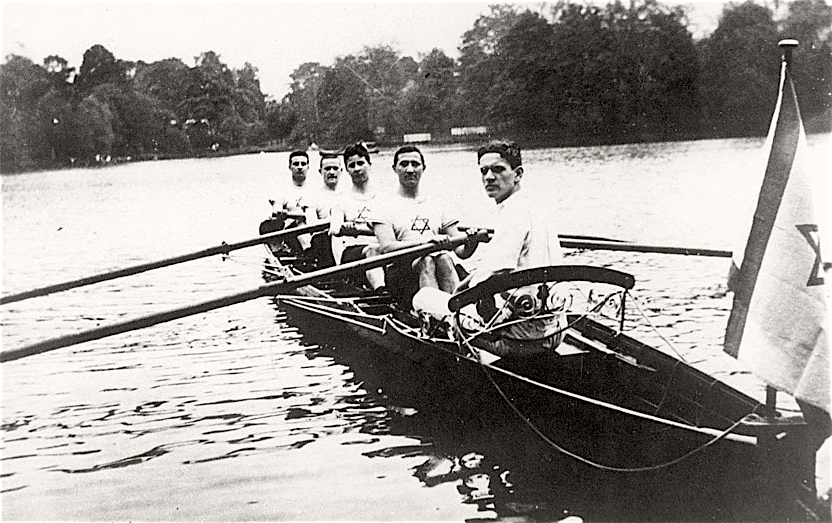
Among the many interesting pieces that Tim Koch has written for HTBS are a series of articles about Jewish rowing clubs in Nazi Germany – most of the articles have been published on one special day, 27 January, which is the International Holocaust Remembrance Day. One article in particular received a lot of attention, “A Poignant Piece of Rowing History: Jewish Rowing Clubs in Nazi-Germany”, published in 2015.
Numerous HTBS readers wrote comments on the article, telling stories about their grandfathers and other relatives who had rowed at Jewish rowing clubs in Germany during the 1930s and then had to flee the country to avoid ending up in a concentration camp. Sadly, not everyone was so lucky.
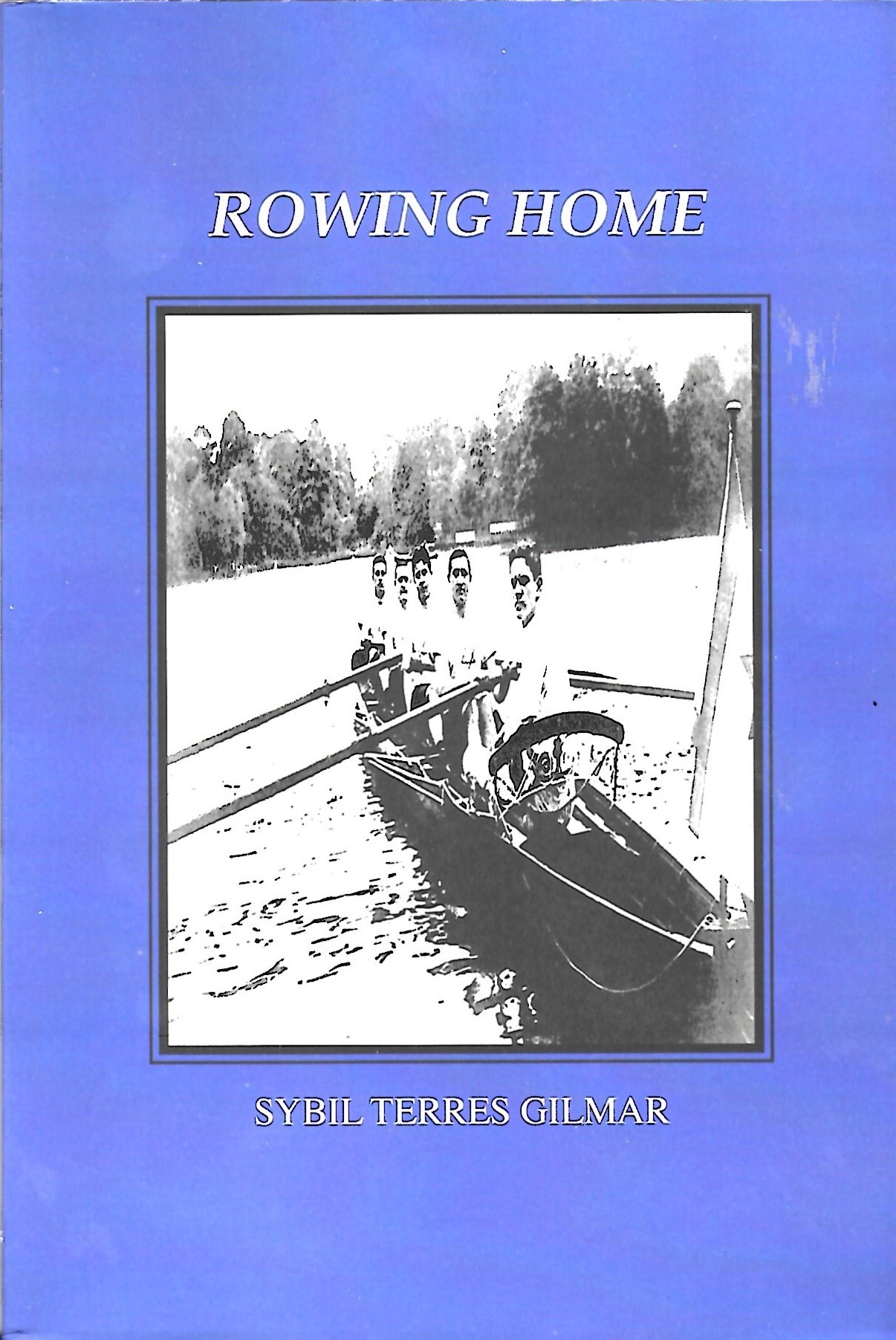
Earlier this year, author Sybil Terres Gilmar, a member of Whitemarsh Boat Club in Pennsylvania, came out with Rowing Home (Wising Up Press, ISBN 978-1-7376940-5-2, $20), a historical novel dealing with some of the topics that Tim wrote about in his articles mentioned above. Ms. Gilmar graciously sent HTBS a review copy and when I started reading it, I wondered if she had read any of Tim’s articles. It was when I had nearly come to the end of her book that I found an interview on YouTube where Rebecca Caroe, of the excellent podcast RowingChat, had Ms. Gilmar as a guest. Ms. Gilmar mentions HTBS in the interview and that she had seen Tim’s articles on Jewish rowing in Nazi Germany. (Listen to the interesting interview here.)
However, the inspiration for the novel came when she visited Israel in December 2019. As a sculler, she looked for rowing waters and was invited to Tel Aviv Rowing Club on the bank of the Yarkon River. Tel Aviv RC was founded by Jews who fled Berlin living under the yoke of Nazism. Of course, when the club was established in 1935, the land was Mandatory Palestine.
When the pandemic hit, Ms. Gilmar found the time to write her novel Rowing Home.

The main character in Rowing Home is the young university student George Grossinger, who is a dedicated oarsman at Germania Club in Berlin. Rowing at the club is also George’s friend Arthur Schwartz, and both these Jewish boys are dreaming of representing Germany, especially at the upcoming 1936 Olympic Games in Berlin. George’s father, Werner, is the editor of the newspaper Der Berliner Tagblatt and George’s mother, Frieda, is an accomplished violinist at the Berlin Symphony Orchestra. However, things are going to change for this talented assimilated Jewish family.
It is the year 1933 and Paul von Hindenburg, president of the Weimar Republic, has appointed the Nazi Party leader Adolf Hitler to chancellor (leader of the Government). Through an Act in the Reichstag (the parliament), Hitler soon converts the riven Weimar Republic into Nazi Germany with himself as the leader, or more correctly, the dictator. (About the republic’s chaotic state in the end of the 1920s/beginning of the 1930s, see HTBS article “Rowing in Weimar Berlin” on 1 May 2018.) Politicians and the ordinary Helmuth on the street, including a large number of the Jewish population in Germany, at first thought that Hitler and his gang could be subdued, and that the Nazi oratory was mostly nonsense talk.
As we know, they were wrong.
George and Arthur see how fellow students at the university organize Nazi rallies on campus. Some students march around in brown shirts and harass both professors and students that they believe are communists, “lefties”, liberals, Jews or not fellow Nazi travellers. At Germania Club, some members of George and Arthur’s eight begin to praise the new leader of the Third Reich and express hopes that he will make Germany great again. Does the rhetoric sound familiar? The self-appointed little führer at the rowing club is the eight’s coxswain, Henry (why are always the coxes the bad guys?), who is trying to make life miserable for George and Arthur. The coach, Siegfried Messinger, who is a fair and decent man, tries to curb the politics at the club, though gives George and Arthur his silent support.
In the meantime, Werner Gosslinger must tiptoe around certain subjects on Der Tagblatt as the Nazi propaganda office with Goebbles at the head is constantly scrutinizing the paper’s content trying to find a reason to close it down. George’s mother Frieda is frustrated that the Symphony Orchestra stops playing music by Jewish composers. One evening, when the members of the orchestra arrive for a concert an enormous flag with a swastika is hanging at the back of the stage. To Frieda’s dismay, the musicians are told that Goebbles and other Nazi potentates will be in the audience, and they have requested that the “Horst Wessel Song” should be performed.
Soon thereafter, Frieda notices how her fellow Jewish musicians in the orchestra do not show up for practice and performances. They are immediately replaced by non-Jewish musicians.
Despite the disturbance around them, George and Arthur try to concentrate on their rowing. Their crew receives some good news from Coach Messinger. Their eight is going to race at a regatta in Henley-on-Thames, England. And off they go to Henley. Though it is never pointed out that it is the “Henley Royal” the Germania Club is going to race in, the question comes up who is going to be the club’s representative in the Diamond Sculls. At the regatta, the Germania eight places third, which gives the boys a bronze medal [sic!]. Personally, I am happy that it is a Swedish crew that takes the silver – oh, if that only was the historical fact in the 1930s!
Before the boys took off to Henley, Werner asked his son to write a race report from Henley for Der Tagblatt. George happily does that but avoids mentioning that there were two Jewish boys in the boat representing Germany.
Maybe more importantly for the novel’s storyline: in Henley, George and Arthur are “kidnapped” by a group of men from the Zionist Movement. They are brought to an office and asked to join the Zionist cause by bringing the sport of rowing to Palestine. One of the men explains: “We need people to grow the land, but we need examples of courage and strength. No more the Jew who just sits with the Talmud all day. You will show our citizens what strength and persistence can do to build a strong body.”

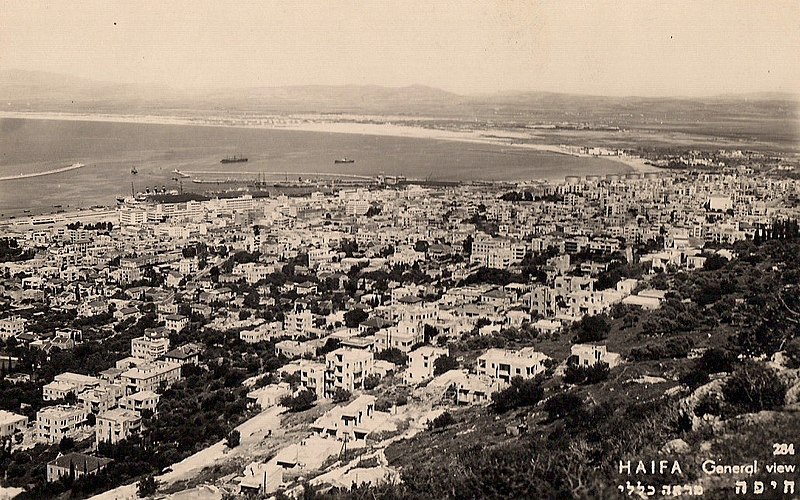
There is a parallel story in the novel about Ben Leicester, Captain of the British Army stationed in Haifa, Palestine. Under a League of Nations Mandate, Britain assumed responsibility for Palestine in 1920 trying to keep peace between the Palestinians and the Jewish population. We learn that Captain Leicester rowed at Oxford and at Henley Royal Regatta – also his commanding officer, Lieutenant Colonel Harry Markham, competed at Henley. Captain Leicester takes every opportunity to row his single sculls on the Kishon River. Leicester is approached by some teens from one of the Jewish settlements who want him to teach them to row. There are even some Palestinian youths who are interested in the sport, and Leicester sees an opportunity to build a bridge between the two sides by teaching them all to row. It proves not to be an easy task.
When the Germania eight comes back from England, Coach Messinger is forced to break the bad news that comes from the political “above” that Jews will not be allowed to train for the 1936 Olympics and represent Germany. George and Arthur decide to leave Germania Club for Hebrew Boat Club where the boys not only row but help with the training of novice rowers. George and Arthur are making plans to be able to leave Germany and settle in Palestine with their families – and how they will be able to continue to row there.
Rowing Home is a historical novel, so “real” characters flash by or are mentioned in the text. Among them are Winston Churchill, T. E. Lawrence (of Arabia), Christopher Isherwood, Franklin D. Roosevelt, King Gustaf V of Sweden and Ernest Hemingway.
It is obvious that Ms. Gilmar is a rower who knows how to spin a good yarn around the sport. Her novel is well-written, thoughtful and she allows herself to use poetic license about some of the rowing details. The Grossinger Family feels like real people of flesh and blood, as do other characters whom we as readers cross paths within her novel.
It would not be fair-minded to reveal more of how the novel continues and ends. For that, dear reader, you must buy your own copy of Ms. Gilmar’s novel to see how it concludes.
 Hear The Boat Sing

DG