
28 September 2023
By Tim Koch
Tim Koch continues with the regatta that was dead but would not lie down. (Part I, II and III)
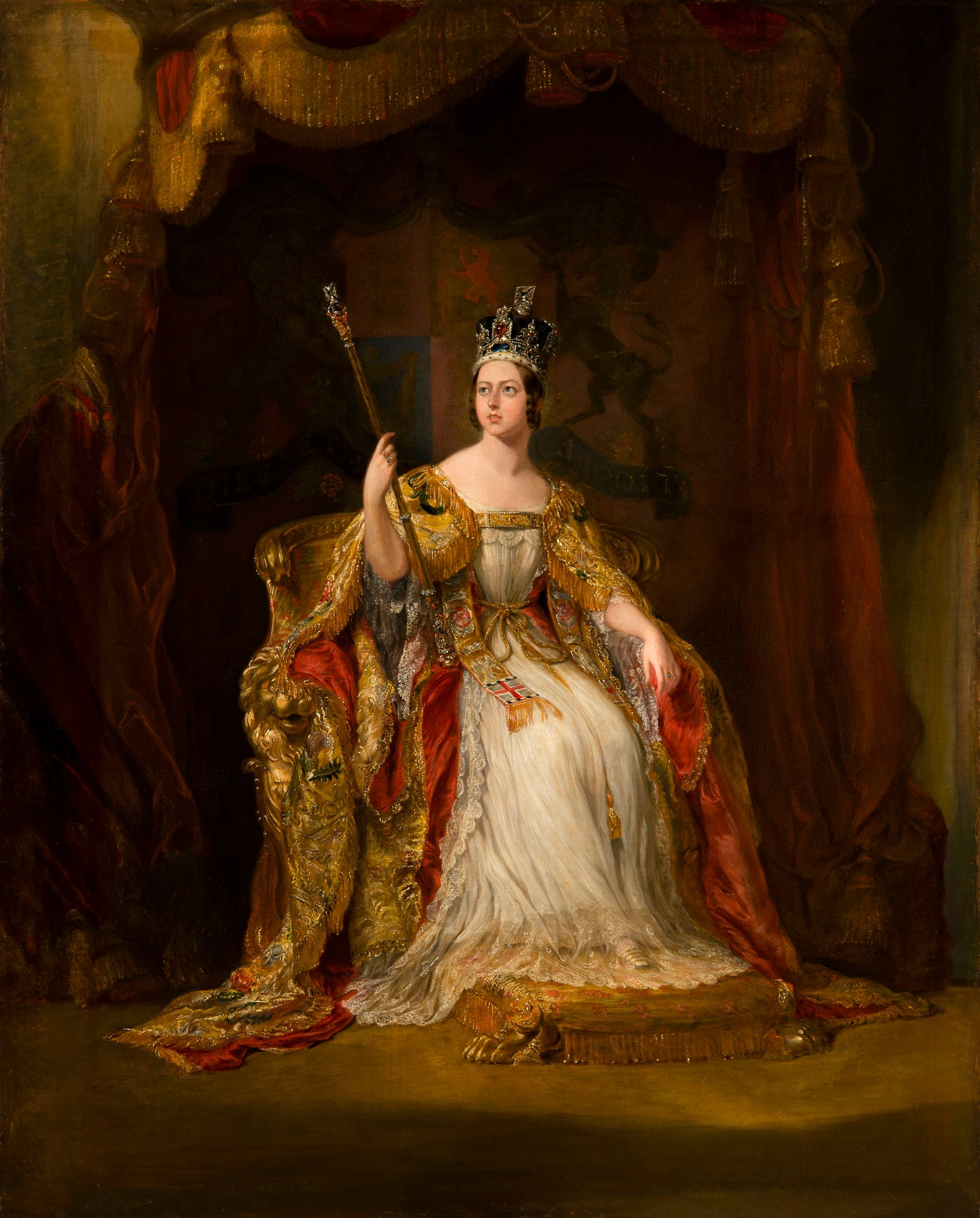
At birth, Victoria was fifth in the line of succession after the four eldest sons of George III, but they had all died by the time she reached 18 and she became Queen on the death of William IV on 20 June 1837. Her Coronation was set for 28 June 1838 and in villages, towns and cities all over Britain plans were made to celebrate. As the Courant of 5 June 1838 shows, Chester was no exception:
It is with the most pleasurable feelings we observe that the inhabitants of this city are determined that… their loyalty and devoted attachment to the throne shall suffer no disparagement on the occasion of the approaching coronation. As a preliminary step, a requisition signed by a number of citizens was last week presented to the Mayor, soliciting him to call a public meeting to decide upon such measures as might appear necessary to be taken in order to ensure the due celebration of this great national event.
The meeting decided that on Coronation Day: the children of the charity schools be given breakfast and a medal; a procession of public authorities attended by bands and banners would parade through the town; the Female Friendly Societies and the “female relatives of the operative classes generally” be given a tea and a dance; the day would end with a firework display. On the next day, a regatta would be held on the River Dee with a total of £50 in prize money.
1838: Amateurs Defined

For the first time, a Chester regatta notice gave some sort of definition of an amateur. In the Coronation Cup, value 15 Guineas, 4-oared gigs were to be rowed and steered by amateurs “being persons not usually occupied in manual labour.”
The names of the amateur crews had to be with the secretary four days before the regatta, but the names of the other boats could be handed in two days before. Possibly, more time was needed to check the bona fide of the amateurs.
The term “gentlemen amateurs” was not used but that is what they were. Unsatisfactorily, an amateur was defined by what they were not. Further, an amateur was defined according to their social class, not whether they made money through rowing or not.
Like the gentlemen amateurs’ race for the Coronation Cup, the race for the Victoria Cup was worth 15 Guineas and was for 4-oared gigs rowed and steered by amateurs – but “amateurs excluded from the (Coronation Cup).” That is, they were occupied in manual labour but were not boatmen or fishermen. In later years they would be called tradesmen amateurs.
Thus, there were three races for gentlemen amateurs, three for tradesmen amateurs, three for “professionals,” boatmen and fishermen, and there was a race for fishermen’s wives or daughters in fishermen’s boats. Finally, there was a coracle race.
The Chester Courant of 3 July 1838 reported that over 12,000 watched the regatta and were generally enthusiastic about the day. The entries were: two for the Coronation Cup, three for the Victoria Cup, two for the 4-oar and three for the 2-oar for boatmen and fishermen, four for the women’s race. The regatta did not attract many outside entries, probably because it offered relatively low prize money.
The Coronation Regatta was a “one off” and the future of an annual regatta in Chester may have seemed uncertain. However, towards the end of 1838 there was an important development.
A Rowing Club for Chester

On 9 October 1838, a notice appeared in the Chester Courant announcing the formation of a new rowing club in the city, the Chester Victoria RC:
The object of this CLUB is to maintain the fame of Cestrians already renowned prowess in rowing, the most elegant and national of our amusements; to excite and uphold a spirit of emulation; to encourage an athletic and innocent sport so conducive to health; and to compete for the Prizes to be given at the neighbouring regattas.
When the advantages are considered which Chester so peculiarly possesses for the purpose of practice, its beautiful river inviting this manly pastime, there can be little doubt that it will receive the countenance and encouragement of all gentlemen of the city and neighbourhood, who, though not actually participating in the sport, may yet be induced to enrol themselves among its Members.
A list of nine club rules and regulations followed and two were of particular note:
That all gentlemen who row for prizes at Regattas shall be paid all reasonable expenses. The cups or prizes to be retained by the Club and displayed at their annual dinners.
The reference to “reasonable expenses” meant that there was not at this stage the fanatical definition of amateurism that would later emerge years later, but it was clear that competion was to be for the love of the sport and not for the hope of winning valuable cups and prizes.
That there be a Regatta on the Dee in each year, on the anniversary of the Coronation of Her Majesty Queen Victoria, from whom the club takes its name, which shall be open to boats from all parts, to the support of which the inhabitants of the city will be respectively invited to contribute.
Thus, it seemed that the new rowing club would take on the responsibility of running an annual regatta in Chester. In his 1000 Years of Rowing on the Dee (2003), Keith Osborne makes the bold claim that, “The addition of a club to its well established regatta gave Chester the… distinction of becoming the first rowing centre in Britain.”

The Cult of Amateurism
While seeming to secure the future of Chester Regatta was good news, the event would be run, for better or for worse, according to the principles of the gentlemen amateurs forming Chester Victoria/Royal Chester Rowing Club.
Starting from the 1840s, British sport became increasingly obsessed by the cult of amateurism. Initially, this made sense as professionalism and/or money brought corruption whereas amateurism, sport for the love of it with no financial reward, was associated with fair play. However, amateur sport eventually became entangled with British snobbery and class obsessiveness, rowing more than most. Cricket had its gentlemen (amateurs) and players (professionals) who had separate ground entrances, dressing rooms and hotels on tour, but at least they could play together – unlike oarsmen who were eventually rigidly separated into gentlemen amateurs, tradesmen amateurs and professionals.

Wigglesworth’s chapter “Amateurism” in his Social History of English Rowing (1992), may explain why Chester Regatta went from a committee of townsmen offering one adult men’s race open to all in 1814 to a committee of gentlemen amateur rowers offering three classes of men’s events twenty years later:
During the (early) nineteenth century, pleasure boating provided the genteel classes with a recreational haven from open competition and any contact with the less desirable social elements… However, for those middle-and upper-class “aquatics” who chose to race boats rather than simply “mess about” in them the situation became vastly more complicated from the 1830s onwards as regattas proliferated and began to attract an increasingly wide social diversity of events, encouraged by lucrative prize funds and ever more convenient rail travel.
Initially, much of the gentlemen’s rowing had been in closed competition between schools or colleges but after graduation, when the oarsmen returned home, they found ad hoc local events organised in a very haphazard fashion which made few allowances for a gentleman’s status….
Perhaps worse than the problems of “status” was that gentlemen found themselves having to race men whose daily work gave them a distinct advantage. The Chesterwiki page on the regatta states:
The definition of “amateur” can be viewed as elitism, but also gave the “gentlemen” the benefit that they would not be competing against those who had professional skill and experience with boats and would have developed strength and technique through years of hard work. In Chester this meant that the salmon fishermen and ferrymen would not walk away with the biggest purse, and the valuable silver cup, from any competition for prize-money.
The gentlemen’s response to this was to maintain their tradition of exclusivity in rowing by inaugurating new regattas or, as in the case of Chester, taking over an existing one, and also by forming new clubs, which in this instance was Chester Victoria Rowing Club, soon renamed Royal Chester Rowing Club.
As what became Royal Chester RC (RCRC) was established in 1838 it is thus the third oldest existing open British rowing club after Leander (1818) and Eton Excelsior (1826). In the 1870s it was noted that it drew its patrons from landed society, catered exclusively for the “upper class of amateur” and enjoyed “elaborate banqueting.”
In 1869, those amateurs excluded from Royal Chester on grounds of social class formed Grosvenor Rowing Club “to serve the clerks and assistants of the City.” Pointedly, they chose the Latin motto Virtus non stemma (Virtue, not pedigree).
Up to 1838, varying proportions of townsmen and oarsmen had formed the committees that had run the previous twelve Chester Regattas. From 1839, Gentlemen Amateur oarsmen were in charge.
Part V will cover the years 1839 to 1855 and will be published tomorrow.
 Hear The Boat Sing