This website covers all aspects of the rich history of rowing, as a sport, culture phenomena, a life style, and a necessary element to keep your wit and stay sane.
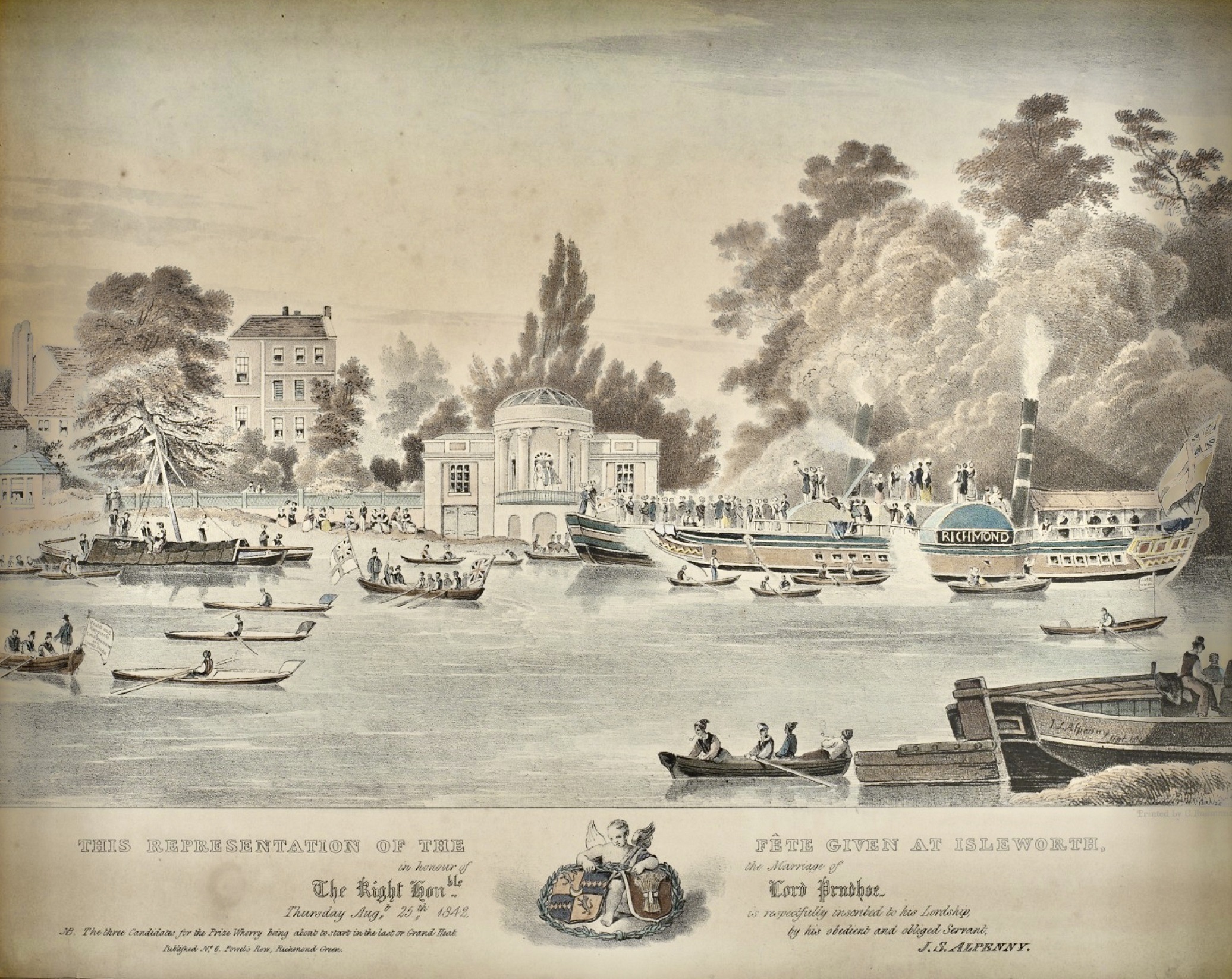
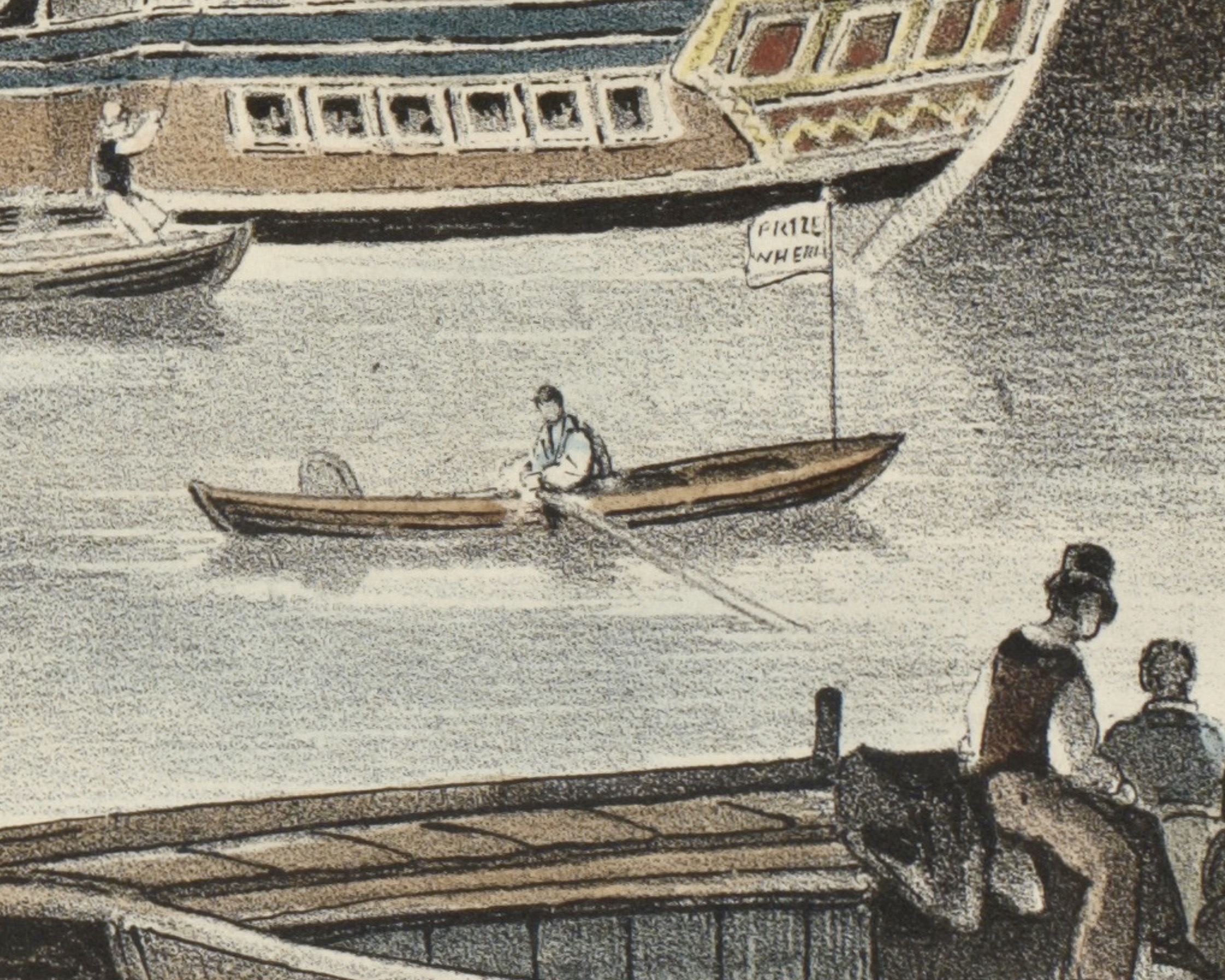
This lithograph has the inscription “This Representation of the Fête Given at Isleworth in honour of the Marriage of The Right Honourable Lord Prudhoe, Thursday, August 25th 1842, is respectfully inscribed to his Lordship by his obedient and obliged Servant J.S. Alpenny. The three Candidates for the Prize Wherry being about to start in the last or Grand Heat.”
4 September 2023
By Tim Koch
The Leander clubhouse may be the Pink Palace, but Tim Koch discovers that the Pink Lodge is the senior aquatic building.
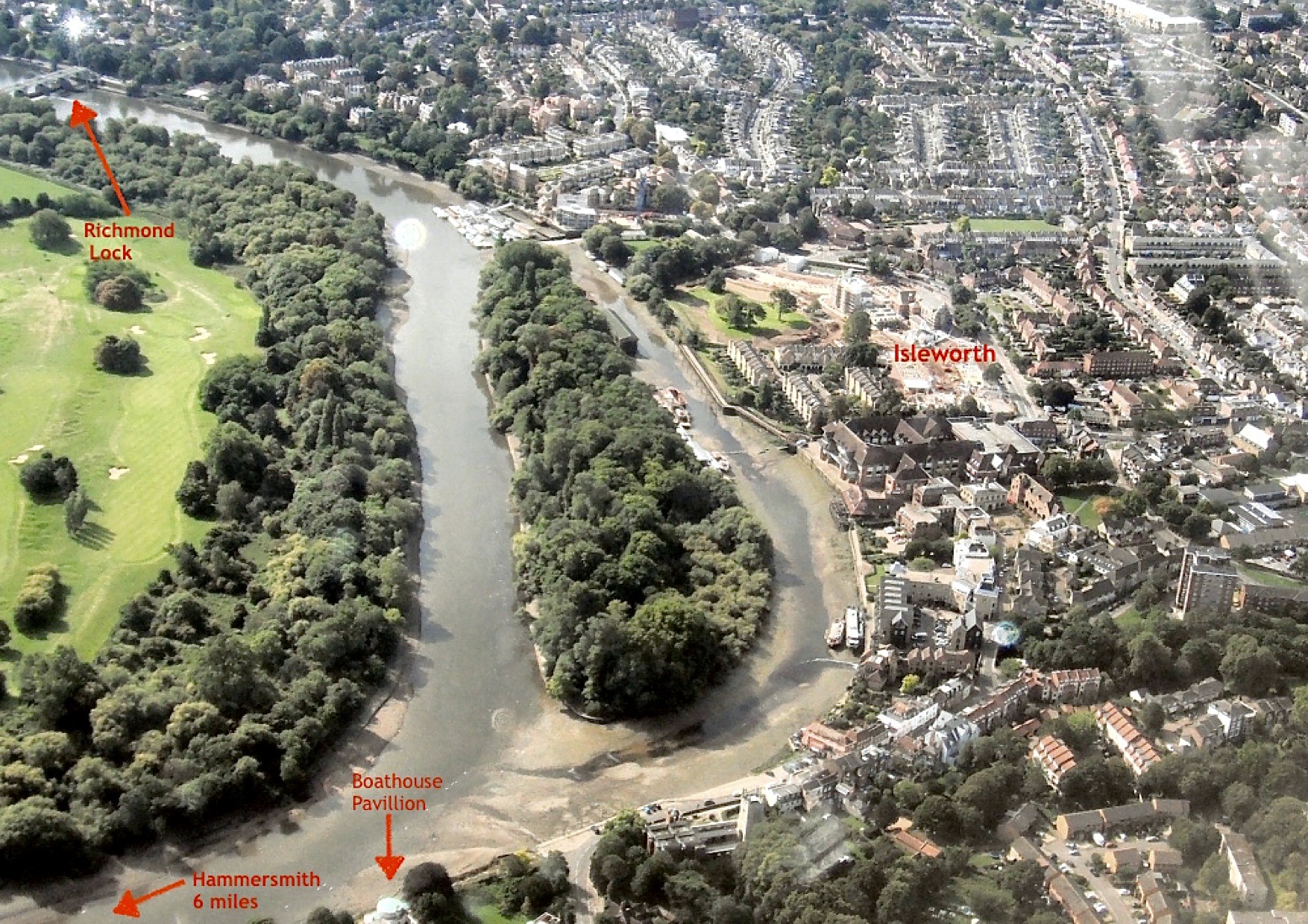
When rowers from Putney or Hammersmith wish to do a long outing, they row to the “Pink Lodge,” six miles from Hammersmith near to “Old Isleworth” which is still a village-like riparian settlement in West London. Row much beyond this and you have to go through Richmond Lock and leave the Tideway.
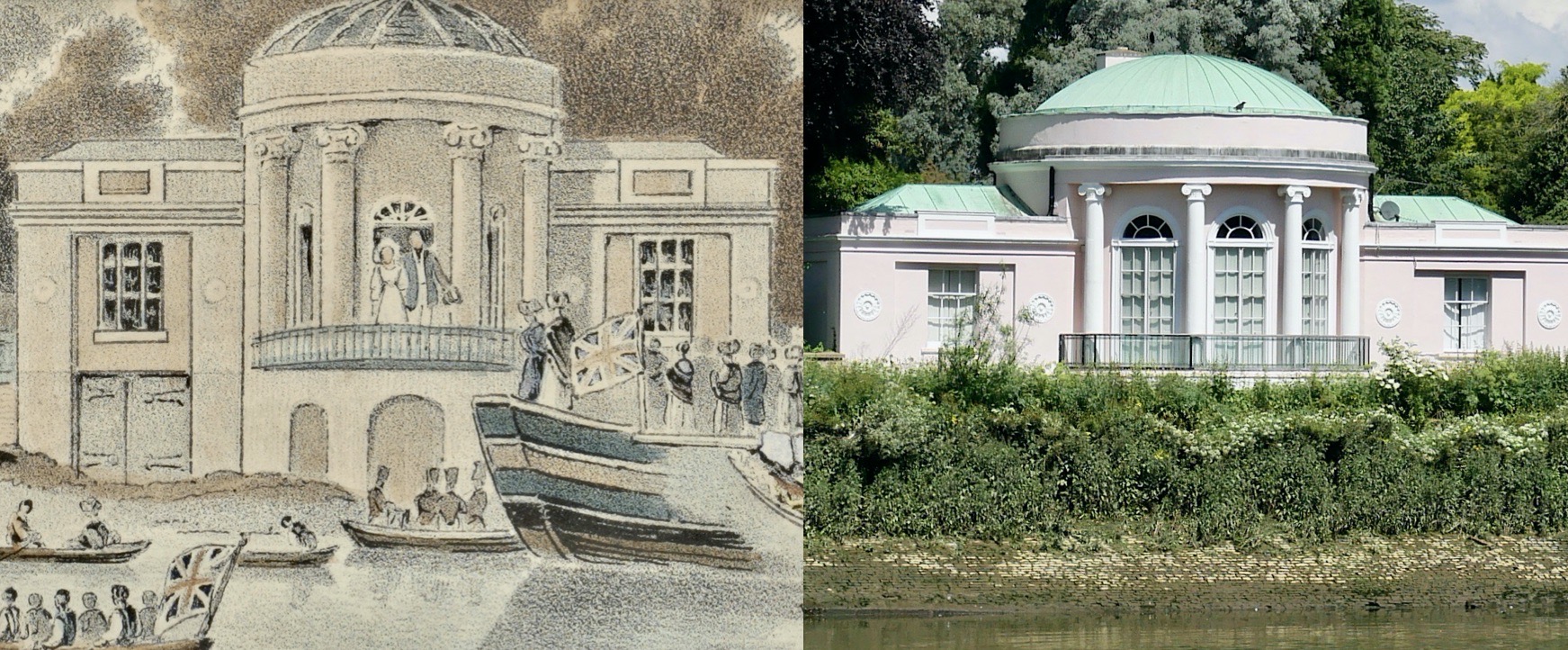
The Pink Lodge is the former boathouse of Syon House (previously sometimes spelt “Sion”), the rural residence of the Dukes of Northumberland, a splendid classical mansion with Robert Adam interiors and gardens by Capability Brown that stands in its own 200-acre park and water meadows on the banks of the Thames, eight miles from central London. Its origins date from 1431 when the English followers of St Bridget of Sweden built Syon Abbey. In the days when the Pink Lodge housed river craft and had rooms above for entertaining, it was called the Pavilion Boathouse.
His Grace, the Second Duke of Northumberland commissioned Robert Mylne to design the Pavilion Boathouse in 1803, as a surprise for the Duchess … The Pavilion was built close to the menagerie, with an adjoining boathouse for the Northumberland state barge.
The family watched regattas from the central windows. On Tuesday 31st July 1832, King William IV and Queen Adelaide paid their first visit to Syon to watch a rowing match for a new wherry, named, The Royal William and Adelaide. King William watched the race from the pavilion windows. Afterwards a dinner for twenty guests was held in the Ante Room.
(In 1833) the King and Queen paid a second visit to watch a race for a purse of Sovereigns, given by His Grace. Nine watermen from Isleworth, Twickenham and Richmond competed…
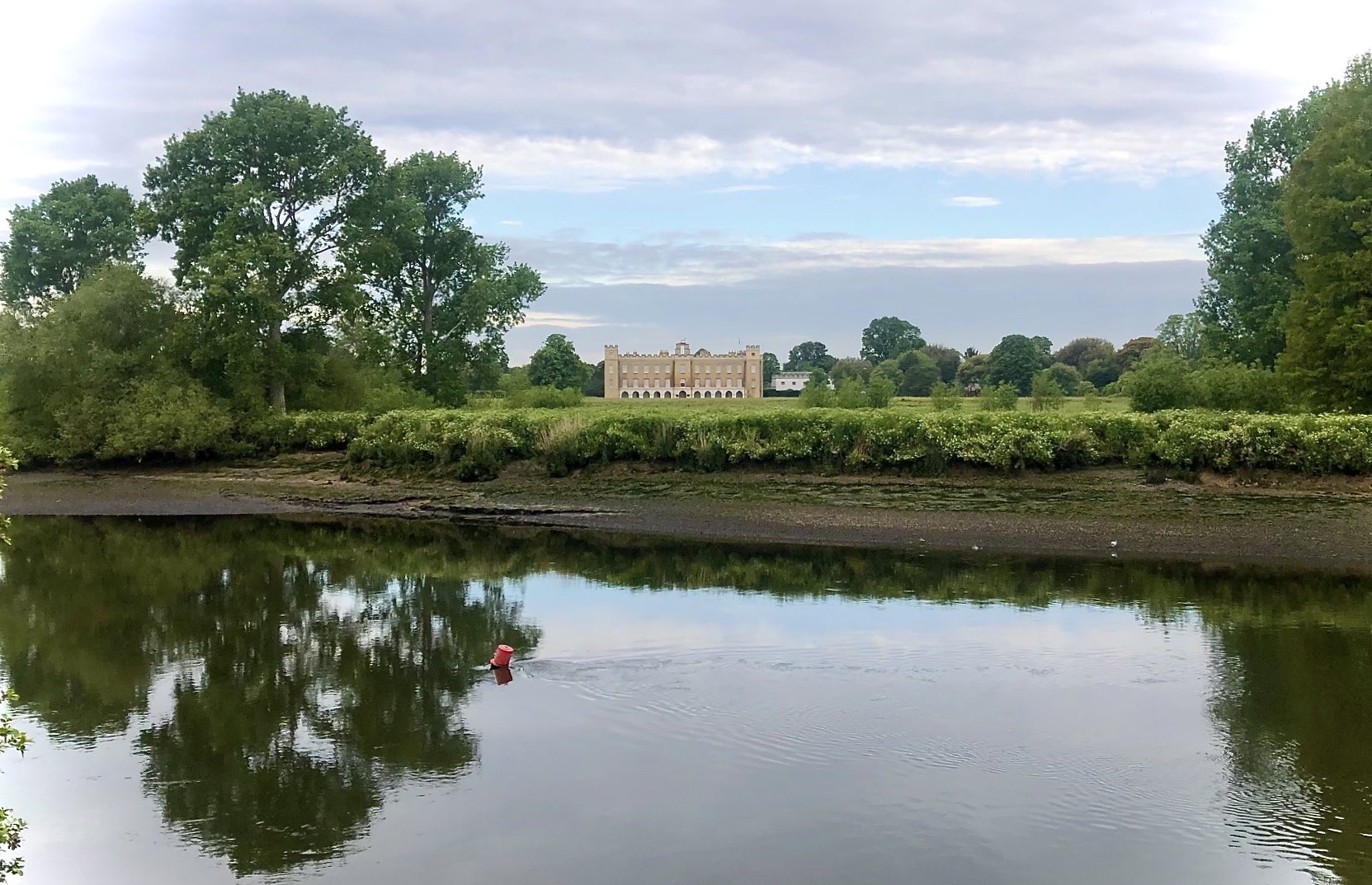
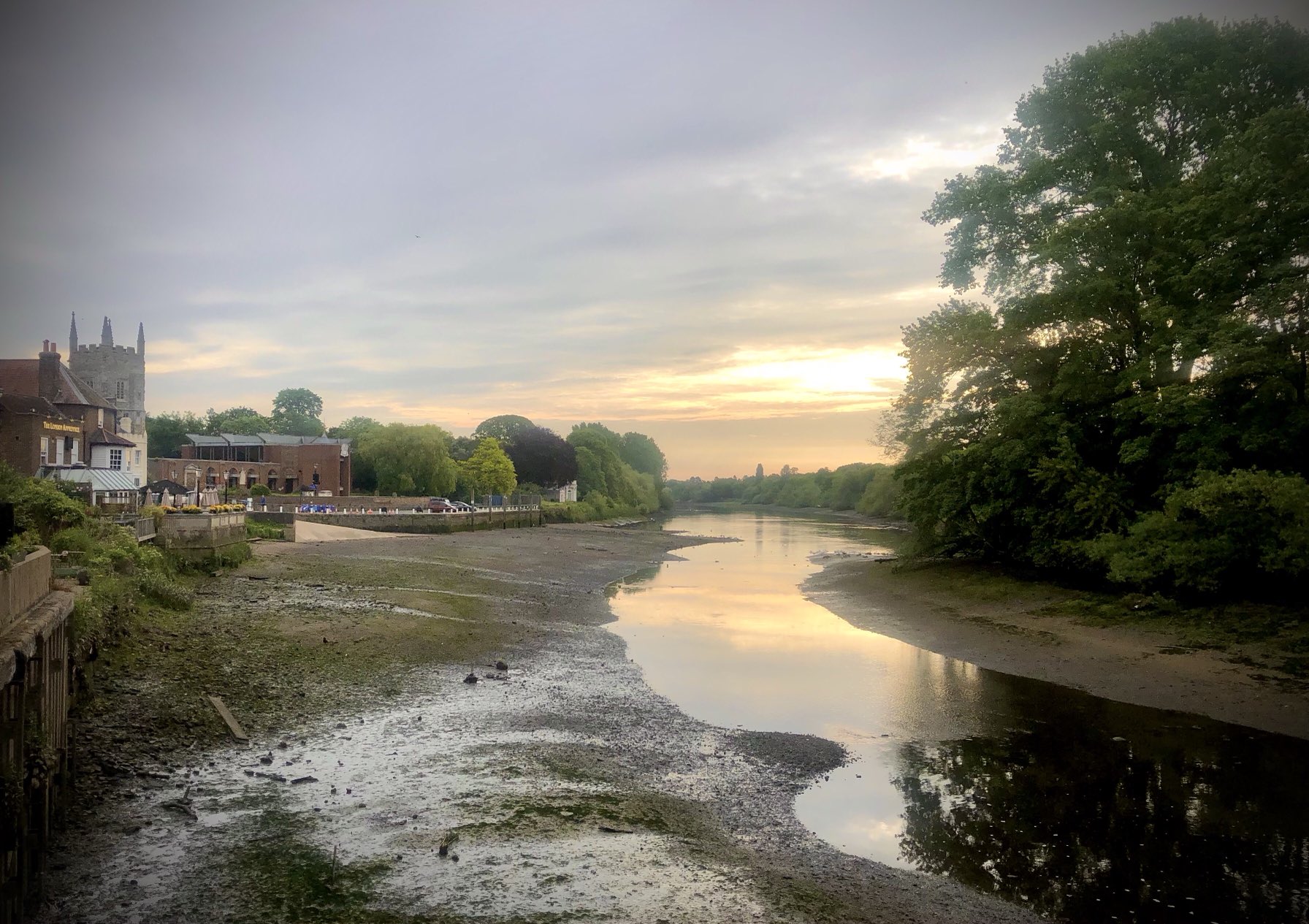
John Rocque’s map of 1743 showing Syon House and, marked “x”, the future site of the Pavilion Boathouse.The boathouse part of the Pavilion was rendered unusable when the river level rose due to the building of embankments. Sometime in the 20th century, the Pavilion became the Lodge when it was converted into living accommodation. It is claimed that the Grade I listed building is London’s oldest sporting-related pavilion.Syon House viewed from Kew Gardens. According to the 2012 Thames Landscape Strategy Review, the tide meadow at Syon Park is the only natural riverbank left in Greater London. Picture: @sarahkern101.A modern aerial view of Isleworth and the Pink Lodge.An Auriol Kensington RC octuple passes the Pink Lodge, 2021. Picture: Daniel Walker.Looking downriver from Isleworth towards the Pink Lodge (just visible in the trees). Picture: @sarahkern101.
Returning to the 1842 lithograph pictured above, The Era newspaper of 28 August 1842 gives a full report of the day including the “Percy-Grosvenor Nuptials Regatta.”
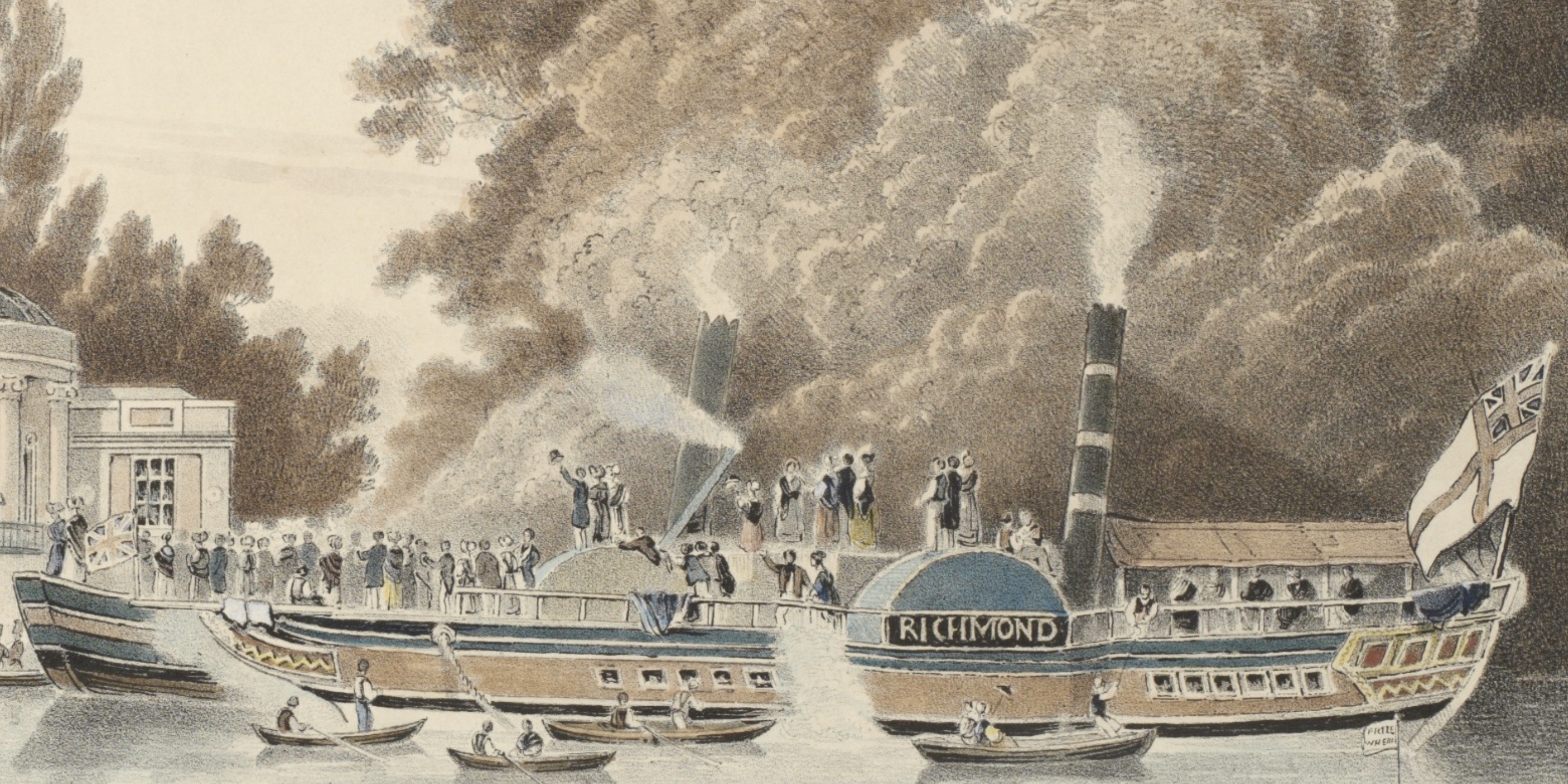
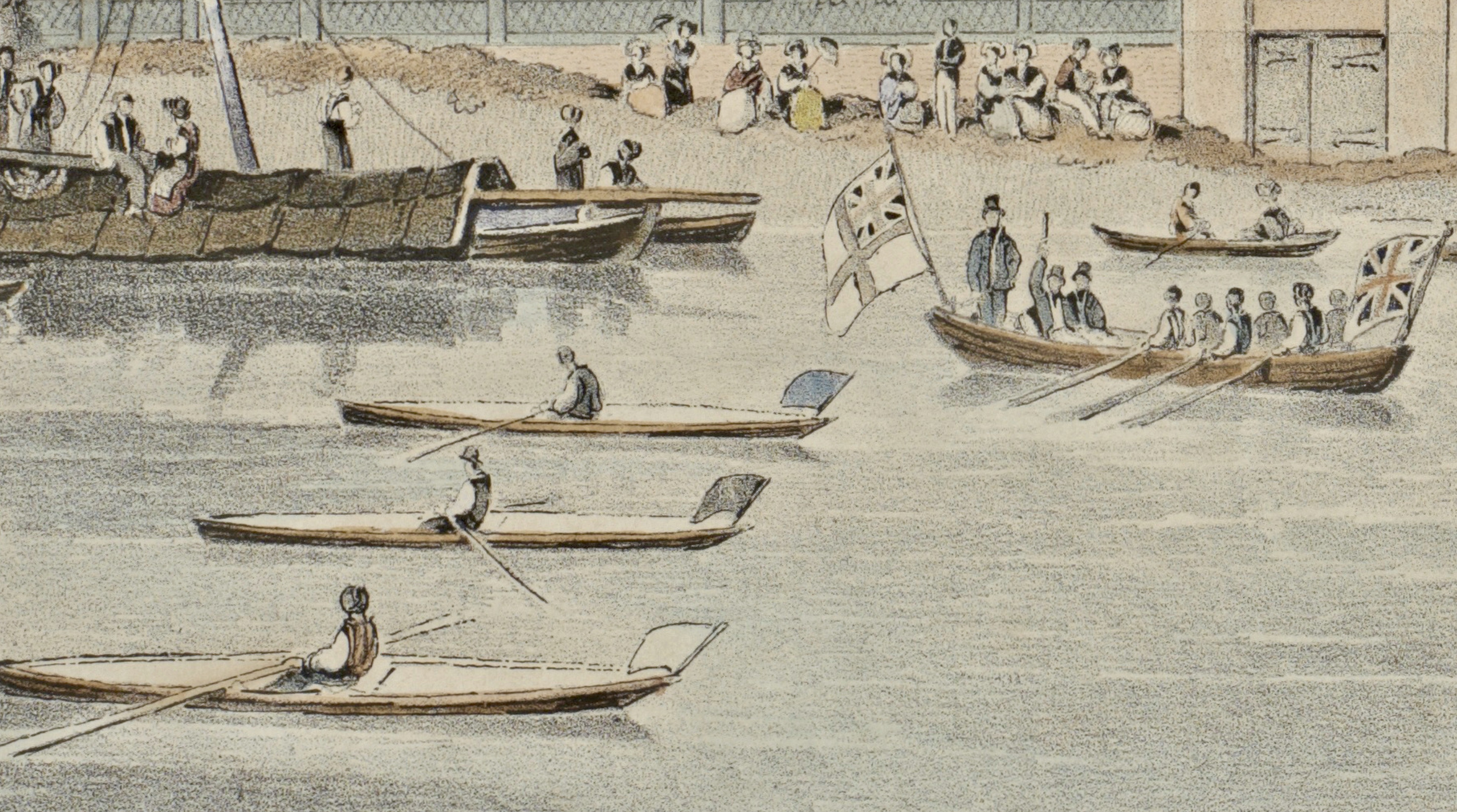
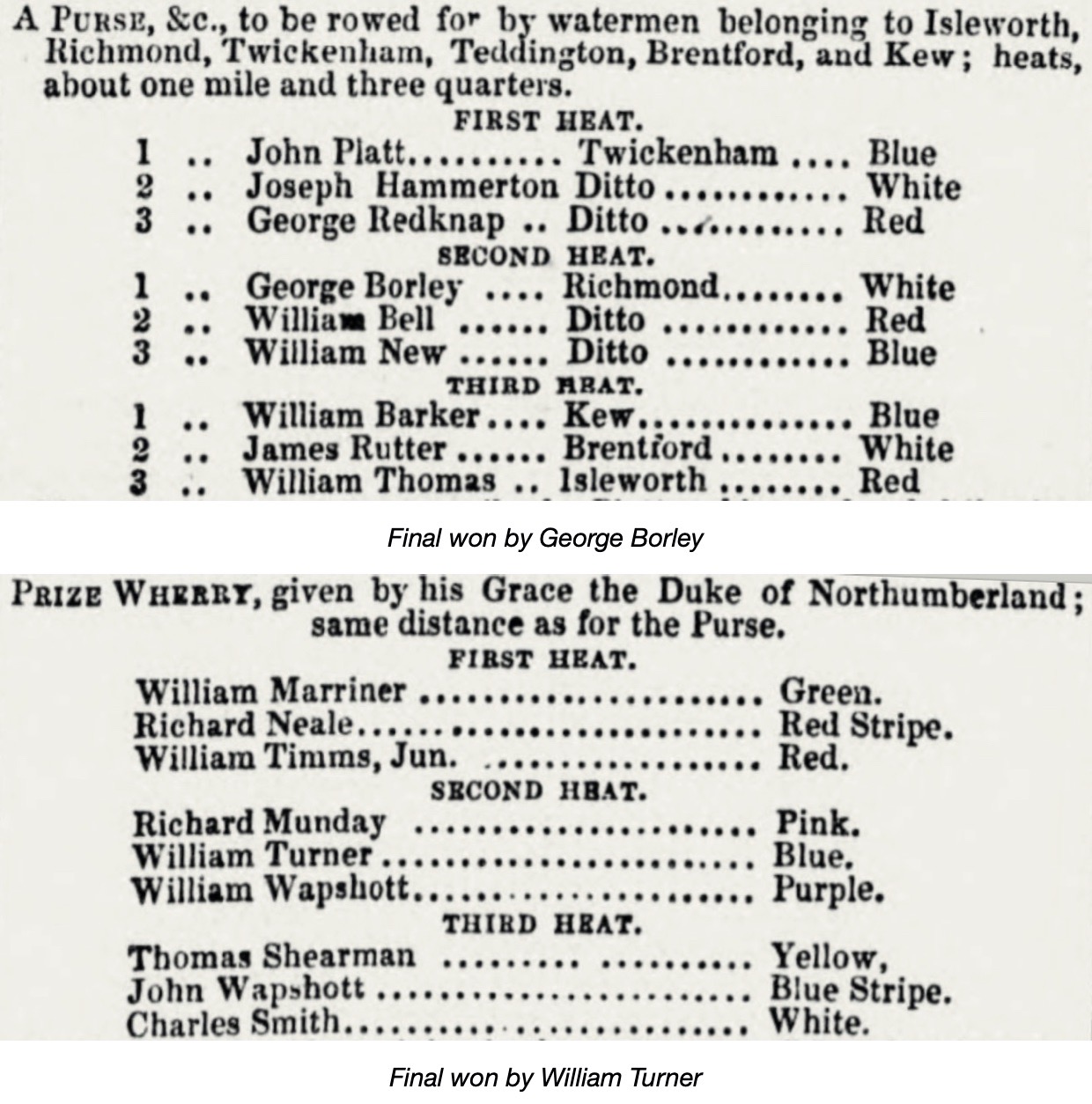
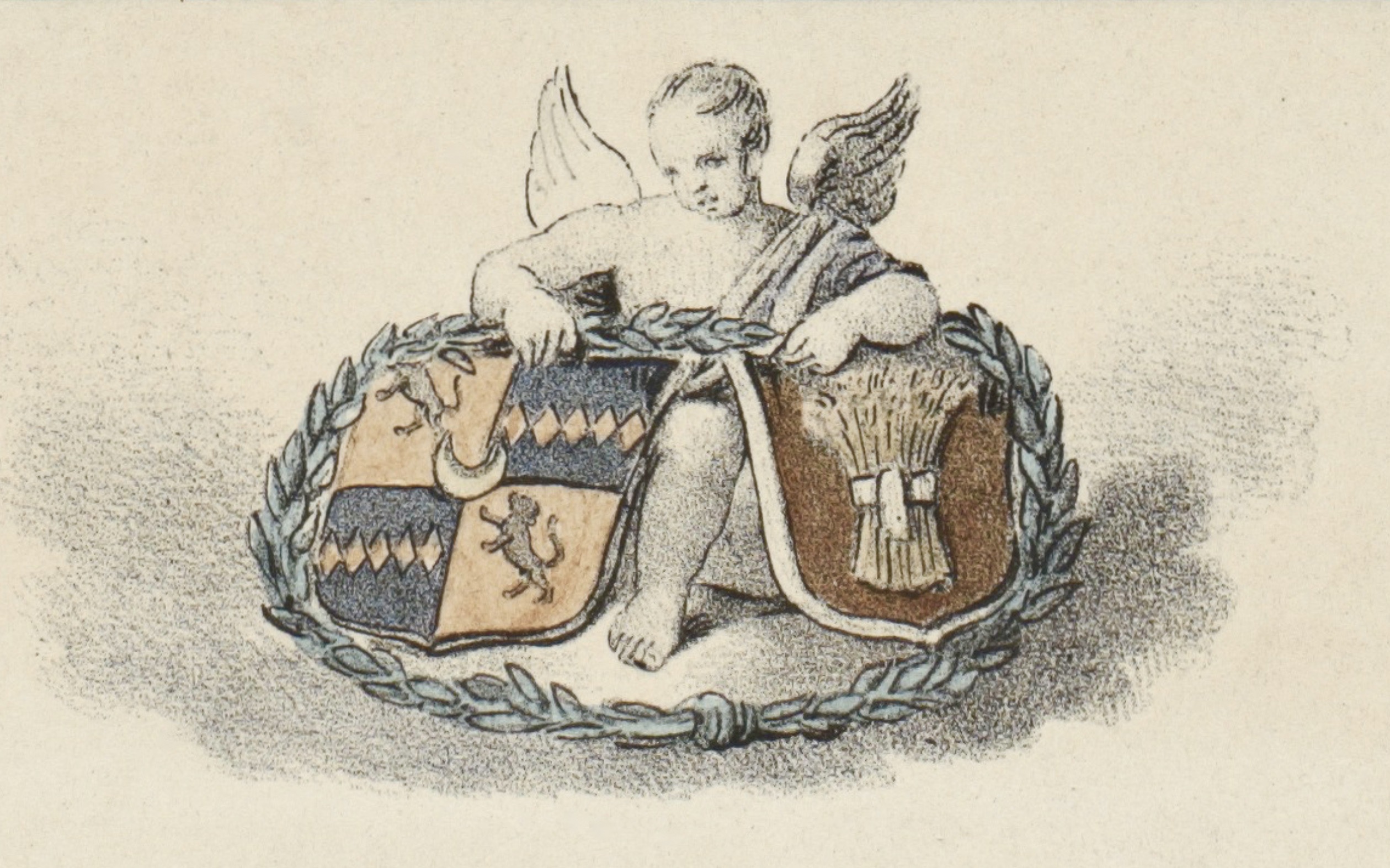
The first part of the Era’s report on the union through marriage of two great and ancient English families, Percy and Grosvenor. Lord Prudhoe was Algernon Percy, from 1847 the 4th Duke of Northumberland (1792-1865). His bride, Eleanor (1820-1911), was the daughter of Richard Grosvenor, 2nd Marquess of Westminster. The couple were actually married at St George’s, Hanover Square, Central London, but returned to Syon for the wedding festivities.Syon House by Robert Griffier (c.1675 – c.1760). The Percy Family came to Syon around 1594 – which was late for a family that arrived in England in 1067. Syon House is the last surviving ducal residence complete with its country estate in Greater London. This painting could show the “Northumberland State Barge” mentioned above (though this particular craft does not seem grand enough to merit this title).The Era noted that Lord Prudhoe’s elder brother, the 3rd Duke, gave a wherry with oars and sculls as the prize for the Isleworth watermen’s race. His Lordship himself gave prize money totalling £10 for another contest for watermen from within a three-mile radius. The banks were lined with spectators, some of whom had come from upriver on two steamers which then moored to view the races.The steamer Richmond with spectators ashore and afloat.Showing deference to the local Lord.The final of the Isleworth free watermen’s race. The blue flag is carried by William Turner, the black by William Timms Junior (though it should have been coloured red in this picture) and the white by Charles Smith. The umpire’s boat is on the right and The Era identifies the three men in the stern. The umpires for the wherry races were Horatio Day (possibly standing) and “Ashby Esq” (possibly sitting on the right with the starting pistol) They were accompanied by “Mr Styles, Queen’s Waterman” (probably sitting on the left) with the six oarsmen forming “an effective crew.”The draw for the two events, each with three heats and a final. In the race for watermen from Isleworth, Richmond, Twickenham, Teddington, Brentford and Kew, the heats were won by Platt, Barker and Borley. In the final, George Borley of Richmond won the purse of £5. In the Isleworth free watermen’s race, Timms, Smith and Turner got to the final where the wherry was won by William Turner.William Timms Junior was an unsuccessful finalist in the Isleworth watermen’s race for the wherry. Pictured here is his grandfather or great-grandfather, another William Timms, painted by Emma Soyer when he was 95 in 1838. Timms was a waterman to the 1st, 2nd and 3rd Dukes of Northumberland and, as a King’s/Queen’s Waterman, attended the coronations of George III, George IV, William IV and Victoria.Some of the visitors “amongst whom the most perfect harmony and hilarity existed” according to The Era.The Era reported that after racing had finished, the bride and groom appeared on the balcony of the Pavilion and were cheered by the crowds. The prize wherry was then brought in front of the Pavilion and the Rev Mr Glossop presented it to William Turner.Lord Prudhoe (aged 50) and the new Lady Prudhoe (aged 22) on the balcony of the Pavilion.The Percy and Grosvenor arms united. It was considered an excellent match since Lord Prudhoe’s older brother, the 3rd Duke, was childless after twenty-six years of marriage. Lord Prudhoe became the 4th Duke in 1847 but no children resulted from the Percy – Grosvenor union.The prize wherry, The Lady Elenor.
Whoever won or lost at the regatta on 25 August 1842, the day probably ended with everyone in and around Isleworth in very good spirits. The Era reported:
After the conclusion of the regatta, a puncheon (a barrel holding between 560 and 960 imperial pints) of strong old ale was distributed amongst the populace in Isleworth Square… The workmen and labourers of the Duke of Northumberland sat down to a solid repast of old English fare in the riding school in Sion Park, for whom three barrels of ale were munificently provided… On the Eclipse and Richmond steamboats a liberal quantity of champagne was distributed among the company to drink the health and happiness of Lord Prudhoe and his bride… About half-past eight o’clock a party of upwards of sixty of the principal inhabitants sat down to an excellent dinner… the noble bridegroom having sent a liberal supply of venison and champagne…
Not surprisingly, The Era concludes:
Convivialities of the evening were maintained to a very late hour.








 Hear The Boat Sing