This website covers all aspects of the rich history of rowing, as a sport, culture phenomena, a life style, and a necessary element to keep your wit and stay sane.
The Model School Rowing Club, Toronto, 1859. If this date is accurate, this picture was taken only four years after the earliest photographic images of rowing crews that I know of. I have previously said that the oldest known rowing photographs date from 1858 (such as the Radley First VIII and an Exeter College crew) but I have recently discovered pictures seemingly taken in 1855 of boatbuilder Matt Taylor and the Royal Chester crew that won the Wyfold and the Stewards’ at Henley. See page 3 here.
14 August 2023
By Tim Koch
Tim Koch finds another online archive and, spoiler alert, types in “rowing.”
There are several institutions around the world that are generous enough to digitise many of their holdings and put them online and in the public domain for non-commercial use. When I discover such sights, HTBS Types will not be surprised that I type “rowing” into the search box and see what results. Previously, this has resulted in posts using the State Library of South Australia, the British Museum, the Wellcome Foundation and the Polish National Archive. I recently found the website of the Toronto Public Library and a search found a small number of nice rowing pictures.
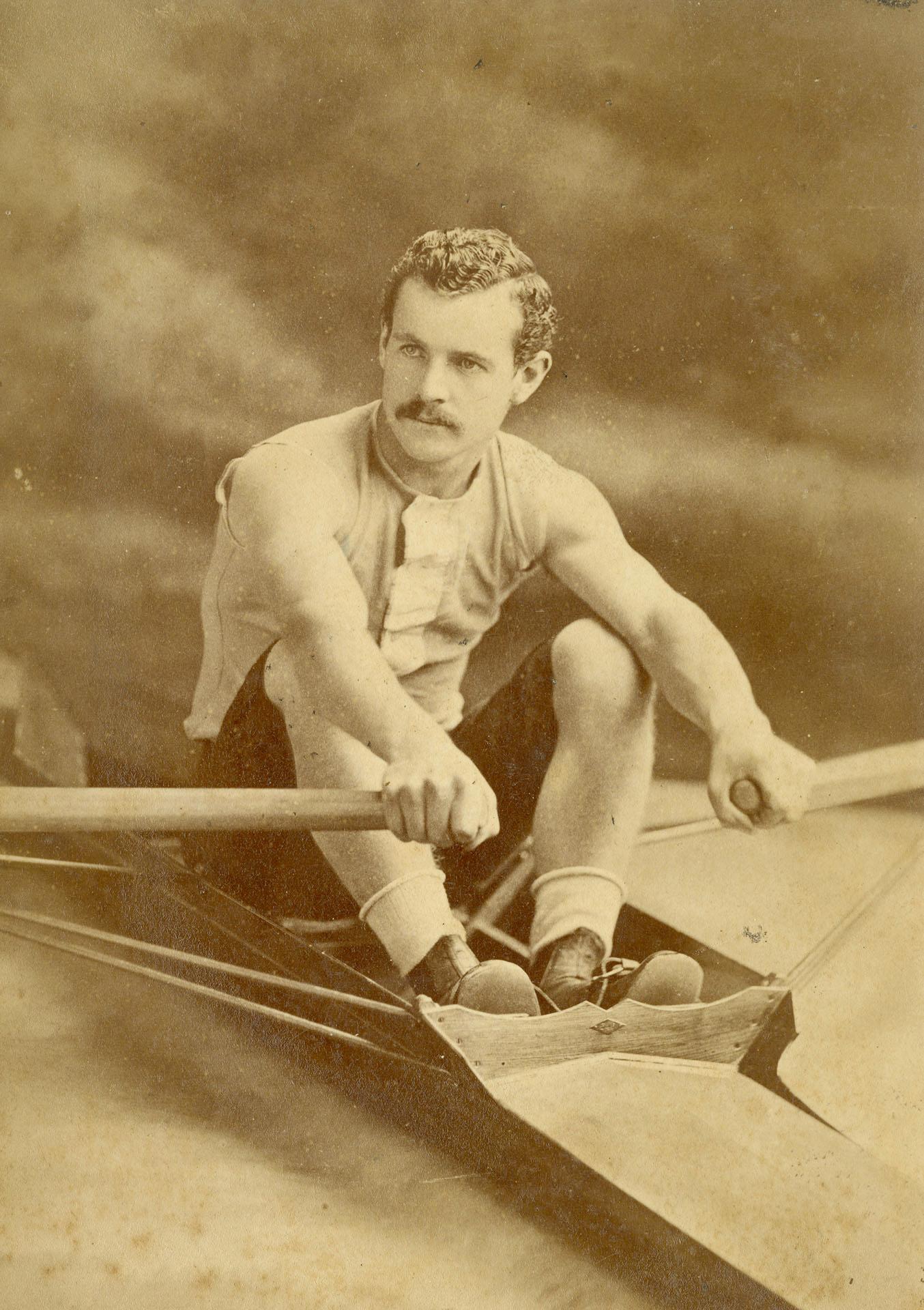
Edward Hanlan (1855-1908) in 1876. Ned Hanlan was World Sculling Champion 1880-1884 and lost only six of his 300 races. He was Canada’s first world sporting champion in an individual event.
An 1878 sculling race at Lachine (near Montreal) between Ned Hanlan (on the right) and US sculler Charles Courtney. An early exponent of the sliding seat, some call Hanlan the father of the modern technique.
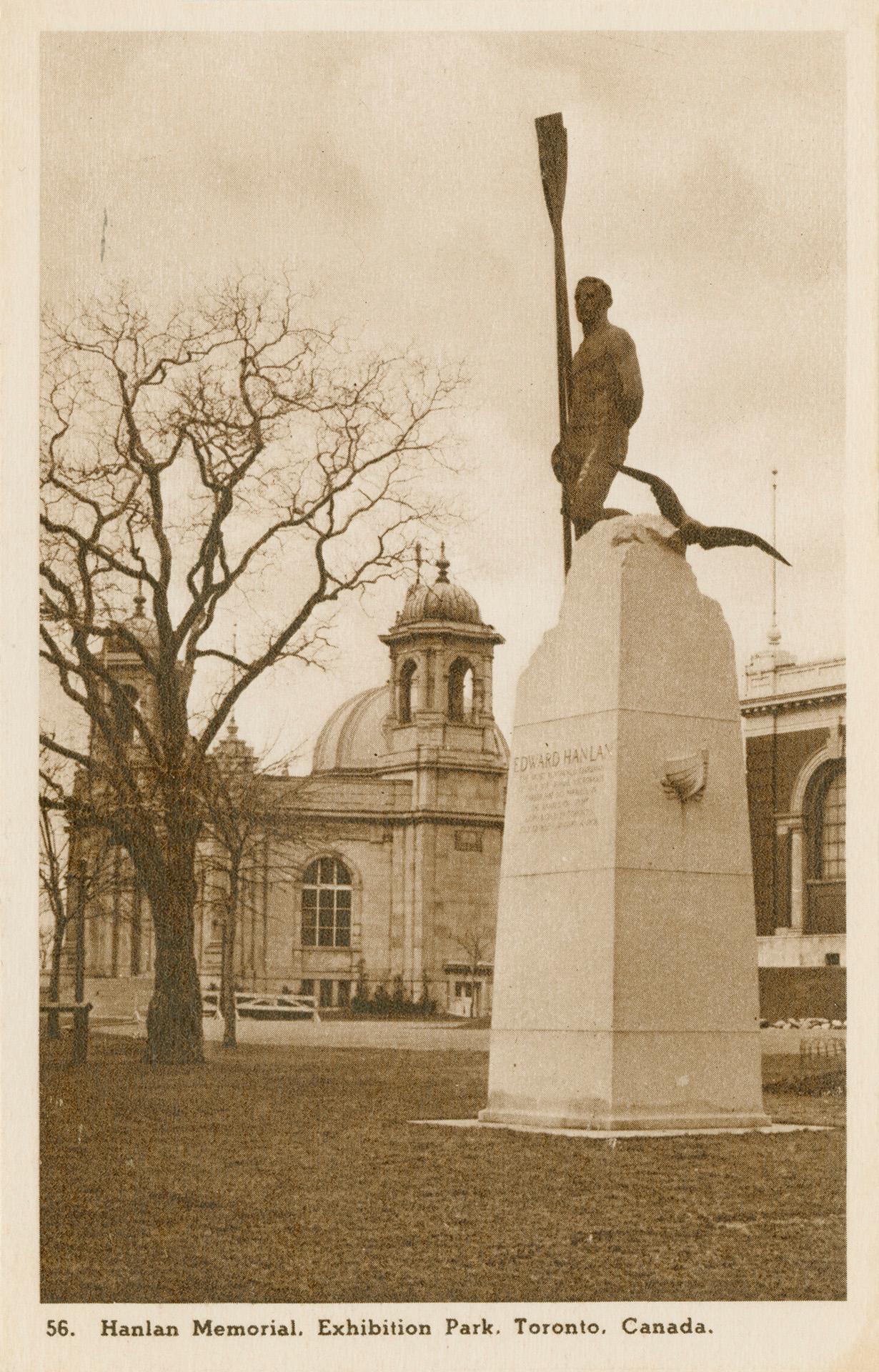
The Hanlan Monument in Exhibition Park, Toronto, in 1930. In 2004, it was moved to the Toronto Islands near Hanlan’s Point Ferry Terminal.
Some attendees at the 1901 World Professional Sculling Championship in Ontario’s Rat Portage (the town was renamed Kenora in 1905).Harry Pearce, Thomas Sullivan & George Towns at the 1901 World Professional Sculling Championship. Pearce was an Australian sculling champion and challenged for the world championship in 1911 and 1913. He was the father of the more famous sculler, Bobby Pierce. Sullivan was Professional Sculling Champion of New Zealand, 1891, and Professional Sculling Champion of England, 1893. Towns was the Australian Single Sculls World Champion from 1901 to 1905 and 1906 to 1907.A regatta at Toronto Rowing Club, c.1905.
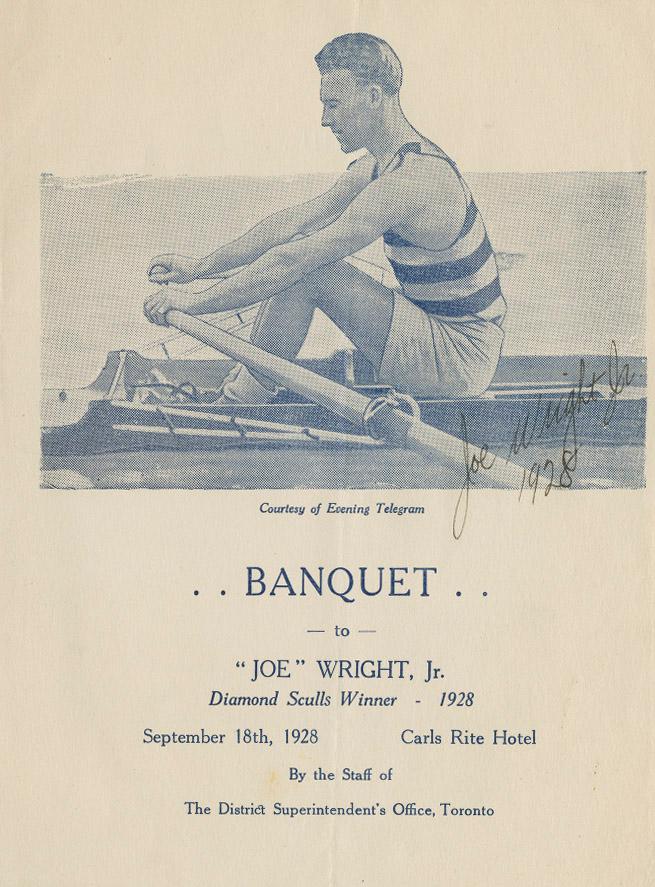
A menu cover for a banquet in Toronto for local boy Joe Wright Jr, the winner of Henley’s Diamond Sculls in 1928. Also in that year, Wright became Canadian and US single sculls champion and won Olympic silver in the double sculls in Amsterdam.
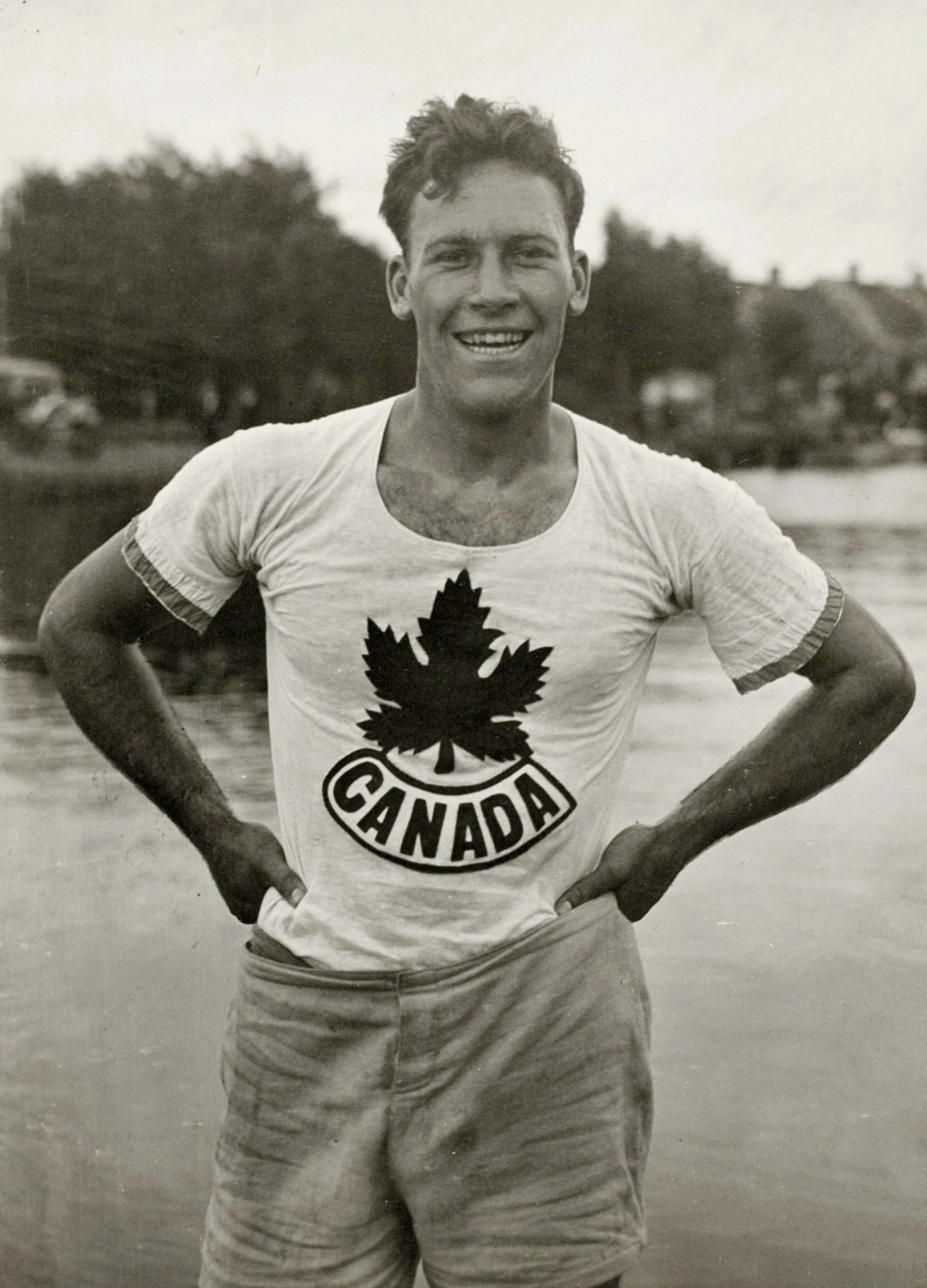
Joe Jr (pictured) was coached by his father, Joe Sr, who had won a silver medal in the 1904 Olympic Eights.The intriguing Toronto Star newspaper caption says: Is this the greatest eight the Argonauts ever turned out? Last year Big Joe Wright, Canada’s most famous rowing coach, called the Argonaut crew shown above the Ham and Egg eight.Bobby Pierce (1905-1976) pictured in 1939. Born in Australia, Pierce won the Olympic Sculls in 1928 and 1932 and the Diamond Sculls in 1931 as an amateur and the World Sculling Championship in 1933, 1934 and 1938 as a professional. He was resident in Canada from 1930 but had to represent Australia in the Olympic Games.
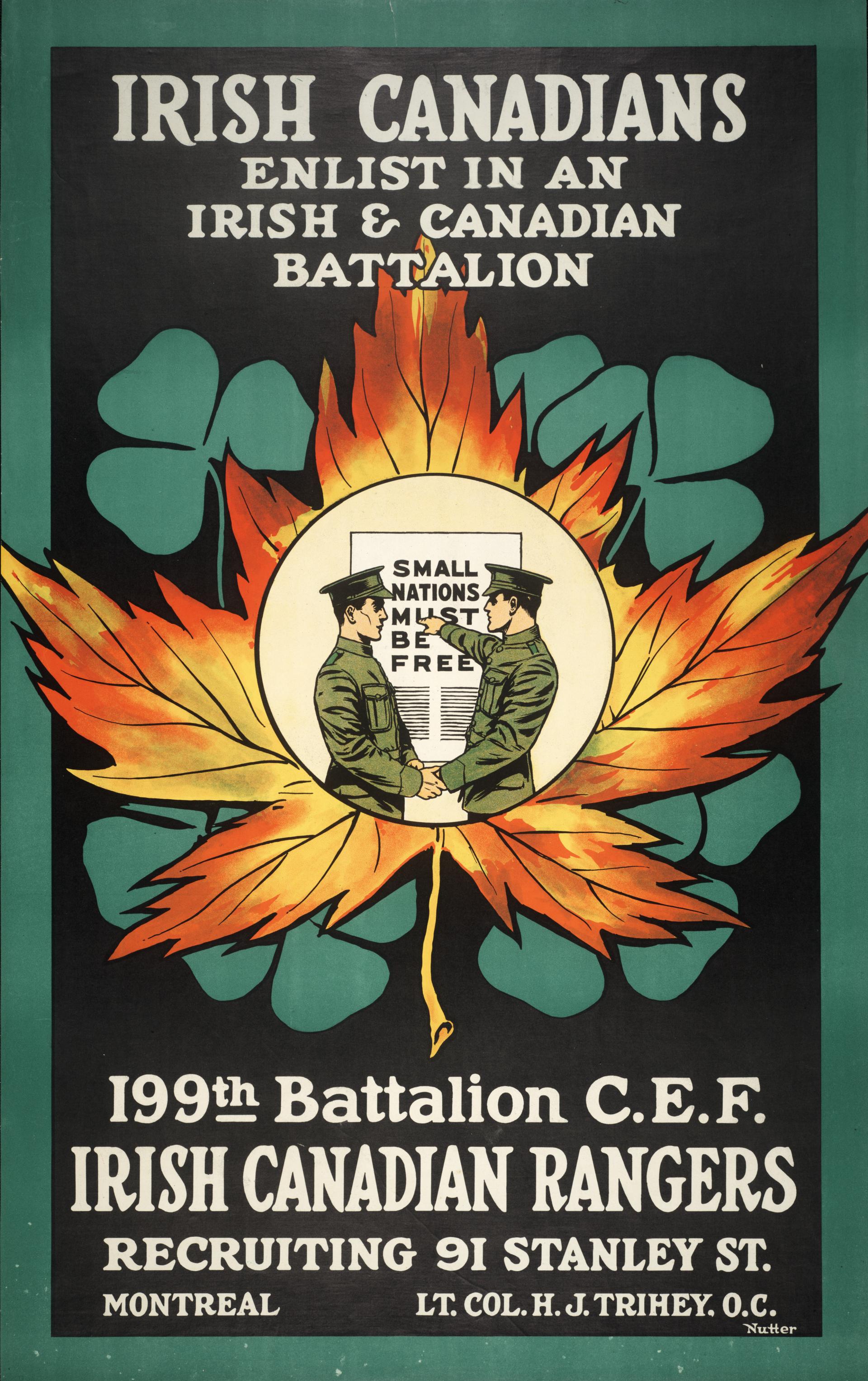
While Canadians of Ulster Scots descent may have not needed too much encouragement to help the United Kingdom in its hour of need, those with Irish Catholic ancestry may have needed more persuading. This poster has the message that, “Small Nations Must Be Free,” a statement ostensively about Belgium but some would say also applied to Ireland.
Safe Stimulants c.1912. Perhaps this persuaded Irish Ontarians to sign up for France in 1916?








 Hear The Boat Sing