This website covers all aspects of the rich history of rowing, as a sport, culture phenomena, a life style, and a necessary element to keep your wit and stay sane.
Karolien Florijn of the Netherlands winning the Women’s Single Sculls A-Final. Tara Rigney of Australia was second and Olympic Champion Emma Twigg of New Zealand was third.
4 August 2023
By Tim Koch
Tim Koch is still worshiping at the Lake of the Gods.
In my two previous pieces from Lucerne I have not identified the individuals and events that I have pictured, hoping that the images alone tell the story of the Rotsee course and give some of the atmosphere of an international regatta. However, I think that the finalists and the winners deserve to be named so (hopefully) informative captions have been included here.
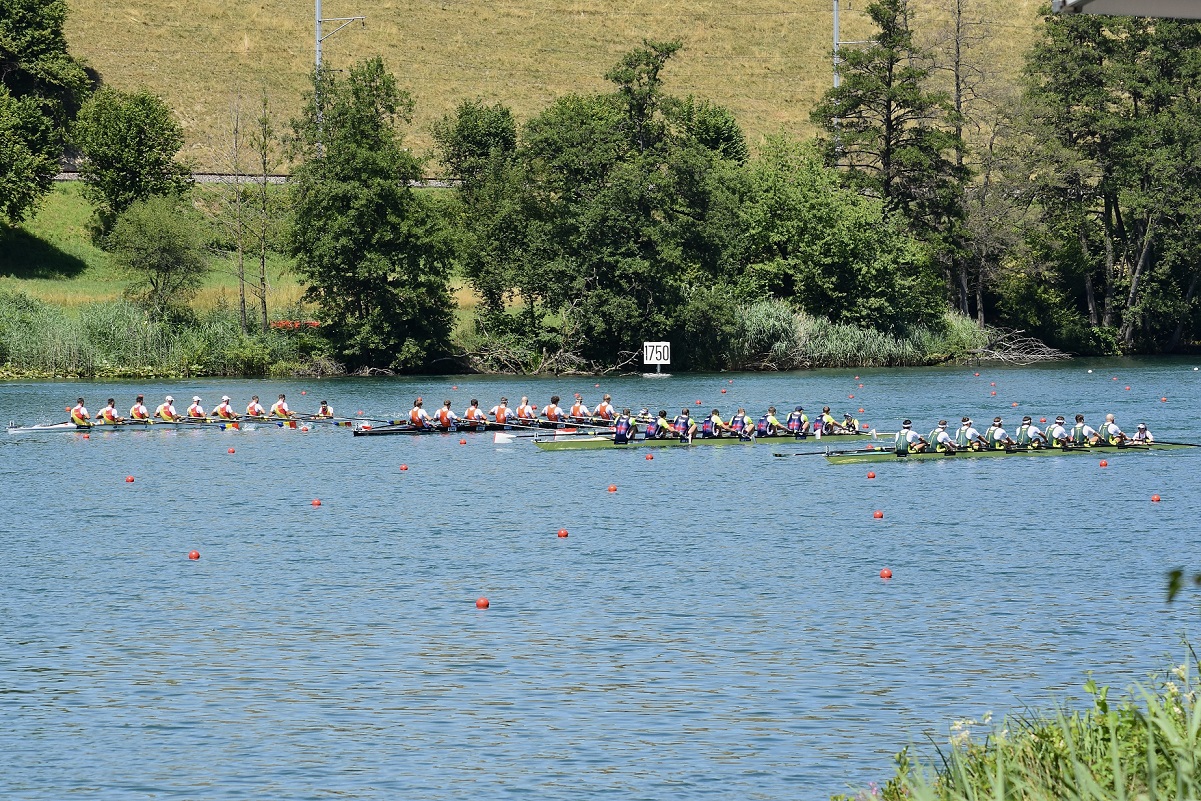
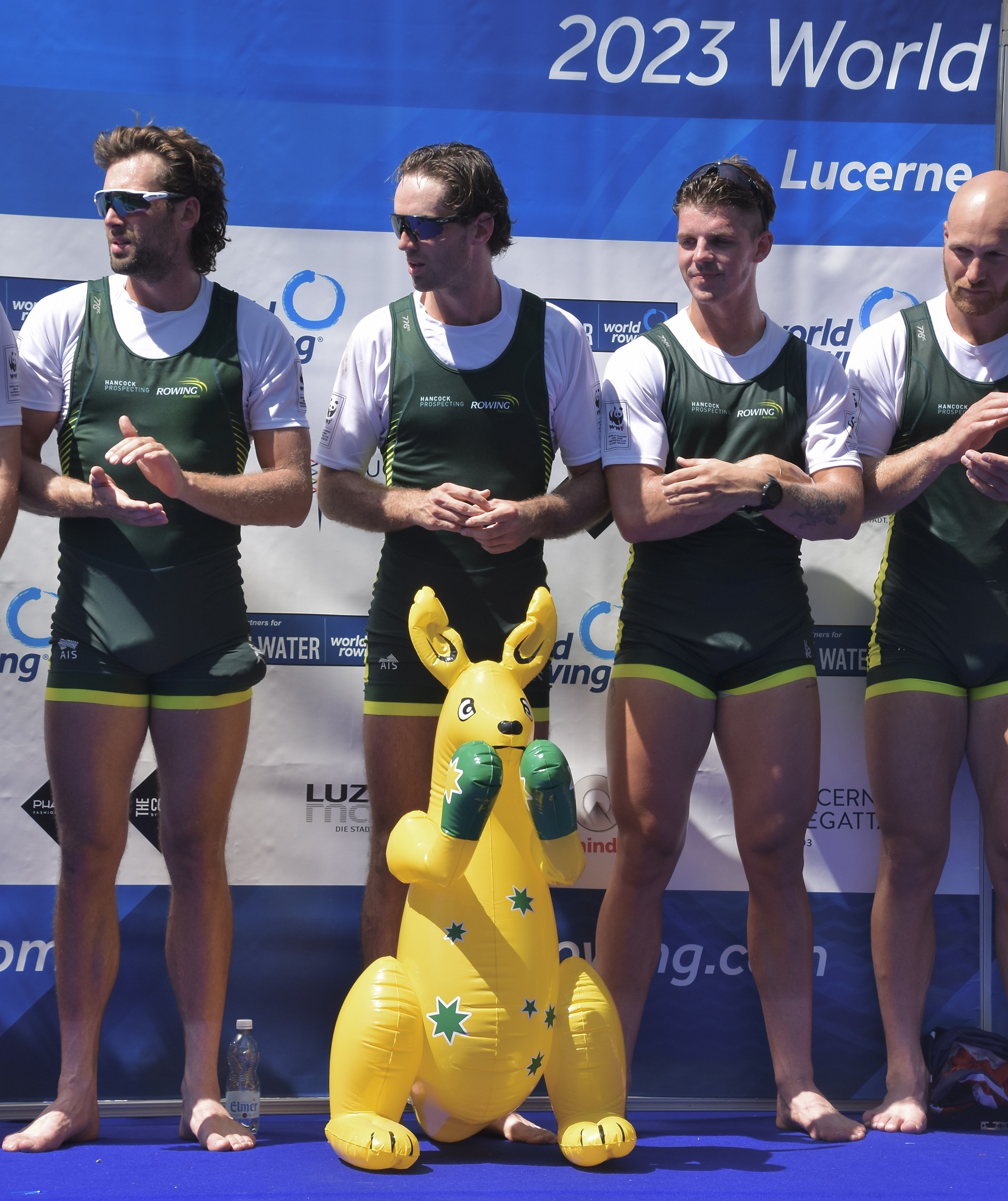
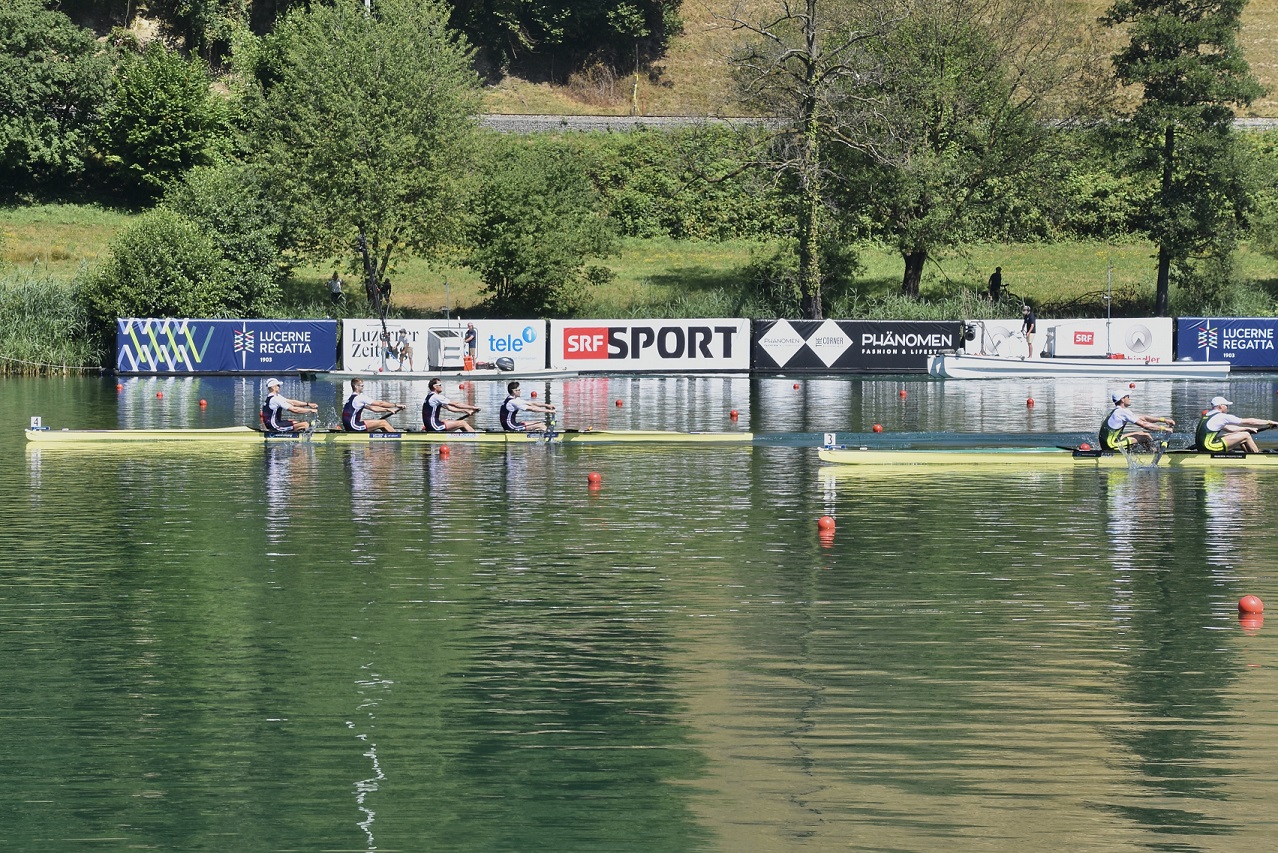
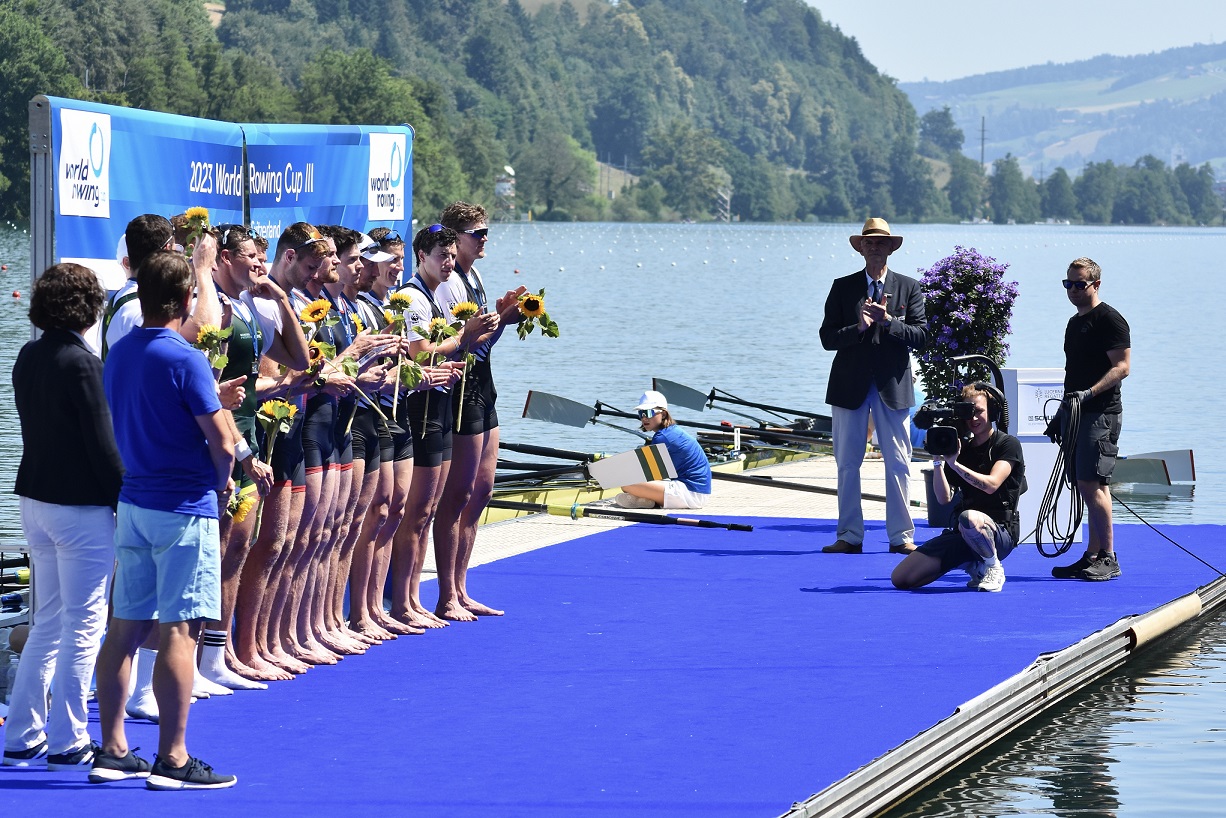
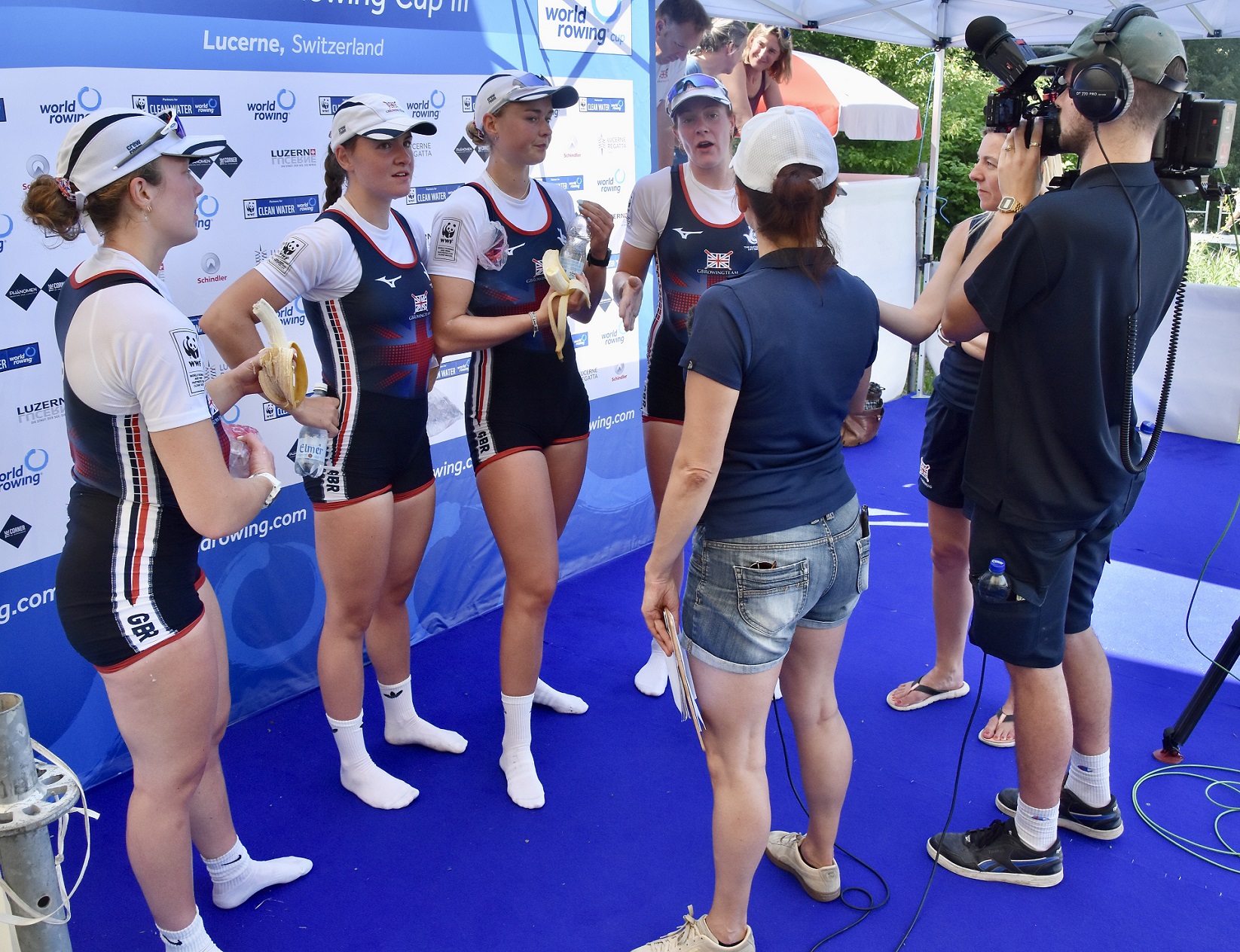
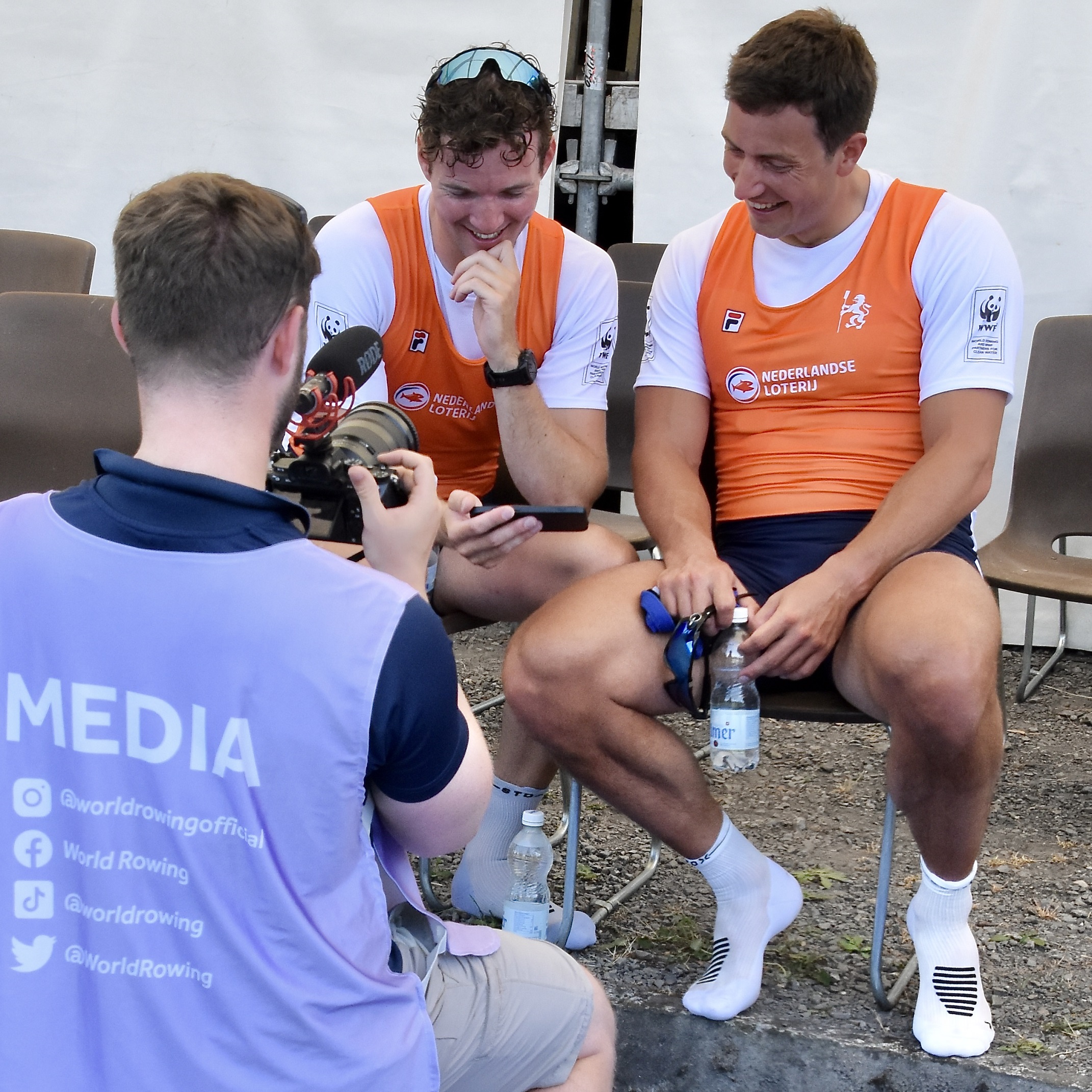
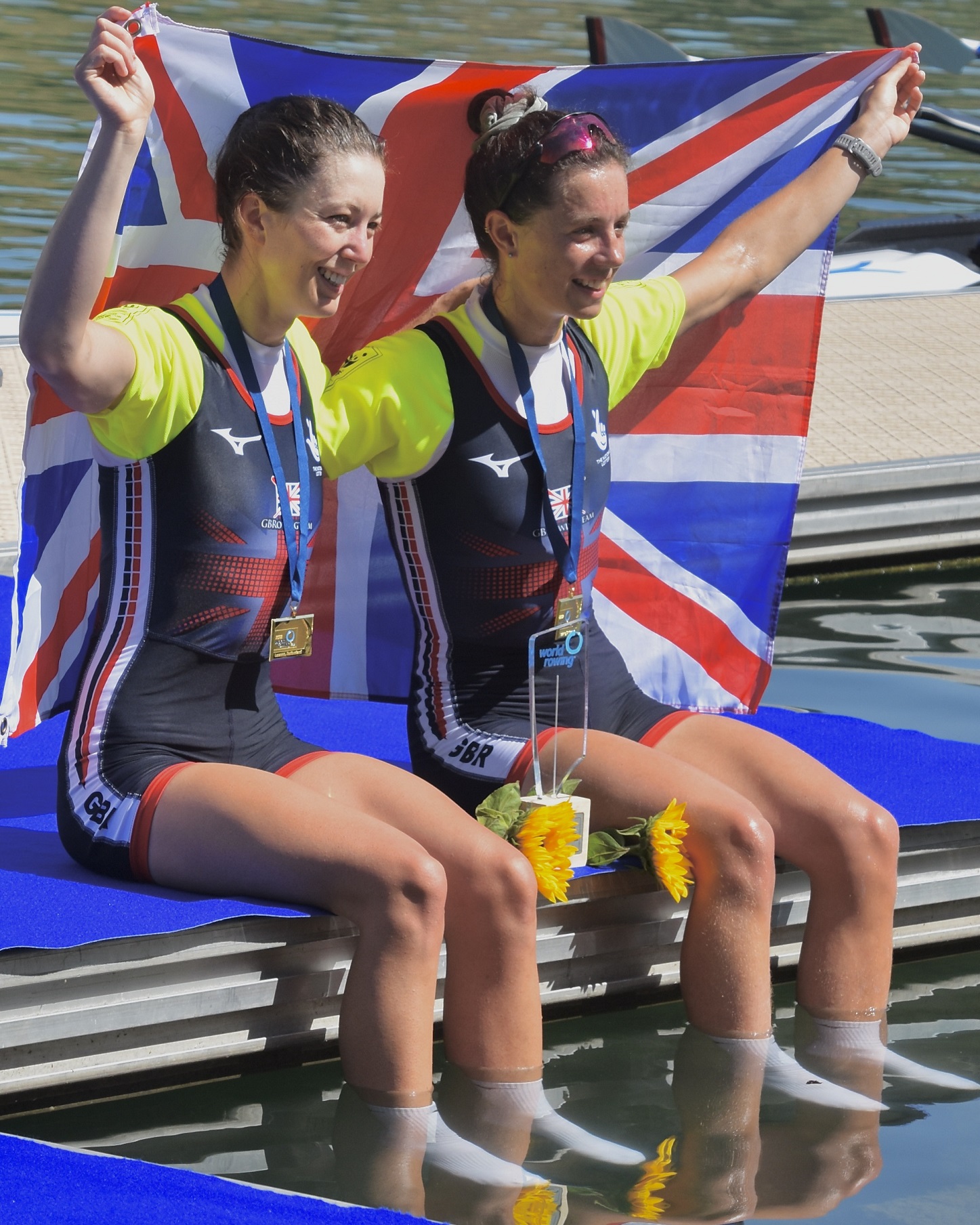
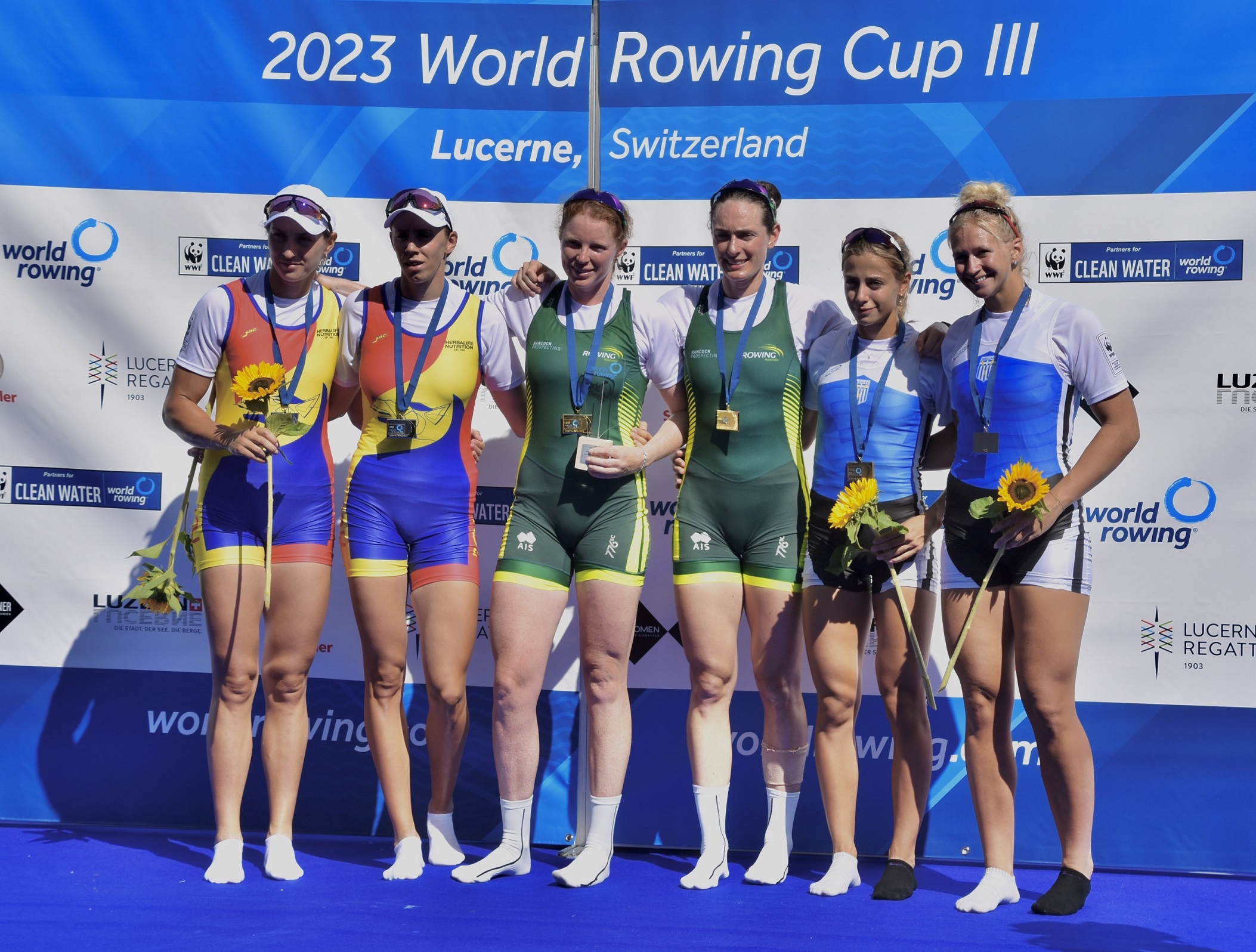
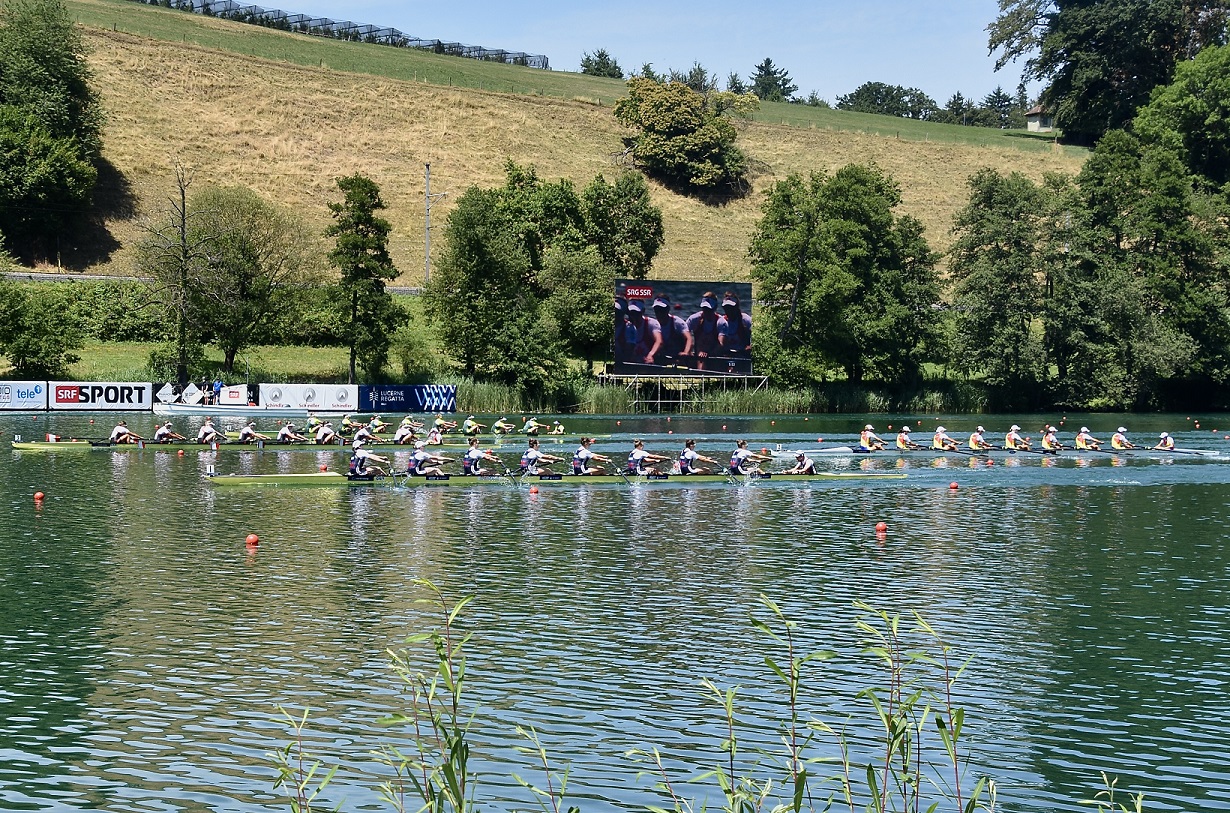
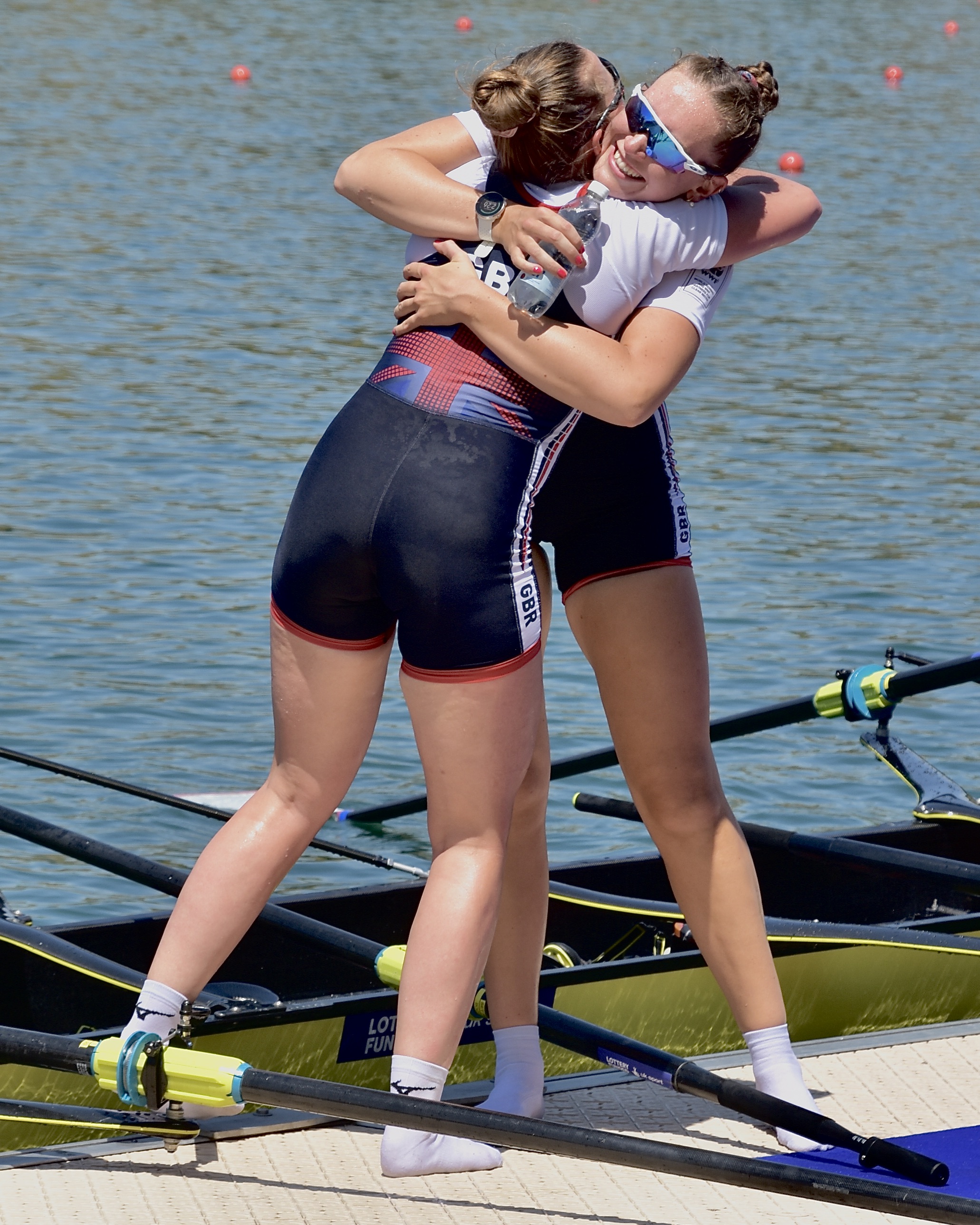
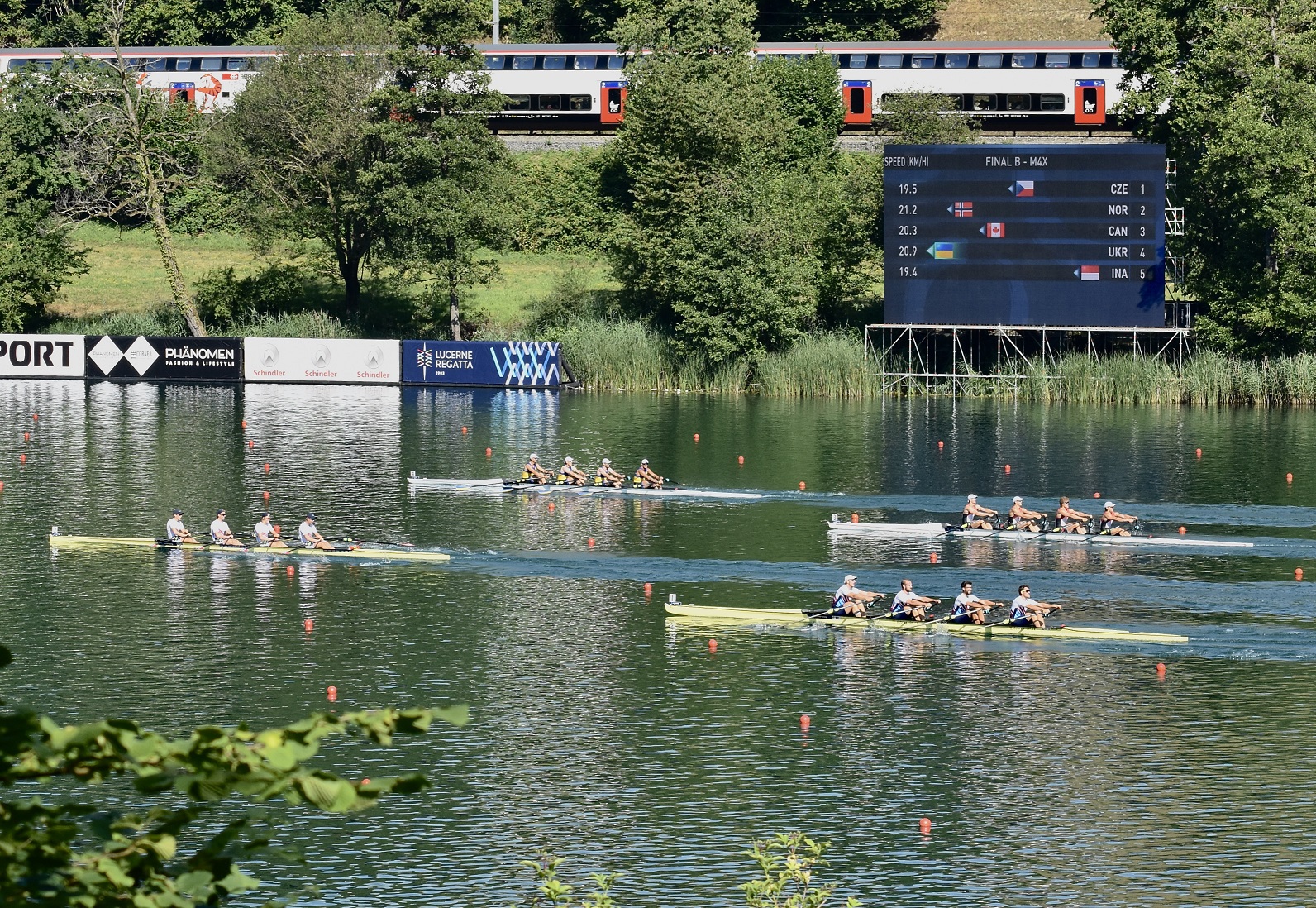
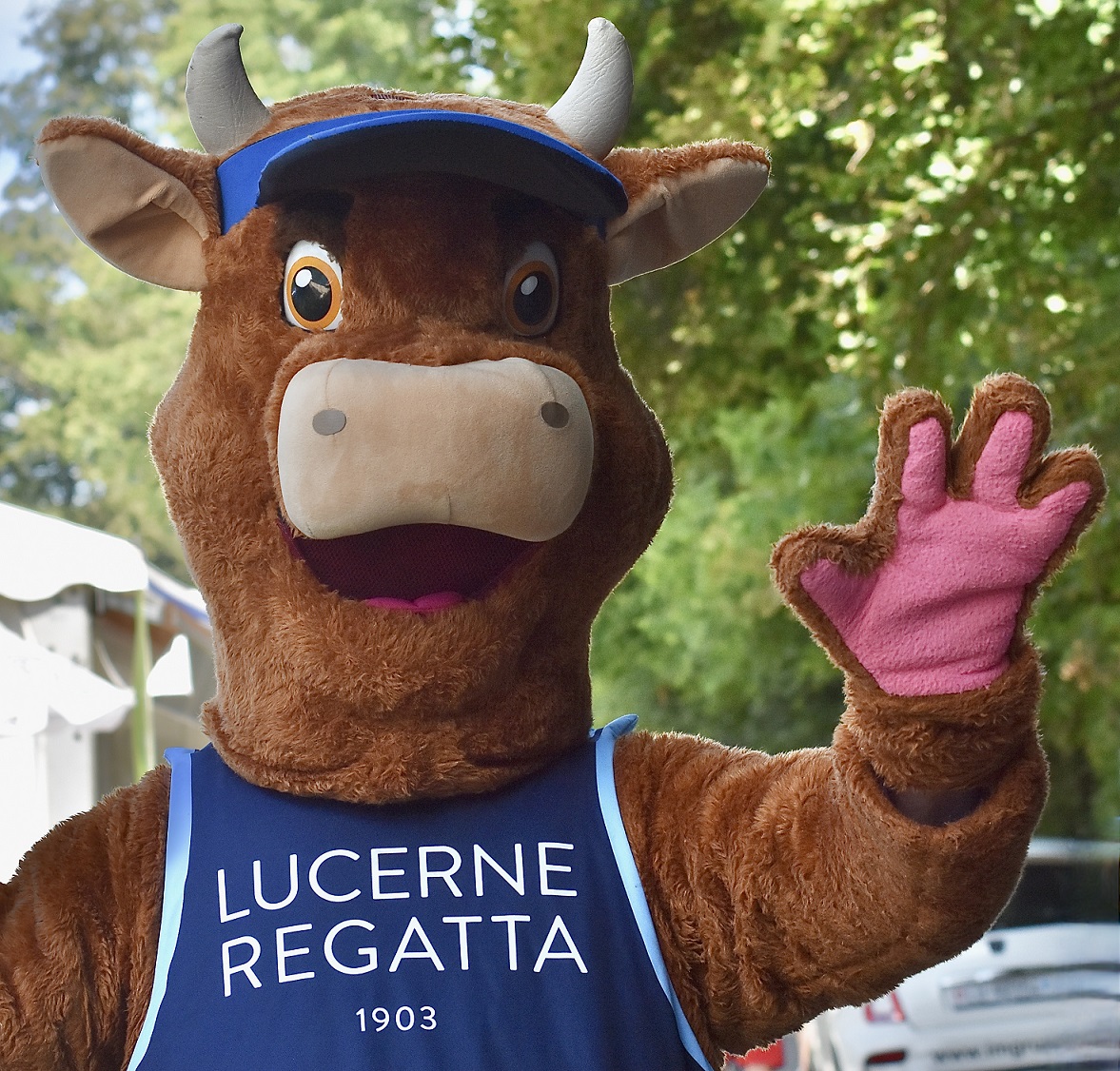
Some of the finalists in the women’s singles recover their breath. From top to bottom: Emma Twigg, Karolien Florijn, Tara Rigney and Germany’s Alexandra Föster.Rigney and Twigg hoist Florijn high.The men’s eights final at 1,750 metres. The finish times were Australia 5.23.92, Britain 5.24.53 and Netherlands 5.25.37. The British eight had been undefeated up until now but it could be argued that a loss at this stage, with the Olympics only a year away, may discourage any complacency in the GB crew. It should get interesting when the two next meet in some sort of Aquatic Ashes at the World Championships in September.“What’s that Skip? We’ve beaten the Poms to win Men’s Eights!” For the benefit of those who missed the 1970s kids TV show, Skippy the Bush Kangaroo, the eponymous marsupial spent a lot of time communicating to adults that yet another child had fallen down a mineshaft.In the Men’s Four. Britain was first followed by Australia and then New Zealand. The GB crew has been undefeated this year and naturally would like to reclaim the Olympic Fours title that British crews had won at Olympic Regatta from 2000 until GB rowing’s disastrous Tokyo Games in 2021.The Men’s Four medal ceremony. Britain was the first country to win five consecutive Olympic titles in the M4-, breaking the record managed by East Germany between 1968 and 1980, and by Britain themselves between 1908 and 1932 (the Olympic Regattas of 1912 and 1920 did not have coxless four events). A photographer’s view of the Men’s Four celebrations.Media time for the second placed GB Women’s Quad.In the Women’s Quad Sculls, four of the crews in the A-Final came through the repechage: Ukraine, Germany, Britain and Switzerland, the latter two coming second and third respectively behind the Netherlands who had led from the start. Unbeaten since 2019, the Chinese Olympic combination was fourth. The Dutch double of Melvin Twellaar and Stef Broenink won the Men’s Double Sculls. The fight for first place was between them and the Sinkovic brothers, but the Croatians had to settle for second. There was an enormous battle for third, but the splendid Irish combination of Philip Doyle and Daire Lynch prevailed.Stef Broenink and Melvin Twellaar are seen here reviewing a recording of their race.Martin and Valent Sinković accepted second place with their customary good grace despite perhaps not having sculled their best. Here they are photobombed by Dominik Keller.Not to take anything away from him but Olli Zeidler’s win in the men’s single was perhaps the least surprising result of the regatta. The German champion won at World Cups I and II and at III was nearly eight-seconds ahead of second placed Sverri Nielsen of Denmark. Thomas Mackintosh of New Zealand was third and Ryuta Arakawa, Japan’s first ever men’s single sculler to make an A-Final, was fourth.Zeidler triumphant.In the words of Rachel Quarrell, “British lightweight women’s double Emily Craig and Imogen Grant (have) an aura of invincibility but still go at every race as if it’s their last…” They won Lightweight Women’s Double Sculls by over four seconds.The Australian Women’s Pair of Jess Morrison and Annabelle Mcintyre finished over 5 seconds up on Romania and over 11-seconds up on Greece.Tom George and Ollie Wynne-Griffith celebrate after winning a dramatic Men’s Pairs race. They had lost their lead to the Romanians in the last 500 metres but got back in front just as the finish line approached.It was Britain, Canada and then Australia in the Women’s Eights. Canada had beaten GB at Henley a week earlier, but both went past Australia in the final very exciting one hundred metres.Hugs at the finish between two of the victorious GB Women’s Eight.The medal ceremony for the women’s eights.Henry Fieldman, cox of the GB Women’s Eight, reviews the final race with some of his crew.Before the A-Finals, Sunday morning saw most of the B-Finals take place. The Men’s 4x B-Final saw a popular win for Ukraine who had the wonderfully named Bull Hula at “2”. After three stages spanning early May to early July, Great Britain topped the World Cup Medal Table with 115 points, followed by Australia in second with 103, and Switzerland in third with 95. Here, Louise Kingsley, Director of Performance for the GB Rowing Team, holds the trophy. More details on the World Rowing site.Next stop, the World Championships, 3-10 September in Belgrade, Serbia. This will be the first opportunity to qualify for the Paris 2024.The Lucerne Regatta mascot says “Auf wiedersehen”. Anyone who returns for the 2024 World Cup II could meet her again and possibly get a sense of déjà moo.
World Rowing’s report on finals’ day is on its website as are all the results and Rachel Quarrell’s summary of Sunday is on Row360.











 Hear The Boat Sing