

27 June 2023
By William O’Chee
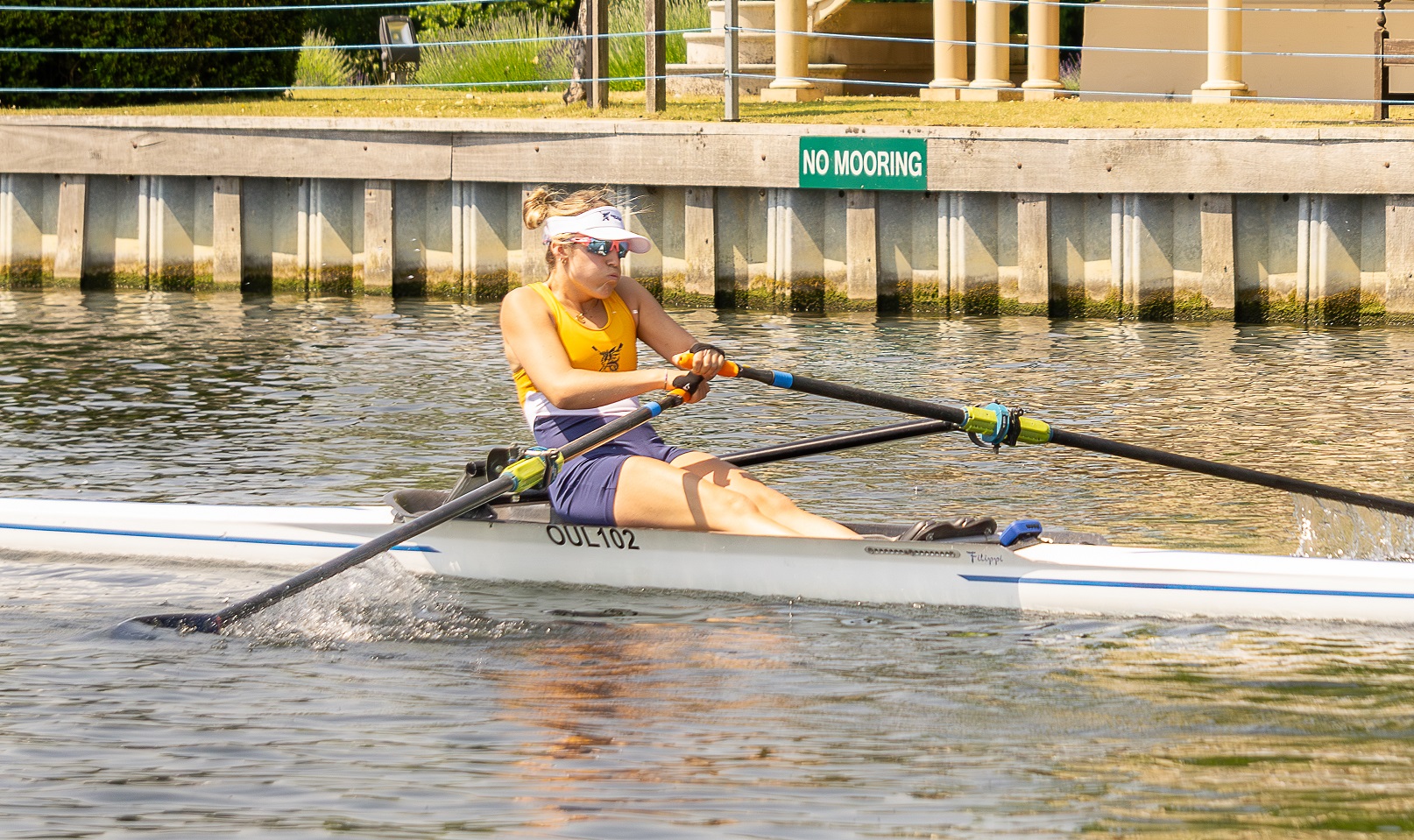
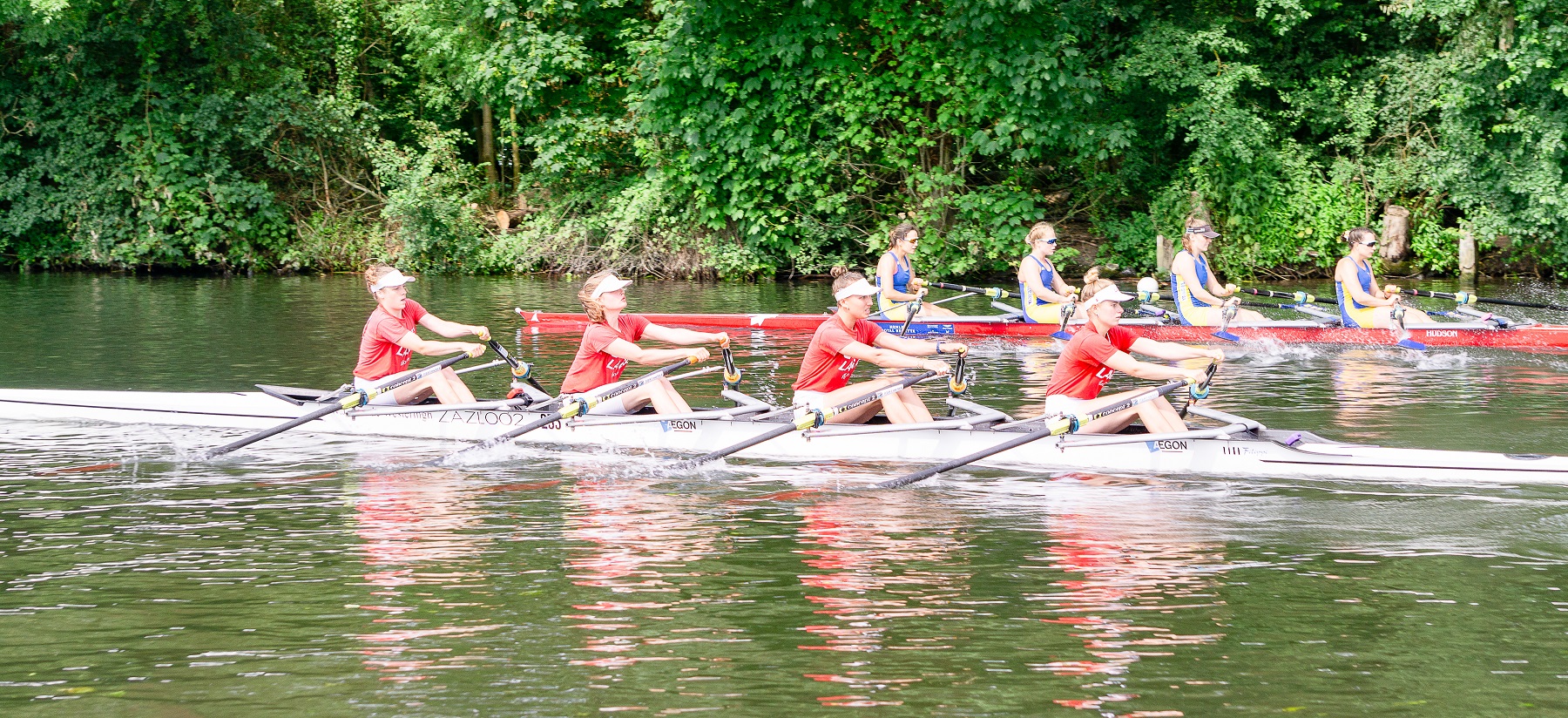
Last week saw the thirty-sixth running of the Henley Women’s Regatta. This year’s iteration saw 2,150 athletes in 547 crews go over the famed Henley regatta course, finishing just above Remenham. Moreover, 33 crews representing 22 clubs from Australia, Ireland, Germany, the Netherlands, Spain and the USA making the trip to Henley.
The regatta was started to give encouragement and something approaching equal opportunity to women and girls, who had far fewer regatta opportunities than men in 1988.
This year there is a new threat to women’s rowing, and that is the inclusion of trans identifying males in women’s categories of differing sport, but particularly in rowing.
Fortunately, women are fighting back, and foremost in this endeavour is Jane Sullivan of the Women’s Rights Network. HTBS sat down with Jane at the regatta to understand the challenge, and the fight to save rowing for women. Jane is not a latecomer to rowing. She has been rowing for forty years, and coaching for seventeen. To talk to her is to witness firsthand the passion she has for the sport, and for women in the sport.
“Women’s Rights Network have looked at data for 72 sports that are recognised by Sports England, and of the 72 transgender policies we looked at, only ten sports are fair and safe for women. Rowing isn’t one of them,” Jane explains.
This, she points out, is a very real crisis for women in rowing.

“It’s become apparent to me that there are males who are taking advantage of the rules and coming into the female category, and I make reference in particular to the indoor rowing leagues where there is one individual who has scooped up ten women’s records despite being a male. [It’s] perfectly legally, because it doesn’t transgress the British Rowing rules.
“Now my view is that British Rowing should really support their women and girls and sort this out, because it’s not fair to have males racing in women’s categories for all the obvious reasons that we all know about.”
As we enjoy the scores of high calibre women’s crews racing past us, Jane explains the overwhelming advantage that male athletes have over females in rowing.

“We all know that men are taller, generally, than women. They have bigger hearts, bigger lungs, their trachea is bigger, their muscle mass is bigger; and crucially for a sport like rowing, which is a power sport, the angle of the hips and the knees are different in women, says Sullivan.
“Q angle (quadriceps angle) is the angle between the quadriceps and the patella tendon and is greater in women because they have wider hips. It is one of the reason women cannot put as much pressure through their feet as men and when it comes to rowing, where you’re putting all your power through the footplate, that’s really important.”
On top of that, the permissible testosterone level in rowing of 2.5 nano moles is higher than just about any naturally born female athlete could achieve. That was set to accommodate trans identifying males.
One would think this should be enough to convince the national governing bodies to act to protect women’s sport, but it hasn’t happened yet with British Rowing.
“I found out that British Rowing had been to training by Mermaids, which is the charity that supports trans children and their families. I only found that out because I found the thing on the Mermaids website,” Sullivan tells me.
“I feel that if British Rowing is consulting trans activist groups, then they should also be consulting women. Women and girls are most adversely affected by policies that allow males into their sport but they were not consulted when these policies were first introduced.”
At this she smiles a pained smile.
“So, when the transgender policies were devised, women weren’t asked if they would allow males into their category. We weren’t consulted.”
A change in policy is desperately needed, although it is unclear if British Rowing – or World Rowing for that matter – is interested in what women have to say.
“In March I was invited to speak to the board of British Rowing, and I told them this has real implications for grassroots rowing, and that feeds through to the elite, and that they need to sort out their policy so that it is women and girls only, and not males, in the female category,” Sullivan says.
“They did a vote in May – it wasn’t called a vote; it was called a canvassing of opinions. We don’t know the result of that because we haven’t been told. All the members of British Rowing were emailed at the end of May and were asked if we would vote on three options. One option was to keep the policy as it is, which is males can reduce their testosterone to 5 nano moles; to go with World Rowing which has issued a 2.5 nano mole restriction, or to keep the female category for females only.
“Now you can argue that it wasn’t fair to have two options for males and one just for females, but that was what we were sent. I don’t know how many people voted. I don’t know what the results of the vote were,” Sullivan explains, because British Rowing won’t reveal them.
Sullivan’s frustration is palpable.
“The thing I get very annoyed about is that Sport England commissioned a fantastic piece of individual research. They paid an independent company to look at all the legal and scientific issues surrounding the inclusion of males in the female category, and that report in 2021 stated very clearly that if you want inclusion you cannot have fairness. So, including males in a sex affected sport, which rowing is, is not fair for women and girls,” Jane says.

For the Women’s Rights Network, the solution is simple, and it needs government to stand up for women.
“When the Equality Act 2010 was passed the word ‘sex’ meant biological sex. No one ever envisaged that it would mean anything else. Yet now we have a situation where it needs to be clearly stated. And it’s ‘sex’ not ‘gender’. Gender also used to be used interchangeably with sex but nowadays it means a whole load of different things so we have to be absolutely crystal clear.
“They need to amend the legislation. They need to change the wording so sex means biological sex, full stop. That’s all they need to do,” Sullivan declares.
Rowing’s governing bodies around the world are on notice. Jane and other women are not going to give up their hard-fought rights to sport.
“Virtually every single person we’ve spoken to has supported us,” Sullivan tells me.
“I’ve had so many mums come up and say, ‘my daughters are rowing; they can’t speak. Thank you because you’re going to make a difference,’ and that has been fantastic.”
 Hear The Boat Sing
Bravo, Jane Sullivan (and William O’Chee). And kudos to 1980 US Olympian and MD Mary O’Connor who leads the debate in the US. It is very disappointing that, in a sport that teaches and celebrates courage, so many who agree with them on this point are reluctant to stand up and be counted, often because they just don’t want to deal with the backlash from those in the trans community and their supporters who unapologetically refuse to acknowledge the fundamental inequities of their efforts in this particular matter and – with great irony – are happy to trample fairness, science and basic women’s rights in pursuit of their own personal agendas.
Another bravo to William and Jane. what I have just read seems common sense.
Go Aussies. I am an occasional rower from Perth, WA. I have ambitions to set up a Herreshoff Rowboat for myself, and to participate in Venetian stand-up rowing on our rivers some time soon.
Peter Edmonds
Perth WA
Thank you. I doubt if even a year ago this article could have been published without serious kick back. Well done to Hear the Boat Sing for giving this important subject an airing. There are many women (and men) in many countries who are campaigning for access to fair and safe sport for women and girls. Mary is a legend among women rowers and her voice is very powerful.