
7 February 2023
By William O’Chee,
text & photographs (except where noted)
William O’Chee has found his rowing paradise.
Each of us, in the hidden places of our hearts, longs for some rowing paradise – dreams of it, yearns for it, mixing passion and desire in an unattainable pilgrimage for aquatic perfection. But what if rowing’s grail quest had an end, a place both sublime and within our reach?
My earliest rowing was done on the Isis in Oxford, a place of rowing idylls, and waters as smooth as a mill pond. Haunting and evocative it may be, but it is far from paradise. Its reach is barely more than 2,000m long, broken by a series of twists and bends, and its narrow stream is often crowded with scores of eights both morning and afternoon.
The Tideway is a place of legends, home to the Championship Course and Doggett’s Coat and Badge. It was where thousands of watermen plied their trade in bygone days, and where dozens of proud clubs line her banks from Greenwich to Richmond. But she is a fickle water, and hardly welcoming when she is in her scorn.
Then there are Henley, the Schuylkill, and the Charles, and an assortment of lakes in Spain and Switzerland, and in Croatia. But what if there was a place surpassing them all for the quality of its waters, its tranquility, and amenity to rowing?
Such a place does exist, at the southern end of Australia’s Gold Coast, a place better known for its fusion of beaches, bikinis, and tacky hedonism than for rowing. This place is called Terranora.
Technically a creek, Terranora is a wide tidal waterway that joins the Tweed River about a mile from where it opens into the Pacific Ocean. The upper sections pool into large shallow lakes of blue water, and its bottom is entirely sand, save for beds of sea grass here and there which are shelter for spawning fish.
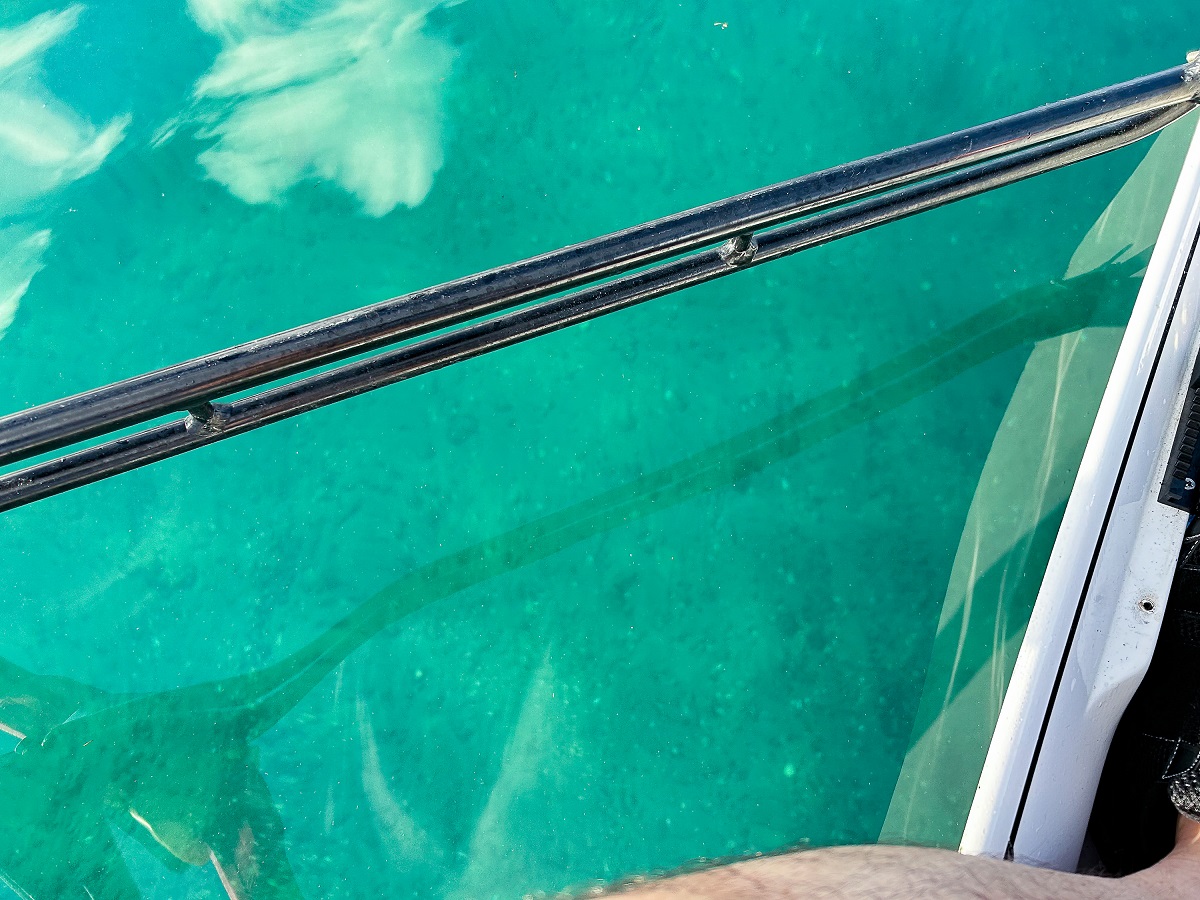
The water is so clean that on a good day you can see all the way to the bottom, where the sand is ploughed into tiny furrows by invisible rivulets of current, disturbed only by the graceful arc of the occasional stingray. And unlike most coastal estuaries in Australia, it seemingly has no sharks, although it is periodically visited by pods of river dolphins that will swim beside your boat.

A typical outing begins from the sandy cove where the first of Terranora’s many anabranches joins the main channel. A sandy mangrove island is on the stroke side, and on the bow side, a scenic river drive is wedged between the water and a high hill to the north. Tiny ripples cover the surface, and the sun is a distant glow on the horizon.
It is just over 1,000m to the highway bridge, the first landmark on our paddle. The low thrum of passing cars above marks your passage through its wide spans, and suddenly the water opens out, just as all sounds from people seem to die away.
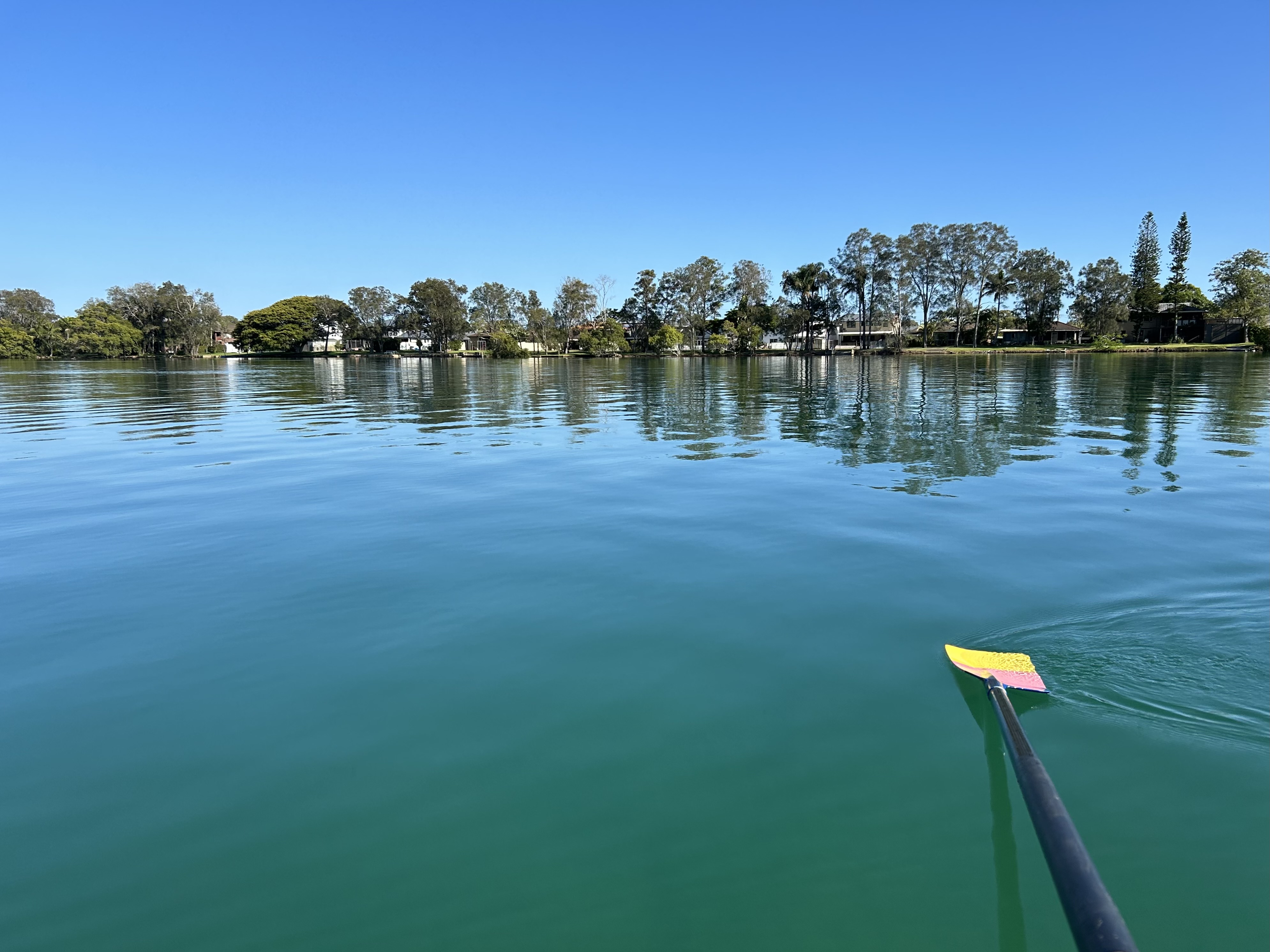
Sometimes not even a ripple exists beyond here, just a gentle rising and falling of the water so slight that it doesn’t even lap the side of the boat.
On and on you go for kilometres, feeling each catch lock up with an assurance that comes from very still water. Each stroke takes you further and further from civilisation, and deeper into the natural world.
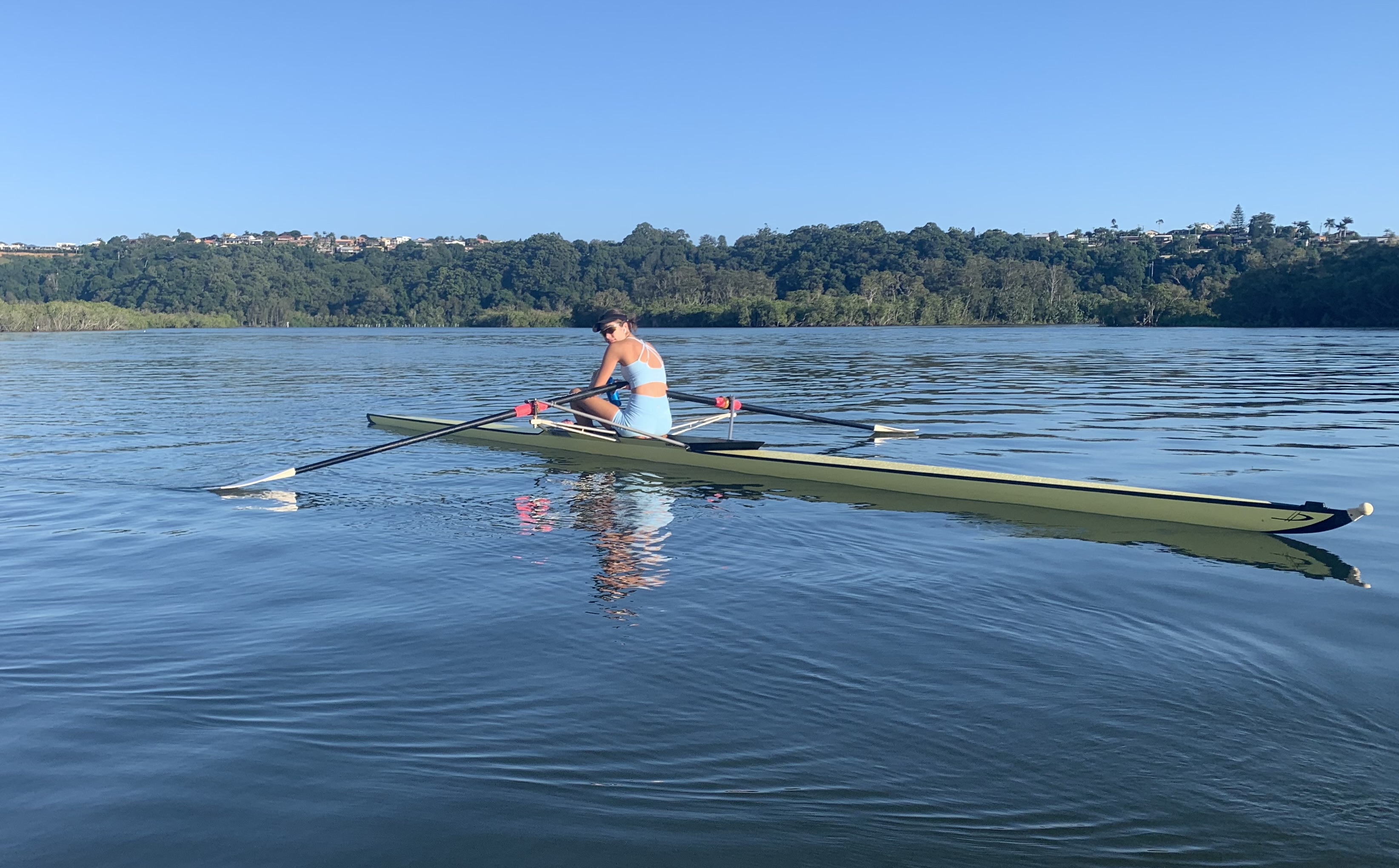
Sweeping through two wide bends you arrive at the beginning of Bingam Bay, which is dotted with islands of mangroves that rise from the sandy bottom. Their branches are lined in places with egrets and black cormorants, while pelicans make their own company away from other birds. There is even more birdlife that cannot be seen. The channels that thread their way between Terranora’s many islands are filled with the calls of birds of all kinds, sometimes so loud that they drown out conversation between scullers.
Most scullers turn after 5 km, although there are several more kilometres of water to enjoy in Terranora Broadwater should one be inclined.
Hugging the southern bank on the way home takes you past the remains of an old dry dock from 1899. The gates long gone, it is just a rectangular bay, but still a reminder of the days when Terranora was a port for sailing ships taking timber cut in the nearby mountains as far afield as England.
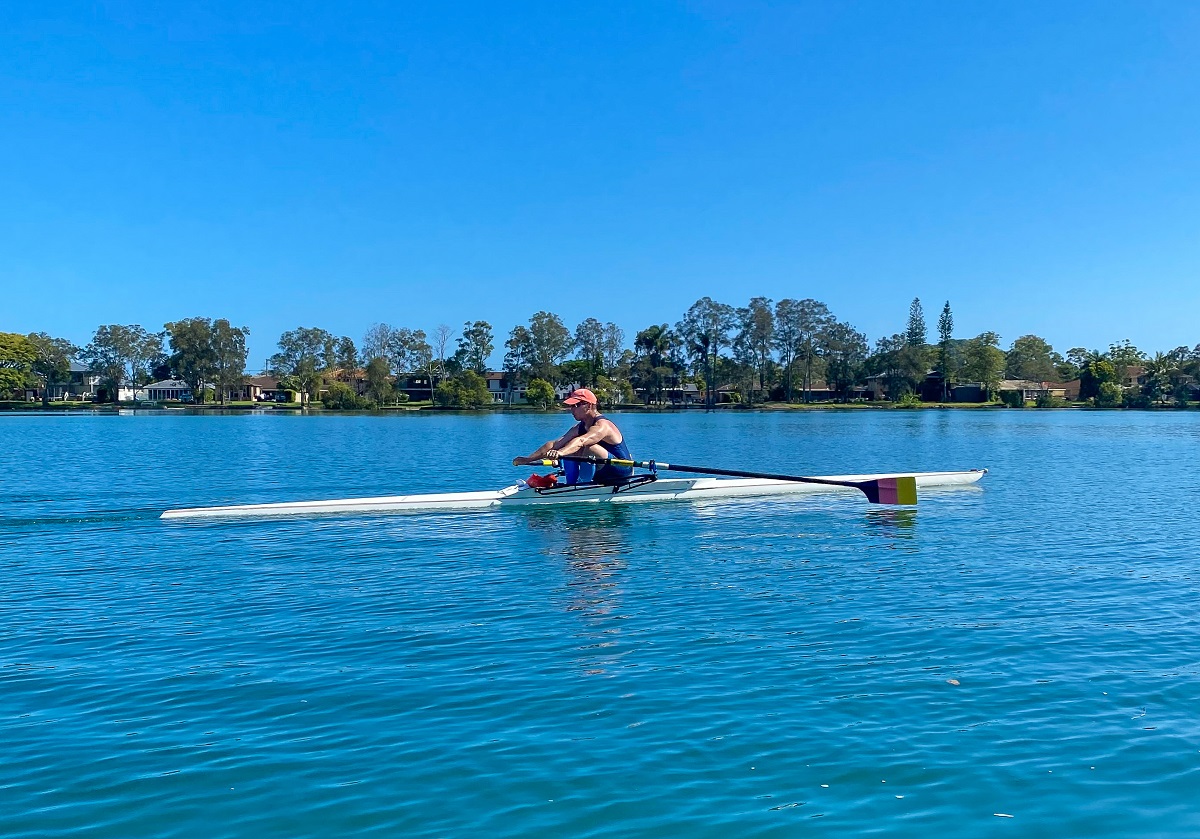
As the morning sun climbs higher, the water is arguably even clearer than at sunrise. This fact is evident from a photo shot looking down through the rigger of your correspondent’s scull. The sandy bottom some six to eight metres below is crystal clear.
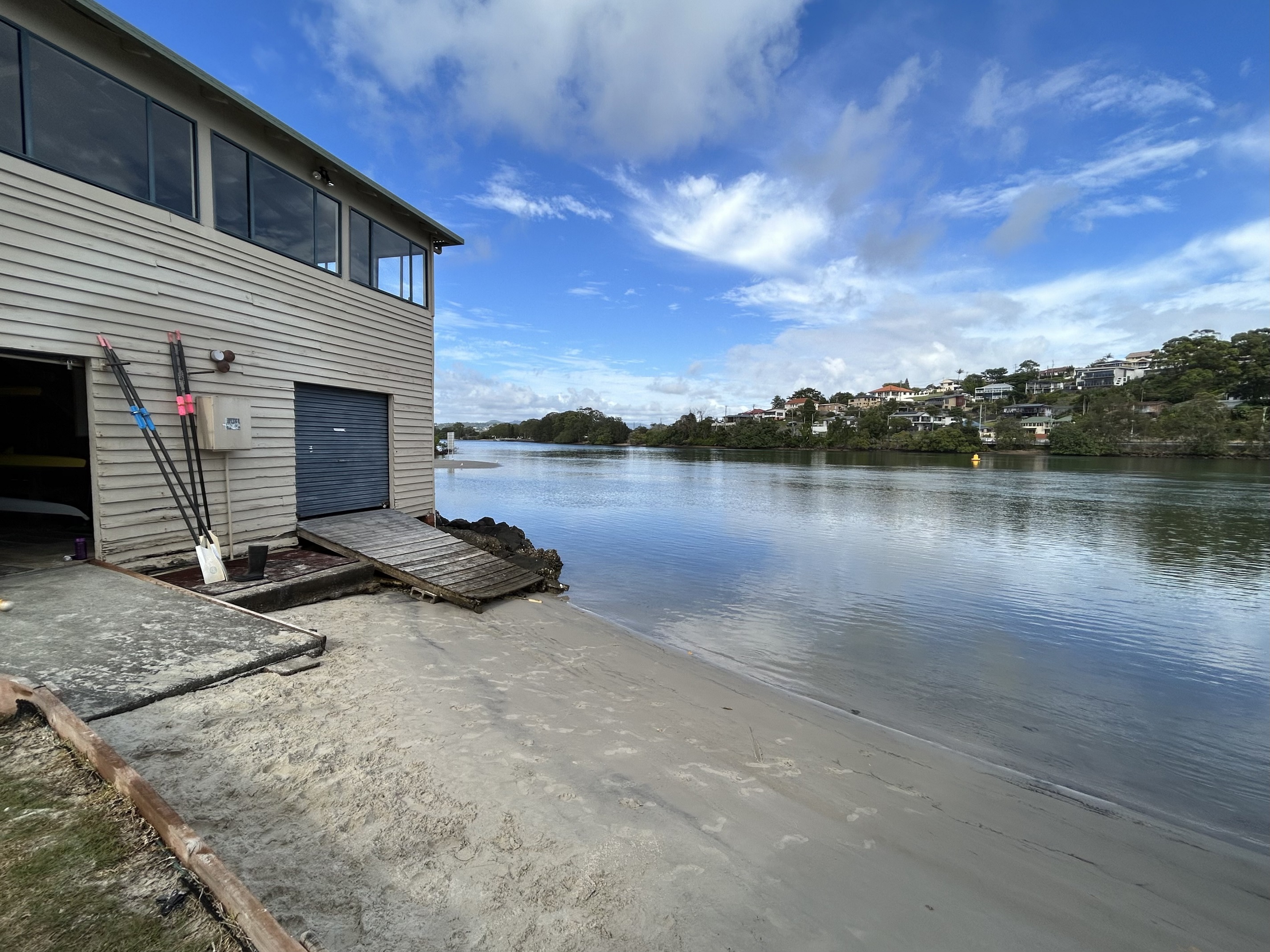
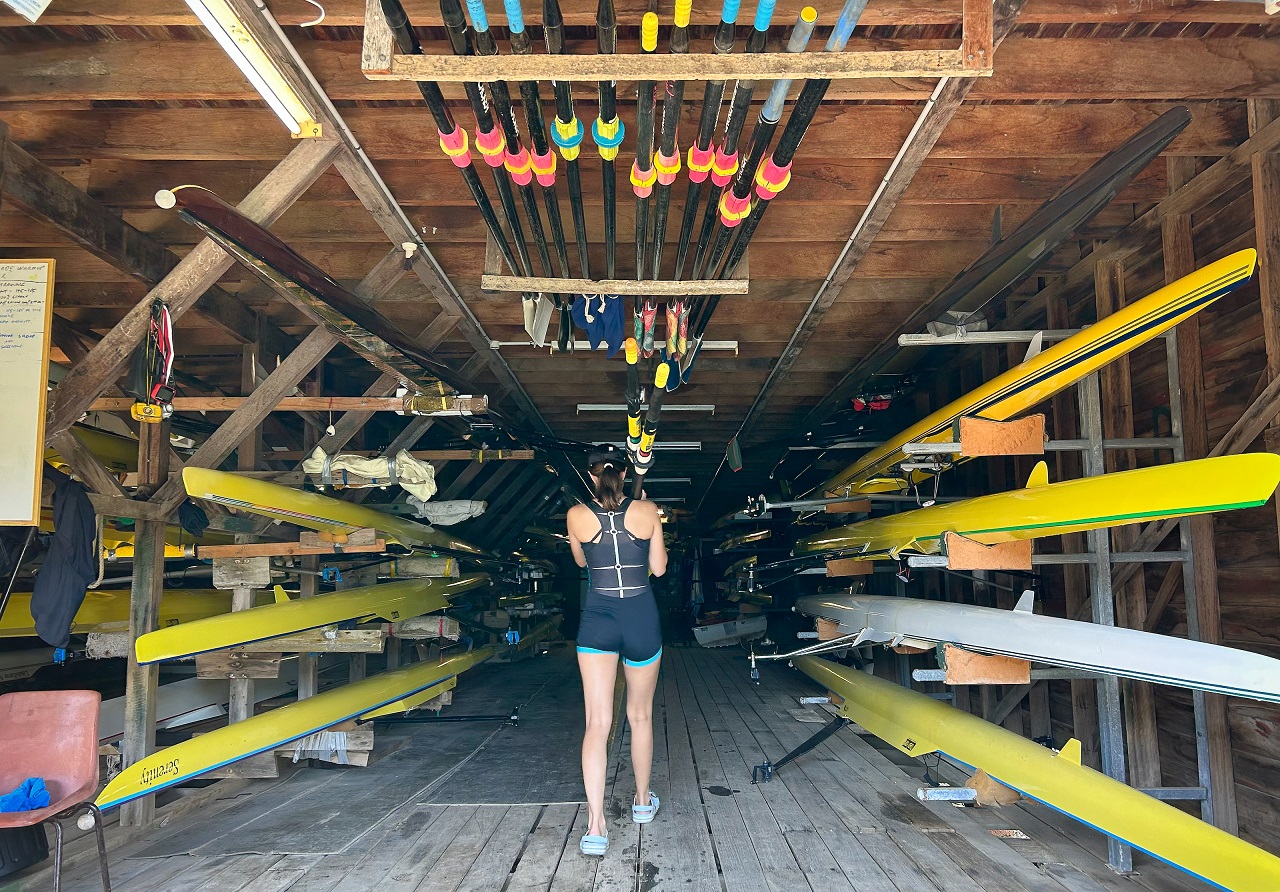
A final few dozen strokes returns you to the Tweed Heads & Coolangatta Rowing Club boathouse, an ancient wooden building with slats between the floorboards to allow the waters to drain in the event of an exceptionally high tide. The club’s treasured history is safely preserved, however, upstairs in the club room.
The boathouse is venerable, and charmingly romantic in a way that only rowers can understand, however, club President André West concedes it needs some work. He sometimes bemoans that “the place is falling down around our ears.” It certainly could do with a lick of paint, and some improvements to the facilities, but hopefully it will never lose its character.
With the Olympics coming to South-East Queensland in 2032, hopefully the State and Federal governments will see fit to make some funding available to the club to upgrade its facilities so it can play host to visiting international squads coming to train here. The Australian Olympic men’s eight used it as a base for the 2000 Olympic Games, and they could have trained anywhere in the country.
In fact, overseas crews would be mad not to train at Terranora. The weather is always balmy, and a long-sleeved rowing shirt is never needed. Accommodation is plentiful, and a very short walk or just a couple of minutes’ drive from the boathouse.
More importantly the place is tranquil most of the day. There is only one rowing club, so there is no sharing the water with other crews. There is also no industry on Terranora Water other than some oyster leases – proof of the cleanliness of the water – and the occasional still water fishing charter.
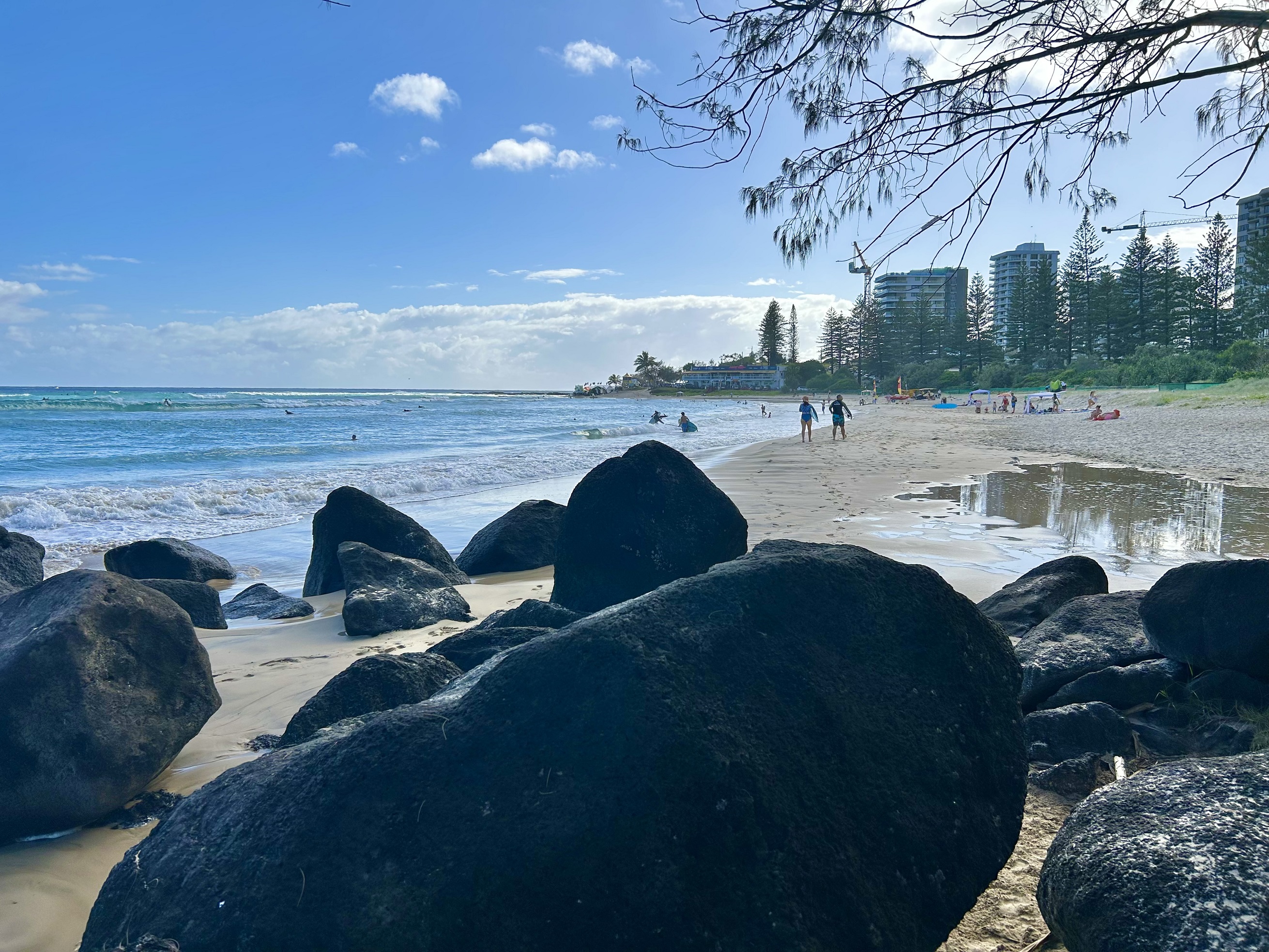
It has one other advantage that very few rowing venues can boast, and that is world famous surfing beaches just a seven-minute drive from the boathouse. Many of the club’s rowers take the lactate out of their legs with a swim in the surf after training, and I am one of them. The cool, refreshing waters of the Pacific Ocean make the perfect recovery from a hard row.

There is also a plenitude of good coffee shops and bakeries – one just across the bridge from the boathouse – for the obligatory post-training scoff. After all, even coxes need to eat (occasionally).


Years of searching have brought me to these waters, and I can think of few places in the world I would rather row than here. Yes, there are places just as pretty, but they are cold in winter, or crowded with other boats. And none can claim the beaches, accommodation, and food on offer. However, if you do know of a rowing paradise you would like to share, please write an article for Hear The Boat Sing* and let us in on your secret.

*Send the article of your rowing paradise (with at least one image) to HTBS editor at gbuckhorn – at – gmail – dot – com – Thank you!
 Hear The Boat Sing