
Tim Koch writes:
A few posts on ‘Hear The Boat Sing’ have rather tenuous links with rowing and this is one of them – but I hope that it will still appeal to ‘HTBS types’. It is inspired by some pictures that I took while at the special ‘Coat and Badge Race’ from Wapping to London Bridge that I reported on recently.
Prior to the race I was walking past the Tower of London and came upon this spectacular sight.

The website for Historic Royal Palaces says:
Don’t miss the major art installation ‘Blood Swept Lands and Seas of Red’ at the Tower of London, marking one hundred years since the first full day of Britain’s involvement in the First World War. Created by ceramic artist Paul Cummins, with setting by stage designer Tom Piper, 888,246 ceramic poppies will progressively fill the Tower’s famous moat over the summer. Each poppy represents a British military fatality during the war.

The poppies will encircle the iconic landmark, creating not only a spectacular display visible from all around the Tower but also a location for personal reflection. The scale of the installation intends to reflect the magnitude of such an important centenary creating a powerful visual commemoration. We are hoping to sell all of the poppies that make up the installation and, in doing so, raise millions of pounds which will be shared equally amongst six service charities.

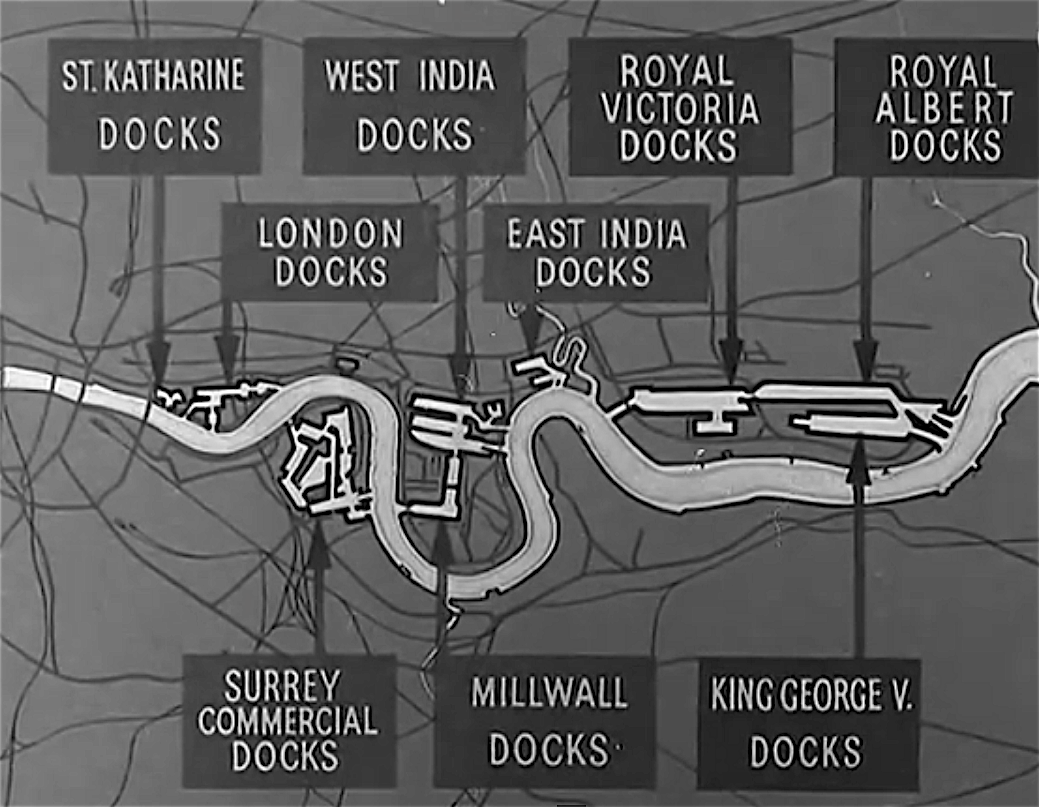
Later I joined the umpire’s boat for the Coat and Badge Race. We left St Katherine’s Dock, very near to the Tower, and we made our way downriver to the start. Passing through Tower Bridge we entered the stretch of the river with Wapping on the north bank and Rotherhithe on the south. This was the centre of what was until recently the Pool of London, an important part of the Port of London. According to Wikipedia:
The Pool reached its peak in the 18th and 19th centuries. By this time the river was lined with nearly continuous walls of wharves running for miles along both banks, and hundreds of ships moored in the river or alongside the quays…

Wikipedia continues:
The docks thrived up until the 1950s, despite suffering extremely severe bomb damage during the Second World War. The abrupt collapse of commercial traffic in the Thames due to the introduction of shipping containers and coastal deep water ports in the 1960s emptied the Pool and led to all of the wharves being closed down, and many being demolished. The area was extensively redeveloped in the 1980s and 1990s to create new residential and commercial neighbourhoods.

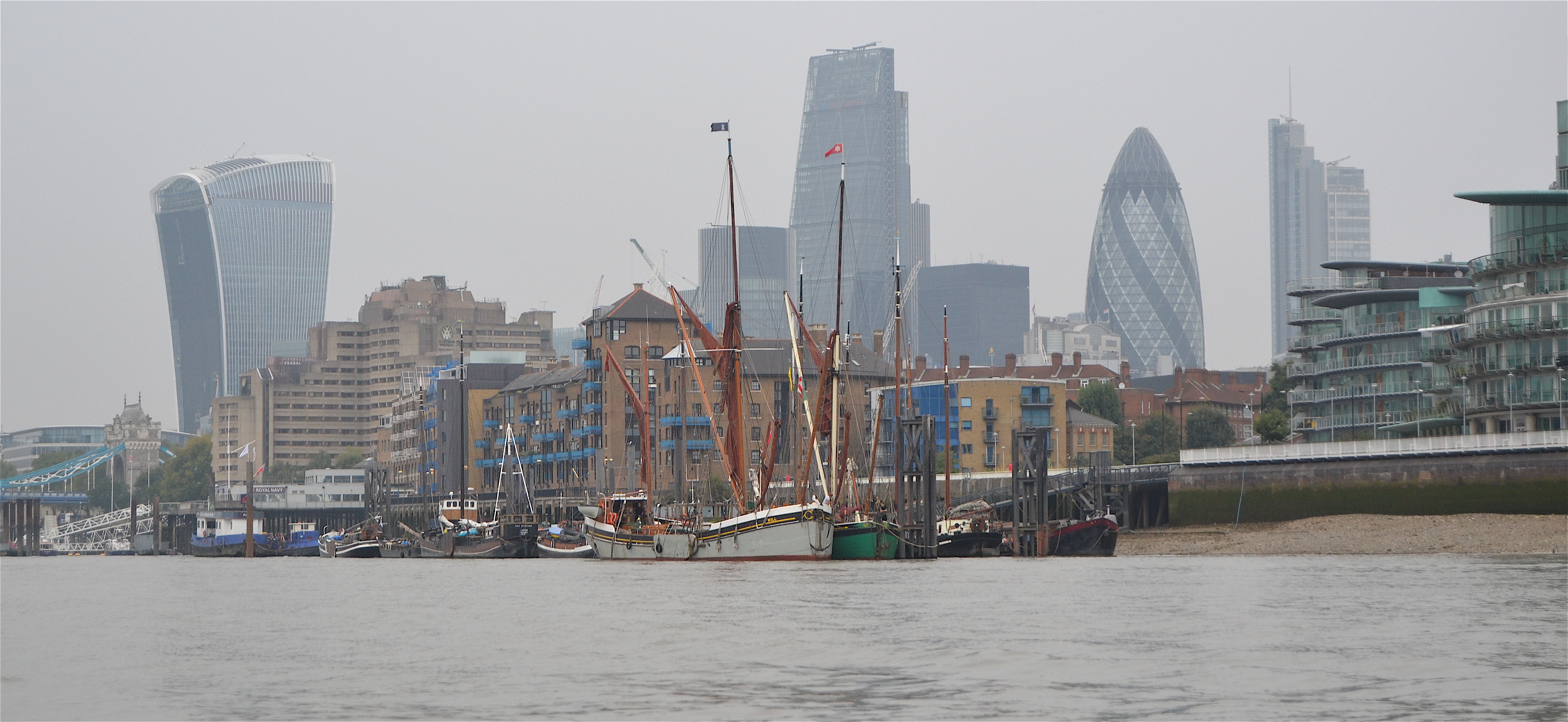


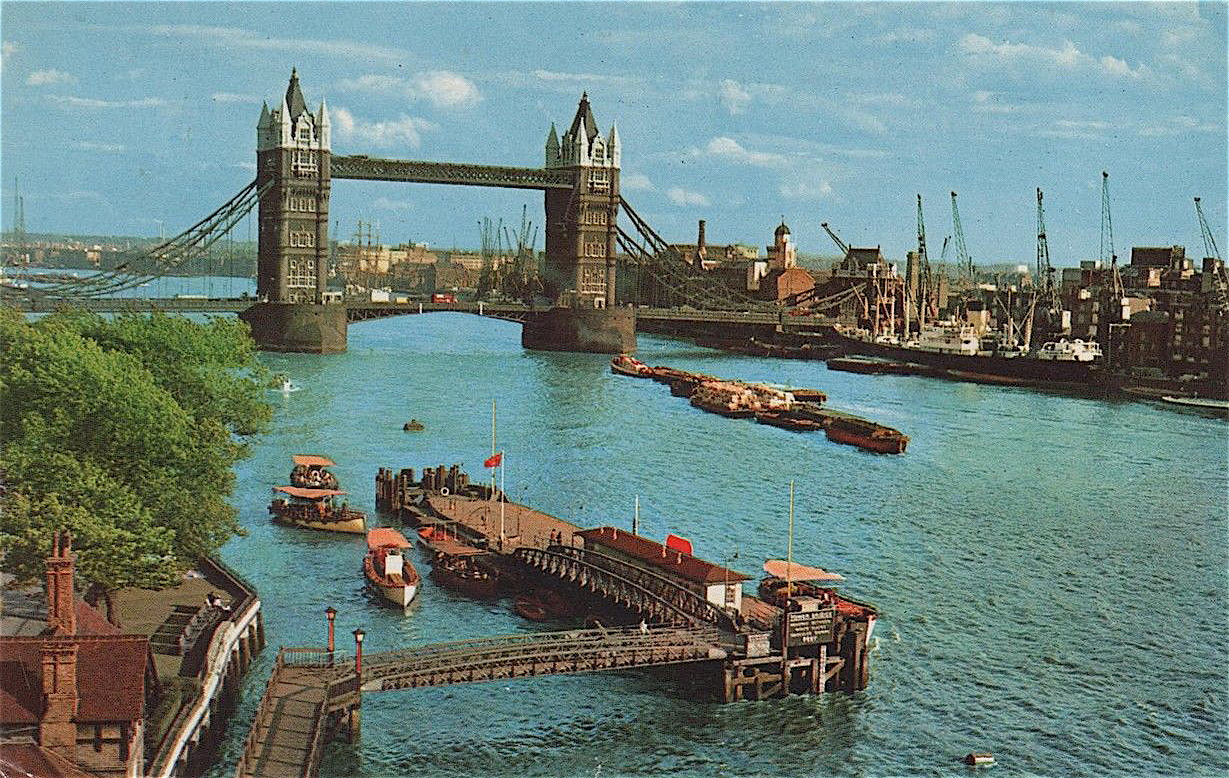
The remaining warehouse are now luxury flats and the wealthy residents, perhaps typically employed in the financial district known as ‘The City’, are a world away from the generations of Londoners who led a tough and precarious existence working river, wharf and warehouse. For most British people of a certain age, our only memory of the Pool of London is from Winston Churchill’s funeral in 1965 when the dockers near Tower Bridge dipped their cranes in salute as the coffin was carried up the Thames on the way to burial at Blandon (see the last 25 seconds of this film).
These three pictures looking downriver towards Tower Bridge show approximately the same view over a period of one hundred years.

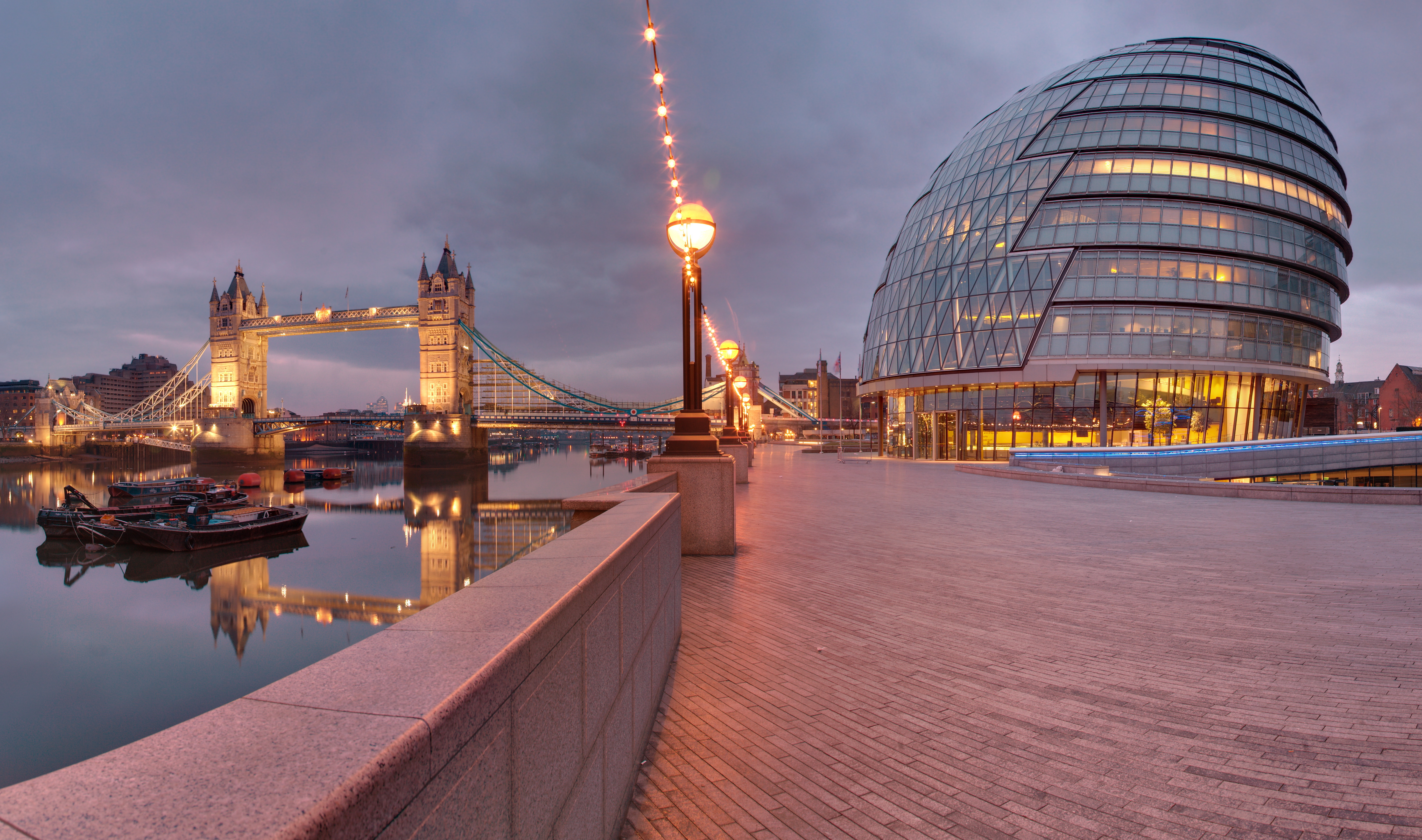
(Picture adapted from a work by Matthias Kabel on Wikipedia – Tower Bridge & City Hall at Dawn).
 Hear The Boat Sing